
High Protein Breakfast No Eggs: Ancient Grain Plant Power
Starting your day with energy and clarity can sometimes feel out of reach, especially if you are searching for high-protein, egg-free options that truly satisfy. With growing awareness across the UK about plant-based wellness, many adults are seeking alternatives that blend authentic nutrition with sustainability. By embracing ancient grains and premium plant proteins, you can create breakfast choices that deliver dense protein, essential micronutrients, and a spectrum of flavour, giving you a solid and balanced foundation for the day ahead.
Table of Contents
- Step 1: Select Ancient Grains And Premium Plant Proteins
- Step 2: Prepare Grains And Blend With Power-Up Ingredients
- Step 3: Incorporate Nuts, Seeds, And Natural Flavour Boosts
- Step 4: Assemble And Portion Your Protein-Packed Breakfast
- Step 5: Check Nutrition For Balanced Wellness
Quick Summary
| Key Takeaway | Explanation |
|---|---|
| 1. Select diverse ancient grains | Choose a variety of ancient grains for comprehensive nutrition and balanced protein intake. |
| 2. Prepare grains effectively | Use soaking and gentle cooking methods to enhance digestibility and nutritional value of grains. |
| 3. Add nutrient-rich nuts and seeds | Incorporate nuts and seeds to boost flavour and increase essential nutrients in your breakfast. |
| 4. Portion your breakfast carefully | Follow specific portion guidelines to create a balanced meal that supports sustained energy. |
| 5. Assess nutritional balance regularly | Regularly evaluate your breakfast’s nutrition to optimise health benefits and dietary goals. |
Step 1: Select ancient grains and premium plant proteins
Choosing the right ancient grains and plant proteins can transform your morning nutrition, providing powerful protein alternatives without relying on eggs. Ancient grains offer remarkable nutritional profiles that combine dense protein content with essential micronutrients and bioactive compounds.
Start by exploring versatile plant-based protein sources that deliver comprehensive nutrition:
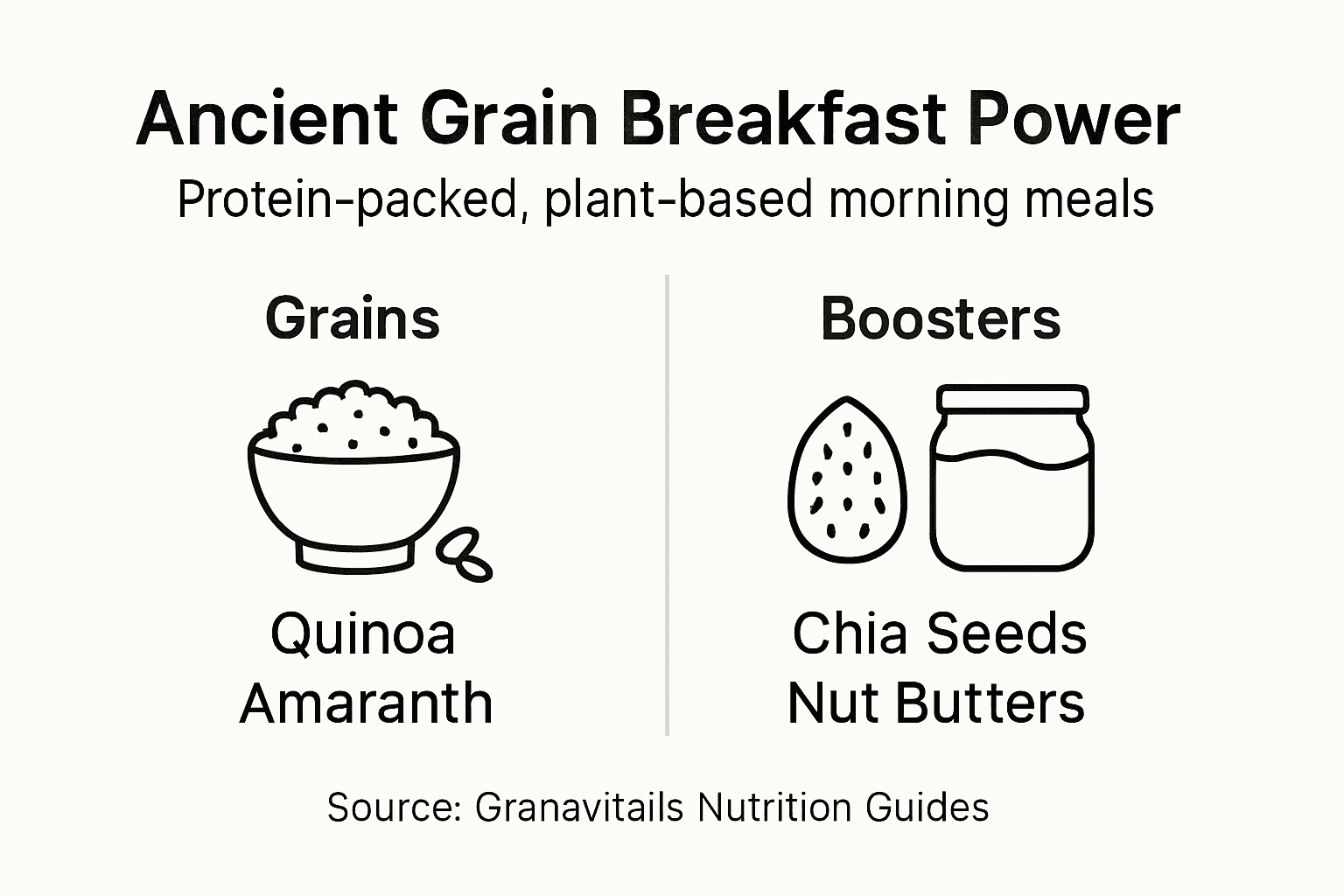
- Quinoa: A complete protein containing all nine essential amino acids
- Amaranth: High in lysine and exceptionally protein-dense
- Chia seeds: Packed with omega-3 fatty acids and plant protein
- Hemp seeds: Offering balanced protein with anti-inflammatory properties
- Teff: A tiny grain with significant protein and mineral content
When selecting your ancient grains, prioritise whole, unprocessed varieties that maintain maximum nutritional integrity. Whole grain selections contribute significantly to sustainable protein intake, providing not just protein but additional fibre and phytochemicals.
Here’s a quick reference comparing ancient grains and their unique nutritional benefits:
| Grain | Unique Nutrient | Benefit to Breakfast |
|---|---|---|
| Quinoa | All essential amino acids | Supports muscle recovery |
| Amaranth | Lysine & high protein | Enhances satiety and tissue repair |
| Chia seeds | Omega-3 & fibre | Boosts brain health and digestion |
| Hemp seeds | Complete protein & anti-inflammatory compounds | Reduces inflammation, sustains energy |
| Teff | Minerals (iron/calcium) | Aids bone health and energy metabolism |
Professional nutrition strategy: Combine multiple ancient grain sources to create a comprehensive protein profile.
Pro tip: Mix different ancient grains and plant proteins to create a balanced, nutrient-rich breakfast that supports sustained energy and muscle recovery.
Step 2: Prepare grains and blend with power-up ingredients
Preparing ancient grains for a protein-packed breakfast requires strategic techniques that maximise nutrition and flavour. Processing techniques can significantly enhance grain digestibility by reducing anti-nutrients and improving protein absorption.
To transform your ancient grains into a nutrient-dense morning meal, follow these essential preparation steps:
- Soaking: Submerge grains in water for 6-8 hours to reduce phytic acid
- Rinsing: Thoroughly wash grains to remove excess starch and improve texture
- Cooking: Use gentle simmering methods to preserve nutritional integrity
When blending your prepared grains, consider adding complementary protein-rich ingredients for enhanced nutrition:
- Nut butters
- Plant-based protein powders
- Ground flaxseeds
- Spirulina powder
- Chopped nuts and seeds
Combining grains with complementary ingredients optimises nutrient availability and creates a more balanced breakfast profile.
Strategic nutrition approach: Balance your grain preparation with diverse protein sources for comprehensive nutrition.
Pro tip: Experiment with fermentation techniques like overnight soaking to unlock maximum nutritional potential and improve grain digestibility.

Step 3: Incorporate nuts, seeds, and natural flavour boosts
Plant-based protein meals become extraordinary when enhanced with carefully selected nuts and seeds, transforming a simple breakfast into a nutritional powerhouse. By strategically adding these ingredients, you’ll elevate both flavour and nutritional profile.
Consider incorporating these nutrient-dense additions:
- Almonds: Rich in vitamin E and magnesium
- Pumpkin seeds: Excellent source of zinc and omega-3 fatty acids
- Chia seeds: Packed with fibre and complete protein
- Walnuts: Supports brain health with omega-3s
- Sunflower seeds: Contains selenium and vitamin E
To maximise flavour and nutrition, experiment with natural boosters:
- Fresh herbs like mint or basil
- Ground cinnamon or cardamom
- Grated fresh ginger
- Citrus zest
- Vanilla extract
Strategic ingredient combinations enhance protein absorption and meal enjoyment by complementing grain-based proteins with diverse nutrients.
Culinary nutrition insight: Balance is key when combining nuts, seeds, and flavour enhancers.
Pro tip: Toast nuts and seeds lightly before adding to activate their natural oils and intensify flavour profiles.
Step 4: Assemble and portion your protein-packed breakfast
Systematic ingredient assembly ensures optimal nutritional balance in plant-based breakfasts, transforming your morning meal into a powerful wellness ritual. Understanding portion control is key to creating a satisfying and nutritionally complete breakfast.
Design your protein-packed breakfast using these strategic portioning guidelines:
- Base portion: 1/2 cup cooked ancient grains
- Protein boost: 2-3 tablespoons plant protein powder
- Nuts and seeds: 1-2 tablespoons mixed varieties
- Flavour enhancers: 1 teaspoon spices or herbs
- Additional toppings: 1/4 cup fresh fruits or berries
Use these recommended serving techniques:
- Start with your grain base
- Layer plant proteins
- Sprinkle nuts and seeds
- Add flavour boosters
- Garnish with fresh ingredients
Balanced macronutrient portioning supports sustained energy and nutritional goals for a wholesome breakfast experience.
Consider these portioning strategies for assembling a balanced breakfast:
| Component | Typical Amount | Nutritional Impact |
|---|---|---|
| Cooked ancient grains | 1/2 cup | Provides sustained energy |
| Plant protein powder | 2-3 tablespoons | Boosts overall protein content |
| Mixed nuts/seeds | 1-2 tablespoons | Adds healthy fats and micronutrients |
| Herbs/spices | 1 teaspoon | Enhances flavour and antioxidant support |
| Fresh fruit or berries | 1/4 cup | Contributes vitamins and fibre |
Nutritional insight: Precision in portioning transforms ingredients into a purposeful meal.
Pro tip: Invest in a kitchen scale to ensure consistent nutrient intake and portion accuracy.
Step 5: Check nutrition for balanced wellness
Ancient grain breakfast nutrition requires comprehensive assessment to ensure your meal delivers optimal health benefits. Understanding the nutritional profile helps you create a breakfast that supports metabolic function and sustained energy.
Conduct a thorough nutritional evaluation using these key metrics:
- Protein quality: Complete amino acid profile
- Micronutrient density: Vitamins and minerals
- Fiber content: Digestive and metabolic support
- Macronutrient balance: Protein, carbohydrates, healthy fats
- Bioactive compounds: Antioxidants and anti-inflammatory elements
Use these practical nutrition tracking strategies:
- Calculate total protein grams per serving
- Assess amino acid completeness
- Check micronutrient diversity
- Evaluate overall caloric distribution
- Monitor ingredient nutrient interactions
Routine nutrition checks support holistic wellness goals by ensuring your breakfast meets comprehensive dietary needs.
Nutritional wisdom: Your morning meal is a strategic wellness investment.
Pro tip: Photograph your breakfast and use nutrition tracking apps to simplify comprehensive nutritional analysis.
Unlock Your High Protein Breakfast with Ancient Grain Power
If you are seeking a high protein breakfast without eggs that combines the nutritional power of ancient grains with premium plant proteins you are in the right place. The challenge of creating a balanced, nutrient-dense morning meal that supports muscle recovery, sustained energy and digestive wellness is met by carefully selecting whole, unprocessed grains and blending them with complementary plant-based ingredients.
At Granavitalis, we offer a thoughtfully crafted range of Vegan Protein Powders – Granavitalis derived from clean, natural sources to perfectly complement your ancient grain selections. Our products are rooted in tradition yet designed for today’s nutritional demands.

Start fuelling your mornings with purity and purpose by exploring our complete collection of plant-powered nutrition on Granavitalis. Take the next step to build your breakfast with confidence and elevate your wellbeing now.
Frequently Asked Questions
What are the best ancient grains for a high-protein breakfast?
To create a high-protein breakfast, consider using quinoa, amaranth, chia seeds, hemp seeds, and teff. These grains are rich in essential amino acids and nutrients. Start by incorporating one or two grains into your morning routine to boost protein intake.
How do I prepare ancient grains for optimal nutrition?
To prepare ancient grains, first soak them in water for 6-8 hours to reduce phytic acid, then rinse thoroughly to improve texture. Cook them using gentle simmering methods to maintain their nutritional integrity. Follow this process to enhance digestibility and nutritional value in your meals.
How can I add protein to my breakfast without using eggs?
You can add protein to your breakfast by incorporating plant-based protein powders, nut butters, or ground flaxseeds alongside ancient grains. Aim for 2-3 tablespoons of plant protein supplements for a significant protein boost. This combination will help you achieve a balanced and nutritious meal.
What types of nuts and seeds should I include in my breakfast?
Include a variety of nutrient-dense options such as almonds, pumpkin seeds, chia seeds, walnuts, and sunflower seeds. These ingredients not only enhance flavour but also provide essential vitamins and healthy fats. Adding 1-2 tablespoons of mixed nuts and seeds can significantly increase the nutritional profile of your breakfast.
How do I portion my high-protein breakfast correctly?
To ensure a balanced meal, use the following portion guidelines: start with 1/2 cup of cooked ancient grains, add 2-3 tablespoons of plant protein powder, and top with 1-2 tablespoons of nuts and seeds. Adjust these portions based on your specific dietary needs to create a satisfying breakfast.
Why should I assess the nutrition of my breakfast?
Conducting a nutritional assessment helps you understand the protein quality, micronutrient density, and overall balance of your meal. Monitor key metrics like protein grams and fibre content to ensure it supports your wellness goals. Regular evaluations can enhance your breakfast’s effectiveness in maintaining energy levels.
Recommended
- 7 High-Protein Breakfast Grains for Energy and Wellness – Granavitalis
- Quick Protein Breakfast Guide with Ancient Grains – Granavitalis
- Fast High Protein Breakfast: Quick, Nutritious Steps for You – Granavitalis
- High Protein Breakfast: Complete Guide to Lasting Energy – Granavitalis
- Role of Protein Pre-Workout: Complete Athletic Guide – Interval
- 7 Essential Types of Protein Supplements Explained