
Benefits of Ancient Grains for Breakfast Choices
Over half of British adults are now seeking alternatives to traditional breakfast cereals, turning their curiosity toward ancient grains with rich nutritional stories. Interest in these forgotten staples is surging, yet myths and confusion still surround their health benefits and everyday use. This guide cuts through the noise, revealing the real advantages and misunderstandings about ancient grains, and offering practical insights to help you choose the right options for a vibrant British breakfast.
Table of Contents
- Ancient Grains Defined And Common Myths
- Nutritional Powerhouse: Key Health Benefits
- Supporting Menopause And Balanced Energy
- Popular Ancient Grains For UK Breakfasts
- Optimal Preparation And Common Pitfalls
Key Takeaways
| Point | Details |
|---|---|
| Nutritional Value of Ancient Grains | Ancient grains offer a rich nutrient profile, providing higher levels of protein, fibre, and essential minerals compared to many modern grains. |
| Menopausal Benefits | These grains support hormonal balance and energy levels during menopause, helping to alleviate common symptoms. |
| Diverse Culinary Uses | Ancient grains can be creatively incorporated into breakfasts, offering nutritious and versatile alternatives to traditional cereals. |
| Preparation Techniques | Understanding the unique cooking methods for different ancient grains is essential for achieving optimal texture and flavour. |
Ancient Grains Defined and Common Myths
Ancient grains represent a fascinating category of nutritional powerhouses that have sustained human populations for thousands of years. These grains have remained remarkably unchanged through agricultural evolution, offering unique nutritional profiles distinctly different from modern hybridised varieties. Ancient grains are defined as cereals that have been cultivated for millennia with minimal genetic modification, representing a direct connection to our agricultural heritage.
Understanding ancient grains requires dispelling several prevalent misconceptions. While many believe these grains are inherently superior to modern alternatives, nutritional science presents a more nuanced perspective. Common whole grains like brown rice and whole wheat can offer comparable health benefits to ancient varieties, challenging the notion of absolute nutritional supremacy. Ancient grains such as einkorn, emmer, spelt, and Khorasan wheat do offer unique characteristics, including potentially higher protein content, more complex nutrient profiles, and different gluten structures compared to contemporary wheat.
The diversity of ancient grains is remarkable, encompassing not just wheat-like cereals but also pseudocereals such as quinoa and amaranth. These grains have evolved in specific ecological conditions, developing robust nutritional characteristics that reflect their original growing environments. Unlike heavily processed modern grains, ancient varieties often retain more of their natural bran and germ, which means they can provide more comprehensive nutritional benefits including increased fibre, minerals, and antioxidants.
Pro Tip - Grain Selection Strategy: When exploring ancient grains, start by introducing one new variety into your diet each month, rotating between different types to maximise nutritional diversity and prevent potential sensitivities.
Nutritional Powerhouse: Key Health Benefits
Ancient grains are not just culinary relics but genuine nutritional powerhouses that offer remarkable health benefits beyond typical modern grain varieties. These grains provide exceptional dietary fibre, including β-glucans and resistant starch, which play critical roles in glycemic control and digestive health. Their complex nutritional profile makes them an extraordinary addition to a balanced breakfast, offering sustained energy and comprehensive wellness support.

The mineral content of ancient grains represents another significant advantage. Unlike refined grains, these nutritional gems are packed with essential minerals such as iron, magnesium, calcium, zinc, and selenium. These micronutrients contribute to numerous bodily functions, from supporting bone health and preventing anaemia to enhancing immune system resilience. The high protein content of ancient grains further distinguishes them as an exceptional breakfast choice, providing a sustained energy release that helps maintain stable blood sugar levels throughout the morning.
Beyond basic nutrition, ancient grains offer unique phytonutrients and antioxidants that modern wheat varieties often lack. Their minimal processing ensures that beneficial compounds remain intact, creating a more holistic nutritional package. Quinoa, amaranth, and spelt, for instance, contain higher concentrations of amino acids and anti-inflammatory compounds compared to standard wheat, making them particularly valuable for individuals seeking comprehensive nutritional support.
Pro Tip - Nutrient Maximisation Strategy: Combine different ancient grains in your breakfast to create a diverse micronutrient profile, ensuring you receive a broad spectrum of vitamins, minerals, and beneficial plant compounds.
Supporting Menopause and Balanced Energy
Ancient grains offer a nutritional lifeline for women navigating the complex hormonal landscape of menopause, providing a strategic dietary approach to managing symptoms and supporting overall wellness. These nutrient-dense grains can play a crucial role in addressing the unique nutritional challenges that emerge during this transformative life stage, offering a natural approach to maintaining energy, hormonal balance, and metabolic health.
During menopause, women experience significant metabolic and hormonal shifts that demand targeted nutritional support. Ancient grains emerge as exceptional allies, delivering essential minerals like magnesium and zinc that help regulate hormone fluctuations and support bone density. Their complex carbohydrate profile ensures steady energy release, combating the fatigue and metabolic slowdown commonly associated with menopausal transitions. Despite some nutritional debate, these grains consistently demonstrate potential benefits for women’s midlife nutritional needs.
The phytoestrogen content in certain ancient grains like quinoa and amaranth provides additional menopausal support, potentially helping to moderate hot flushes and support hormonal equilibrium. Their rich fibre content also aids digestive health and helps manage weight—a common concern during this life stage. By incorporating a diverse range of ancient grains, women can create a nutritional strategy that addresses multiple menopausal challenges simultaneously, from maintaining stable blood sugar to supporting cognitive function and emotional well-being.
Pro Tip - Menopause Nutrition Strategy: Rotate different ancient grains in your breakfast routine to ensure a comprehensive nutrient intake, targeting hormonal balance and sustained energy throughout your menopausal journey.
Popular Ancient Grains for UK Breakfasts
Ancient grains have transformed breakfast options across the United Kingdom, offering nutritious alternatives to traditional breakfast cereals and porridges. Quinoa, spelt, and millet have emerged as particularly popular choices, providing versatile ingredients that can be seamlessly incorporated into morning meals while delivering exceptional nutritional benefits.
These nutrient-dense grains offer remarkable versatility for British breakfast enthusiasts, allowing creative preparation methods that extend far beyond simple porridge. Quinoa, with its complete protein profile, can be transformed into overnight breakfast bowls, while spelt flour creates delightful pancakes and breakfast breads. Millet presents an excellent alternative for those seeking gluten-free options, capable of being prepared as a warm porridge or used in granola and baking recipes.
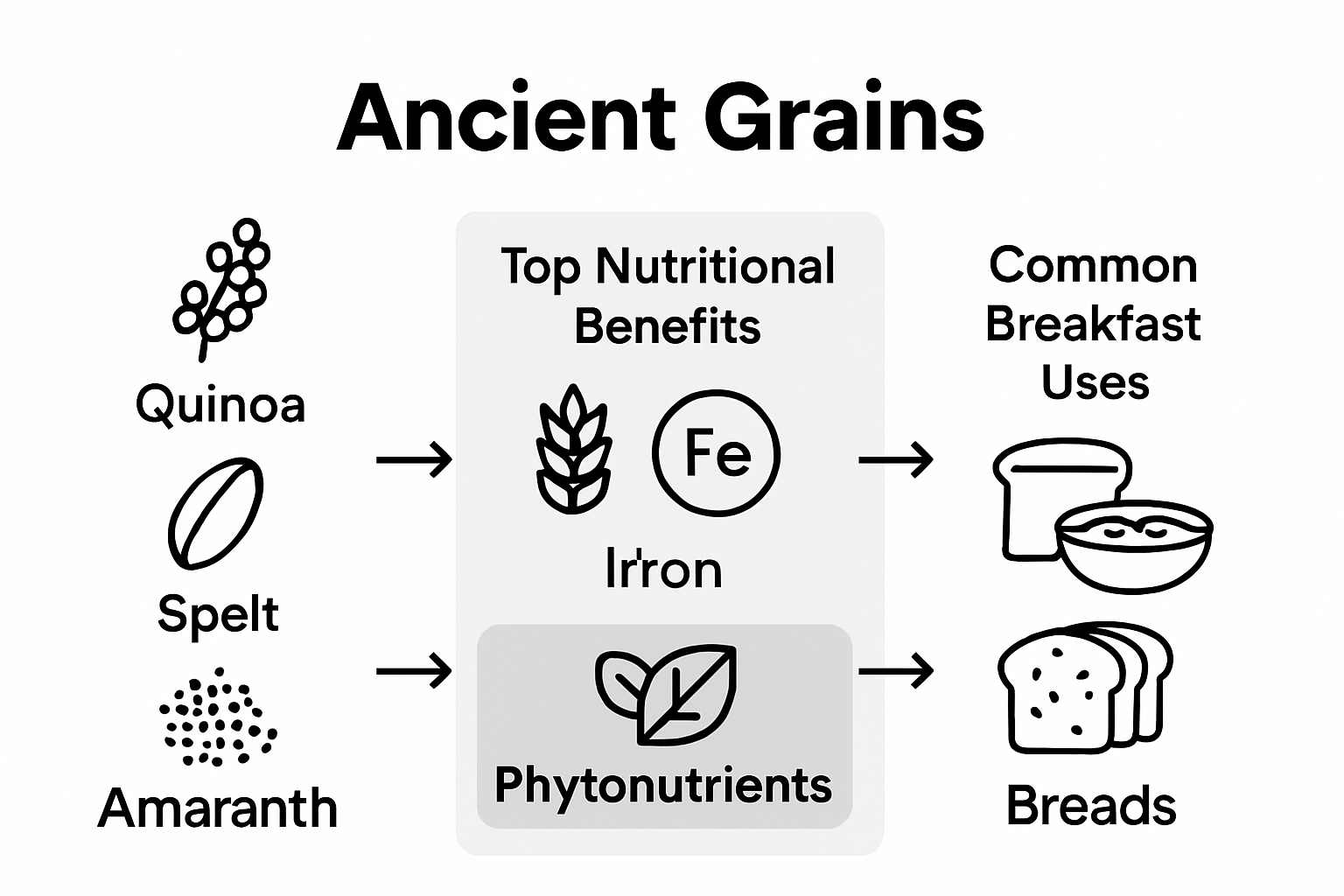
The rising popularity of ancient grains reflects a growing awareness of their nutritional superiority compared to processed breakfast options. Each grain brings unique characteristics: amaranth offers exceptional calcium content, teff provides significant iron levels, and buckwheat delivers impressive antioxidant properties. These grains not only diversify breakfast nutrition but also introduce exciting textures and flavour profiles that challenge traditional morning meal expectations, making healthy eating both enjoyable and sophisticated.
Here is a comparison of popular ancient grains and their notable qualities:
| Grain | Key Nutritional Benefit | Typical UK Breakfast Use |
|---|---|---|
| Quinoa | Complete protein profile | Breakfast bowls, porridge |
| Spelt | Higher protein, complex carbs | Pancakes, breads |
| Millet | Gluten-free, rich in fibre | Warm porridge, granola |
| Amaranth | High calcium, phytoestrogens | Porridge, baking mixes |
| Teff | Iron-rich, resistant starch | Pancakes, warm cereals |
| Buckwheat | Antioxidants, magnesium | Toasted porridge, muesli |
Pro Tip - Breakfast Grain Rotation: Experiment with different ancient grains weekly to prevent monotony and ensure a broad spectrum of nutrients in your morning meal.
Optimal Preparation and Common Pitfalls
Mastering the preparation of ancient grains requires understanding their unique characteristics and cooking requirements, a skill that transforms these nutritional powerhouses from challenging ingredients to delectable breakfast options. Unlike standard grains, ancient varieties demand more nuanced cooking techniques to preserve their intricate nutritional profiles and prevent textural disappointments.
Rinsing and soaking represent critical first steps in preparing most ancient grains, helping to reduce antinutrients and improve overall digestibility. Quinoa, for instance, requires thorough rinsing to remove its natural saponin coating, which can impart a bitter taste if neglected. Different grains demand varying water ratios and cooking times: millet needs less liquid and shorter cooking periods, while spelt and farro require longer, more patient preparation to achieve optimal tenderness.
Common preparation pitfalls can quickly derail your ancient grain breakfast experience. Overcooking leads to mushy, unappetising textures that diminish the grains’ natural character, while undercooking results in tough, chewy results that challenge even the most determined breakfast enthusiast. Each grain demands individual attention: amaranth benefits from a porridge-like consistency, teff works wonderfully in pancake batters, and buckwheat shines when lightly toasted before cooking. Understanding these subtle differences transforms ancient grain preparation from a potential culinary challenge to an enjoyable morning ritual.
To help you achieve the perfect texture and flavour, here is a summary of optimal ancient grain preparation methods:
| Grain | Rinsing Needed | Cooking Time (Approx.) | Ideal Texture Achieved |
|---|---|---|---|
| Quinoa | Yes | 15 minutes | Fluffy, light |
| Spelt | No (soak helps) | 40 minutes | Soft, slightly chewy |
| Millet | Yes | 20 minutes | Creamy or fluffy |
| Amaranth | Yes | 25 minutes | Porridge-like |
| Teff | No | 15 minutes | Smooth, soft |
Pro Tip - Grain Preparation Mastery: Invest in a digital kitchen scale to precisely measure grain and water ratios, ensuring consistently perfect ancient grain breakfasts every time.
Experience the Power of Ancient Grains with Granavitalis
Breakfast choices can be challenging when searching for foods that deliver lasting energy, balanced nutrition and menopausal support as highlighted in the article. Ancient grains provide a rich source of sustained carbohydrates, essential minerals and unique phytonutrients to help overcome common morning fatigue, hormonal imbalance and digestive issues. At Granavitalis we understand your goals for nutrient-dense breakfasts that honour tradition while fuelling modern lifestyles.
Discover our curated range of ancient grains designed to bring variety and vitality to your morning meals. From the gluten-free options to hearty wholegrain flours, each product embraces purity and performance. Start your journey by exploring our full Grains collection or if you prefer versatile baking ingredients try our selection of All Flours. For those seeking naturally gluten-free choices, our Gluten Free Flours are crafted to fit your needs.

Elevate your breakfast with wholesome ancient grains that deliver more than just flavour; they provide clean, sustained energy and nutritional balance. Visit Granavitalis today to fuel your mornings with foods rooted in heritage and perfected for today’s demands. Embrace the Granavitalis way for strength, clarity and everyday wellness starting now.
Frequently Asked Questions
What are ancient grains?
Ancient grains are cereals that have been cultivated for millennia with minimal genetic modification, retaining more of their natural bran and germ compared to modern grains. Examples include quinoa, amaranth, spelt, and Khorasan wheat.
What are the health benefits of consuming ancient grains for breakfast?
Ancient grains provide exceptional dietary fibre, essential minerals like iron and magnesium, and unique phytonutrients and antioxidants. They support digestive health, provide sustained energy, and may aid in maintaining stable blood sugar levels.
How can ancient grains be incorporated into breakfast meals?
Ancient grains can be transformed into a variety of breakfast options, including porridge, granola, pancakes, and breakfast bowls. They can be combined with fruits, nuts, or yogurt for added nutrition and flavour.
Are ancient grains suitable for gluten-free diets?
Certain ancient grains, such as quinoa and amaranth, are naturally gluten-free and can be excellent choices for those with gluten sensitivities. However, others like spelt contain gluten and may not be suitable for everyone.