
Best plant protein for muscle gain: a 2026 guide
Choosing the best plant protein for muscle gain can feel overwhelming with countless options flooding the market. Not all plant proteins deliver equal quality or muscle-building benefits, despite similar protein counts on labels. This guide cuts through the confusion with research-backed insights on which plant proteins work best in 2026 and exactly how to use them for optimal muscle recovery and growth.
Table of Contents
- Understanding Plant Protein Quality For Muscle Gain
- Top Plant Proteins For Muscle Gain And Recovery
- How To Use Plant Protein Effectively For Muscle Gain
- Common Mistakes And How To Avoid Them When Choosing Plant Protein
- Explore High-Quality Plant-Based Protein Options At Granavitalis
- Frequently Asked Questions
Key takeaways
| Point | Details |
|---|---|
| Protein quality matters | PDCAAS and DIAAS scores measure digestibility and amino acid completeness, guiding effective choices. |
| Leucine drives growth | Adequate leucine content per serving triggers muscle protein synthesis effectively. |
| Blends match whey | Plant protein blends can deliver muscle recovery and gains comparable to whey when dosed properly. |
| Processing impacts results | Protein isolates offer higher digestibility and concentration than whole food sources. |
| Smart timing boosts gains | Consuming protein around workouts and consistently throughout the day maximises muscle synthesis. |
Understanding plant protein quality for muscle gain
Protein quality determines how effectively your body can use what you consume for muscle repair and growth. PDCAAS and DIAAS scores measure protein digestibility and amino acid completeness, providing a scientific foundation for evaluating different protein sources. These metrics reveal that plant proteins often score lower than animal proteins initially, but modern processing techniques can significantly narrow this gap.
Protein isolates generally achieve higher digestibility scores than whole food plant proteins because the refinement process removes fibre, starches, and anti-nutritional factors that can interfere with absorption. This distinction matters when you’re trying to maximise muscle protein synthesis after training sessions. Understanding these scores helps you choose high-quality protein plant based options that actually deliver results rather than simply checking boxes on nutrition labels.
The key factors affecting plant protein quality include:
- Amino acid profile completeness, especially essential amino acids your body cannot produce
- Digestibility percentage, indicating how much protein your body can actually absorb
- Leucine concentration, the primary trigger for muscle protein synthesis
- Processing methods that either preserve or enhance nutritional value
- Presence of anti-nutritional factors like phytates that can reduce absorption
While animal proteins traditionally dominated muscle-building discussions, advances in plant protein processing and strategic blending have created options that rival whey for muscle recovery and growth when used correctly.
Top plant proteins for muscle gain and recovery
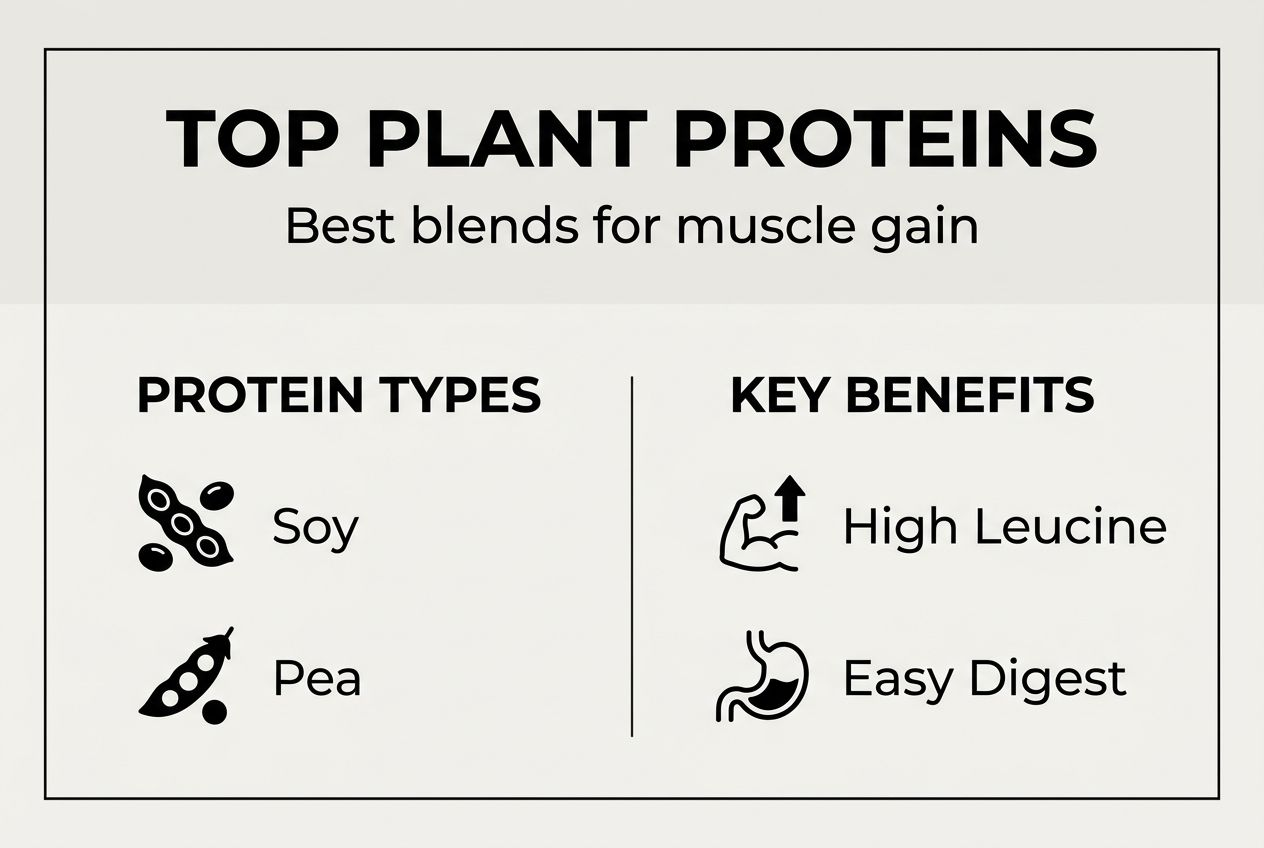
Soy protein stands out among plant options with leucine content around 7-8%, slightly lower than whey but highly effective when dosage accounts for this difference. Research demonstrates that when leucine content was matched, soy and whey protein produced identical lean mass and strength gains over 12 weeks of training. This finding challenges outdated assumptions about plant protein inferiority for muscle building.
Pea protein has emerged as a popular choice with digestibility scores around 0.82-0.93, making it highly absorbable and gentle on digestion. It contains substantial amounts of branched-chain amino acids crucial for muscle recovery. Many successful plant protein blends for recovery combine pea with rice protein to create a complete amino acid profile that covers all essential building blocks your muscles need.
Here’s how leading plant proteins compare for muscle-building effectiveness:
| Protein Source | Leucine Content | Digestibility Score | Best For |
|---|---|---|---|
| Soy isolate | 7-8% | 0.91-0.98 | Muscle gains matching whey when leucine-matched |
| Pea isolate | 6-7% | 0.82-0.93 | Lean muscle support with easy digestion |
| Rice protein | 6-7% | 0.83-0.90 | Blending to complete amino acid profiles |
| Hemp protein | 4-5% | 0.46-0.65 | Added nutrients and fibre, secondary protein source |
| Pea/rice blend | 6.5-7.5% | 0.85-0.95 | Complete amino acid profile for muscle recovery |
Rice protein works exceptionally well in blends despite being lower in lysine alone, as combining it with pea creates a synergistic amino acid profile. Hemp protein offers added fibre, omega-3 fatty acids, and minerals but delivers lower leucine concentration, making it less ideal as your sole protein source for muscle gain. Non-dairy protein options now include sophisticated blends engineered specifically for muscle recovery.

Pro Tip: Look for protein powders listing leucine content per serving on labels. Aim for products delivering at least 2.5 grams of leucine per scoop to effectively trigger muscle protein synthesis after workouts.
Blended formulations combining two or three plant proteins typically outperform single-source options because they compensate for individual amino acid limitations. When manufacturers balance pea’s lysine richness with rice’s higher methionine content, the resulting blend provides all essential amino acids in proportions that support muscle growth effectively.
How to use plant protein effectively for muscle gain
Protein intake timing and total amount both influence muscle-building results significantly. Aim for servings that provide sufficient total protein and leucine, approximately 2.5 grams of leucine per dose, to maximally stimulate muscle protein synthesis. Most quality plant protein powders require 25-30 grams of protein powder to hit this leucine threshold, slightly more than whey-based options.
Follow these steps to maximise muscle gains with plant protein:
- Calculate your daily protein target at 1.6 to 2.2 grams per kilogram of body weight for muscle building
- Distribute protein intake across 4-5 servings throughout the day rather than loading it all in one meal
- Time one serving within 2 hours after resistance training when muscles are primed for growth
- Choose protein isolates or well-processed concentrates for enhanced digestibility and absorption
- Blend different plant protein sources in your daily routine to ensure complete amino acid coverage
- Maintain consistency for at least 8-12 weeks whilst following a structured resistance training programme
Blending different plant proteins ensures you’re getting a full spectrum of amino acids your muscles need for repair and growth. Even if you prefer whole food sources like beans and lentils, adding low-calorie plant protein powder around workouts provides concentrated nutrition when your body needs it most. Protein isolates undergo processing that removes most carbohydrates and fats whilst concentrating the protein content, making them ideal for post-workout recovery when you want rapid amino acid delivery.
Pro Tip: Mix your plant protein powder with a source of simple carbohydrates like fruit after intense training sessions. This combination replenishes glycogen stores whilst providing amino acids for muscle repair simultaneously.
Consistency matters more than perfection with protein timing. Whilst the post-workout window offers benefits, your total daily protein intake and regular distribution throughout the day drive long-term muscle gains. Plant-based protein isolates make it simple to hit your targets without excessive meal preparation, especially on busy training days when whole food preparation becomes challenging.
Common mistakes and how to avoid them when choosing plant protein
Neglecting leucine content represents the most frequent error when selecting plant proteins for muscle gain. You might consume adequate total protein yet still limit muscle protein synthesis if individual servings don’t deliver sufficient leucine. Calculate leucine per serving, not just total protein grams, to ensure you’re actually triggering the muscle-building response your training demands.
Relying exclusively on one plant protein source often leads to incomplete amino acid intake over time. Variety ensures you’re covering all essential amino acids in adequate proportions. Even excellent proteins like soy or pea benefit from rotation with other sources to provide comprehensive nutrition supporting muscle recovery and growth.
Key mistakes that undermine plant protein effectiveness:
- Assuming all plant proteins deliver identical muscle-building benefits regardless of processing quality
- Ignoring processing impacts on nutritional value that can affect digestibility and amino acid availability
- Consuming inadequate total daily protein whilst focusing excessively on workout timing alone
- Choosing highly refined proteins exclusively without incorporating whole food sources for micronutrients
- Believing plant proteins can’t match animal proteins despite research showing otherwise with proper use
Processing methods dramatically affect the nutritional value and effectiveness of plant-based proteins for muscle building. Minimally processed whole food proteins offer additional nutrients like fibre, vitamins, and minerals but may have lower digestibility. Highly refined isolates maximise protein concentration and absorption but sacrifice some beneficial compounds found in whole foods. The ideal approach incorporates both, using clean plant-based protein supplements strategically whilst maintaining a foundation of nutrient-dense whole foods.
“The belief that plant proteins are inherently inferior for muscle building stems from outdated research that didn’t account for leucine matching or strategic blending. Modern formulations close the gap completely when used with knowledge and consistency.”
Ignoring timing and consistent intake reduces the effectiveness of even the highest-quality plant proteins. Your muscles respond to regular amino acid availability throughout the day, not sporadic large doses. Spreading protein intake across multiple servings, including one after training, optimises the muscle protein synthesis response that drives growth and recovery.
Explore high-quality plant-based protein options at Granavitalis
Your muscle-building journey deserves nutrition rooted in wholefood vitality and backed by thoughtful sourcing. Whilst protein powders play an important role around training, nutrient-dense whole foods form the foundation of lasting strength and recovery.
Granavitalis offers premium plant-based nutrition options that complement your muscle gain goals naturally. Our organic nut and seed butter selection provides protein alongside healthy fats that support hormone production and nutrient absorption. These butters make excellent additions to post-workout smoothies or recovery meals when you need concentrated nutrition.
Our immune booster superfood bundle supports the recovery and wellness foundation that makes consistent training possible. Raw organic pecan butter delivers plant protein with minerals like magnesium and zinc crucial for muscle function and testosterone production. These products align with Granavitalis’s commitment to purity, performance, and purpose in every ingredient.
Frequently asked questions
What is the best plant protein for muscle gain?
Soy and pea proteins rank highest among plant options due to favourable amino acid profiles and digestibility scores. Blended formulations combining rice and pea proteins often outperform single sources by providing complete amino acid coverage. Choose isolates when prioritising muscle building, as processing enhances digestibility and protein concentration.
How much plant protein should I consume for muscle gain?
Aim for 1.6 to 2.2 grams of protein per kilogram of body weight daily, distributed across multiple servings. Each serving should provide approximately 2.5 grams of leucine to effectively stimulate muscle protein synthesis. Consistency over time matters more than perfect timing for each dose.
Can plant protein really replace whey for building muscle?
Yes, research confirms that soy protein matched whey’s effects on lean mass and strength gains when leucine content was equalised. Blended plant proteins also support similar recovery and growth outcomes. The key lies in consuming adequate amounts providing sufficient leucine per serving.
What are the best plant protein blends for muscle gain?
Pea and rice protein combinations create excellent blends for muscle building by complementing each amino acid’s strengths. These blends improve amino acid profile completeness whilst maintaining high digestibility. Look for formulations listing specific leucine content and explore low-calorie plant protein options that fit your nutritional targets.
Recommended
- Best plant protein powder to build muscle: 25g per serve 2026 – Granavitalis
- Top plants high in protein: complete UK guide for 2026 – Granavitalis
- Low-Calorie Plant Protein: 20g Blends Fuel Muscle & Wellness – Granavitalis
- Top 10 Vegan Sources of Protein for Your Diet – Granavitalis
- 8 Tips voor Gezond Eten voor Sporters - Mijn Voedsel Intolerantie Test