
Balanced diet foundations guide: eating well for life
TL;DR:
- A balanced diet includes all five core food groups in appropriate proportions to meet nutritional needs.
- The NHS Eatwell Guide emphasizes variety, moderation, and adapting to individual dietary preferences for lasting health.
A balanced diet is defined as consuming a variety of foods from all major food groups in the right proportions to meet your body’s nutritional needs and maintain good health. The NHS Eatwell Guide, published by Public Health England and updated in line with UK dietary guidelines, sets the standard framework for what this looks like in practice. The British Nutrition Foundation reinforces these principles, emphasising that no single food delivers everything your body requires. Getting the foundations right means understanding which food groups to prioritise, how much of each to eat, and how to adapt that framework to your own life.
What are the balanced diet foundations guide principles?
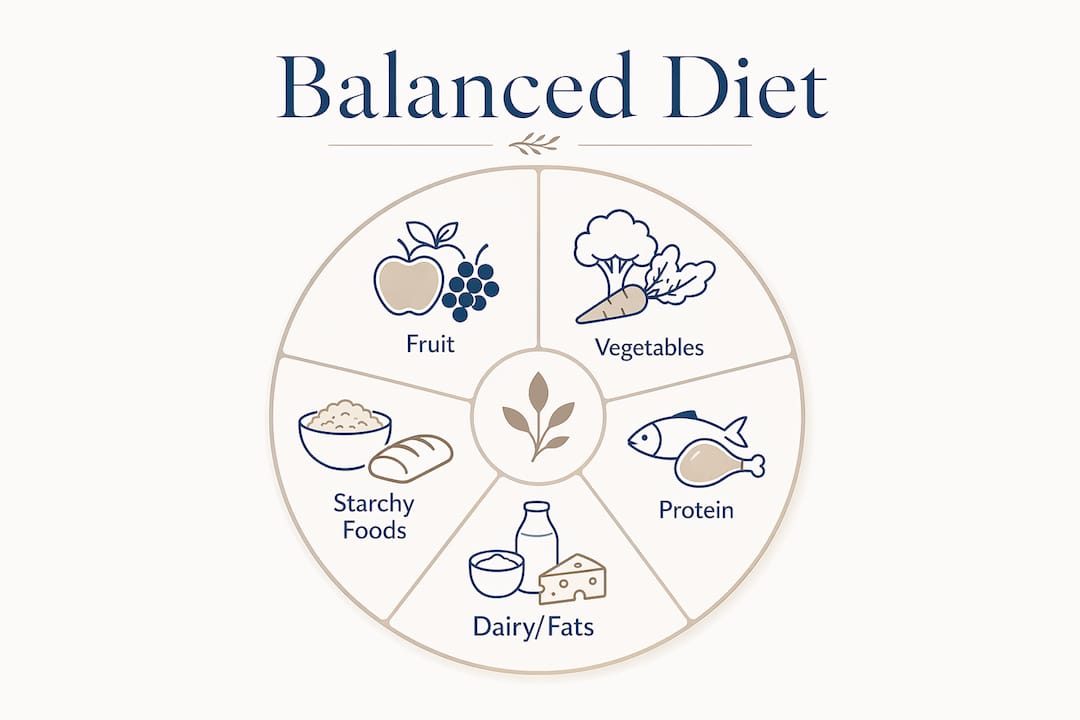
A balanced diet is built on five core food groups, each contributing distinct nutrients your body cannot function without. The Eatwell Guide divides your plate proportionally across these groups, giving you a clear visual target rather than a list of rules to memorise.
The five food groups at a glance:
- Fruit and vegetables: Fruit and vegetables should make up over one-third of your daily food intake. Aim for at least five varied portions every day. Potatoes do not count toward this target because they are classified as starchy carbohydrates.
- Starchy carbohydrates: Starchy foods account for just over one-third of total daily food intake. Wholegrain varieties such as brown rice, wholemeal bread, and oats release energy more steadily and provide more fibre than refined alternatives.
- Proteins: Beans, pulses, eggs, lean meats, and fish all contribute to this group. UK guidance recommends two portions of fish weekly, with at least one being oily fish such as salmon, mackerel, or sardines.
- Dairy and alternatives: Milk, cheese, yoghurt, and fortified plant-based alternatives supply calcium and iodine. Choosing lower-fat versions where possible keeps saturated fat intake in check without sacrificing nutritional value.
- Oils and spreads: Unsaturated fats from sources such as olive oil, rapeseed oil, and nut butters support heart health. Saturated and trans fats should be kept to a minimum.
The proportions matter as much as the food choices themselves. Eating large amounts of protein while neglecting fruit and vegetables, for example, leaves gaps in fibre, vitamins, and antioxidants that protein cannot fill.
| Food group | Approximate share of daily intake | Key nutrients provided |
|---|---|---|
| Fruit and vegetables | Over one-third | Vitamins, minerals, fibre, antioxidants |
| Starchy carbohydrates | Just over one-third | Energy, B vitamins, fibre (wholegrain) |
| Proteins | Smaller portion | Amino acids, iron, zinc, omega-3 (oily fish) |
| Dairy and alternatives | Smaller portion | Calcium, iodine, vitamin B12 |
| Oils and spreads | Small amounts only | Unsaturated fatty acids, vitamin E |

One common misconception is that foods high in fat, salt, or sugar are forbidden. The British Dietetic Association is clear that these foods are not banned but should form only a small part of the overall diet. Cutting out entire food groups entirely creates its own nutritional risks.
How does energy balance affect weight and health?
Energy balance is the relationship between the calories you consume and the calories your body expends. Energy balance is vital for weight maintenance and long-term health, sitting alongside dietary composition as an equally important factor.
Your activity level determines how many calories your body needs each day. A sedentary office worker and a physically active tradesperson may eat identical foods yet have very different energy requirements. Eating more than your body expends leads to weight gain over time, even if the foods themselves are nutritious. Eating too little relative to your output risks fatigue, muscle loss, and nutrient deficiencies.
The practical implication is straightforward. Match your food intake to your actual activity, not to a generic calorie figure. On days with more physical demand, your body needs more fuel. On rest days, slightly less. This flexibility is what makes energy balance a sustainable principle rather than a rigid rule.
Pro Tip: Keep a simple food and activity diary for one week. You do not need to count every calorie precisely. The goal is to spot patterns, such as consistently eating more on low-activity days, and adjust accordingly.
How can the Eatwell Guide be adapted for different diets?
The Eatwell Guide is population-level advice, not a fixed prescription. The Eatwell Guide is customisable to individual dietary preferences, including vegetarian and vegan diets, through targeted nutrient replacement rather than wholesale abandonment of its structure.
For those following plant-based diets, the protein group expands significantly. Beans, lentils, chickpeas, tofu, tempeh, and edamame all deliver protein alongside fibre and micronutrients. The dairy group is replaced by fortified plant-based milks, yoghurts, and cheeses, which supply calcium and iodine when chosen carefully. For a detailed breakdown of what to include, the Granavitalis guide on plant-based balanced meals covers this thoroughly.
Key nutrients to monitor on a plant-based diet include:
- Vitamin D: Difficult to obtain from food alone in the UK. A daily supplement of 10 micrograms is recommended, particularly through autumn and winter.
- Vitamin B12: Found almost exclusively in animal products. Fortified foods or a supplement are non-negotiable for vegans.
- Calcium: Fortified plant milks and tofu set with calcium sulphate are reliable sources.
- Iron: Plant-based iron from lentils and spinach is less readily absorbed than meat-based iron. Eating it alongside vitamin C-rich foods improves absorption.
- Omega-3 fatty acids: Flaxseed, chia seeds, hemp seeds, and walnuts provide ALA. Algae-based supplements supply DHA and EPA directly.
Those following a high-protein vegetarian approach will find the Granavitalis guide on vegetarian protein sources particularly useful for meeting targets without relying on meat. The core principle remains the same across all dietary patterns: replace, do not simply remove.
What practical steps build a sustainable balanced diet?
Sustainable dietary change does not require a complete overhaul on day one. Adopting healthy changes incrementally gives your habits time to settle before you add the next adjustment. This approach produces far better long-term results than dramatic short-term restrictions.
Here are six practical steps to build your foundation:
- Base your meals on starchy foods. Fill roughly one-third of your plate with wholegrain bread, pasta, rice, or potatoes. This provides sustained energy and reduces the temptation to snack on high-sugar foods between meals.
- Eat five portions of fruit and vegetables daily. Fresh, frozen, tinned, and dried all count. Variety matters more than perfection. A banana at breakfast, salad at lunch, and two vegetables at dinner gets you there without much effort.
- Hit your fluid target. Aim for 6 to 8 cups of fluid daily. Water, lower-fat milk, and unsweetened teas are the best choices. Sugary drinks and alcohol add calories without nutritional benefit.
- Read food labels. Check for saturated fat, sugar, and salt content. Traffic light labelling on UK packaging makes this quick. Aim for mostly green and amber, and limit red-labelled products to occasional use.
- Choose unsaturated fats. Swap butter for olive oil or rapeseed oil spreads. Use nut butters in place of processed spreads. The majority of your fat intake should come from unsaturated sources.
- Change one thing at a time. Swap white bread for wholemeal this week. Add an extra portion of vegetables next week. Each small change compounds over months into a genuinely different dietary pattern.
Pro Tip: When planning meals for the week ahead, check whether you have covered all five food groups across your planned dinners. If three dinners lack a vegetable portion, that is the gap to fix, not your entire diet.
Maintaining dietary balance while travelling is a separate challenge. The Wild Foodz guide on eating well on holiday offers practical strategies for keeping your foundations intact when you are away from your usual routine.
Key takeaways
A balanced diet built on the Eatwell Guide’s five food groups, matched to your personal energy needs and adapted to your dietary preferences, is the most reliable path to sustained good health.
| Point | Details |
|---|---|
| Proportions drive balance | Fruit, vegetables, and starchy foods each cover roughly one-third of daily intake. |
| Energy balance matters | Match calorie intake to your actual activity level, not a generic daily figure. |
| Adaptation is built in | The Eatwell Guide flexes for vegetarian, vegan, and other diets through nutrient replacement. |
| Hydration is non-negotiable | Drink 6 to 8 cups of fluid daily, prioritising water and unsweetened drinks. |
| Change gradually | Adopt one new dietary habit at a time to make improvements that actually last. |
Why perfection is the wrong target
I have spent years watching people abandon genuinely good dietary habits because they missed one meal or ate something off-plan. The most damaging idea in nutrition is that balance must happen at every single meal. It does not. Dietary balance is a cumulative target, achievable across a day or a week rather than requiring perfection at every sitting.
The people I have seen maintain the healthiest diets long-term are not the ones who eat perfectly. They are the ones who enjoy their food, make mostly good choices, and do not catastrophise when they do not. A Saturday takeaway does not undo a week of solid eating. What matters is the pattern, not the individual meal.
The other thing I have noticed is that most people already eat more balanced diets than they realise. They just lack the framework to see it. Once you understand that fruit and vegetables should fill more than a third of your plate, and that wholegrains are the preferred base, you start to see your existing meals differently. The gaps become obvious, and the fixes are usually smaller than expected.
Enjoyment is not the enemy of good nutrition. It is the mechanism that keeps you eating well for years rather than weeks.
— Jarrod
Granavitalis: real food that fits your foundations
Nut and seed butters are one of the most practical ways to add unsaturated fats and plant-based protein to your daily meals without complicating your routine.

Granavitalis stocks the Raw Organic Pecan Butter from RAWGORILLA, a single-ingredient butter delivering healthy fats and natural nutrients with no additives. For those who want variety, the Nut & Seed Butter Selection Box from RAWGORILLA brings together a range of organic butters, each contributing different fatty acid profiles and micronutrients. Both sit naturally within the oils and spreads group of the Eatwell Guide and complement a diet built on whole, minimally processed foods.
FAQ
What is a balanced diet according to UK guidelines?
A balanced diet means eating a variety of foods from all five major food groups in the right proportions, as set out by the NHS Eatwell Guide. Fruit and vegetables should make up over one-third of daily intake, with starchy carbohydrates forming a similar share.
Do potatoes count towards my five a day?
Potatoes are classified as starchy carbohydrates in UK dietary guidance and do not count towards the five daily fruit and vegetable portions. Sweet potatoes, parsnips, and other root vegetables do count.
How much water should I drink each day?
UK dietary guidance recommends 6 to 8 cups or glasses of fluid daily. Water, lower-fat milk, and unsweetened teas are the best choices for meeting this target.
Can I follow a balanced diet as a vegan?
Yes. The Eatwell Guide is adaptable to vegan diets through nutrient replacement, particularly for protein, calcium, vitamin B12, and vitamin D. Fortified foods and targeted supplements fill the gaps that removing animal products creates.
How often do I need to eat perfectly to have a balanced diet?
Dietary balance does not require perfection at every meal. The NHS Eatwell Guide supports achieving balance across a day or a week, making sustainable healthy eating realistic for most people.