
Understanding Einkorn Flour Nutrition Facts for Health
Einkorn flour might look like any other bag of wheat on the shelf but it comes straight from the dawn of civilisation and has barely changed in over 10000 years. Most people reach for modern wheat without a second thought and yet these newer varieties have been modified and stripped of nutrients over time. Surprisingly einkorn flour contains up to 50 percent more protein and significantly higher levels of key minerals like iron and zinc than standard wheat, making it a nutritional powerhouse that reconnects us with the diets of our ancestors.
Table of Contents
- What Is Einkorn Flour And Its Nutritional Value?
- Why Einkorn Flour Matters In Modern Diets
- How Einkorn Flour Benefits Health And Nutrition
- Key Components Of Einkorn Flour And Their Effects
Quick Summary
| Takeaway | Explanation |
|---|---|
| Einkorn flour has higher protein content. | It possesses more protein than modern wheat, promoting muscle maintenance and repair effectively. |
| Rich in essential minerals like iron and zinc. | Einkorn flour provides elevated levels of vital minerals, supporting immune function and overall health. |
| Lower gluten reactivity enhances digestibility. | This flour’s unique protein structure may be easier to digest, particularly for individuals with mild sensitivities. |
| Supports sustainable agricultural practices. | Choosing einkorn helps preserve biodiversity and prioritises environmentally friendly farming methods. |
| Offers robust antioxidant properties. | Einkorn flour’s high levels of antioxidants contribute to cellular protection and long-term health benefits. |
What is Einkorn Flour and Its Nutritional Value?
Einkorn flour represents one of humanity’s most ancient wheat varieties, originating from the earliest agricultural civilisations thousands of years ago. This remarkable grain, scientifically known as Triticum monococcum, offers a nutritional profile distinctly different from modern wheat varieties. Research from agricultural historians reveals that einkorn represents a pristine, unmodified wheat grain that has remained largely unchanged since its initial cultivation.
The Ancient Origins of Einkorn Wheat
Unlike contemporary wheat strains that have undergone extensive genetic modification, einkorn wheat maintains its original chromosomal structure. This unique genetic composition contributes to its exceptional nutritional characteristics. Cultivated initially in the Fertile Crescent region, einkorn has survived millennia without substantial human intervention, preserving its original nutritional integrity.
The grain’s remarkable resilience stems from its ability to thrive in challenging agricultural environments. Farmers appreciate einkorn for its capacity to grow in poor soil conditions where other wheat varieties might struggle, making it an incredibly sustainable crop. Our guide on ancient grains offers deeper insights into these fascinating agricultural characteristics.
Nutritional Powerhouse: Understanding Einkorn’s Unique Profile
Nutritionally, einkorn flour stands out compared to standard wheat flour. Its protein composition is particularly noteworthy, containing higher concentrations of essential amino acids and micronutrients. Scientific analysis indicates that einkorn provides:
- Significantly higher protein content than modern wheat varieties
- Elevated levels of essential minerals like iron and zinc
- Enhanced carotenoid concentrations, contributing to better antioxidant profiles
- Lower gluten reactivity, potentially making it more digestible for some individuals
The grain’s nutrient density makes it an exceptional choice for individuals seeking wholesome, minimally processed nutritional alternatives.
To help clarify how einkorn flour compares to standard wheat flour, the following table summarises their key nutritional and functional differences as described in the article.
| Feature | Einkorn Flour | Standard Wheat Flour |
|---|---|---|
| Protein Content | Up to 50% higher; supports muscle maintenance | Lower; less effective for muscle repair |
| Mineral Levels | Rich in iron and zinc | Significantly less iron and zinc |
| Gluten Reactivity | Lower; potentially more digestible for some | Higher; may cause more sensitivities |
| Antioxidant Profile | Enhanced carotenoids, robust antioxidant content | Lower antioxidant levels |
| Agricultural Impact | Supports sustainability and biodiversity | Linked to modern, intensive practices |
| Digestive Effects | May support more stable blood sugar and absorption | Can cause sharper blood sugar spikes |
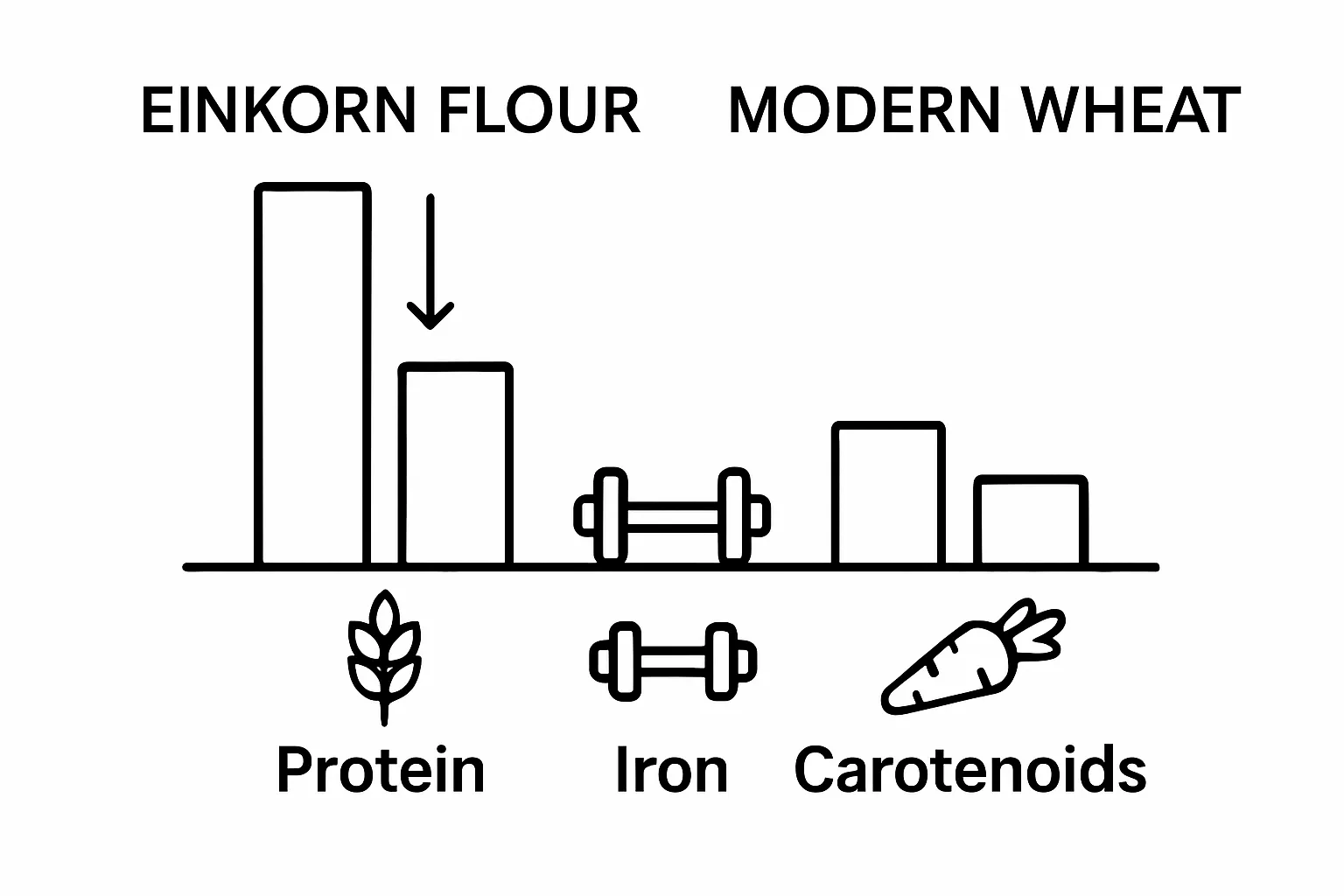 By retaining its original genetic structure, einkorn offers a direct connection to our ancestral dietary patterns while providing robust nutritional support for modern wellness goals.
Why Einkorn Flour Matters in Modern Diets
In an era of processed foods and industrial agriculture, einkorn flour emerges as a significant nutritional alternative that reconnects us with traditional dietary practices. Research from nutritional anthropologists highlights how this ancient grain represents more than just a food product it symbolises a return to wholesome, minimally processed nutrition.
Addressing Modern Dietary Challenges
Contemporary wheat varieties have been extensively modified to increase crop yields, often at the expense of nutritional quality. Einkorn wheat stands in stark contrast, offering a more nutrient dense alternative that aligns with growing consumer demands for healthier, more authentic food sources. Our comprehensive guide on ancient grains provides deeper insights into this nutritional revolution.
The modern diet frequently suffers from nutrient deficiencies and over processing. Einkorn flour presents a solution by providing a more complete nutritional profile that supports overall health and wellness. Its unique genetic structure allows for better nutrient absorption and potentially reduced inflammatory responses compared to standard wheat products.
Nutritional and Health Implications
Einkorn flour offers several compelling advantages for individuals seeking optimal nutrition:
- Higher protein content supporting muscle maintenance and repair
- Enhanced mineral concentrations including zinc and iron
- Lower gluten reactivity potentially beneficial for individuals with mild wheat sensitivities
- Rich antioxidant profile contributing to cellular protection
- More stable blood sugar response compared to refined wheat products
Moreover, choosing einkorn flour represents a conscious decision towards sustainable agriculture. By supporting ancient grain varieties, consumers contribute to preserving biodiversity and supporting agricultural practices that prioritise nutritional integrity over industrial efficiency. The grain’s ability to thrive in challenging environments makes it an environmentally resilient crop that requires fewer agricultural interventions.
How Einkorn Flour Benefits Health and Nutrition
Einkorn flour transcends traditional nutritional expectations, offering a remarkable profile that supports holistic wellness through its unique biochemical composition. Research from nutritional biochemists demonstrates that this ancient grain provides substantially more than standard wheat derivatives, presenting a nutrient dense alternative for conscious consumers.
Micronutrient Richness and Metabolic Support
The micronutrient composition of einkorn flour distinguishes it from contemporary wheat varieties. Its elevated mineral content, particularly iron and zinc, plays a critical role in supporting fundamental metabolic processes. These trace minerals contribute to immune function, cellular energy production, and overall physiological resilience. Our organic wholemeal einkorn flour represents an exceptional source of these essential nutrients.
Unlike heavily processed wheat flours that strip away nutritional complexity, einkorn maintains a comprehensive nutrient profile. The grain’s inherent antioxidant compounds, including lutein and beta carotene, provide additional cellular protection mechanisms that combat oxidative stress and support long term health maintenance.
Protein Quality and Digestive Wellness
Einkorn flour offers superior protein characteristics compared to standard wheat varieties, presenting several significant health advantages:
- Higher protein bioavailability supporting muscle maintenance
- More complete amino acid profile promoting optimal protein synthesis
- Potentially reduced inflammatory responses in digestive systems
- Enhanced protein density supporting metabolic efficiency
- Lower gluten complexity potentially improving digestibility
Moreover, the grain’s molecular structure contributes to a more balanced glycaemic response. By providing sustained energy release and minimising rapid blood sugar fluctuations, einkorn flour supports metabolic stability and contributes to more consistent energy levels throughout daily activities. Its nutritional integrity represents a profound reconnection with traditional, wholefood dietary principles that prioritise natural, unmodified nutritional sources.

Key Components of Einkorn Flour and Their Effects
Einkorn flour represents a complex nutritional ecosystem, with each molecular component contributing uniquely to human health and metabolic function. Research from nutritional biochemists reveals the intricate relationship between its distinctive biochemical structure and potential physiological benefits.
Molecular Composition and Metabolic Interactions
The fundamental difference between einkorn and conventional wheat lies in its genetic complexity. With fewer chromosomes compared to modern wheat varieties, einkorn maintains a more primitive genetic structure that directly influences its nutritional profile. This unique chromosomal configuration enables enhanced nutrient absorption and potentially reduces inflammatory responses within human metabolic systems.
Its molecular composition includes a rich tapestry of proteins, minerals, and micronutrients that work synergistically to support comprehensive wellness. Our exploration of ancient grain nutritional profiles provides additional context into these remarkable nutritional interactions.
Essential Nutritional Components
Einkorn flour contains several critical nutritional components that distinguish it from standard wheat derivatives:
- Higher concentrations of lutein and zeaxanthin supporting eye health
- Elevated protein content with more complete amino acid profiles
- Enhanced levels of essential fatty acids promoting cardiovascular function
- Robust antioxidant compounds protecting cellular structures
- Trace minerals including selenium and zinc supporting immune function
Moreover, the grain’s natural molecular structure contributes to its potential digestive compatibility. Its lower gluten complexity and unique protein configuration suggest reduced inflammatory potential compared to conventional wheat products, making it an intriguing option for individuals seeking alternative nutritional strategies. The nuanced interplay between its molecular components represents a testament to the sophisticated nutritional wisdom inherent in ancient agricultural practices.
The table below outlines the primary nutritional components of einkorn flour and their health-related effects, providing a clear reference for readers interested in its wellness attributes.
| Nutritional Component | Health Effect |
|---|---|
| Elevated protein | Aids muscle maintenance and metabolic efficiency |
| Iron | Supports energy, oxygen transport, immune health |
| Zinc | Strengthens immune function, cellular resilience |
| Lutein & Zeaxanthin | Contribute to eye health and antioxidant defence |
| Essential fatty acids | Promote cardiovascular health |
| Selenium | Supports antioxidant activity and cell protection |
| Lower gluten complexity | May improve digestive tolerance for some individuals |
Discover the Power of Einkorn Flour for True Nourishment
Are you searching for a flour that respects tradition while supporting modern wellbeing? Many struggle with heavily processed grains that lack nutrition and can upset digestive balance. If you have ever felt unsatisfied or worried about ingredient quality, the difference in ancient grains like einkorn stands out. Einkorn’s high protein, rich micronutrients and lower gluten reactivity offer a meaningful step towards more complete nutrition and a return to time-honoured food wisdom. Dive into the All Flours section at Granavitalis to see our selection of premium ancient grains, including authentic einkorn options.
Take control of your health by bringing ancestral nourishment back to your table. Start browsing at Granavitalis for thoughtfully sourced grains and flours, and experience the nutritional integrity you deserve. Deepen your knowledge and choose foods that support your long-term wellbeing, beginning today.
Frequently Asked Questions
What is einkorn flour, and how does it differ from modern wheat flour?
Einkorn flour is made from one of the oldest varieties of wheat, Triticum monococcum. Unlike modern wheat, it has not undergone extensive genetic modification, retaining its original chromosomal structure, which contributes to its unique nutritional profile and lower gluten content.
What are the nutritional benefits of einkorn flour compared to regular wheat flour?
Einkorn flour offers higher protein content, increased levels of essential minerals like iron and zinc, enhanced carotenoid levels for better antioxidant properties, and lower gluten reactivity, making it potentially more digestible for some individuals.
How can einkorn flour be used in cooking and baking?
Einkorn flour can be used in a variety of recipes, including bread, pancakes, and pastries. Due to its unique gluten structure, it may require adjustments in water and mixing times compared to regular wheat flour.
Is einkorn flour suitable for individuals with gluten sensitivities?
While einkorn has lower gluten reactivity compared to modern wheat, it still contains gluten and may not be suitable for individuals with celiac disease. It is often better tolerated by those with mild wheat sensitivities. Always consult with a healthcare provider before making dietary changes.