

What is a mindful breakfast? Your guide to eating well
TL;DR:
- A mindful breakfast involves eating with full awareness of hunger signals, senses, and nutrition, promoting better health and stress reduction.
- Practicing simple habits like distraction-free eating, slow pace, and sensory engagement can be integrated into busy mornings with minimal effort.
- Starting with one intentional act each week helps build lasting habits without overcomplication or needing extended quiet time.
A mindful breakfast is defined as a morning meal eaten with full awareness of hunger signals, sensory experience, and nutritional quality, rather than on autopilot between tasks. The practice draws from mindful eating, a well-established behavioural approach rooted in Jon Kabat-Zinn’s mindfulness-based stress reduction work, and applies it to the most skipped or rushed meal of the day. Get it right and you set a measurably different tone for everything that follows. The Healthy Habit Hub recommends anchoring a mindful breakfast with 20 to 30 g of protein and 8 to 12 g of fibre for steady, sustained energy throughout the morning. That nutritional foundation, combined with presence and pace, is what separates a mindful breakfast from simply eating something before you leave the house.
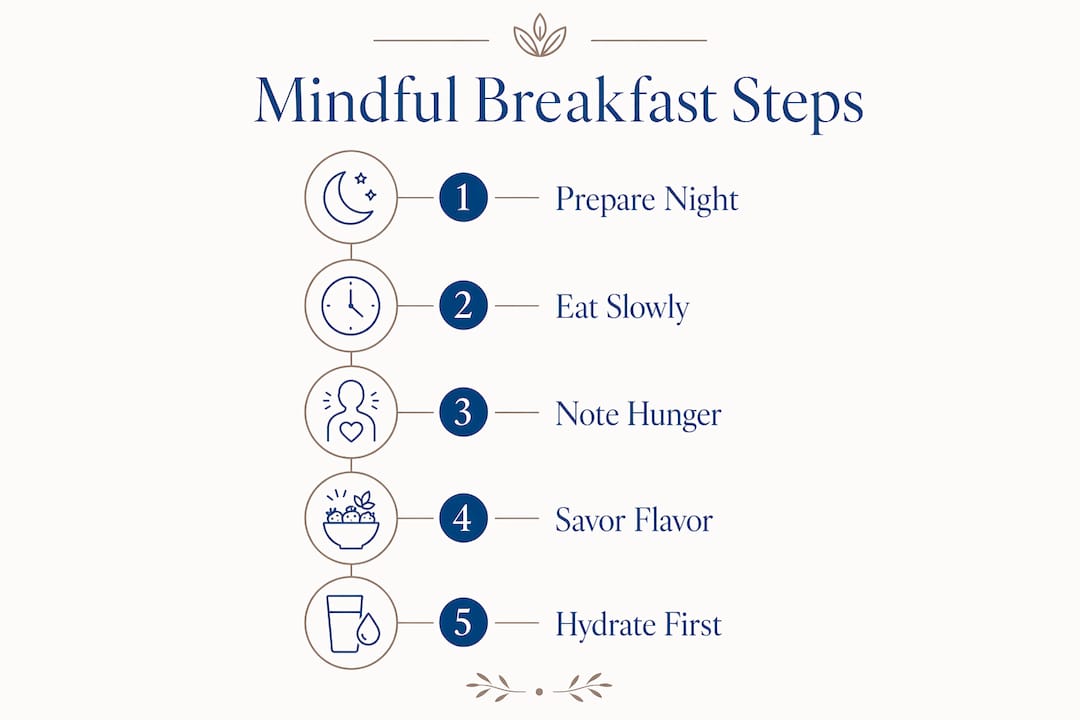
What is a mindful breakfast made of?
A well-constructed mindful breakfast has two equally important layers: what you eat and how you eat it. Both matter, and neglecting either one undermines the whole practice.

On the nutritional side, the goal is a plate that delivers slow-release carbohydrates, healthy fats, adequate protein, and meaningful fibre. Think whole oats, eggs or Greek yoghurt, a tablespoon of nut butter, and a handful of berries. This combination keeps blood glucose stable and prevents the mid-morning energy crash that sends most people reaching for biscuits. For a detailed breakdown of how to build this plate, the Granavitalis nutrient-dense breakfast guide is a practical starting point.
On the behavioural side, the University of Washington’s Whole U programme identifies six core mindful eating behaviours: creating a distraction-free environment, engaging all five senses, tuning into hunger cues before eating, pausing midway through the meal, eating slowly, and practising gratitude. You do not need all six every morning. Even two or three, applied consistently, shift the experience.
- Distraction-free space. Put your phone face-down. Turn off the television. Even five dedicated minutes without a screen changes how you experience the meal.
- Sensory engagement. Notice the colour of your food, the smell as it cooks, the texture on your tongue. This is not precious behaviour. It is the mechanism by which your brain registers satisfaction.
- Hunger awareness. Before you eat, pause and rate your hunger on a scale of one to ten. This single habit, practised daily, rebuilds the connection between appetite and eating that distracted mornings erode.
- Slow pacing. Put your fork or spoon down between bites. It sounds trivial. It is not.
Pro Tip: Set your breakfast table the night before. A laid table signals to your brain that the meal is an event worth attending, not a refuelling stop.
How does mindful eating at breakfast benefit your health?
The benefits of a mindful breakfast operate on two levels simultaneously: the physiological and the psychological. Understanding both makes the practice far easier to commit to.
Physiologically, the most significant benefit is improved satiety recognition. Eating over at least 20 minutes aligns with the time it takes for fullness signals to travel from the gut to the brain. Most people eat breakfast in under ten minutes. The result is that the brain never receives the signal to stop, so hunger returns far sooner than it should. Slowing down is not a wellness cliché. It is basic neuroscience applied to meal timing.
Psychologically, distracted eating is a primary driver of overeating and reduced meal satisfaction. When you eat while scrolling or watching something, your brain does not encode the meal as a complete experience. You finish eating but do not feel finished. Mindful eating closes that loop.
“Mindful eating returns you to yourself and lets you explore how food affects you without judgement.” — Jenn Baswick, Registered Dietitian, Real Simple
VA dietitians describe mindfulness as a resilience-building practice that signals safety to the nervous system and reduces chronic stress over time. Treating breakfast as a ritual, rather than a chore, is one of the most accessible ways to activate that effect. The morning is when cortisol peaks naturally. A calm, intentional meal works with that biology rather than against it.
What are the common myths about mindful breakfasts?
Several misconceptions keep people from starting, and most of them are straightforwardly wrong.
Myth one: you need a long, quiet morning. Delores James, a nutrition educator, is direct on this point: small mindful acts like turning off your phone or taking a single deep breath before eating are sufficient to begin the practice. A mindful breakfast does not require a silent kitchen and forty minutes. It requires intention, applied in whatever time you have.
Myth two: you must eat perfectly nutritious food. Mindful eating is not a diet. Jenn Baswick describes it as curiosity and awareness without judgement, not a rulebook. Eating a croissant mindfully is infinitely more valuable than eating a protein bowl while answering emails.
Myth three: you have to do it every single day. This is where many people burn out. Forcing mindfulness at every meal creates what practitioners call mindfulness fatigue. The practical solution is to choose one default mindful breakfast per week to start, then build from there. Consistency over perfection is the only rule that matters.
Here are three concrete ways to overcome the most common barriers:
- Anchor it to an existing habit. Drink a glass of water before you eat. That thirty-second pause is already a mindful act, and it stacks naturally onto your existing morning routine.
- Use a physical reset. Put your utensils down between every two or three bites. This single sensory reset technique keeps attention on the meal without requiring silence or stillness.
- Start with one sense. If full sensory engagement feels overwhelming, pick one. Smell your coffee before you drink it. Notice the temperature of your food. One point of presence is enough to begin.
Pro Tip: If your mornings are genuinely chaotic, practise your mindful breakfast on a Saturday. Build the habit in low-pressure conditions before applying it to weekdays.
How to build a mindful breakfast routine that actually sticks
Sustainable mindful breakfast habits are built through structure, not willpower. The following routine works for most schedules and can be adapted without losing its core benefits.
Before you eat:
- Drink 250 ml of water on waking. Hydration supports alertness and mild hunger cue clarity.
- Spend two minutes in natural light if possible. Light exposure regulates cortisol and sets circadian rhythm, which directly influences appetite timing.
- Assess your hunger before opening the fridge. A simple one-to-ten rating takes five seconds and reconnects you to your body’s actual signals.
During the meal:
- Sit down. This is non-negotiable. Eating standing at the counter is the single biggest barrier to presence.
- Aim for a minimum of fifteen to twenty minutes at the table. Use the 20-minute rule as your pacing guide.
- Engage at least one sense deliberately. Smell, texture, and temperature are the easiest entry points.
After the meal:
- Pause for thirty seconds before clearing the table. Notice how you feel. Satisfied? Still hungry? This brief check-in builds the self-awareness that makes the whole practice compound over time.
For healthy breakfast ideas that align with these habits, the Granavitalis plant-based breakfast guide covers options that are both nutritionally complete and genuinely quick to prepare. For those who want a structured checklist approach, the morning power meal checklist is worth bookmarking.
| Habit | Why it works |
|---|---|
| Drink water before eating | Supports hunger cue clarity and reduces false appetite signals |
| Sit at a table | Removes the distraction of movement and signals meal intent to the brain |
| Eat over 15 to 20 minutes | Allows fullness signals to reach the brain before overeating occurs |
| Put utensils down between bites | Slows pace without requiring conscious effort to chew more slowly |
| Rate hunger before and after | Rebuilds the appetite-to-eating connection eroded by distracted eating habits |
For additional morning routine strategies that complement mindful eating, energy optimisation tips from nutrition practitioners offer practical, time-efficient approaches that slot into busy schedules.
Key takeaways
A mindful breakfast works because it combines nutritional quality with deliberate presence, and that combination improves satiety, reduces stress, and builds long-term eating resilience.
| Point | Details |
|---|---|
| Core definition | A mindful breakfast is a meal eaten with full awareness of hunger, senses, and nutritional quality. |
| Nutritional foundation | Aim for 20 to 30 g protein and 8 to 12 g fibre to support steady energy and satiety. |
| The 20-minute rule | Eating over at least 20 minutes allows fullness signals to reach the brain and prevents overeating. |
| Myths to discard | You do not need silence, perfect food, or daily practice. One intentional meal per week is a valid start. |
| Sustainability strategy | Anchor mindful habits to existing routines and choose one default mindful breakfast rather than forcing it at every meal. |
Why I think most people overcomplicate this
When I first started paying attention to how I ate breakfast, rather than what I ate, the change felt almost embarrassingly small. I put my phone in another room. I sat down. I ate slowly. That was it. Within two weeks, I noticed I was less hungry by mid-morning and noticeably calmer before ten o’clock. Nothing about my food had changed.
The overcomplicated version of mindful eating, the one with journals and gratitude lists and elaborate breathing exercises, is real and useful for some people. But it is also the version that stops most people from starting. The barrier is not knowledge. Everyone knows that eating slowly and without distraction is better. The barrier is the belief that doing it properly requires time and conditions that most mornings simply do not offer.
What I have found, both personally and in observing how people actually build lasting habits, is that the entry point matters far more than the depth of practice. Starting with one sense, one meal, one morning per week, is not a compromise. It is the correct strategy. Perfection at breakfast is not the goal. Presence is. And presence, unlike a perfect diet, is available to you right now, with whatever food is already in your kitchen.
The emotional reward of a calm morning meal is also consistently underestimated. Stress does not only come from what happens to you. It comes from how you begin the day. A mindful breakfast is one of the few morning habits that costs nothing, requires no equipment, and delivers a measurable return within days rather than months.
— Jarrod
Start your mindful breakfast with Granavitalis

A mindful breakfast is only as good as the ingredients you bring to it. Granavitalis sources raw and organic nut butters, premium nuts, and seeds specifically to support the kind of nutrient-dense, flavour-forward morning meals that make mindful eating genuinely enjoyable. The Raw Organic Pecan Butter by RAWGORILLA delivers healthy fats and natural richness that pair beautifully with oats, yoghurt, or wholegrain toast. For variety, the organic nut and seed butter selection box lets you explore different flavours and nutritional profiles across the week. Every product is minimally processed, transparently sourced, and built for mornings that deserve better than shortcuts.
FAQ
What is a mindful breakfast in simple terms?
A mindful breakfast is a morning meal eaten with full attention to hunger signals, sensory experience, and nutritional quality, without distractions such as screens or multitasking. The goal is presence and awareness, not dietary perfection.
How long does a mindful breakfast need to take?
A mindful breakfast ideally takes 15 to 20 minutes, which is the time needed for fullness signals to reach the brain. Even five dedicated distraction-free minutes delivers meaningful benefits for those with limited time.
Do I have to eat specific foods to eat mindfully?
No. Mindful eating is about awareness and curiosity, not food rules or restrictions. Any meal can be eaten mindfully. That said, a nutritional foundation of protein, fibre, healthy fats, and slow-release carbohydrates supports the sustained energy that makes mindful mornings easier.
Can mindful breakfast habits reduce stress?
Yes. VA dietitians identify mindful eating as a resilience-building practice that signals safety to the nervous system and reduces chronic stress over time. Treating breakfast as a calm ritual is one of the most accessible ways to lower morning cortisol.
How do I start if my mornings are very busy?
Begin with one small act: put your phone away, sit down, or take a single breath before eating. Delores James, a nutrition educator, confirms that small mindful moves integrated into an existing routine bring meaningful benefits without requiring extra time.