
What Are Grain Free Foods? 30% Less Gut Inflammation
Many people assume grain-free automatically means gluten-free, but this common belief can lead to serious dietary mistakes. Understanding the true definition of grain-free foods matters for your digestive health, sustained energy, and nutrition goals. This guide clarifies what grain-free really means, debunks myths, explains science-backed benefits, and shows you how to integrate these foods into your active lifestyle confidently.
Table of Contents
- Understanding Grain-Free Foods: Definition and Scope
- Nutritional Benefits of Grain-Free Foods
- Common Misconceptions About Grain-Free Diets
- Comparing Grain-Free Ingredients: Ancient Grains, Nuts, Seeds, and Plant Proteins
- Practical Guidance for Choosing and Using Grain-Free Foods
- Health Benefits and Limitations of Grain-Free Diets
- Explore Nutrient-Dense Ancient Grains and Plant Proteins
Key Takeaways
| Point | Details |
|---|---|
| Grain-free excludes modern cereal grains but may include gluten-containing ancient grains | Not all grain-free foods are gluten-free, a critical distinction for digestive health |
| Higher protein and micronutrient density than refined grains | Ancient grains and seeds offer superior nutritional profiles for active individuals |
| Can reduce gut inflammation by up to 30% | Scientific studies show measurable digestive improvements |
| Requires balancing carbohydrates with tubers and seeds | Maintaining energy levels demands thoughtful food selection and meal planning |
| Distinct from gluten-free and low-carb diets | Understanding these differences prevents nutritional mistakes and supports informed choices |
Understanding Grain-Free Foods: Definition and Scope
Grain-free diets exclude modern cereal grains like wheat, barley, oats, and rye. This approach focuses on removing foods that have undergone significant hybridisation and industrial processing over the past century. However, many people confuse this with gluten-free eating, missing a crucial nutritional nuance.
Ancient grains such as quinoa and amaranth are technically seeds, not grains. They qualify as grain-free options and happen to be naturally gluten-free. This distinction matters because your body processes these nutrient-dense seeds differently than processed wheat or barley.
Here’s where confusion strikes hardest:
- Not all grain-free foods are gluten-free. Some ancient varieties contain gluten proteins.
- Gluten-free diets focus solely on avoiding gluten, regardless of grain status.
- Grain-free eating emphasises whole food sources and nutrient density.
- Choosing gluten-free grains requires checking specific botanical classifications and processing methods.
This clarity prevents dietary mistakes for those managing gluten sensitivity and those targeting grain avoidance for gut health. When you understand these boundaries, you can select foods that truly support your wellness goals rather than accidentally consuming ingredients that work against them.
Nutritional Benefits of Grain-Free Foods
Ancient grains and seeds pack significantly more protein per serving than refined grains. Where white rice offers about 2.7g protein per 100g, quinoa delivers 14g. This protein density matters for muscle recovery and sustained energy throughout your active day.
These foods also provide essential vitamins and minerals improving overall nutrition. You get higher levels of magnesium, iron, zinc, and B vitamins compared to processed grain products. Your body absorbs these micronutrients efficiently because they come packaged with natural cofactors and enzymes.
Research shows grain-free diets have been associated with reduced gut inflammation and improved digestive comfort, with some individuals experiencing up to 30% reduction in inflammatory markers. This improvement likely stems from excluding gluten and certain fermentable carbohydrates that trigger digestive distress.
Key nutritional advantages include:
- Enhanced protein availability supporting muscle synthesis and repair
- Superior micronutrient profiles boosting immune function and energy metabolism
- Reduced inflammatory compounds improving gut barrier integrity
- Better nutrient absorption due to lower antinutrient content
- Sustained blood sugar levels preventing energy crashes
Improved digestion directly supports active lifestyles. When your gut absorbs nutrients efficiently, you fuel workouts better, recover faster, and maintain consistent energy. Ancient grains for energy offer clean fuel without the digestive burden of processed grains.

Pro Tip: Start tracking your energy levels and digestive comfort when you swap refined grains for ancient varieties. Most people notice improvements within two weeks, giving you clear feedback about what works for your body.
Common Misconceptions About Grain-Free Diets
Myth 1: Grain-free automatically means gluten-free. Some ancient grains like certain wheat varieties contain gluten despite qualifying as grain-free by botanical standards. Always verify gluten content separately if you have coeliac disease or gluten sensitivity.
Myth 2: Grain-free diets cause nutrient deficiencies. This happens only when people fail to replace grains with equally nutritious alternatives. Careful planning with diverse foods prevents any nutritional gaps.
Myth 3: Grain-free diets are just fads with no health benefits. Clinical studies demonstrate measurable digestive and metabolic improvements for many individuals. The key lies in proper implementation, not dismissing the approach entirely.
Understanding diet distinctions prevents confusion:
- Grain-free diets exclude cereal grains but allow other carbohydrate sources like tubers and legumes.
- Paleo diets avoid grains, legumes, and dairy, emphasising foods available to hunter-gatherers.
- Gluten-free diets eliminate only gluten-containing foods, allowing gluten-free grains like rice.
- Low-carb diets restrict total carbohydrate intake regardless of source.
These approaches overlap but serve different goals. Grain-free eating focuses on food quality and digestive compatibility rather than macronutrient restriction. You maintain adequate carbohydrates through vegetables, fruits, tubers, and seeds.
Diverse food inclusion sustains nutrition effectively. Replace wheat pasta with spiralised vegetables, use nut flours for baking, incorporate seeds into breakfast bowls, and balance meals with quality proteins and healthy fats.
Pro Tip: When transitioning to grain-free eating, keep a food journal noting which alternatives satisfy you most. This personalised data guides sustainable choices better than generic meal plans.
Comparing Grain-Free Ingredients: Ancient Grains, Nuts, Seeds, and Plant Proteins
Selecting the right grain-free ingredients transforms your nutrition. Each category offers unique benefits supporting different aspects of your active lifestyle.
| Ingredient Type | Protein Content | Key Nutrients | Best Uses |
|---|---|---|---|
| Ancient grains (quinoa, amaranth) | 13-15g per 100g | Iron, magnesium, complete amino acids | Base for bowls, porridge, salads |
| Nuts (almonds, walnuts) | 15-21g per 100g | Healthy fats, vitamin E, minerals | Snacks, nut butters, baking |
| Seeds (chia, hemp, pumpkin) | 17-31g per 100g | Omega-3s, zinc, fibre | Toppings, smoothies, energy bars |
| Plant proteins (pea, hemp) | 80-90g per 100g | Complete amino acids, highly digestible | Post-workout shakes, protein fortification |
Ancient grains provide higher protein and micronutrients than refined grains, typically offering gluten-free options like quinoa and amaranth. These foods fuel endurance activities with complex carbohydrates that digest steadily. Ancient grains and wellness connects directly to improved metabolic health.
Nuts and seeds deliver healthy fats, fibre, protein, and essential minerals in compact servings. Hemp seeds offer all nine essential amino acids, making them complete proteins. Chia seeds expand in liquid, creating satisfying texture while providing omega-3 fatty acids.
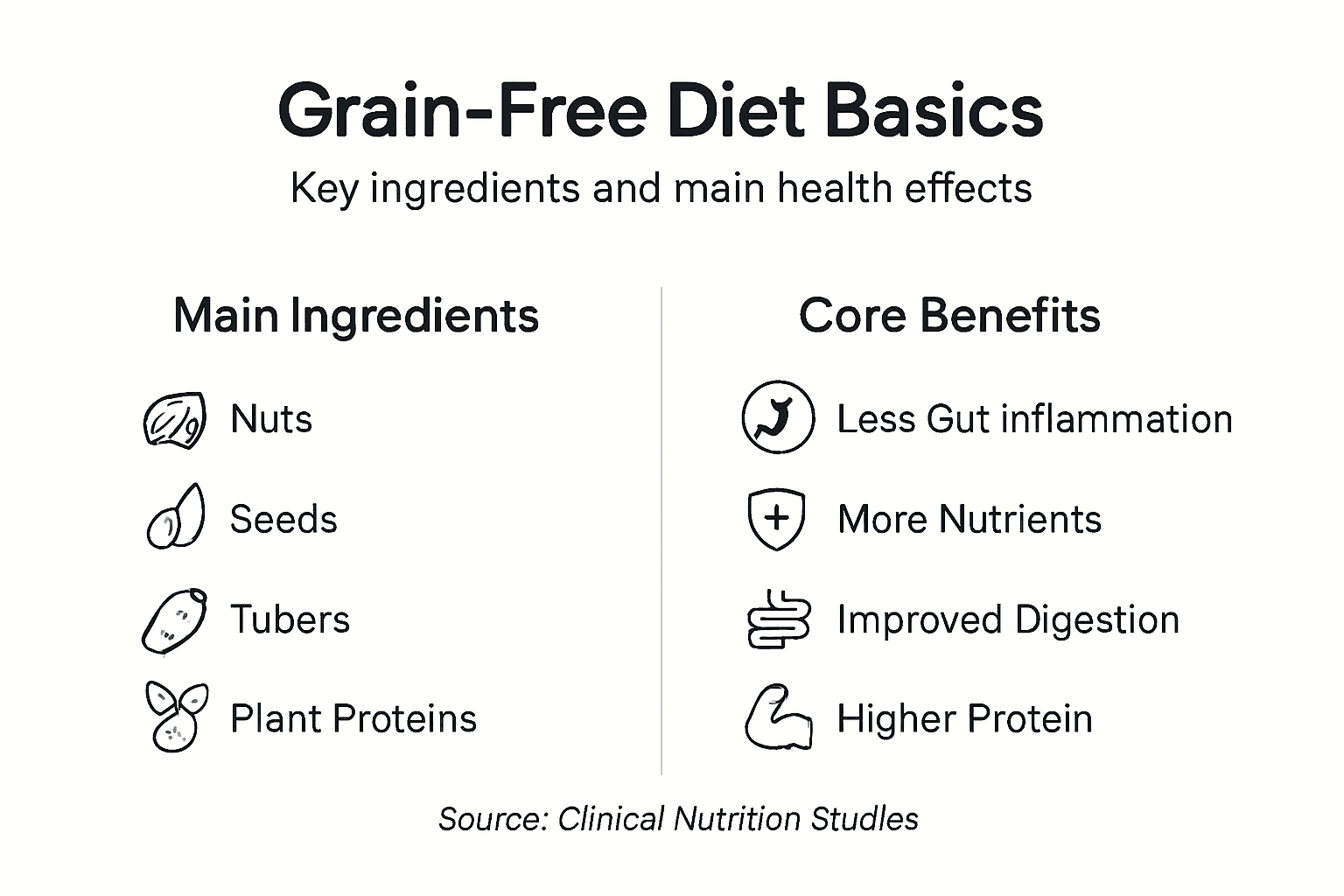
Plant proteins like pea and hemp powder offer complete amino acid profiles with high digestibility. These concentrated protein sources support muscle recovery without the digestive load of dairy or soy for sensitive individuals. Mix them into smoothies or baked goods for protein fortification.
Selection criteria based on your needs:
- Digestion focus: Choose easily digestible options like hemp protein or well-cooked quinoa
- Inflammation reduction: Emphasise omega-3-rich seeds and anti-inflammatory nuts like walnuts
- Muscle recovery: Prioritise complete proteins from plant powders and protein-dense seeds
- Energy demands: Balance ancient grain carbohydrates with healthy fats from nuts
Grain alternatives for plant-based power explores these options in depth, showing you how to build meals that truly satisfy.
Practical Guidance for Choosing and Using Grain-Free Foods
Balancing carbohydrates becomes essential when you remove grains from your diet. Research confirms that including tubers, nuts, and seeds is critical to sustain energy on grain-free diets. Without adequate carbohydrate sources, you risk energy dips that derail active lifestyles.
Sample meal ideas emphasising nutrient diversity:
- Breakfast: Chia seed pudding with almond butter, berries, and hemp seeds
- Lunch: Sweet potato bowl topped with roasted vegetables, tahini dressing, and pumpkin seeds
- Dinner: Cauliflower rice stir-fry with cashews, mixed vegetables, and plant protein
- Snacks: Apple slices with almond butter, or homemade energy balls from dates and seeds
Avoiding common pitfalls requires attention to details:
- Read labels carefully as grain-free products may still contain gluten from other sources
- Don’t slash carbohydrates too low; active individuals need 100-150g daily minimum
- Include varied protein sources to ensure complete amino acid intake
- Balance meals with healthy fats preventing blood sugar spikes and crashes
Gradual introduction works better than sudden changes. Start by replacing one grain-based meal daily, monitoring how your body responds. Some people adapt quickly while others need several weeks to optimise digestion and energy levels.
Nutrient-dense grain options and grain-free dairy free breakfast ideas provide specific recipes supporting this transition. Learning to combine ancient grains effectively maximises nutritional synergy.
Pairing grain-free foods with plant proteins optimises muscle recovery. After workouts, combine a carbohydrate source like sweet potato with hemp protein powder in a smoothie. This combination replenishes glycogen stores while providing amino acids for tissue repair.
Pro Tip: Prep grain-free staples in batches. Cook quinoa, roast sweet potatoes, and portion nuts on Sundays. Having ready-to-eat components makes daily meals effortless, preventing reliance on convenience foods that may contain hidden grains.
Health Benefits and Limitations of Grain-Free Diets
Clinical studies provide concrete evidence about grain-free diet outcomes. Research demonstrates that grain-free diets can reduce gut inflammation by up to 30% and improve digestive comfort for many individuals. These improvements stem from removing potentially irritating compounds found in modern cereal grains.
Consumers consistently report metabolic and energy benefits when carbohydrates stay balanced. Blood sugar stability improves, reducing afternoon energy crashes and sugar cravings. Many people notice enhanced mental clarity and sustained focus throughout their workday.
Key scientifically supported benefits include:
- Reduced inflammatory markers in the digestive tract
- Improved gut barrier function and microbiome diversity
- Better blood sugar regulation and insulin sensitivity
- Enhanced nutrient absorption from whole food sources
- Decreased bloating and digestive discomfort
“Grain-free approaches show particular promise for individuals with inflammatory bowel conditions, though personalisation remains essential for optimal outcomes.”
Potential limitations require honest consideration. Studies indicate that lower carbohydrate availability on grain-free diets may affect some individuals, particularly those with high energy demands from intense training or physical labour. These people need careful attention to alternative carbohydrate sources.
Monitoring individual response proves crucial. What works brilliantly for one person may not suit another due to genetic factors, activity levels, and existing health conditions. Track your energy, digestion, mood, and performance metrics to assess whether grain-free eating serves your goals.
Customising your approach based on feedback ensures sustainable results. If you feel fatigued, increase carbohydrate portions from tubers and fruits. If digestion improves but energy lags, add more healthy fats from nuts and seeds. Nutrition thrives on personalisation, not rigid rules.
This balanced perspective allows you to weigh measurable benefits against realistic expectations. Grain-free eating offers genuine advantages for many people, particularly those with digestive sensitivities. However, it’s a tool, not a cure-all, and works best when tailored to your unique physiology and lifestyle demands.
Explore Nutrient-Dense Ancient Grains and Plant Proteins
Your grain-free journey deserves foundation foods that deliver real nutritional value. At Granavitalis, we source ancient grains unchanged by industrial processing, premium plant proteins, and nutrient-rich seeds specifically for health-conscious individuals like you.

Discover how understanding ancient grains explained clarifies your food choices, making nutrition simple and effective. Explore our complete guide to plant-based proteins to see how quality protein sources support your active lifestyle. Learn what makes foods truly beneficial in our nutrient-dense foods explained resource, connecting traditional wisdom with modern wellness goals. Every product we offer serves your body’s needs with wholefood integrity.
What Are Grain Free Foods? FAQ
Do all ancient grains contain gluten?
No, most ancient grains like quinoa, amaranth, and buckwheat are naturally gluten-free. However, some heritage wheat varieties qualify as ancient grains yet contain gluten, so always verify botanical classification and processing methods before consuming.
How do I maintain energy levels on a grain-free diet?
Include adequate carbohydrates from sweet potatoes, squash, fruits, and starchy vegetables. Most active adults need 100-150g of carbohydrates daily to sustain energy, achieved easily through diverse plant foods and careful meal planning.
Can grain-free diets support endurance activities effectively?
Yes, when properly balanced with sufficient carbohydrate sources like tubers and fruits. Endurance athletes may need higher carbohydrate intake (150-250g daily), easily met through strategic food selection and timing around training sessions.
How can I identify truly grain-free products in stores?
Read ingredient labels carefully, looking for cereal grain names like wheat, barley, rye, oats, corn, and rice. Be cautious of terms like “wheat-free” which don’t guarantee grain-free status. Choose products explicitly labelled grain-free from trusted manufacturers.
Will grain-free eating help with digestive sensitivity?
Many people experience reduced bloating and improved digestion on grain-free diets, with research showing up to 30% reduction in gut inflammation markers. However, individual responses vary, so monitor your symptoms and adjust your approach based on personal feedback.