
Grain Free Dairy Free Breakfast: Fuel for Modern Life
Choosing breakfast with both energy and health in mind can feel tricky when grains and dairy are off the table. Many British adults seek ways to keep their mornings balanced, especially when fitness goals or dietary sensitivities influence every bite. By focusing on nutrient-rich alternatives and following UK nutritional guidelines for balanced eating, you can enjoy breakfasts that support an active lifestyle without missing out on taste or essential nutrients.
Table of Contents
- Defining Grain Free Dairy Free Breakfasts
- Popular Foods and Ingredient Alternatives
- Nutritional Benefits and Common Misconceptions
- Smart Recipe Ideas for Busy UK Lifestyles
- Avoiding Nutritional Pitfalls and Common Mistakes
Key Takeaways
| Point | Details |
|---|---|
| Grain and Dairy Free Focus | These breakfasts eliminate traditional grains and dairy, focusing on nutrient-dense alternatives suitable for various dietary needs. |
| Nutritional Planning is Essential | Careful selection of fortified alternatives is crucial to ensure adequate intake of essential nutrients like calcium and protein. |
| Variety in Ingredients | Using a diverse range of protein and carbohydrate sources enhances nutritional balance and prevents dietary deficiencies. |
| Practical Preparation Strategies | Batch cooking and overnight recipes can facilitate quick, nutritious breakfasts that accommodate busy lifestyles while adhering to dietary restrictions. |
Defining Grain Free Dairy Free Breakfasts
Grain free and dairy free breakfasts represent a nutritional approach designed to eliminate two common food groups while maintaining balanced dietary intake. These breakfasts focus on alternative ingredients that provide essential nutrients without traditional grains or dairy products, catering to individuals with specific dietary requirements, sensitivities, or health goals.
At its core, a grain free and dairy free breakfast eliminates wheat, barley, rye, oats, and all dairy products while emphasising nutrient-dense alternatives. This approach aligns with UK nutritional guidelines for balanced eating, which underscore the importance of diverse food sources to meet nutritional needs.
The key characteristics of these breakfasts include:
- Protein sources from eggs, nuts, seeds, and plant-based proteins
- Carbohydrate alternatives using vegetables, fruits, and root vegetables
- Healthy fats from avocados, coconut, and nut butters
- Nutrient-rich alternatives like fortified plant milks derived from almonds, coconut, or soya
Nutritional considerations are paramount. The British Nutrition Foundation highlights that dairy-free diets require careful planning to ensure adequate intake of calcium, protein, and essential vitamins. This means selecting fortified, unsweetened alternatives that provide comparable nutritional profiles to traditional dairy products.
Pro tip: When transitioning to grain free and dairy free breakfasts, gradually introduce diverse protein and nutrient sources to maintain a balanced nutritional profile and prevent potential dietary deficiencies.
Popular Foods and Ingredient Alternatives
Nutritional variety is key when exploring grain free and dairy free breakfast options. Modern dietary approaches offer an impressive range of alternative ingredients that not only replace traditional grains and dairy products but also provide rich, diverse nutritional profiles. Heart UK breakfast recipes demonstrate how creative ingredient substitutions can transform morning meals.
The most popular grain-free and dairy-free ingredient alternatives include:
-
Protein Sources:
- Eggs (whole eggs, egg whites)
- Plant-based proteins (chickpeas, lentils)
- Nuts and seeds (almonds, chia, hemp)
- Tofu and tempeh
-
Milk Alternatives:
- Almond milk
- Coconut milk
- Soya milk
- Oat milk (ensure gluten-free varieties)
-
Carbohydrate Replacements:
- Sweet potato
- Cauliflower
- Butternut squash
- Zucchini
The British Nutrition Foundation recommends selecting fortified alternatives to ensure comprehensive nutritional intake. This means choosing plant-based milks enriched with calcium, vitamin D, and vitamin B12 to match the nutritional benefits of traditional dairy products.
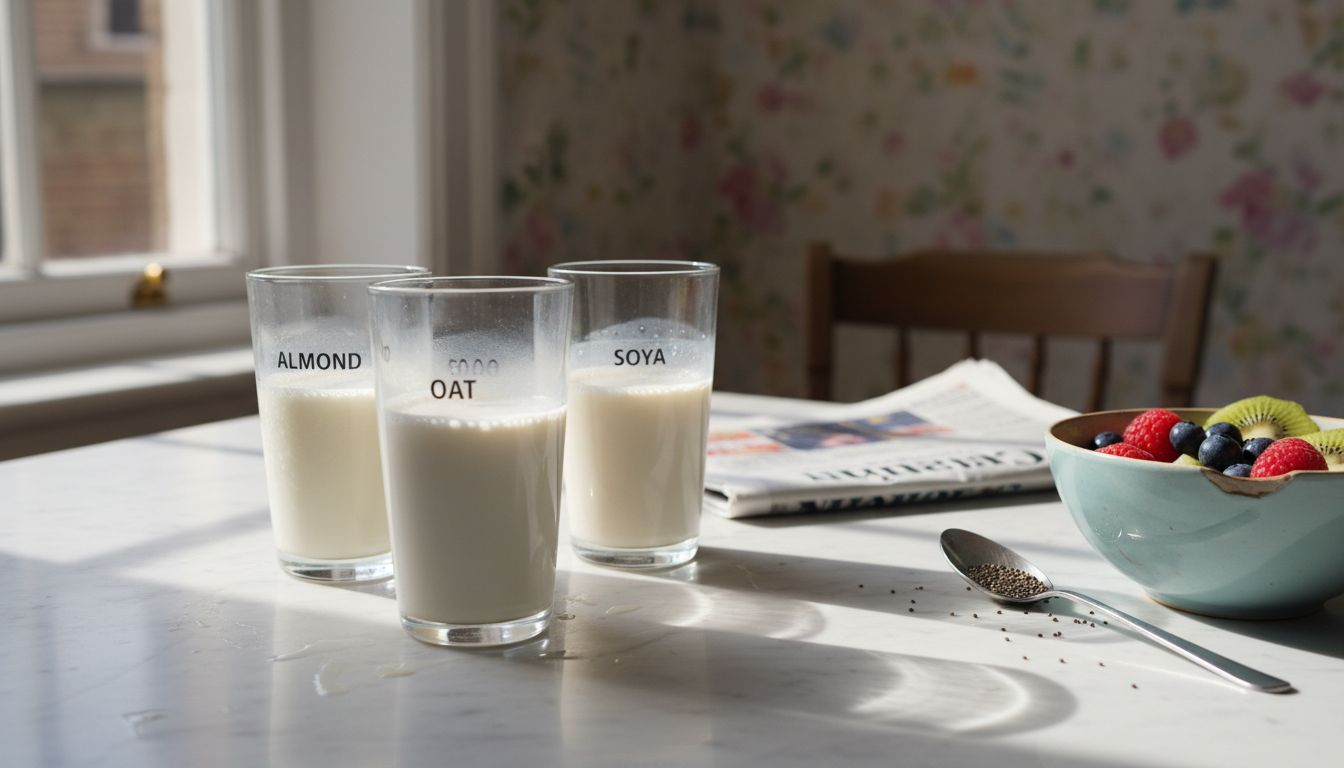
To clarify nutrient profiles, here is a comparison of common plant-based milk alternatives:
| Milk Alternative | Calcium (per 200ml) | Vitamin D | Best Breakfast Uses |
|---|---|---|---|
| Almond (fortified) | 240mg | Added in most UK brands | Smoothies, cereals |
| Soya (fortified) | 240mg | Often added | Porridge, drinks |
| Coconut (fortified) | 240mg | May be added | Chia puddings, smoothies |
| Oat (GF, fortified) | 240mg | Commonly added | Pancakes, overnight mixes |
Cooking techniques and creative preparation can transform these alternatives into delicious, satisfying breakfast options. Shakshuka, vegetable frittatas, chia puddings, and smoothie bowls offer exciting ways to incorporate these ingredients while maintaining flavour and nutritional balance.
Pro tip: Experiment with different alternative ingredients and combinations to discover your personal favourite grain-free and dairy-free breakfast recipes, ensuring you maintain a balanced and enjoyable diet.
Nutritional Benefits and Common Misconceptions
Grain-free and dairy-free breakfasts challenge several long-standing nutritional myths while offering substantial health benefits for modern individuals. British Heart Foundation research reveals that nutrient density matters more than traditional dietary constraints, demonstrating how alternative breakfast choices can support overall wellness.
Common misconceptions about grain-free and dairy-free diets include:
-
Nutritional Deficiency Myths:
- Belief that these diets lack essential proteins
- Assumption that calcium intake will be insufficient
- Perception of limited breakfast variety
- Misconception about complex carbohydrate sources
-
Actual Nutritional Realities:
- Plant-based proteins provide complete amino acid profiles
- Fortified alternatives offer comparable nutrient levels
- Diverse ingredient combinations ensure balanced nutrition
- Alternative carbohydrates can be more nutrient-dense
The British Nutrition Foundation clarifies that well-planned dairy-free diets can provide equivalent nutrients through fortified plant-based alternatives. Protein, calcium, B vitamins, and iodine can be effectively sourced from non-dairy products when selected mindfully.
Nutritional benefits extend beyond simple ingredient replacement. These breakfast approaches can support improved digestion, sustained energy release, and potentially reduce inflammatory responses associated with traditional grain and dairy consumption. By focusing on whole, nutrient-dense ingredients, individuals can create breakfast options that genuinely nourish and support their bodies.
Below is a summary of nutritional benefits of grain-free and dairy-free breakfasts compared with traditional options:
| Feature | Grain & Dairy Free | Traditional UK Breakfast |
|---|---|---|
| Protein Variety | High (eggs, nuts, legumes) | Moderate (mostly meat, dairy) |
| Fibre Content | Often higher (vegetables, seeds) | Lower (refined grains) |
| Calcium Source | Fortified plant alternatives | Dairy products |
| Inflammatory Potential | Lower for many individuals | Higher (wheat, dairy) |
Pro tip: Consult a registered nutritionist to personalise your grain-free and dairy-free breakfast strategy, ensuring you meet your specific nutritional requirements and health goals.
Smart Recipe Ideas for Busy UK Lifestyles
Busy professionals require breakfast solutions that are not just nutritious, but also quick to prepare and adaptable to grain-free and dairy-free dietary requirements. Heart UK breakfast recipes offer innovative approaches that transform morning meal preparation into a streamlined, enjoyable experience.
Quick and versatile recipe ideas include:
-
Overnight Preparation Strategies:
- Chia seed puddings with coconut milk
- Protein-rich smoothie packs
- Vegetable and egg muffins
- No-cook bircher-style oat alternatives
-
Rapid Morning Preparation:
- Shakshuka with plant-based proteins
- Scrambled eggs with vegetable medley
- Smoothie bowls with seed toppings
- Banana and almond flour pancakes
Batch cooking becomes a game-changer for those managing tight morning schedules. By dedicating a few hours during the weekend to meal preparation, individuals can create multiple servings of grain-free and dairy-free breakfasts that remain fresh and delicious throughout the week. Family Action recipe guidance emphasises the importance of flavour balance and nutrient variety when preparing make-ahead meals.
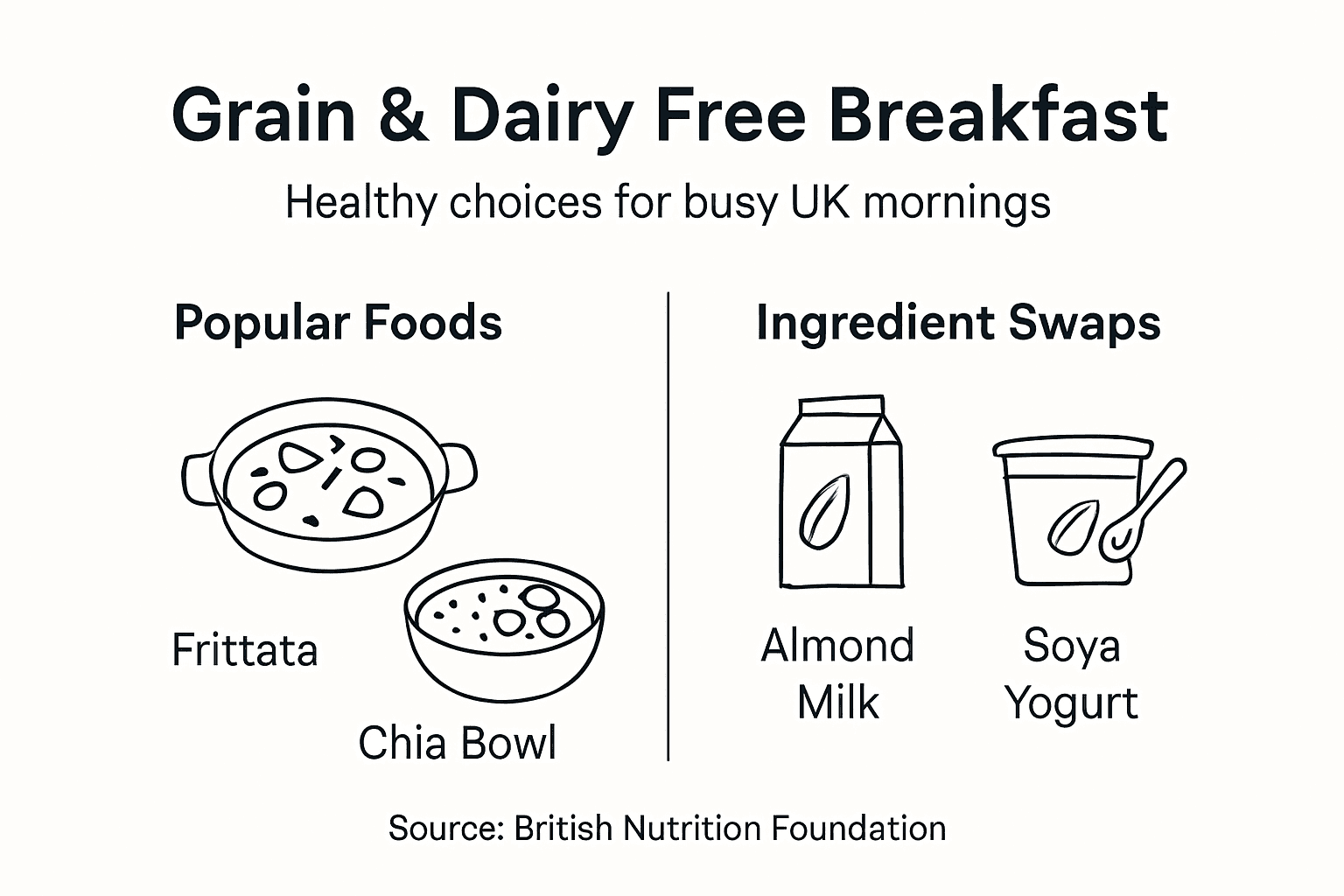
The key to successful grain-free and dairy-free breakfasts lies in ingredient versatility and smart preparation techniques. Mixing protein sources, incorporating various vegetables, and using creative plant-based alternatives can transform seemingly restrictive dietary choices into exciting culinary experiences that support sustained energy and nutritional balance.
Pro tip: Invest in quality food storage containers and dedicate a specific time each week for batch meal preparation to ensure consistent, nutritious breakfasts that fit your busy lifestyle.
Avoiding Nutritional Pitfalls and Common Mistakes
Navigating grain-free and dairy-free breakfasts requires strategic nutritional planning to prevent potential dietary deficiencies. British Nutrition Foundation guidelines highlight critical considerations for maintaining balanced nutrition while avoiding common nutritional mistakes.
Common nutritional pitfalls to be aware of include:
-
Nutrient Deficiency Risks:
- Insufficient calcium intake
- Low protein consumption
- Vitamin B12 and iodine shortages
- Inadequate dietary diversity
-
Strategic Nutritional Compensation:
- Choose fortified plant-based alternatives
- Incorporate diverse protein sources
- Use nutritional supplements strategically
- Balance meals with nutrient-dense ingredients
The UK Government’s Nutrient Profiling Model provides essential guidance for making healthier food choices. Nutrient profiling strategies help identify less healthy products by evaluating their nutritional composition, focusing on minimising saturated fat, salt, and sugar content while maximising beneficial nutrients.
Successful grain-free and dairy-free breakfast strategies demand proactive nutritional management. This involves carefully selecting fortified alternatives, understanding individual nutritional requirements, and creating balanced meal plans that provide comprehensive nutritional support without relying on traditional grain and dairy products.
Pro tip: Consult a registered nutritionist to develop a personalised nutrition plan that addresses your specific dietary needs and prevents potential nutrient deficiencies.
Elevate Your Grain Free Dairy Free Breakfasts with Granavitalis
Navigating grain free and dairy free breakfasts means embracing nutrient-dense, thoughtfully crafted ingredients that support sustained energy and well-being. If you seek balanced, traditional nutrition aligned with modern dietary needs, explore our range of Gluten Free Flours and discover the power of ancient grains untainted by industrial hybridisation. Each product is chosen to fuel your mornings with clarity and vitality.
Start your journey to wholesome breakfasts that honour the past while energising today. Visit Granavitalis and browse our All Flours – Granavitalis collection for real food solutions crafted for clean performance. Take control of your nutrition now and experience the difference rooted wholefoods can make.
Frequently Asked Questions
What are some common grain-free and dairy-free breakfast options?
Popular options include vegetable frittatas, chia seed puddings, smoothie bowls, and banana almond flour pancakes, ensuring a balanced mix of protein, healthy fats, and carbohydrates.
How can I ensure adequate calcium intake on a grain-free and dairy-free diet?
Opt for fortified plant-based milks, such as almond or soya milk, which provide comparable calcium levels to traditional dairy. Additionally, consider including calcium-rich foods like tofu, leafy greens, and fortified cereals.
Are grain-free and dairy-free breakfasts suitable for a balanced diet?
Yes, when planned mindfully, these breakfasts can provide a variety of essential nutrients, including proteins, healthy fats, and carbohydrates from alternative ingredients that promote overall wellness and sustained energy.
How can I prevent nutrient deficiencies while following a grain-free and dairy-free diet?
To prevent deficiencies, include a mix of protein sources, choose fortified alternatives, incorporate a variety of fruits and vegetables, and consider consulting a nutritionist for personalised advice.
Recommended
- Nutritious Breakfasts: Fuel for Modern Wellbeing – Granavitalis
- 7 Micronutrient-Packed Breakfast Foods for Lasting Energy – Granavitalis
- Master High Protein Gluten Free Breakfasts for Active Days – Granavitalis
- Nutritious Breakfast Checklist: Build Your Morning Power Meal – Granavitalis
- 7 Peanut Free Snack Options for Canadian Schools and Cafes - Probe IT
- Qubik 8:20 Italian Breakfast – Caffo
- Тайната на Диета Зоната: Оптимално хранене и ефективни добавки