
Adaptogenic foods: what they are and how they work
Adaptogenic foods are natural substances that increase the body’s non-specific resistance to a broad range of stressors, normalising physiological functions without the energy crash that follows stimulant use. The European Medicines Agency defines adaptogens by three core criteria: low toxicity at normal doses, a broad-spectrum effect across multiple stressor types, and a normalising action on disturbed body functions regardless of the direction of the disturbance. Unlike caffeine, which forces alertness and then drops you, a true adaptogen nudges the body back towards equilibrium.
Key characteristics at a glance:
- Non-specific resistance: they work across physical, chemical, and biological stressors, not just one type
- Normalising effect: they raise what is too low and moderate what is too high, rather than pushing in one direction
- Low toxicity: safe for extended use at recommended amounts
- Botanical origin: the best-evidenced examples are plants such as Eleutherococcus senticosus (Siberian ginseng), Panax ginseng, Rhodiola rosea, and Schisandra chinensis
- Traditional and modern basis: centuries of use in Ayurveda, Traditional Chinese Medicine, and Russian military medicine, now supported by pharmacological research
Table of Contents
- How adaptogenic foods work in the body
- Common adaptogenic foods you can find in the UK
- What UK regulations say about adaptogenic foods
- Safety and practical considerations before you start
- How to choose adaptogenic foods you can actually trust
- Interactions with medications and health conditions
- Dosages and preparation methods worth knowing
- The long history behind adaptogenic foods
- Granavitalis: wholefood nutrition rooted in real ingredients
- Key takeaways
How adaptogenic foods work in the body
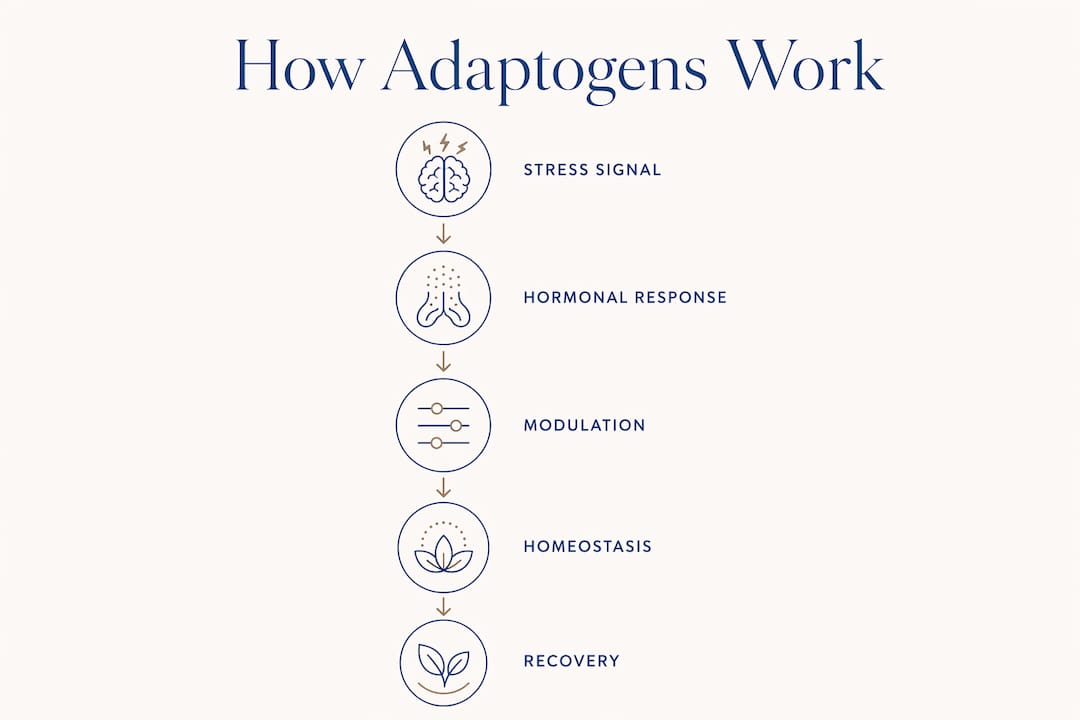
Adaptogens act on the neuroendocrine-immune axis, the network linking the nervous system, hormonal signalling, and immune response. Research published in Medicinal Research Reviews shows that active constituents such as polysaccharides and terpenoids modulate stress-response pathways, particularly the hypothalamic-pituitary-adrenal (HPA) axis and the sympathoadrenal system. The practical result is enhanced resilience, reduced fatigue, and steadier cognitive function under load.
Key bioactive compounds and their roles:
- Polysaccharides: found in mushroom-based adaptogens; support immune modulation
- Terpenoids (e.g., withanolides in ashwagandha, ginsenosides in Panax ginseng): regulate cortisol signalling and cellular stress responses
- Lignans (e.g., schisandrin in schisandra): support liver function and physical endurance
- Rosavins and salidroside (rhodiola): linked to fatigue reduction and mood stabilisation
The distinction from tonics matters here. A tonic broadly nourishes; an adaptogen specifically modulates the stress response. A stimulant overrides fatigue temporarily. Adaptogens do neither: they recalibrate.
Common adaptogenic foods you can find in the UK
Clinically studied adaptogenic plants available to UK consumers include:
- Ashwagandha (Withania somnifera): root powder or extract; Ayurvedic rasayana herb used for vitality and stress resilience. Currently under regulatory review in the UK (see section below).
- Siberian ginseng (Eleutherococcus senticosus): root; used in Russian sports medicine for endurance and recovery
- Panax ginseng: root extract; widely studied for cognitive support and physical stamina; available in capsules and teas
- Rhodiola rosea: root; Scandinavian and Siberian traditional use for fatigue and mood; sold as standardised extract in the UK
- Schisandra (Schisandra chinensis): berry; Traditional Chinese Medicine staple for liver support and mental clarity
- Reishi and lion’s mane mushrooms: functional fungi with adaptogenic properties; increasingly available as powders and drink mixes in the UK
- Maca (Lepidium meyenii): Andean root; used for energy and hormonal balance; sold as powder in health food stores
These plants appear in roots, dried powders, tinctures, and food-grade extracts. The role of heritage foods in wellness is precisely this: traditional botanical knowledge, made accessible in modern wholefood formats.

What UK regulations say about adaptogenic foods
The science is credible. The marketing rules, however, are strict, and UK businesses have learned this the hard way.
The Food Standards Agency classifies several adaptogens, including ashwagandha, under Novel Food regulations when sold outside the licensed supplement category, meaning they require formal authorisation before use in general food products. Any plant not demonstrably consumed in the UK or EU before May 1997 falls under this framework regardless of its traditional use elsewhere.
Health claims are equally constrained. The Nutrition and Health Claims Regulations 2007 prohibit any claim that a food treats, prevents, or cures a disease. West Sussex Trading Standards prosecuted a business for making unauthorised health claims on adaptogenic coffee products, including packaging that referenced stress relief and cognitive performance without regulatory authorisation.
Medical herbalist Nikki Hawkes is direct on this: retail adaptogen marketing must avoid medicinal claims entirely, and even anecdotal customer testimonials are restricted under food law. The one legal route to personalised adaptogen advice is through a qualified herbalist, who can supply certain herbs under the Human Medicines Regulations 2012 after conducting an individual risk-benefit assessment.
Safety and practical considerations before you start
The FSA has not established specific safe dosage limits for most adaptogenic foods in the UK context. That absence of guidance is itself guidance: proceed carefully, particularly if you take prescription medication or have a diagnosed health condition.
Practical steps for safe use:
- Consult a GP or registered herbalist before adding adaptogens to your routine, especially if you take anticoagulants, immunosuppressants, or thyroid medication
- Start low: begin with the lowest suggested amount on any product label and observe your response over two to four weeks
- Choose minimally processed forms: root powders, standardised extracts, and whole dried herbs retain more of the original bioactive profile than heavily processed blends
- Check for Novel Food status: if a product contains ashwagandha or another flagged ingredient, confirm it carries FSA registration
- Avoid combining multiple adaptogens without professional guidance: the interaction profile of stacked adaptogens is not well studied
The safety concerns around adaptogens in the UK market are real, not alarmist. The FSA’s caution reflects genuine gaps in long-term human safety data, not a dismissal of traditional use.
How to choose adaptogenic foods you can actually trust
The adaptogen market in the UK is crowded, and label claims vary wildly in accuracy. A few principles cut through the noise.
Look for products that name the specific plant species (Latin binomial included), the plant part used (root, berry, leaf), and the extraction ratio or standardisation percentage for key actives. “Ashwagandha extract” tells you little; “ashwagandha root extract standardised to 5% withanolides” tells you something meaningful.
Third-party testing matters. Reputable suppliers publish certificates of analysis confirming the absence of heavy metals, pesticides, and microbial contaminants. Minimal processing preserves the bioactive compounds that make adaptogens worth taking in the first place. Whole foods and lightly processed powders generally outperform heavily encapsulated blends where the original plant matrix has been stripped away.
Interactions with medications and health conditions
Adaptogens are not inert. Several have documented interactions with pharmaceutical drugs:
- Panax ginseng may potentiate anticoagulants such as warfarin and interact with MAO inhibitors
- Ashwagandha has thyroid-stimulating properties; people on levothyroxine should use it only under supervision
- Rhodiola may amplify the effects of stimulant medications and antidepressants
- Schisandra affects cytochrome P450 enzymes, which metabolise a wide range of drugs
People who are pregnant, breastfeeding, or managing autoimmune conditions should treat adaptogens with the same caution as any herbal medicine. The UK adaptogen regulatory context reflects precisely this complexity: traditional use does not automatically equal safety for every individual.
Dosages and preparation methods worth knowing
No universal dosage standard exists for adaptogenic foods in the UK. What the clinical literature does offer are the ranges used in trials:
- Ashwagandha root extract: 300–600 mg daily in studies examining stress and cortisol
- Rhodiola rosea extract (3% rosavins): 200–400 mg daily in fatigue research
- Panax ginseng: 200–400 mg standardised extract daily in cognitive studies
- Schisandra berry powder: 500 mg–2 g daily in traditional and clinical use
Preparation varies by form. Powders blend well into warm drinks, porridge, or nut butters. Tinctures offer faster absorption but require precise dosing. Teas made from dried root or berry are gentler and suit daily maintenance use. Cooking with adaptogenic powders is possible, though prolonged high heat can degrade some terpenoids.
The long history behind adaptogenic foods
The term “adaptogen” was coined by Soviet pharmacologist Nikolai Lazarev in 1947, but the plants themselves have millennia of use behind them. Panax ginseng appears in Chinese medical texts dating back over 2,000 years. Ashwagandha has been a cornerstone of Ayurvedic medicine for at least 3,000 years, classified as a rasayana, a category of rejuvenating substances. Rhodiola was used by Viking warriors and Siberian hunters for stamina in harsh conditions.
Russian military and sports medicine research in the mid-20th century formalised the adaptogen concept, studying Siberian ginseng extensively for use by cosmonauts and Olympic athletes. That research tradition eventually fed into the pharmacological literature now cited by the EMA and WHO. The cultural roots of these foods are not marketing mythology; they are the starting point for the science.
Granavitalis: wholefood nutrition rooted in real ingredients

Granavitalis sources foods where the ingredient story is honest and the processing is minimal. For those drawn to adaptogenic nutrition, the range includes adaptogen-containing drink formats formulated to stay within UK food law, alongside nutrient-dense wholefoods that complement a stress-resilient diet. The Immune Booster Superfood Bundle pairs functional botanicals with whole-food nutrition in a format that needs no health-claim gymnastics to justify its place in your kitchen.
For those who prefer to build their foundation with premium nuts and seeds, the organic nut and seed butter selection from Granavitalis delivers the kind of nutrient density that supports daily vitality without shortcuts. Browse the full range at Granavitalis and find the wholefood formats that fit your routine.
Key takeaways
Adaptogenic foods are natural substances that normalise physiological stress responses through bioactive compounds such as polysaccharides and terpenoids, with a strong evidence base and strict UK regulatory constraints on how they can be marketed.
| Point | Details |
|---|---|
| Core definition | Adaptogens increase non-specific stress resistance, normalise body functions, and carry low toxicity at normal doses. |
| How they work | Bioactive compounds like terpenoids and polysaccharides modulate the HPA axis and neuroendocrine-immune system. |
| UK regulatory reality | Novel Food rules and the Nutrition and Health Claims Regulations 2007 tightly restrict what sellers can say about adaptogens. |
| Safety first | No official UK dosage limits exist; consult a GP or registered herbalist before use, especially if on medication. |
| Granavitalis | Offers adaptogen-containing wholefood formats and nutrient-dense bundles formulated within UK food law. |