
The role of seeds in nutrition: a practical guide
TL;DR:
- Seeds are nutrient-dense foods that provide proteins, healthy fats, vitamins, and minerals essential for health. Eating a variety of seeds daily, such as flax, chia, hemp, and pumpkin, maximizes nutritional benefits and supports heart and immune health. Proper preparation and portion control are important to maximize absorption and prevent excess calorie intake.
Seeds are defined as concentrated nutritional packages that deliver protein, healthy fats, fibre, vitamins, and minerals in every small handful. The role of seeds in nutrition is foundational: they supply nutrients that support heart health, bone strength, and immune function without requiring any cooking or complex preparation. The British Heart Foundation and the UK Eatwell Guide both endorse seeds as part of a balanced, heart-protective diet. Whether you add them to porridge, blend them into smoothies, or eat them straight from the bag, seeds punch well above their weight nutritionally.
What nutrients do seeds provide and why does it matter?
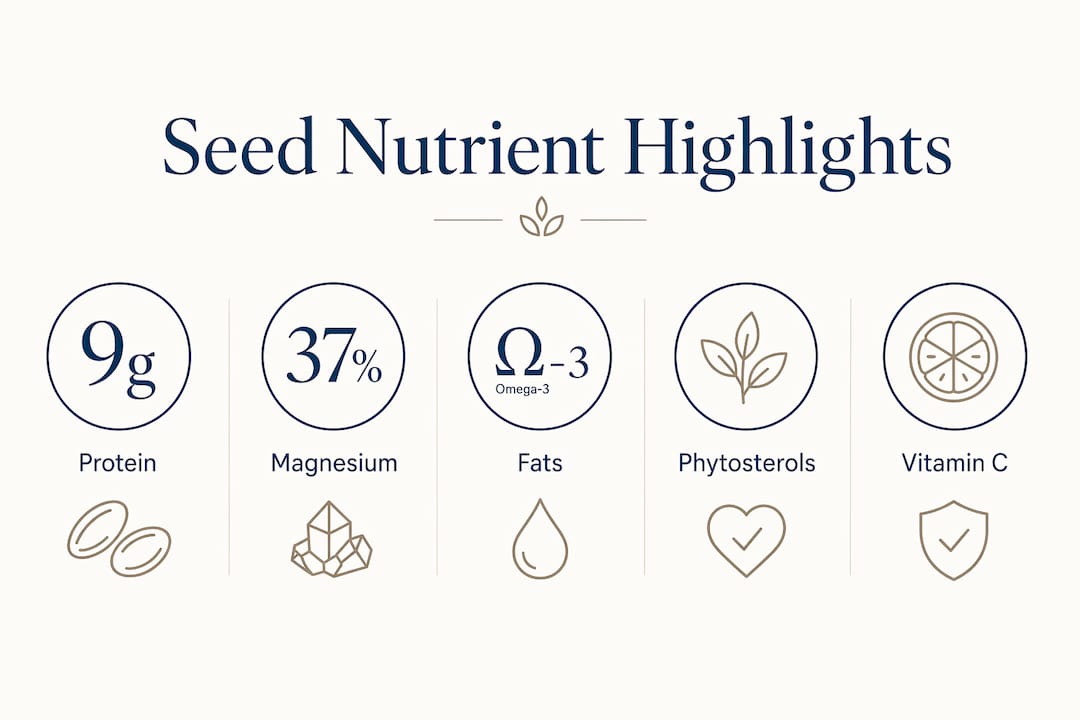
Seeds deliver an impressive range of nutrients in a compact form. A 30g serving of pumpkin seeds provides approximately 9g of protein and 37% of your daily magnesium, making them one of the most efficient plant-based protein sources available. Sunflower seeds offer around 6g of protein per 30g serving alongside meaningful amounts of vitamin E and selenium. That combination of protein and micronutrients in a single food is rare.

The healthy fats in seeds are equally significant. Seeds are rich in unsaturated fats, including omega-3 and omega-6 fatty acids, which the British Heart Foundation confirms are healthier than saturated fats from sources like butter or coconut oil. These fats actively reduce LDL cholesterol and lower cardiovascular disease risk. Replacing saturated fats with seed-derived unsaturated fats is the core dietary guideline for reducing chronic disease risk in the UK.
Seeds also contain phytosterols, plant compounds that physically interfere with cholesterol absorption in the gut. Phytosterols enhance cholesterol-lowering beyond what dietary fat changes alone achieve. This makes seeds a genuinely multi-mechanism food for heart health, not simply a protein swap. Fibre from seeds further supports gut health and helps regulate blood sugar levels.
The mineral content of seeds deserves specific attention. Magnesium supports muscle function and sleep quality. Zinc drives immune response and wound healing. Selenium acts as a powerful antioxidant that protects cells from oxidative damage. B vitamins in seeds support energy metabolism. Each of these nutrients addresses a gap that many people in the UK carry without realising it.
Pro Tip: Pair seeds with a source of vitamin C at the same meal. Vitamin C significantly improves the absorption of non-haem iron found in plant foods, including seeds.
| Seed | Protein per 30g | Key mineral | Notable fat type |
|---|---|---|---|
| Pumpkin | 9g | Magnesium (37% DV) | Omega-6, zinc |
| Sunflower | 6g | Vitamin E, selenium | Omega-6 |
| Chia | 5g | Calcium, phosphorus | Omega-3 (ALA) |
| Flaxseed | 5g | Manganese | Omega-3 (ALA) |
| Hemp | 10g | Magnesium, iron | Omega-3 and omega-6 |
| Sesame | 5g | Calcium, copper | Omega-6 |
Which seeds stand out nutritionally?
Not all seeds are equal, and that is precisely the point. Different seeds contain unique combinations of fats, minerals, and phytochemicals, which means eating a variety delivers far more than relying on a single type. Experts at Plant Based Health Professionals UK confirm that mixing seed types is superior to consuming just one variety for maximum health impact.
Here is how the major seeds differ in their nutritional focus:
- Flaxseeds are the richest plant source of alpha-linolenic acid (ALA), an omega-3 fatty acid linked to reduced inflammation and improved cardiovascular markers. They also provide lignans, a type of phytoestrogen with antioxidant properties.
- Chia seeds absorb up to ten times their weight in water, forming a gel that slows digestion and stabilises blood sugar. They are also a meaningful source of calcium for those avoiding dairy.
- Hemp seeds contain all nine essential amino acids, making them one of the few complete plant proteins. Their omega-3 to omega-6 ratio is considered close to ideal for human health.
- Pumpkin seeds are the standout source of magnesium and zinc among common seeds, making them particularly useful for people who exercise regularly or follow plant-based diets.
- Sesame seeds provide more calcium per gram than most dairy alternatives and are the base for tahini, one of the most nutrient-dense seed pastes available.
- Brazil nuts (botanically a seed) contain selenium at concentrations found nowhere else in the food supply. Just two Brazil nuts meet your entire daily selenium requirement.
- Sunflower seeds are exceptionally high in vitamin E, a fat-soluble antioxidant that protects cell membranes and supports skin health.
The practical implication is clear. Rotating through several seed types across the week covers a broader spectrum of micronutrients than any single seed can provide. You can read more about omega-rich seeds in your diet to understand how their fat profiles complement each other.
How can you add seeds to your diet every day?
Seeds require no cooking, have long shelf lives, and boost nutritional density in meals and snacks with minimal effort. That convenience is genuinely underrated. Most people who struggle to eat enough plant protein or micronutrients are not short on motivation. They are short on time.
Here are practical ways to build seeds into your daily routine:
- Breakfast: Stir a tablespoon of ground flaxseed into porridge or yoghurt. Add chia seeds to overnight oats the night before and let them swell into a thick, pudding-like texture.
- Smoothies: Blend hemp seeds directly into smoothies. They dissolve almost completely and add 10g of complete protein per 30g serving without altering the flavour.
- Salads and soups: Scatter pumpkin or sunflower seeds over salads and soups as a finishing texture. They add crunch, protein, and minerals in seconds.
- Baking: Press sesame seeds onto bread rolls or mix flaxseed into muffin batter. Seeds survive baking temperatures without losing their mineral content.
- Snacking: Keep a small jar of mixed seeds at your desk. A 30g handful takes seconds to eat and delivers a meaningful nutritional contribution.
- Seed butters: Use tahini or nut and seed butters as spreads, dips, or dressings. They are one of the most concentrated and convenient ways to consume seeds daily.
One preparation detail matters enormously for flaxseeds. Ground flaxseeds are necessary for proper omega-3 absorption because the tough outer hull of whole flaxseeds passes through the digestive system largely intact. Grinding them takes ten seconds in a coffee grinder and transforms their nutritional value completely. Store ground flax in the fridge and use within a week to prevent the oils from going rancid.
When buying seeds, look for single-ingredient products with no added salt, sugar, or flavourings. NOVA 1 classified seeds are minimally processed and retain their full nutritional profile. Buying in bulk from a trusted supplier reduces cost and keeps seeds fresher than small retail packets. If you travel frequently, seeds are one of the easiest nutritious foods to pack. This guide on eating well while travelling covers practical strategies for maintaining seed intake away from home.
Pro Tip: Soak seeds like pumpkin and sunflower overnight before eating. Soaking reduces phytate content, which improves your absorption of zinc, magnesium, and iron from the seeds.
Are there any precautions to know before eating seeds daily?
Seeds are calorie-dense foods. A typical 30g serving delivers 160–200 kcal, and clinical research uses 28–30g daily as the standard dose for cardiovascular benefit. Eating significantly more than this regularly can add excess calories that offset the health gains through gradual weight increase.
A few specific considerations are worth knowing:
- Phytates and mineral absorption: Seeds contain phytic acid, which binds to minerals like zinc, iron, and magnesium and reduces how much your body absorbs. Soaking, sprouting, or roasting seeds reduces phytate levels meaningfully.
- Selenium and Brazil nuts: Two Brazil nuts provide your full daily selenium requirement. Eating large quantities regularly risks selenium toxicity, which causes hair loss, nail brittleness, and neurological symptoms. Two nuts per day is the safe upper limit.
- Calorie awareness: Seeds are not a low-calorie snack. A 30g handful is the right portion. Eating them straight from a large bag without measuring is an easy way to overconsume.
- Nut and seed allergies: Sesame allergy is now one of the 14 major allergens listed under UK food labelling law. Check labels carefully if you have a known nut or seed sensitivity.
The practical guide to using flax seeds covers preparation methods that reduce phytates and maximise the nutritional return from each serving.
Key takeaways
Seeds are the most efficient plant food for delivering protein, healthy fats, fibre, and minerals in a single daily serving of 28–30g, with variety across seed types being the single most important factor for maximum nutritional benefit.
| Point | Details |
|---|---|
| Seeds as protein sources | Pumpkin seeds provide 9g of protein per 30g, making them a strong plant-based protein option. |
| Variety maximises benefit | Rotating flax, chia, hemp, pumpkin, and sesame covers a broader micronutrient range than any single seed. |
| Grind flaxseeds | Whole flaxseeds pass through the gut undigested; grinding them is necessary for omega-3 absorption. |
| Portion control matters | A 28–30g daily serving delivers clinical benefit; exceeding this regularly adds excess calories. |
| Buy single-ingredient seeds | NOVA 1 classified seeds with no additives retain full nutritional value and avoid hidden extras. |
Seeds as a daily habit: what I have actually observed
Seeds are the nutritional intervention I recommend most consistently, and the reason is simple: the barrier to entry is almost zero. You do not need a recipe, a kitchen, or even a plate. A small jar of mixed seeds on your desk or in your bag changes your daily nutrient intake in a way that feels effortless once it becomes habit.
What I find most interesting is how underestimated variety is in practice. Most people who eat seeds eat the same one, usually chia or flaxseed, because they read about it once and stuck with it. That is better than nothing, but it misses the point. Hemp seeds cover complete protein. Pumpkin seeds cover magnesium and zinc. Sesame covers calcium. No single seed does all of that. Rotating three or four types across the week is genuinely more effective than optimising one.
The other thing I have noticed is that seed butters are the most underused format. Tahini, hemp butter, and mixed nut and seed butters deliver the same nutrients in a form that integrates into meals without any thought. Stirring a spoonful of tahini into a salad dressing or spreading it on rice cakes takes seconds and adds meaningful nutrition. For people who find eating plain seeds unappealing, butters are the answer.
Seeds are also one of the few foods where the ancient and the modern align perfectly. These are foods humans have eaten for thousands of years, unchanged by industrial processing, and the evidence for their benefit keeps growing. That combination of heritage and clinical validation is rare. I would not swap them out of my diet for anything.
— Jarrod
Granavitalis seeds and butters worth trying
Granavitalis sources seeds and seed-based products that meet the single-ingredient, minimal-processing standard that makes seeds genuinely worth eating. Every product in the range is selected for nutritional integrity, not convenience shortcuts.

The Raw Organic Pecan Butter from RAWGORILLA is a single-ingredient seed butter with no additives, delivering healthy fats and minerals in a format that works as a spread, a dip, or a smoothie addition. For those who want to explore multiple seed and nut butter profiles, the Organic Nut & Seed Butter Selection Box offers a curated range in one box. If immune support is your focus, the Immune Booster Superfood Bundle combines seeds with complementary superfoods designed to work together. All Granavitalis products are transparently sourced and built around real-food nutrition.
FAQ
What is the role of seeds in nutrition?
Seeds are concentrated sources of protein, healthy fats, fibre, vitamins, and minerals that support heart health, immune function, and bone strength. They are one of the most nutrient-dense foods available relative to their serving size.
How much seeds should you eat per day?
A daily serving of 28–30g (roughly a small handful) aligns with clinical research on cardiovascular benefit. Eating significantly more regularly risks excess calorie intake due to seeds’ high energy density of 160–200 kcal per 30g.
Are seeds a good protein source for plant-based diets?
Seeds are a strong plant-based protein source. Hemp seeds contain all nine essential amino acids, and pumpkin seeds provide approximately 9g of protein per 30g serving, making them particularly useful for those avoiding animal protein.
Do you need to prepare seeds in any special way?
Flaxseeds must be ground before eating to release their omega-3 fatty acids, as the whole seed hull resists digestion. Soaking pumpkin and sunflower seeds overnight reduces phytate content and improves mineral absorption.
Which seed is highest in selenium?
Brazil nuts are the richest dietary source of selenium by a significant margin. Two Brazil nuts per day meet the full adult daily requirement for selenium, and eating large quantities regularly risks toxicity.