

Using flax seeds: your practical guide to better nutrition
TL;DR:
- Flax seeds are highly nutrient-dense, providing omega-3 fatty acids, fiber, and antioxidant lignans in a small seed.
- Grinding the seeds is essential to release these nutrients for absorption, as whole seeds pass through the gut undigested.
Flax seeds are one of the most nutrient-dense whole foods available, delivering plant-based omega-3 fatty acids (ALA), soluble and insoluble fibre, and antioxidant lignans in a single small seed. Known interchangeably as linseed in the UK, linseed and flaxseed refer to exactly the same plant, Linum usitatissimum, with identical nutrient profiles. Using flax seeds regularly supports heart health, digestive regularity, and blood sugar control, all backed by clinical evidence. The NHS recommends 30g of fibre daily for adults, and a single tablespoon of ground flaxseed contributes approximately 2g fibre and 1.6g ALA. That makes flax seeds one of the most efficient additions you can make to your daily diet.
What are the main health benefits of using flax seeds regularly?
Flax seeds deliver measurable benefits across several body systems, making them one of the few single foods with broad clinical support.
Heart health is the most well-documented benefit. Meta-analyses show that daily flaxseed consumption reduces total cholesterol, LDL cholesterol, triglycerides, and systolic blood pressure. These are not marginal changes. Consistent reductions in LDL and blood pressure directly lower cardiovascular risk over time.
Digestive health improves because flax seeds contain both soluble and insoluble fibre. The soluble fibre forms a gel in the gut, which slows digestion and blunts blood sugar spikes after meals. The insoluble fibre adds bulk to stools and supports bowel regularity.
Metabolic benefits include improved insulin sensitivity. The gel-forming action of soluble fibre slows glucose absorption, which helps manage blood sugar levels across the day. This makes flax seeds particularly relevant for people managing their weight or blood sugar.
Antioxidant lignans are a lesser-known but significant benefit. Flaxseed lignans, especially secoisolariciresinol diglucoside (SDG), are metabolised by gut bacteria into compounds that modulate hormone pathways and reduce inflammation. Bioavailability of these lignans depends on the health of your gut microbiome, which means a varied, fibre-rich diet amplifies their effect.
Key benefits at a glance:
- Reduces LDL cholesterol and triglycerides
- Lowers systolic blood pressure
- Supports bowel regularity through dual-fibre action
- Blunts post-meal blood sugar spikes
- Delivers antioxidant lignans that support hormonal balance
- Provides ALA omega-3, the plant-based precursor to EPA and DHA
How should you prepare flax seeds for best results?
Whole flax seeds often pass through the gut undigested. Their hard outer shell protects the seed so effectively that the omega-3 fats and lignans inside remain largely inaccessible. Grinding the seeds breaks the shell and releases these compounds for absorption. This is the single most important preparation step.

Pro Tip: Grind flax seeds fresh in small batches using a coffee grinder. Ground flaxseed is prone to rancidity when exposed to air and light, so grinding only what you need each week preserves potency and flavour.
Once ground, store flaxseed in an airtight, opaque container in the fridge or freezer. Pre-ground flaxseed bought in bags should also be refrigerated after opening. Whole seeds, by contrast, keep well at room temperature for months because the shell acts as a natural barrier.
Serving size and hydration matter as much as preparation method. The NHS advises starting with 1 tablespoon of ground flaxseed daily, taken with at least 150–250ml of water per tablespoon. Flax seeds absorb water extensively, so inadequate fluid intake can cause constipation rather than relieve it.
| Form | Nutrient availability | Best use | Storage |
|---|---|---|---|
| Whole seeds | Low (shell blocks absorption) | Garnish, texture | Room temperature, airtight |
| Ground flaxseed | High (shell broken) | Smoothies, baking, porridge | Fridge or freezer, airtight |
| Flaxseed oil | ALA only, no lignans | Cold dressings, drizzling | Fridge, use quickly |
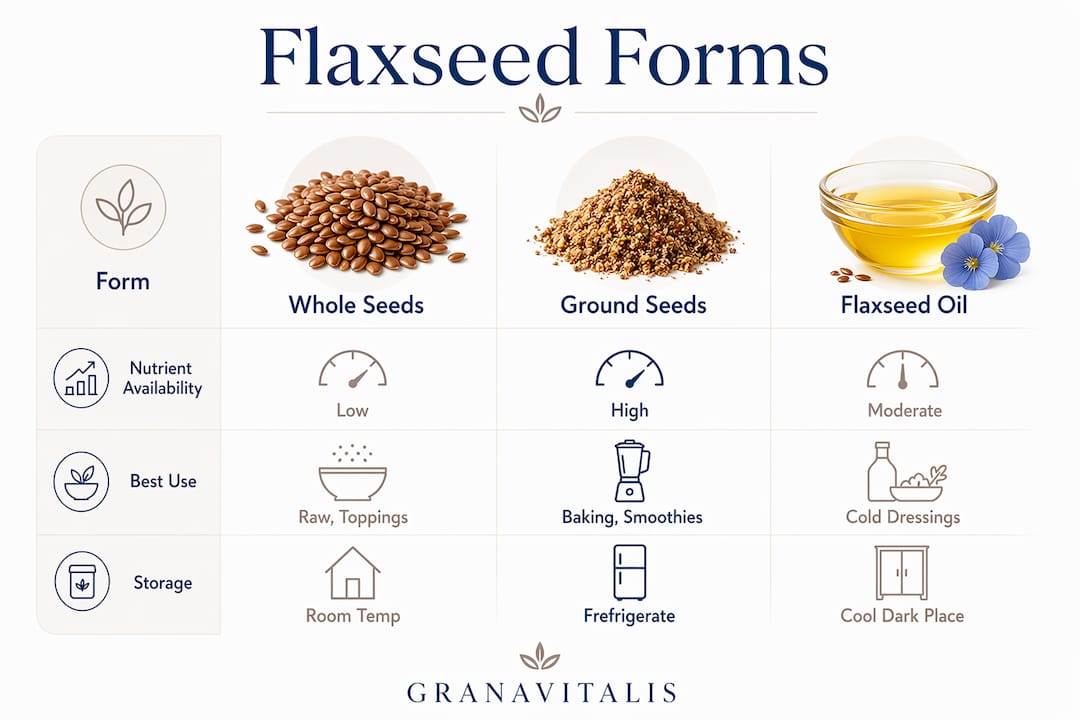
Cold-pressed flaxseed oil contains concentrated ALA but negligible lignans, because the seed coat is excluded during pressing. If you are seeking lignan benefits, such as hormonal support or anti-inflammatory effects, ground seeds are the correct choice. Flaxseed oil is also unsuitable for cooking because heat degrades ALA rapidly.
How to use flax seeds in everyday cooking and recipes
Flax seeds have a mild, slightly nutty flavour that blends into most foods without altering the taste noticeably. That subtlety is an advantage. You can add them to meals you already make without rebuilding your cooking habits from scratch.
Here are the most practical ways to incorporate ground flaxseed into your daily routine:
-
Smoothies. Add one tablespoon of ground flaxseed to any blended drink. It thickens the texture slightly and adds fibre without changing the flavour. Pair it with banana, oat milk, and a spoonful of nut butter for a balanced breakfast.
-
Porridge and overnight oats. Stir ground flaxseed into your oats before cooking or soaking. The fibre integrates fully, and the ALA omega-3 content makes a standard bowl considerably more nutritious. For more on omega-3 in plant foods, the difference between ALA, EPA, and DHA is worth understanding.
-
Yoghurt and fruit bowls. Sprinkle a tablespoon over Greek yoghurt with berries. This is the lowest-effort method and works well as a mid-morning snack or light breakfast.
-
Flax eggs for vegan baking. Mix 1 tablespoon ground flaxseed with 3 tablespoons water and leave it to gel for 5–10 minutes. This replaces one egg in muffins, breads, and cookies, acting as a binder. The ratio is consistent and reliable across most recipes.
-
Breads, muffins, and crackers. Replace up to 10–15% of the flour in a recipe with ground flaxseed meal. This adds fibre and a slightly denser crumb. It works particularly well in banana bread, seeded loaves, and oat-based biscuits.
-
Salad dressings and soups. Stir ground flaxseed into vinaigrettes or add it to blended soups just before serving. Heat degrades ALA, so add it after cooking rather than during.
Pro Tip: Start with one teaspoon daily and build up to one or two tablespoons over two to three weeks. Increasing your fluid intake at the same time prevents the bloating that can occur when fibre intake rises quickly. If you travel frequently, eating well on the go is easier when you have portable, fibre-rich staples like flaxseed already in your routine.
What precautions should you take when using flax seeds?
Flax seeds are safe for most people, but a few specific situations require care. Getting the dosage and hydration right matters more than most people realise.
The most common mistake is adding too much flaxseed too quickly without increasing water intake. Flax seeds are highly hygroscopic, meaning they absorb water aggressively. Without adequate fluid, this can cause bloating, cramping, or constipation. Start with one teaspoon and increase gradually over several weeks.
Individuals who are pregnant, breastfeeding, taking blood thinners, or managing hormone-sensitive conditions should speak to a healthcare provider before adding significant daily amounts of flaxseed. Flaxseed phytoestrogens interact with hormone pathways, and the seed’s anticoagulant properties may affect medication efficacy. Medical guidance is the correct first step, not an optional one.
Flaxseed oil deserves a separate caution. It contains no lignans and degrades rapidly when heated. Use it only in cold applications such as salad dressings or drizzled over cooked vegetables after plating. Cooking with flaxseed oil destroys its ALA content and can produce harmful oxidation products.
There is no official upper limit for flaxseed intake, but most nutritional guidance points to 1–2 tablespoons of ground flaxseed daily as the practical range for most adults. Exceeding this regularly without medical supervision is unnecessary and unlikely to add further benefit.
Key takeaways
Ground flaxseed is the most effective form for nutrient absorption, delivering fibre, ALA omega-3, and lignans that whole seeds and flaxseed oil cannot match.
| Point | Details |
|---|---|
| Grind before eating | Whole seeds pass undigested; grinding releases omega-3 and lignans for absorption. |
| Start small, increase slowly | Begin with one teaspoon daily and build to one or two tablespoons over several weeks. |
| Hydration is non-negotiable | Drink at least 150–250ml of water per tablespoon to prevent digestive discomfort. |
| Oil is not a substitute | Flaxseed oil contains ALA but no lignans; use ground seeds for the full nutritional profile. |
| Seek advice if needed | Pregnant, breastfeeding, or medicated individuals should consult a healthcare provider first. |
Flax seeds as a long-term staple, not a short-term fix
I have been adding ground flaxseed to my diet for years, and the most useful shift in thinking was treating it as a background ingredient rather than a supplement. The moment I stopped measuring it out with the seriousness of a medication and started spooning it into porridge the same way I reach for cinnamon, it became effortless.
What most articles miss is the sourcing question. The quality of flaxseed varies considerably. Seeds that have been stored poorly before you buy them are already partially rancid, and you will not taste it until you compare them against freshly ground, well-stored seeds. Buying whole seeds and grinding them yourself at home is the most reliable way to control this. The omega-rich seeds you grind fresh on a Monday morning are nutritionally superior to pre-ground bags that have been sitting in a warm warehouse.
The other thing I would push back on is the idea that flaxseed is only for people with specific health goals. It is not a weight loss tool or a cholesterol medication. It is a whole food with a broad nutritional profile that supports general health when eaten consistently over months and years. The clinical evidence is strongest for people who make it a daily habit, not those who use it for a fortnight and expect results.
— Jarrod
Quality flaxseed and wholefood nutrition from Granavitalis
Granavitalis sources flaxseed with the same standard applied to every product in its range: minimal processing, transparent origin, and genuine nutritional integrity.

The organic ground linseed from Granavitalis is ready to use straight from the bag, making it the most convenient option for daily smoothies, porridge, and baking. For those who prefer to grind their own, the organic golden linseed offers whole seeds with a milder flavour profile. Pair either with the nut and seed butter selection for a genuinely nutrient-dense breakfast or snack combination that covers healthy fats, protein, and fibre in one go.
FAQ
What is the difference between linseed and flaxseed?
Linseed and flaxseed are the same plant, Linum usitatissimum, with identical nutritional profiles. The two terms are used interchangeably in UK nutritional contexts.
How much ground flaxseed should I eat each day?
Most nutritional guidance recommends 1–2 tablespoons of ground flaxseed daily, taken with at least 150–250ml of water per tablespoon to support digestion and fibre intake.
Can I cook with flaxseed oil?
Flaxseed oil is not suitable for cooking. Heat degrades its ALA content rapidly. Use it only in cold applications such as dressings or drizzled over food after cooking.
How do I make a flax egg for vegan baking?
Mix 1 tablespoon of ground flaxseed with 3 tablespoons of water and leave it to gel for 5–10 minutes. This replaces one egg as a binder in muffins, breads, and cookies.
Why do whole flax seeds need to be ground?
Whole flax seeds have a hard outer shell that the gut cannot break down. Grinding the seeds releases the omega-3 fats and lignans inside, making them available for absorption.