
How to Make Healthy Porridge Naturally for Daily Vitality
Most british breakfasts rely on simple oats, but heritage grains are quietly transforming the morning meal. With up to twice the protein content and a richer array of nutrients, ancient grains like quinoa and millet can turn regular porridge into a genuine nutritional powerhouse. Knowing how to select and prepare these grains offers a smarter, tastier way to start your day with both tradition and modern wellness in mind.
Table of Contents
- Step 1: Select Heritage Grains And Protein Boosts
- Step 2: Prepare And Combine Wholesome Ingredients
- Step 3: Cook Gently For Creamy Consistency
- Step 4: Add Vibrant Toppings For Nourishment
- Step 5: Check Texture And Taste For Perfection
Quick Summary
| Key Insight | Explanation |
|---|---|
| 1. Select nutrient-rich grains | Choose heritage grains like quinoa and amaranth for a high protein and nutrient content. |
| 2. Properly combine ingredients | Measure your grains and liquid carefully, warming the liquid first for better absorption. |
| 3. Cook slowly for optimal texture | Use low heat and stir continuously to achieve a creamy consistency without scorching. |
| 4. Enhance with nutritious toppings | Add fruits, nuts, and seeds right before serving to boost flavour and nutrition without losing texture. |
| 5. Adjust texture and flavour precisely | Regularly check the porridge consistency and taste, making small adjustments for balance. |
Step 1: Select heritage grains and protein boosts
Selecting the right heritage grains and protein boosters transforms an ordinary porridge into a powerhouse of nutrition. When crafting your morning meal, you want to choose ancient grains that pack substantial protein and essential nutrients. Heritage grains like quinoa, amaranth, and millet offer remarkable nutritional profiles that elevate your porridge from simple carbohydrate fuel to a complete wellness experience.
Your protein strategy matters significantly. Consider blending multiple heritage grains to create a complex nutritional profile. Quinoa, for instance, provides a complete protein with all nine essential amino acids. Amaranth contributes additional protein density and minerals like iron and magnesium. Millet brings B vitamins and a subtle nutty flavour. By mixing these grains, you create a protein rich base that supports muscle recovery and sustained energy release. High protein breakfast grains can dramatically improve your morning wellness routine, offering a balanced start to your day.
Pro tip: When selecting your grains, opt for organic, minimally processed options. Look for whole grain varieties that retain their natural nutrient profile. Avoid heavily refined grains that strip away essential vitamins and minerals. Your body deserves whole, unadulterated nutrition that connects you with traditional wholefood wisdom.
Step 2: Prepare and combine wholesome ingredients
Crafting the perfect porridge requires thoughtful ingredient preparation and strategic combination. Your goal is to transform simple grains into a nutritionally dense meal that energises and nourishes. Protein-packed porridge techniques can elevate your breakfast from mundane to magnificent.
Start by measuring your selected heritage grains carefully. Typically, you will want a ratio of approximately one part grains to three parts liquid water or plant milk. Consider warming your liquid first to help the grains absorb moisture more effectively and create a smoother texture. For added protein and creaminess, consider stirring in plant based protein powder or nut butter during the cooking process. These additions not only boost nutritional value but also create more complex flavour profiles.
Pro tip: Always stir your porridge gently and consistently to prevent clumping and ensure even cooking. Wooden spoons work brilliantly for this task as they distribute heat more evenly and do not scratch your cooking vessel. Once your porridge reaches a smooth, creamy consistency, you are ready to personalise with your favourite nutrient dense toppings like seeds, nuts, or fresh fruits.
Step 3: Cook gently for creamy consistency
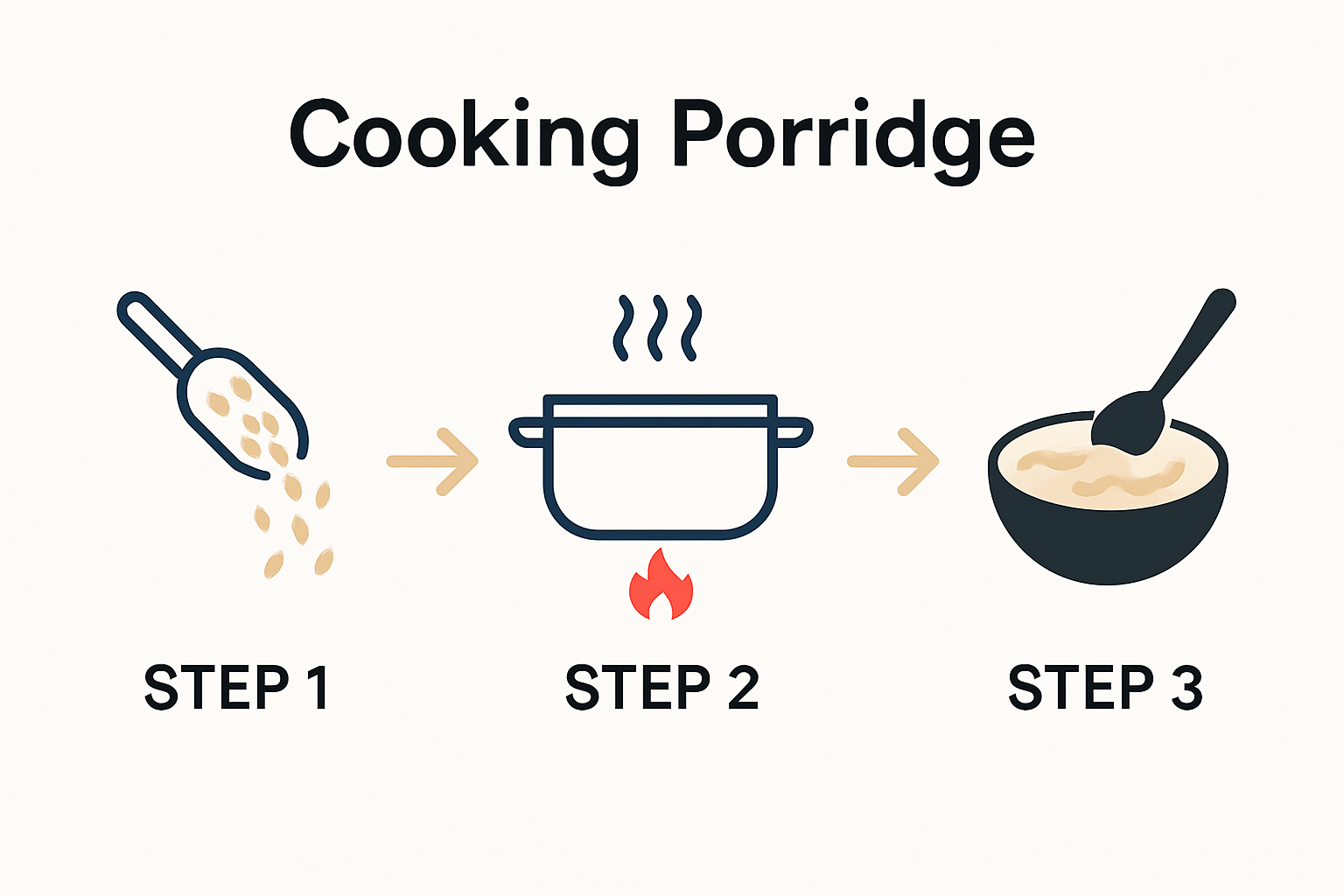
Mastering the art of porridge cooking requires patience and precision. Your ultimate goal is to transform simple ingredients into a luxuriously smooth and creamy breakfast that nourishes both body and soul. High protein porridge techniques demand careful temperature control and consistent attention to achieve that perfect texture.
Begin by setting your stovetop to a low medium heat setting. This gentle approach prevents scorching and allows grains to absorb liquid gradually and evenly. Stir continuously with a wooden spoon or silicone spatula using smooth circular motions. As the grains start to soften, they will release natural starches that create a rich creamy consistency. Watch for visual cues like slight thickening and bubbling at the edges of your cooking vessel which indicate the porridge is progressing perfectly.
Pro tip: If your porridge becomes too thick, gradually add warm liquid in small increments to restore desired consistency. Remove from heat just before it reaches your ideal thickness as it will continue to thicken while cooling. The result should be a silky smooth texture that holds its shape without becoming stiff or dry preparation approach guarantees a breakfast that is both nutritionally dense and supremely satisfying.
Step 4: Add vibrant toppings for nourishment
Enhancing your porridge with nutritious toppings transforms a simple breakfast into a culinary masterpiece that nourishes both body and palate. Your carefully prepared porridge serves as a canvas for an array of wholesome ingredients that will elevate its nutritional profile and create a symphony of textures and flavours.
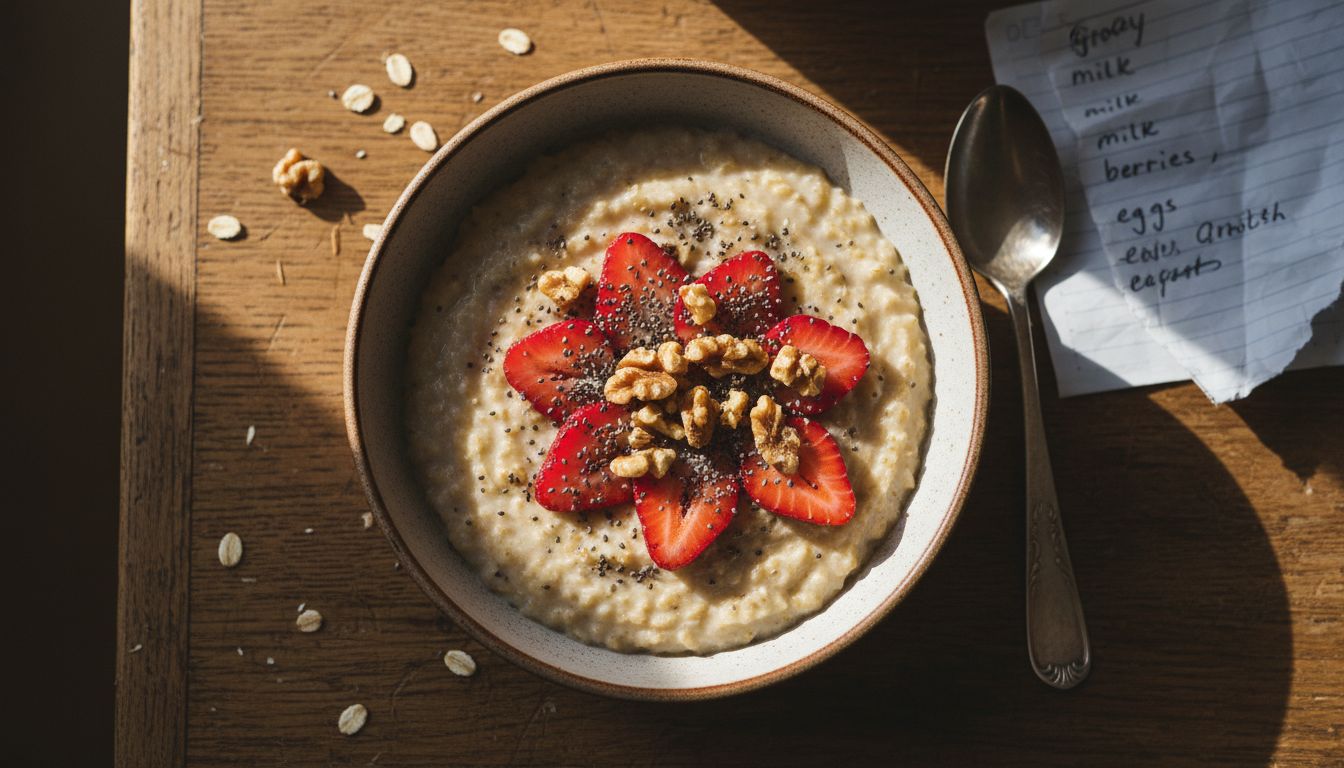
Consider a strategic approach to topping selection. Fresh berries provide antioxidant rich bursts of colour and natural sweetness. Chopped nuts like almonds and walnuts contribute essential healthy fats and provide satisfying crunch. Seeds such as chia, pumpkin, and hemp offer additional protein and minerals. For extra protein density, sprinkle a small handful of crushed nuts or a measured portion of plant based protein granules. The key is balance creating a topping combination that complements your base porridge while adding diverse nutritional benefits.
Pro tip: Add your toppings just before serving to maintain their optimal texture and nutritional integrity. Delicate ingredients like fresh berries and sliced fruits should be placed gently on top to preserve their shape and prevent them from becoming soggy. A drizzle of honey or a sprinkle of cinnamon can provide the perfect finishing touch that transforms your porridge from ordinary to extraordinary.
Step 5: Check texture and taste for perfection
The final moments of porridge preparation are where culinary magic truly happens. Your goal is to assess the delicate balance of texture consistency and flavour profile that transforms a simple grain mixture into a nourishing masterpiece. High protein porridge techniques demand precise sensory evaluation to ensure optimal results.
Begin by observing the porridge consistency. The ideal texture should flow smoothly from your spoon yet hold its shape slightly when plated. Gently tilt your cooking vessel and watch how the porridge moves. If it appears too thick, gradually introduce warm liquid to restore desired smoothness. Taste systematically starting with plain porridge then adding toppings to understand how each ingredient transforms the base flavour. Consider the temperature critical warm enough to be comforting but not scalding which can diminish subtle grain nuances.
Pro tip: Trust your palate and make incremental adjustments. A pinch of sea salt can enhance underlying grain flavours while a drizzle of honey balances any potential earthiness. Remember that porridge is a deeply personal experience each adjustment reflects your unique nutritional preferences and morning wellness goals.
Elevate Your Porridge with Ancient Grains from Granavitalis
Struggling to create a truly nourishing breakfast that fuels your day with clean energy and sustained vitality? The article guides you through making healthy porridge naturally using heritage grains and protein-rich ingredients to support muscle recovery, energy balance, and overall wellbeing. If you want to resolve the challenge of finding high quality, nutrient dense grains that align with these goals Granavitalis offers a curated selection designed to bring tradition and purity to your bowl. Discover our Gluten Free Flours that echo the article’s emphasis on organic, whole grains untouched by industrial refinement.
Transform your morning routine by choosing thoughtfully sourced flours that embody our promise of purity and performance. Visit Granavitalis today to explore all our premium options in All Flours and power up your porridge naturally at home. Act now to embrace simple ingredients with clear nutrition that support your daily vitality and honour time tested wholefood wisdom.
Frequently Asked Questions
What are heritage grains, and why should I use them in my porridge?
Heritage grains, such as quinoa, amaranth, and millet, are ancient grains that offer superior nutritional profiles compared to conventional grains. They provide essential proteins, vitamins, and minerals, making your porridge more nutritious. Choose a blend of these grains to create a balanced and protein-rich breakfast.
How can I enhance the creaminess of my porridge?
To achieve a creamy texture in your porridge, cook it gently over low to medium heat while stirring continuously. This allows the grains to absorb liquid properly and release their natural starches, resulting in a smooth consistency. For an added boost, consider incorporating plant-based protein powder or nut butter during cooking.
What toppings can I add to my porridge for extra nutrition?
You can enhance your porridge with toppings like fresh berries, chopped nuts, and seeds such as chia or hemp. These toppings not only add flavour but also increase the nutritional density of your meal. Aim to balance your toppings to include healthy fats, protein, and antioxidants for a complete breakfast experience.
How do I know when my porridge is cooked to perfection?
To check if your porridge is ready, observe its consistency; it should flow smoothly from a spoon but hold its shape slightly. Tilt your cooking vessel to see how it moves, and taste for warmth and flavour. Adjust by adding warm liquid if it appears too thick, ensuring a comforting texture.
Can I prepare porridge in advance for daily breakfasts?
Yes, you can prepare porridge in advance by partially cooking the grains and storing them in the refrigerator. When ready to eat, simply reheat and add your choice of toppings. This makes it convenient to enjoy a healthy breakfast with minimal preparation time during the week.
Is it necessary to use organic grains for my porridge?
While not strictly necessary, using organic grains can be beneficial as they are less processed and retain more of their natural nutrients. Opt for whole grain varieties whenever possible to ensure you’re getting the full health benefits. Choosing organic also supports sustainable farming practices.
Recommended
- Complete Guide to Nutrient-Rich Porridge – Granavitalis
- Protein-Packed Porridge Guide: Create Nourishing Breakfasts – Granavitalis
- How to Add More Protein to Porridge Naturally – Granavitalis
- How to Make High-Protein Porridge: A Nutritious Start – Granavitalis
- 7 Simple Indian Salads for Healthy Living and Wellness – naturessoulshop