
Nut butter: your complete guide to making and buying it
TL;DR:
- Choosing nut butters made from 100% nuts without added oils or sugars supports better health and nutrient diversity. Rotating between types like walnuts, almonds, and seeds provides broader micronutrient coverage and prevents dietary monotony. Proper storage and label reading help ensure freshness and maximum health benefits from homemade or store-bought options.
Nut butter is a spread made by grinding nuts or seeds into a smooth or crunchy paste. The single most important thing to know before you buy or make it: choose jars with 100% nuts, no palm or coconut oil, minimal salt, and no added sugar. A moderate daily portion (roughly two heaped teaspoons) is linked to measurable health benefits. Making it at home is genuinely straightforward, but the result depends almost entirely on your food processor’s motor power. And rotating between types, say almond one week and walnut the next, gives you a broader spread of micronutrients than sticking to one variety.
Table of Contents
- What counts as nut butter, and how do the types differ?
- What does nut butter actually do for your health?
- How to make nut butter at home
- Practical ways to use nut butter in everyday meals
- How to store nut butter and spot when it has gone off
- How to pick a healthier nut butter in UK shops
- Allergy considerations and seed-based alternatives
- What the research and experts say
- Key takeaways
- The case for keeping it simple
- Granavitalis nut butters: made the way the label should read
- Useful sources
What counts as nut butter, and how do the types differ?
The term covers any spread produced by grinding nuts or seeds until their natural oils release and the mixture becomes a paste. That definition is broader than most people assume.
- Peanut butter is the most widely consumed variety in the UK, though peanuts are botanically legumes, not tree nuts. The Food Standards Agency treats them separately from tree nuts for allergen labelling purposes, which matters if you are buying for someone with a tree-nut allergy.
- Tree-nut butters — include almond, cashew, hazelnut, walnut, macadamia, pistachio, and pecan. Each has a distinct fat and micronutrient profile.
- Seed butters — sit in their own category: tahini (ground sesame), sunflower seed butter, and pumpkin seed spread are the most common. Nutritionally they are comparable to nut butters and are increasingly used as peanut-free alternatives in schools and workplaces.
Label language worth knowing: “100% nuts” means exactly that. “High-oleic” signals that the nuts were grown for a higher monounsaturated fat content, which typically means a longer shelf life and a better cardiovascular profile. “Contains palm oil” is a flag to avoid, for reasons covered in the nutrition section below.
What does nut butter actually do for your health?
The short answer: quite a lot, provided the jar contains nothing but nuts. The longer answer involves the fat type, the protein content, and the micronutrients that vary by variety.
Nutrition at a glance
| Butter type | Protein (per 100 g) | Total fat (per 100 g) | Key micronutrients |
|---|---|---|---|
| Peanut butter | ~29.6 g | ~50 g | Niacin, magnesium, vitamin B6 |
| Almond butter | ~21 g | ~56 g | Vitamin E, magnesium, calcium |
| Cashew butter | ~18 g | ~46 g | Zinc, iron, copper |
| Walnut butter | ~15 g | ~65 g | Plant omega-3 (ALA), polyphenols |
| Tahini | ~17 g | ~54 g | Calcium, iron, selenium |
Peanut butter reaches approximately 29.6 g of protein per 100 g in high-quality versions, making it the most protein-dense of the common spreads. A moderate portion delivers a significant amount of protein alongside heart-healthy unsaturated fats and a useful hit of magnesium.
The fat in most nut butters is predominantly unsaturated. That matters because controlled trials and meta-analyses show that eating around 28 g of nuts daily is associated with measurable LDL reductions and lower cardiovascular risk. The PREDIMED trial, one of the largest dietary intervention studies conducted, linked approximately 30 g of mixed nuts daily with lower rates of heart attack, stroke, and death from cardiovascular disease. A UK-specific analysis using National Diet and Nutrition Survey data found that tree-nut consumers showed better diet quality and more favourable cardiovascular risk markers than non-consumers.
Regular, portion-controlled intake is not linked to weight gain and may support satiety, according to Heart UK. The key word is portion: A moderate serving size is recommended, not large amounts.
What to avoid on the label
Many commercial nut butters add palm oil or coconut oil to prevent separation and extend shelf life. Both are high in saturated fat, which reduces the heart-health benefit you would otherwise get from the nuts themselves. Added sugars and flavour syrups push the product closer to confectionery than food. A label checklist worth keeping:
- Ingredient list: nuts only (and perhaps a small amount of salt)
- No palm oil, coconut oil, or hydrogenated fats
- Added sugar: ideally zero; certainly no more than 1 g per 100 g
- Salt: below 0.08 g per 100 g where shown
- “High-oleic” as a positive quality marker
The British Heart Foundation is direct on this: the health value of a nut butter depends on its ingredient list, not the specific nut variety. A hazelnut butter loaded with palm oil is nutritionally inferior to a plain peanut butter with nothing added.
How to make nut butter at home
Making your own gives you complete control over ingredients and is cheaper per gram than most premium shop-bought jars. The process is simple; the variable is your equipment.
Equipment
A food processor with at least 600W is the most forgiving option. A high-speed blender (Vitamix, Ninja) produces silkier results faster but needs a tamper to push nuts into the blades. A small personal blender will struggle with harder nuts like almonds and may overheat. Motor power matters more than any other variable.
Step-by-step method
- Weigh your nuts. 300 g makes a standard jar. Almonds, cashews, peanuts, and hazelnuts all work well for beginners.
- Roast (optional but recommended). Spread on a baking tray and roast at 160–180°C for the times shown in the table below. Roasting deepens flavour and helps oils release faster during processing.
- Cool completely. Hot nuts create steam in the processor, which can make the butter grainy. Give them 10–15 minutes.
- Process. Add cooled nuts to the processor and run continuously. Do not stop at the flour stage.
- Wait through the flour stage. The nuts will first become a dry, crumbly powder. This is normal. Keep going: the oils have not released yet. Patience at this point is the difference between gritty paste and proper butter.
- Rest if needed. If the motor feels hot, stop for 2–3 minutes, then continue. Overheating the motor is the main risk with lower-powered machines.
- Check consistency. Once the butter is glossy and pourable, it is done. For crunchy butter, pulse in a handful of roughly chopped nuts at the end.
- Season. A pinch of flaked salt is all most butters need. Taste before adding anything else.
- Jar and label. Transfer to a clean, dry glass jar and note the date.
Roasting times by nut type
| Nut | Temperature | Time | Notes |
|---|---|---|---|
| Almonds | 160°C | 12–15 min | Skins will split slightly |
| Cashews | 160°C | 8–10 min | Watch closely; they colour fast |
| Peanuts | 180°C | 10–12 min | Rub skins off after cooling |
| Hazelnuts | 180°C | 10–12 min | Rub skins off in a tea towel |
| Walnuts | 160°C | 8–10 min | Easy to over-roast; pale golden only |
| Macadamia | 160°C | 10–12 min | High fat content; oils release quickly |
Troubleshooting
- Still powdery after 5 minutes? Keep processing. The flour stage can last several minutes with drier nuts.
- Butter is too thick? Add a teaspoon of a neutral oil (sunflower or light olive) and process again. Avoid coconut oil if you want to keep saturated fat low.
- Bitter or acrid smell? The nuts are over-roasted. Start again with a fresh batch; over-roasted nuts produce a sharp, unpleasant butter.
- Grainy texture that won’t smooth out? The processor motor may not be powerful enough for that nut type. Try cashews instead, which have a higher fat content and process more easily.
Quick variations
Sweetened: Add a teaspoon of raw honey or maple syrup at the end of processing. Savoury: Blend in a pinch of smoked paprika and a few drops of tamari. Tahini blend: Half sesame seeds, half cashews, roasted together. Protein-boosted: Stir in a tablespoon of hemp seeds after processing for extra plant protein without changing the texture.
Practical ways to use nut butter in everyday meals
The spread goes far beyond toast. Here are the most useful applications, plus three recipe templates worth keeping.
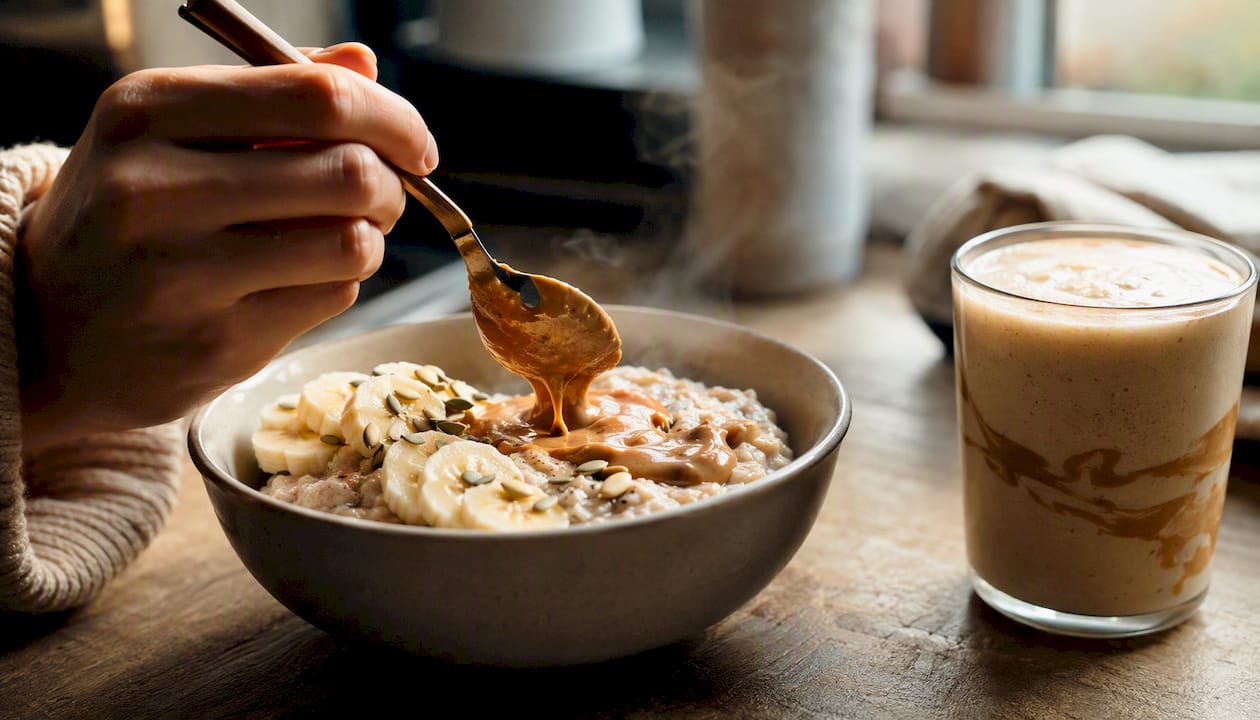
Stirred into porridge, a tablespoon of almond or peanut butter adds protein and fat that slow the release of oats’ carbohydrates, keeping you fuller longer. In smoothies, it adds body and richness without needing banana as a thickener. As a dip for apple slices, celery, or rice cakes, it turns a snack into something genuinely sustaining.
In baking, nut butter replaces butter or oil as a binding agent in brownies, flapjacks, and energy balls, contributing moisture and a denser crumb. In savoury cooking, it forms the base of satay sauces, dressings, and West African-style stews.
Pro Tip: When using nut butter in a dressing or sauce, whisk it with warm water first to loosen it before adding acid (lemon juice or vinegar). Cold nut butter seizes up when it meets liquid directly.
Three quick recipe templates
Satay dressing 3 tbsp peanut butter, 1 tbsp soy sauce, 1 tbsp lime juice, 1 tsp sesame oil, 1 tsp grated ginger, 2–3 tbsp warm water. Whisk until smooth. Works on noodles, grilled chicken, or roasted broccoli.
Breakfast bowl Cooked oats, 1 tbsp almond butter swirled through, sliced banana, a few pumpkin seeds, a drizzle of honey. The almond butter provides vitamin E and magnesium alongside the oats’ beta-glucan.
Energy bites 100 g rolled oats, 3 tbsp any nut butter, 2 tbsp honey, 1 tbsp chia seeds, 30 g dark chocolate chips. Mix, roll into balls, refrigerate for 30 minutes. Makes roughly 12 bites at around 25 g each. A useful option for plant-based eaters looking to combine nut butter with other vegan protein sources.
How to store nut butter and spot when it has gone off
Homemade nut butter, with no preservatives, keeps for 2–3 weeks in the fridge in a sealed glass jar. Frozen, it lasts up to 3 months with no meaningful loss of quality; freeze in portions so you are not defrosting the whole batch each time.
Opened shop-bought jars vary by brand, but most are stable for 1–3 months in a cool cupboard once opened, and longer in the fridge. High-oleic varieties last towards the upper end of that range because their higher monounsaturated fat content is more resistant to oxidation.
Signs it has gone off
Rancid nut butter smells sharp, bitter, or faintly like paint. The taste follows: sour and unpleasant rather than rich and nutty. Oil separation is normal and not a sign of spoilage; simply stir it back in. What you are looking for is a change in smell or taste, not just a pool of oil on top.
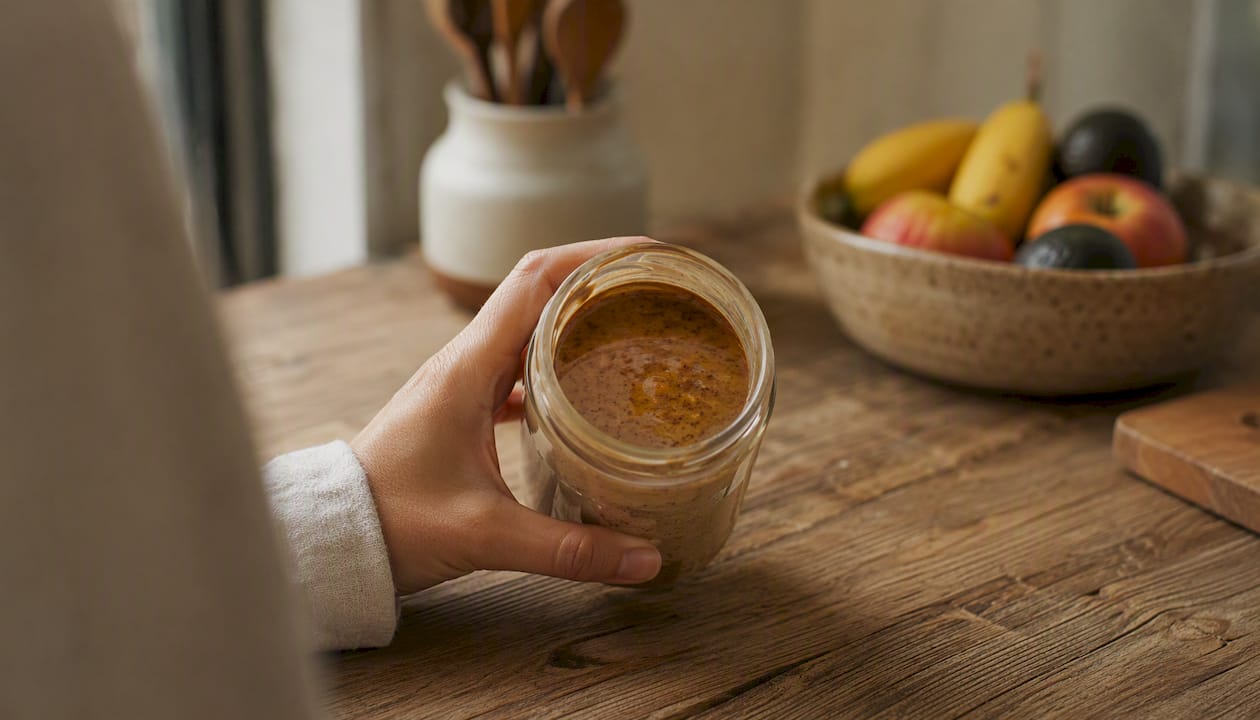
Pro Tip: Store natural nut butters upside down in the fridge. The oil migrates to the bottom of the jar during storage, so inverting it before refrigerating means less stirring when you open it.
Food safety for homemade jars
Use a clean, dry spoon every time. Double-dipping a knife that has touched bread introduces moisture and bacteria into the jar, which accelerates spoilage. Never return unused butter from a plate to the jar. Label every batch with the date so you are not guessing how old it is.
How to pick a healthier nut butter in UK shops
The UK market has expanded considerably. You can now find single-origin almond butters, raw pecan spreads, and seed-butter blends in most large supermarkets, health-food shops, and online.
The label checklist in practice: Turn the jar over before you buy it. The ingredient list should be short: the nut, possibly salt. If you see palm oil, coconut oil, glucose syrup, or “flavouring” in the first three ingredients, put it back. The front-of-pack claim “no added sugar” is meaningless if palm oil is the second ingredient.
Where to shop: Supermarkets stock a wider range than they did five years ago, and own-label versions from the larger chains are often good value. Speciality health-food shops and farmers’ markets tend to carry smaller-batch, single-origin products where provenance is clearer. Direct-to-consumer brands sold online frequently offer the cleanest ingredient lists because their customers are specifically looking for them.
When premium is worth it: Organic certification matters most for nuts that are heavily sprayed in conventional production (almonds, peanuts). Raw, unroasted butters preserve heat-sensitive nutrients but have a shorter shelf life. If you are buying whole nuts to make your own, you often get better value buying in bulk from a reputable supplier than paying for a premium jar.
Sustainability and ethics: Fair-trade certification on cashew and peanut products is worth seeking out; both crops are grown predominantly in regions where supply-chain labour conditions vary significantly. Organic labels on almond products reduce your exposure to pesticide residues and support lower-impact farming practices.
Allergy considerations and seed-based alternatives
Tree-nut and peanut allergies are among the most common food allergies in the UK, and they carry distinct risks. The Food Standards Agency requires both peanuts and tree nuts to be declared as allergens on pre-packed food labels, but they are treated as separate allergen categories. Someone allergic to peanuts is not automatically allergic to tree nuts, and vice versa.
- Cross-contact risk: Many nut butters are produced in facilities that handle multiple nut types. “May contain” statements are voluntary but common; for someone with a severe allergy, a shared-facility note is a reason to avoid the product.
- Sunflower seed butter is the most widely available peanut-free, tree-nut-free alternative. Its flavour is mild and its protein content is comparable to almond butter.
- Tahini (sesame paste) is another option, though sesame is itself a declared allergen in the UK, so it is not suitable for everyone.
- Pumpkin seed spread is less common but nutritionally strong, with good zinc and magnesium levels.
- Schools and packed lunches: Many UK schools operate nut-free policies. Sunflower seed butter and pumpkin seed spread are the practical alternatives; check the label to confirm the product was made in a nut-free facility, not just that it contains no nuts.
Nutritionally, seed butters hold their own. Tahini is one of the better plant-based calcium sources available. Sunflower seed butter offers vitamin E in amounts comparable to almond butter. Neither is a nutritional compromise.
What the research and experts say
The evidence on nut butters converges on three practical points, regardless of the variety you prefer.
The ingredient list matters more than the nut type. This is the consistent message from dietitians and from the British Heart Foundation’s own guidance. A walnut butter with added palm oil is not a heart-healthy food. A plain cashew butter with nothing added is.
Rotating varieties gives you broader micronutrient coverage. Walnuts supply plant omega-3 fatty acids (ALA); almonds are among the better food sources of vitamin E and magnesium; pumpkin seeds contribute zinc. No single nut covers everything. For a deeper look at plant-based omega-3 sources, walnut butter is one of the most accessible ways to include ALA in a daily diet. The role of nutrient diversity in long-term health is well-supported; rotating your nut butter is one of the simplest ways to act on it.
Portion control matters, but not because nut butters cause weight gain. Heart UK is clear that regular, portion-controlled nut intake is not associated with weight gain and may support satiety. The 28 g daily figure is not a ceiling; it is the amount at which benefits have been consistently measured in trials.
“What matters most is the ingredient list: the healthiest nut butters contain only nuts, with perhaps a pinch of salt. Avoid those with added sugars, palm oil, or other oils.” British Heart Foundation
For further reading, the Nutrition Society’s overview of nut nutrients and Heart UK’s guidance on cholesterol-lowering foods are the most accessible UK-focused summaries of the evidence base.
This article is general nutritional information, not medical or dietary advice. If you have a nut allergy, a cardiovascular condition, or specific dietary requirements, consult a registered dietitian or your GP.
Key takeaways
The single most important principle: choose nut butter with one ingredient on the label, use a 28–30 g portion daily, and rotate varieties to cover the micronutrient gaps no single nut fills alone.
| Point | Details |
|---|---|
| Choose simple jars | Look for 100% nuts on the label; avoid palm oil, added sugars, and flavour syrups. |
| Portion to 28–30 g daily | This is the amount linked to LDL reduction and lower cardiovascular risk in trials. |
| Store correctly | Homemade butter keeps 2–3 weeks in the fridge; shop-bought lasts 1–3 months once opened. |
| Rotate nut types | Walnuts for plant omega-3, almonds for vitamin E, pumpkin seeds for zinc — no single variety covers all bases. |
| Granavitalis range | Raw organic and minimally processed options from Granavitalis meet the 100% nuts standard the article recommends. |
The case for keeping it simple
The nut butter category has become cluttered with products that dress up mediocre ingredients with clever packaging. Activated this, artisan that. The reality is that the best nut butters have always been the simplest ones: nuts, possibly salt, nothing else.
What I find genuinely underestimated is the rotation principle. Most people find a nut butter they like and buy it on repeat for years. That is fine for habit, but it means they are missing the distinct micronutrient contributions that come from switching between varieties. Walnut butter, for instance, is one of the few plant foods that delivers meaningful ALA omega-3 in a format most people will actually eat regularly. Almond butter’s vitamin E content is not trivial either, particularly for people who do not eat much oily fish or leafy greens.
The homemade route is worth trying at least once, not because it is dramatically cheaper (it often is not, once you factor in the nuts), but because it forces you to read the ingredient list of every commercial jar differently afterwards. When you know that a jar of good almond butter contains nothing but almonds, a jar that lists palm oil as the second ingredient starts to look like a different product entirely. Which it is.
Granavitalis nut butters: made the way the label should read
If the buying checklist in this article describes what you are looking for, the Granavitalis range is worth a look. The Raw Organic Pecan Butter from RAWGORILLA contains one ingredient: organic pecans. No palm oil, no added sugar, no stabilisers. It meets every criterion in the label checklist above, and pecan butter is one of the less common varieties, which means it fills a micronutrient gap if you already rotate between almond and peanut.
For readers who want to try the rotation approach without committing to a full jar of each variety, the Organic Nut & Seed Butter Selection Box covers several types in one order. If you prefer to make your own, nibbed hazelnuts are ready to go straight into a food processor, with no peeling required. Browse the full range at Granavitalis and check the ingredient lists for yourself.
Useful sources
- Food Standards Agency — UK allergen labelling rules, including the regulatory distinction between peanuts and tree nuts.