
25–40g Protein Oat Bowls: Exact Kitchen Combos That Work
Oats alone are a modest protein source, offering roughly 11 to 17g per 100g dry. The highest-protein bowls come from pairing oats with a concentrated protein such as powder, Greek yoghurt or liquid egg whites. A 50g oats plus one scoop of protein powder combo lands near 25g protein; add Greek yoghurt and seeds on top and you’re pushing 35 to 40g, usually for 400 to 550 kcal.
TL;DR:
- Combining oats with whey or plant-based protein powder can easily achieve 25 to 40 grams of protein per serving, depending on the ingredients used.
- Using soy or dairy milk instead of water significantly increases the protein content of oatmeal bowls, often by a third or more.
- Protein content remains consistent across different types of oats, with raw oats providing 11 to 17 grams per 100 grams due to the avenalin protein.
- Overstacking protein boosters past two concentrated sources tends to raise calorie counts above 600 and affects texture negatively.
- Proper timing, such as adding protein powder off the heat or using quick-cooking methods, enhances texture and maximizes nutrient absorption.
Table of Contents
- Quick protein targets: exact combos for 25g, 30g, and 40g oats
- Three high-protein oat recipes you can cook tonight
- Do steel-cut, rolled, and instant oats differ in protein?
- Which protein boosters work best, and how many should you stack?
- How Granavitalis supports these high-protein bowls
- What I’ve learned from actually eating this way
- Build your bowl faster with Granavitalis nut butters and protein blends
- Sources
Quick protein targets: exact combos for 25g, 30g, and 40g oats
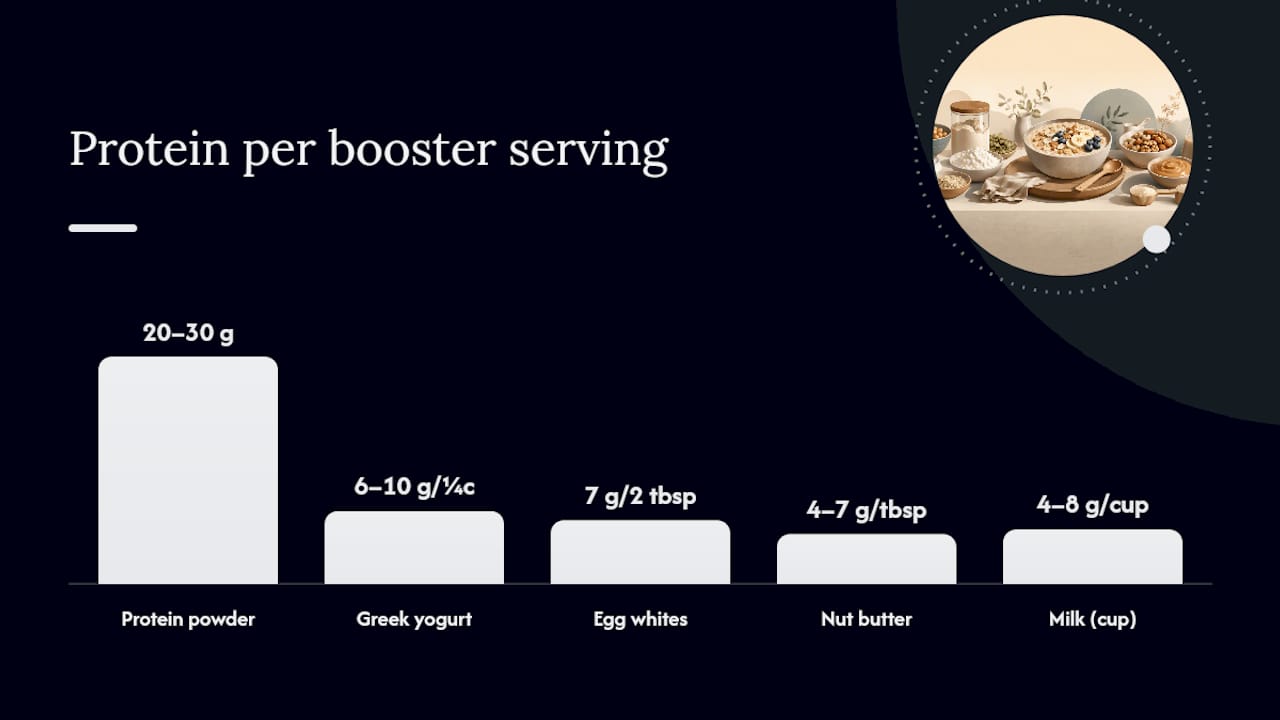
Hitting a specific number stops being guesswork once you know what each ingredient actually contributes. A scoop of whey or vegan protein powder typically carries 20 to 30g protein; a quarter-cup of Greek yoghurt adds around 6 to 7g; two tablespoons of liquid egg whites bring roughly 7g.
Here’s how those building blocks stack up against real targets:
- 25g target: 50g rolled oats (≈6g protein) cooked in 250ml semi-skimmed milk (≈8g), topped with 1 tablespoon peanut or pecan butter (≈4g) and a small scoop of whey (≈7g).
- 30g target: 50g oats + 1 full scoop protein powder (25g) stirred into water, plus a tablespoon of hemp hearts (3g) for texture.
- 40g target: 60g oats + 1.5 scoops protein powder + 100g Greek yoghurt stirred through at the end, sweetened with a spoon of honey rather than sugar.
- Dairy-free version: 50g oats + soy milk (≈8g protein per 250ml) + pea or soy protein powder (25g) + 2 tablespoons hemp hearts (6g) — comfortably clear 35g without a drop of dairy.
The liquid you cook in matters more than most people realise. Water contributes nothing; dairy or soy milk adds 4 to 8g protein per cup, while almond, oat or rice milks sit close to zero. Swapping water for soy milk alone can add close to a third of your protein target before you’ve touched a scoop.
Pro Tip: Stir protein powder into a small splash of cold milk first, then fold it into the hot porridge off the heat. Adding it straight to boiling liquid causes clumping and a slightly gritty texture.
A properly built high-protein bowl following recipe benchmarks like BBC Good Food’s protein porridge, which combines 80g oats with 30g protein powder, reliably lands around 25g protein per serving. That’s a useful baseline to build from rather than a ceiling.
Three high-protein oat recipes you can cook tonight
Each of these hits a different protein mechanism. Pick based on what you’ve got in the fridge, not just what sounds appealing.
- Overnight oats, two ways. For the powder version: mix 50g rolled oats, 1 scoop protein powder (25g), 200ml milk, and a tablespoon of chia seeds; refrigerate for at least six hours. Yields roughly 33g protein, 420 kcal. For the yoghurt version: swap the protein powder for 150g Greek yoghurt stirred in the next morning rather than overnight, which keeps its texture thicker. That version lands closer to 22g protein, 380 kcal.
- Stovetop egg-white porridge. Cook 50g oats in 200ml milk as normal. Once thickened and off the boil, slowly stir in 60ml (about 4 tablespoons) liquid egg whites and return briefly to low heat, stirring constantly for 60 to 90 seconds. Done this way, the whites gently coagulate into a custardy texture rather than scrambling, adding up to 7g protein per two tablespoons with no eggy taste. Total: around 28g protein, 390 kcal.
- No-powder cottage-style bowl. Cook 50g oats in water, then fold in 150g cottage cheese or Greek yoghurt once slightly cooled (adding it to boiling oats can make it grainy). Top with a tablespoon of nut butter and a tablespoon of pumpkin seeds. Protein lands around 27g, calories near 430 kcal, with no protein powder at all.
| Recipe | Protein per serving | Approx. calories |
|---|---|---|
| Overnight oats (powder) | ~33g | ~420 kcal |
| Overnight oats (yoghurt) | ~22g | ~380 kcal |
| Stovetop egg-white porridge | ~28g | ~390 kcal |
| No-powder cottage-style bowl | ~27g | ~430 kcal |
For dairy-free readers, swap Greek yoghurt for silken tofu blended until smooth, and use a pea protein isolate in place of whey. Store any overnight version in a sealed jar for up to three days; stovetop porridge is best eaten fresh but keeps a day in the fridge if reheated with a splash of extra milk to loosen it.
Do steel-cut, rolled, and instant oats differ in protein?
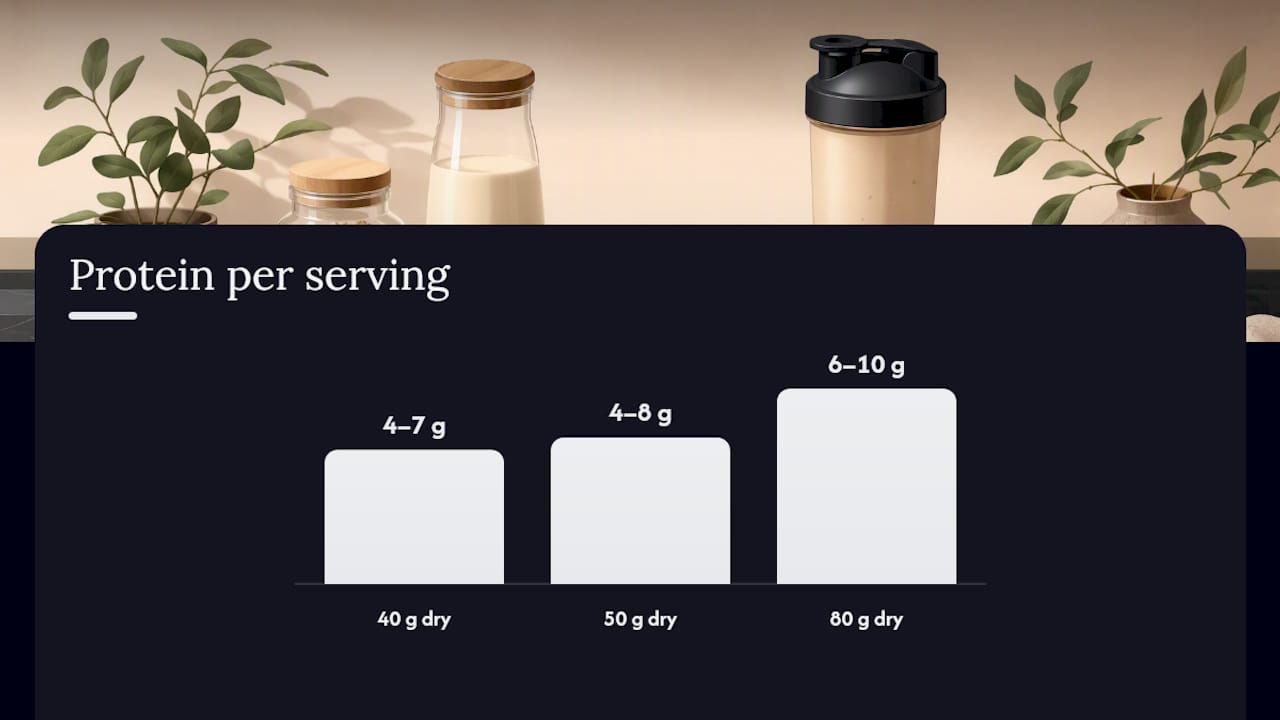
Barely. Steel-cut, rolled, quick and instant oats all come from the same oat groat, and processing (rolling, steaming, cutting) changes texture and cook time far more than it changes protein. Across types, raw oats sit at roughly 11 to 17g protein per 100g dry, which is high for a cereal grain thanks to a distinctive storage protein called avenalin that behaves more like a legume protein than a typical grain protein.
Translated into servings you’d actually eat:
| Portion (dry oats) | Approx. protein |
|---|---|
| 40g | 4 to 7g |
| 50g | 4 to 8g |
| 80g | 6 to 10g |
An 80g portion carries around 11g protein and roughly 303 kcal before any toppings, alongside about 8g fibre. Oats also contribute beta-glucan and avenanthramide antioxidants, compounds tied to cholesterol management and gut health that don’t show up on a protein label but justify keeping oats as the base rather than swapping to a protein shake alone. Instant oats sometimes carry slightly less protein per 100g if the packet blends in sugar or flavouring, so check the label rather than assuming “instant” and “rolled” are nutritionally identical.
Which protein boosters work best, and how many should you stack?
Every booster changes texture as well as protein, so the right choice depends on what bowl you’re making, not just the biggest number on the label.
- Protein powder (whey, casein, or plant blend): 20 to 30g protein per scoop; whey blends in smoothest, plant blends can taste slightly chalky if overused.
- Greek yoghurt or cottage cheese: roughly 6 to 10g per quarter-cup; adds tang and creaminess but stir in once the oats have cooled slightly.
- Liquid egg whites: around 7g per two tablespoons; needs gentle heat control to avoid scrambling.
- Nut and seed butters: roughly 4 to 7g per tablespoon, plus healthy fats that slow digestion and improve satiety.
- Hemp hearts or seeds: 2 to 3g protein per tablespoon with no cooking required, useful as a finishing touch.
- Soy or dairy milk as the cooking liquid: 4 to 8g per cup, essentially free protein you’d otherwise get from water.
The practical rule is to stack no more than two concentrated boosters (powder plus yoghurt, or powder plus egg whites) alongside one textural add-in like seeds or nut butter. Stacking three heavy boosters tends to push calories past 600 and can leave the bowl gluey rather than creamy. Dietitians generally recommend treating oats as the base and layering protein rather than expecting oats alone to close the gap, which is exactly the logic behind every combo above.
If you’re avoiding dairy, pea or soy protein isolate substitutes cleanly for whey at a similar protein-per-scoop rate, and silken tofu blended smooth can replace Greek yoghurt in the no-powder recipe. Watch for allergens in nut butters and hemp if cooking for others, and check whey isolate labels if lactose intolerance is a concern; casein and whey concentrate carry more residual lactose than isolate. For more seed-based ideas beyond hemp and pumpkin, Wild Foodz’s seed recipe roundup is worth a look for variety across meals, not just breakfast.
How Granavitalis supports these high-protein bowls
Granavitalis sources ancient grain flours, plant proteins and nut butters with the specific goal of making bowls like these easy to build without hunting down five separate brands. The pecan and mixed nut butters referenced above come from that same range, chosen for texture as much as protein content. For readers who want the full worked maths behind a 30g bowl, Granavitalis has a dedicated guide to building a 30g protein oatmeal bowl, and a separate breakdown of overnight oats that scale from 25g to 40g protein depending on which boosters you choose. Both were built using the same ingredient logic covered here: measured scoops, real serving sizes, no rounding up.
What I’ve learned from actually eating this way
Most people overthink the protein-powder step and underthink the liquid. Swapping water for milk or soy milk before you add a single scoop of anything is the laziest, highest-return change you can make to a bowl, and almost nobody does it.
My own routine on training days is unglamorous: overnight oats made the night before with Greek yoghurt stirred in at breakfast, a spoon of pecan butter, and a scattering of hemp hearts. It takes four minutes to assemble the night before and delivers roughly 30g protein without touching a shaker. Eating it within an hour of waking rather than mid-morning is the only timing rule worth following. Try one of the combos above for a week and see which one you actually want to eat again, because that’s the one that sticks.
— Jarrod
Build your bowl faster with Granavitalis nut butters and protein blends
Granavitalis exists so you’re not assembling six different brands to hit one protein number. The Raw Organic Pecan Butter mentioned throughout this guide adds both protein and healthy fats to any bowl above, with sourcing that skips the palm oil and added sugar found in many supermarket alternatives.

If you want variety rather than committing to one jar, the Organic Nut & Seed Butter Selection Box lets you rotate flavours across the week without buying five separate products. For readers building toward a broader nutrition reset rather than just breakfast, the Immune Booster Superfood Bundle covers the seeds and powders used across several of the combos above in one order. Pick whichever matches the recipe you’re most likely to actually repeat, and start your next bowl with it tomorrow morning.
Sources
- Oats and oat products: nutritional and functional properties (PMC review, 2023-07-17)
- Nutritionvalue
- Protein porridge recipe (BBC Good Food) - Published: 2025-10-07