
High protein plant based powder: your 2026 guide
TL;DR:
- A high protein plant-based powder is an all-plant supplement designed to support muscle growth without animal ingredients. The best options include blends of pea and rice proteins for complete amino acids, with at least 70 grams of protein per 100 grams and third-party testing for quality. These powders work best when paired with whole foods and used as supplements, not meal replacements.
A high protein plant based powder is a concentrated dietary supplement derived entirely from plant sources, designed to deliver the protein your muscles need without any animal ingredients. The best vegan protein powders provide 20–30g of protein per serving, with 30g per serving recommended for plant sources due to slightly lower bioavailability compared to whey. UK nutrition guidance sets the baseline adult protein requirement at 0.75g per kilogram of body weight, with athletes needing considerably more. Choosing the right powder means understanding protein sources, amino acid completeness, and quality standards before you buy.
1. What are the main types of plant protein used in powders?
Plant proteins fall into several distinct categories, each with its own nutritional strengths and weaknesses. Knowing the differences helps you choose a powder that genuinely supports your goals.
- Pea protein is the most widely used base in plant powders. It is high in lysine and leucine, two amino acids critical for muscle repair and growth. Its main limitation is a low methionine content.
- Brown rice protein complements pea protein well. It supplies the methionine that pea protein lacks, making the two a natural pairing.
- Soy protein is one of the few single-source plant proteins with a complete amino acid profile. It contains all nine essential amino acids in useful quantities, though some people prefer to avoid it for hormonal or allergy reasons.
- Hemp protein delivers a moderate amino acid profile alongside omega-3 and omega-6 fatty acids. The additional fats support joint health and inflammation management, making hemp a useful secondary ingredient.
- Pumpkin seed protein is rich in magnesium, zinc, and iron. It contributes a mild, nutty flavour and pairs well in multi-source blends.
Single-source powders are often incomplete proteins. Blends are preferred because they cover the full spectrum of essential amino acids that any one plant source misses.
2. What are the best plant protein powder blends for muscle support?
The gold standard in plant protein blending is pea combined with brown rice. Pea protein supplies high lysine and leucine, while rice protein fills the methionine gap. Together, they produce an amino acid profile that closely mirrors whey. That completeness matters because leucine, in particular, acts as the trigger for muscle protein synthesis.
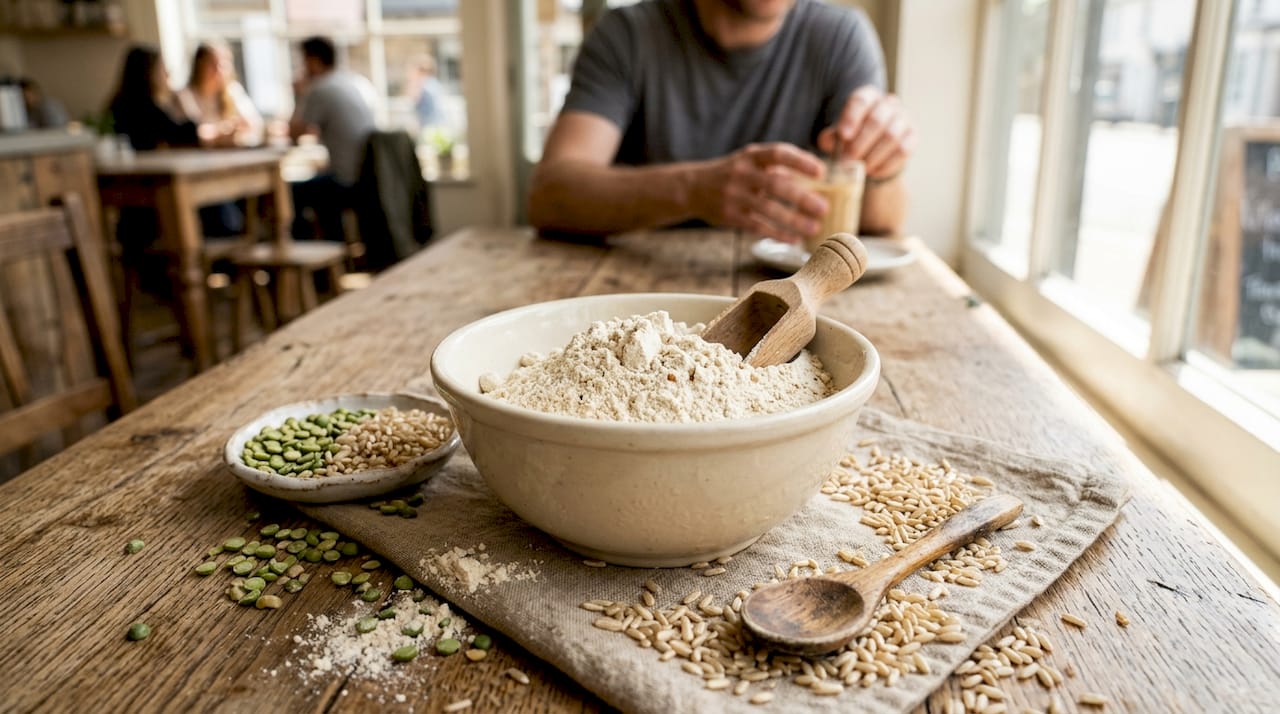
Targeting around 30g of protein per serving from a blended powder is the practical benchmark. Research confirms that vegan sources require roughly 30g per serving to achieve the same muscle-building stimulus as 25g of whey. A well-formulated blend closes that gap without requiring you to double your serving size.
Adding pumpkin seed or chia to a pea and rice base brings micronutrient benefits beyond protein. Pumpkin seed contributes zinc and magnesium, both of which support recovery. Chia adds fibre and omega-3s, which aid digestion and reduce inflammation after training.
- Pea + rice blend: complete amino acid profile, high leucine, widely available
- Pea + rice + pumpkin seed: adds zinc, magnesium, and a richer flavour
- Pea + rice + hemp: adds omega fatty acids for joint and inflammation support
- Soy-based blends: naturally complete, though less popular due to allergen concerns
Pro Tip: Check the amino acid breakdown on the label, not just the total protein figure. A powder listing leucine, lysine, and methionine separately signals genuine nutritional transparency.
For a detailed breakdown of complete vegan protein blends, the Granavitalis 2026 buying guide covers the key criteria clearly.
3. How do taste, texture, and digestibility vary among plant protein powders?
Taste is the most common reason people abandon a powder after one bag. Earthy, chalky, or bitter flavours put many people off, yet these issues are almost always a product quality problem rather than an unavoidable feature of plant protein. Blends with fewer artificial ingredients consistently score better on taste and texture than single-source powders loaded with gums and flavour maskers.
Texture depends heavily on milling quality. Coarsely milled powders feel gritty in a shaker. Finer milled isolates dissolve more completely, producing a smoother drink. Finer isolates and minimal gums are the standard recommendation for digestive comfort and mouthfeel.
Artificial sweeteners, particularly sucralose and acesulfame K, cause bloating and digestive discomfort in a meaningful number of people. Gums like xanthan and guar, added to improve texture, can have the same effect. The cleanest powders use natural sweeteners such as stevia or coconut sugar, and rely on quality milling rather than gums for consistency.
Chocolate and salted caramel remain the most popular flavours in the UK market. Both mask the natural earthiness of pea and hemp protein effectively. Unflavoured powders give you the most flexibility for cooking and baking, though they require a stronger base liquid to taste neutral.
Pro Tip: Mix your powder with oat milk or a nut butter base rather than water. The added fat and natural sweetness from the milk significantly improve the flavour of even a basic pea protein.
For culinary ideas that work well with plant protein powders, seasonal vegan recipes from Wild Foodz offer practical inspiration across the year.
4. What quality and safety factors matter when choosing a plant protein powder?
Quality in plant protein powders is not always obvious from the front of the pack. Marketing language like “natural” or “clean” carries no legal definition in the UK, so you need to look past the label claims.
- Protein density: A quality powder contains at least 70g of protein per 100g. Powders sitting at 50–60g per 100g are padded with carbohydrates or fillers that dilute the nutritional value.
- UK or EU manufacturing: UK and EU sourced products meet stricter safety and labelling standards than many imports. This matters for heavy metal testing, allergen disclosure, and accurate nutritional claims.
- Third-party testing: Look for batch-tested products with certificates of analysis. This confirms the protein content matches the label and screens for contaminants.
- Ingredient list length: A short, readable ingredient list is a reliable quality signal. Long lists with multiple gums, emulsifiers, and artificial additives suggest the manufacturer is compensating for poor base ingredients.
- Medical consultation: People with kidney or liver disease, or metabolic conditions, should consult a healthcare professional before using concentrated protein supplements regularly.
Safety concerns around heavy metals in plant proteins are real but manageable. Choosing products with transparent sourcing and third-party batch testing removes most of the risk. Prioritise brands that publish their testing results openly.
5. How to choose the right plant protein powder for your goals
The right powder depends on what you are actually trying to achieve. Muscle gain, weight management, and general health each call for a slightly different approach.
For muscle gain: Prioritise protein density and leucine content. A pea and rice blend delivering 25–30g of protein per serving is the practical target. Check that the amino acid profile includes all nine essential amino acids. The Granavitalis 2026 high protein guide covers this in detail.
For weight management: Look for powders with minimal added sugars and a high protein-to-calorie ratio. Protein increases satiety, so a clean, high-density powder used as a post-meal supplement helps control appetite without adding unnecessary calories.
For general health: A blend that includes hemp or pumpkin seed adds micronutrients alongside protein. Pairing your powder with whole foods, such as nut butters, oats, or seeds, creates a more nutritionally complete meal than powder alone.
For budget-conscious buyers: Protein density is the key metric. A cheaper powder with 75g of protein per 100g delivers better value than a premium-priced product at 55g per 100g. The best budget plant protein options in Europe for 2026 show that quality and affordability are not mutually exclusive.
Digestive enzymes added to a powder, such as bromelain or protease, improve protein absorption. This is particularly useful if you find plant proteins cause bloating. Powders with added superfoods like spirulina or maca provide extra micronutrients, though they tend to cost more and the quantities are often too small to make a clinical difference.
Plant protein powders are supplements supporting a balanced diet, not meal replacements. Use them to fill gaps in your protein intake, not as a substitute for whole food meals.
Key takeaways
The most effective high protein plant based powder combines a pea and rice blend, delivers at least 25–30g of protein per serving, and carries transparent third-party testing from a UK or EU manufacturer.
| Point | Details |
|---|---|
| Aim for 30g per serving | Vegan proteins need a slightly larger serving than whey to trigger the same muscle-building response. |
| Choose blends over single sources | Pea and rice together provide all nine essential amino acids that neither delivers alone. |
| Check protein density | A quality powder contains at least 70g of protein per 100g; anything lower is likely padded with fillers. |
| Prioritise UK or EU manufacturing | Stricter safety and labelling standards reduce the risk of heavy metal contamination and misleading claims. |
| Use powder as a supplement | Plant protein powders work best alongside whole foods, not as a replacement for balanced meals. |
Why I think most people overcomplicate choosing a plant protein powder
The conversation around plant protein has become unnecessarily complicated. People spend hours comparing amino acid charts and debating soy versus pea, when the practical answer is straightforward: buy a pea and rice blend with at least 70g of protein per 100g, from a brand that publishes its testing results.
What I have observed consistently is that taste and texture drive long-term compliance far more than marginal differences in amino acid ratios. If you hate drinking it, you will stop using it within a fortnight. A slightly less “optimal” powder you actually consume every day beats a theoretically perfect one sitting at the back of the cupboard.
The other thing worth saying plainly: plant proteins do work for muscle building, but they require realistic expectations. You will likely need a slightly larger serving than you would with whey, and progress may feel marginally slower in the first few weeks as your body adjusts. That is not a failure of plant protein. It is simply how the biology works, and it is manageable.
My honest advice is to stop chasing the “best” powder in the abstract and start with a clean, well-blended product from a transparent brand. Adjust your serving size to hit your daily protein target, pair it with whole foods, and give it eight weeks before drawing any conclusions.
— Jarrod
Granavitalis plant protein: clean ingredients, clear results
Granavitalis builds its range around the same principles this article covers: transparent sourcing, minimal processing, and nutritional integrity you can verify. Every product meets UK and EU manufacturing standards, so you know exactly what you are getting in every serving.
The Granavitalis range includes plant proteins formulated for real performance goals, alongside organic nut and seed butters that complement your protein intake with healthy fats and micronutrients. The organic nut and seed butter selection pairs particularly well with a post-workout shake, adding flavour, satiety, and nutritional depth. For a single-serve option, the raw organic pecan butter from RAWGORILLA delivers clean plant-based nutrition with no additives. Browse the full Granavitalis range to find the protein and wholefood options that fit your goals.
FAQ
What is the best plant protein blend for muscle building?
A pea and brown rice blend is the most effective combination for muscle building. Together, they provide all nine essential amino acids, including sufficient leucine to trigger muscle protein synthesis.
How much plant protein powder should I take per serving?
Aim for around 30g of protein per serving from a plant-based powder. Plant proteins have slightly lower bioavailability than whey, so a larger serving achieves the same muscle-building effect.
Are plant protein powders safe for everyday use?
Yes, for most healthy adults. People with kidney or liver conditions should consult a healthcare professional before using concentrated protein supplements regularly.
How do I know if a plant protein powder is high quality?
Check that the powder contains at least 70g of protein per 100g and is manufactured to UK or EU standards. Third-party batch testing and a short ingredient list are the clearest signs of a trustworthy product.
Can plant protein powder replace a meal?
Plant protein powders are supplements, not meal replacements. They work best when used alongside a varied, whole-food diet to fill protein gaps rather than substitute for complete meals.