
High-protein plant-based meals that actually support weight loss
Yes, you can lose weight and hold onto muscle on a high-protein plant-based diet. The evidence backs it: a controlled trial of plant-based caloric restriction proved non-inferior to a standard calorie-restricted diet for weight loss, with better results on some body-fat measures. The numbers to work with are straightforward: aim for a sufficient amount of protein per day, split evenly across main meals.
Your shortlist for hitting that target looks like this:
- Breakfast: tofu scramble with wholemeal toast (~24g protein)
- Lunch: lentil and chickpea salad bowl (~28g protein)
- Dinner: tempeh stir-fry with edamame and quinoa (~32g protein)
- Snack: roasted chickpeas or a handful of nuts and seeds (~10g protein)
Clinical guidance used by NHS dietitians for weight-loss programmes supports this range for preserving muscle mass during a calorie deficit, and the British Dietetic Association confirms that well-planned plant-based diets meet these needs without difficulty.
Key Takeaways
High-protein plant-based meals support effective weight loss when daily protein reaches 80 to 100g, spread across meals at 25 to 30g each, using whole-food sources first.
| Point | Details |
|---|---|
| Hit daily protein targets | Aim for 80–100g of protein daily, adjusted for body size and activity level. |
| Spread protein across meals | Target 25–30g of plant protein per main meal to support muscle preservation. |
| Prioritise whole foods | Favour tofu, tempeh, lentils, chickpeas and edamame over processed alternatives. |
| Batch-cook for consistency | Cook pulses and grains once weekly, then reuse them across three different meals. |
| Add quality fats strategically | A spoonful of Granavitalis nut butter on toast or in oats boosts protein and healthy fats without processed additives. |
Table of Contents
- How much protein do you actually need for weight loss?
- High-protein plant-based meal ideas for every part of the day
- How do you keep plant meals high in protein without piling on calories?
- Which plant foods give you the most protein per portion?
- What does a full day of high-protein plant-based eating look like?
- Why whole-food plant proteins deserve first place on your plate
- A simple next step to keep your plant meals protein-rich
- Where this article’s guidance comes from
- Frequently asked questions
- Sources
How much protein do you actually need for weight loss?
Most adults trying to lose weight while protecting muscle should target an appropriate amount of protein daily, according to guidance used in NHS weight-management services. That is not a number plucked from nowhere. It reflects the reality that a calorie deficit pushes your body to burn some muscle alongside fat, and protein is the main lever you have against that.
Spreading protein across meals matters more than most people realise. The British Dietetic Association notes that muscle protein synthesis from plant sources plateaus at around 30g per meal, slightly higher than the 20g plateau typically seen with animal protein. Practically, that means:
- Aim for 25–30g of plant protein at each main meal, not just at dinner.
- Older adults or those doing regular resistance training may need the upper end of that range.
- 150g of tofu plus a wholegrain side, or 200g of cooked lentils with vegetables, both land close to that per-meal target.
Body size, activity levels and any existing health conditions all shift these numbers, so anyone managing a medical condition alongside weight loss should get a personalised range from a registered dietitian.
High-protein plant-based meal ideas for every part of the day
These meals prioritise whole-food proteins first and lean on convenience options only where they genuinely help. Mix and match to build your own week.
Breakfast
- Tofu scramble with wholemeal toast — crumbled firm tofu, turmeric, spinach, black salt. Cook tofu with spices for five minutes, wilt in spinach, serve on toast. 24g protein, ~350 kcal.
- Overnight oats with pea protein and chia — oats, fortified soya milk, plant protein powder, chia seeds. Combine, chill overnight, top with berries. 27g protein, ~380 kcal. For more variations, Granavitalis’s high-protein vegan breakfast ideas cover several fortified-milk combinations.
- Chickpea flour omelette — gram flour, nutritional yeast, spring onion, mushrooms. Whisk batter, pour into a hot pan, fold once set. 20g protein, ~290 kcal.
- Greek-style soya yoghurt bowl — high-protein soya yoghurt, walnuts, ground flaxseed, berries. Layer and serve cold. 22g protein, ~310 kcal.
Lunch
- Lentil and chickpea salad bowl — cooked lentils, chickpeas, cucumber, feta-style tofu, lemon dressing. Combine all ingredients and dress just before eating. 28g protein, ~420 kcal.
- Black bean and quinoa bowl — black beans, cooked quinoa, roasted peppers, avocado. Warm the beans, layer over quinoa, top with avocado. 24g protein, ~440 kcal.
- Seitan wrap with hummus — sliced seitan, hummus, shredded carrot, wholemeal wrap. Pan-fry seitan two minutes per side, assemble the wrap. 30g protein, ~460 kcal.
- Edamame and soba noodle salad — soba noodles, shelled edamame, sesame dressing, spring onion. Cook noodles, toss with edamame and dressing. 23g protein, ~400 kcal.
Dinner
- Tempeh stir-fry with edamame and quinoa — tempeh, edamame, broccoli, quinoa, tamari. Stir-fry tempeh until golden, add vegetables and edamame, serve over quinoa. 32g protein, ~480 kcal.
- Chickpea and spinach curry — chickpeas, spinach, tinned tomatoes, coconut yoghurt, spices. Simmer chickpeas in tomato base, stir through spinach and yoghurt. 22g protein, ~410 kcal.
- Lentil bolognese with wholewheat pasta — brown lentils, tomato sauce, wholewheat pasta, nutritional yeast. Simmer lentils in sauce for 20 minutes, serve over pasta. 26g protein, ~470 kcal.
- Seitan and black bean chilli — seitan pieces, black beans, kidney beans, tomatoes, chilli spices. Brown seitan, add beans and tomatoes, simmer 15 minutes. 34g protein, ~450 kcal.
Snacks
- Roasted chickpeas with smoked paprika (~10g protein, 150 kcal)
- Edamame pods with sea salt (~11g protein, 120 kcal)
- Small portion of mixed nuts and seeds (~7g protein, 190 kcal)
- Fortified soya milk protein shake with a scoop of plant protein powder (~20g protein, 180 kcal)
Convenience options like protein powder and fortified soya milk earn their place here because they help you hit targets on busy days, but the NHS’s practical guide to plant-based eating is clear that fortification should support whole foods, not replace them. Watch the sodium and additive load in heavily processed meat substitutes. For more full meals built around these staples, Granavitalis’s seven vegan meals high in protein offers further recipe detail.
How do you keep plant meals high in protein without piling on calories?
Batch-cooking makes the difference between hitting your targets sporadically and doing it every week without thinking. Cook a large batch of lentils, chickpeas and quinoa on a Sunday, then use them three different ways across the week: a salad Monday, a curry Wednesday, a wrap Friday. Store cooked pulses in the fridge for up to four days or freeze in portions for longer.
A few swaps consistently cut calories while raising protein density:
- Swap mashed potato for cauliflower mash blended with white beans.
- Add edamame or cubed tofu to salads instead of croutons or cheese.
- Replace refined pasta or rice with quinoa or bulgur for extra protein per portion.
- Choose roasted chickpeas over crisps, and a small nut-butter portion on high-fibre toast over sugary spreads.
A realistic weekly plan looks like one shop on Saturday, a two-hour prep session Sunday covering grains, pulses and roasted vegetables, then a shorter twenty-minute top-up on Wednesday for anything perishable.
Pro Tip: Cook double the lentils or chickpeas you think you need. Cold cooked pulses hold their texture far better than reheated ones, so tomorrow’s salad often tastes better than today’s dinner.
Which plant foods give you the most protein per portion?
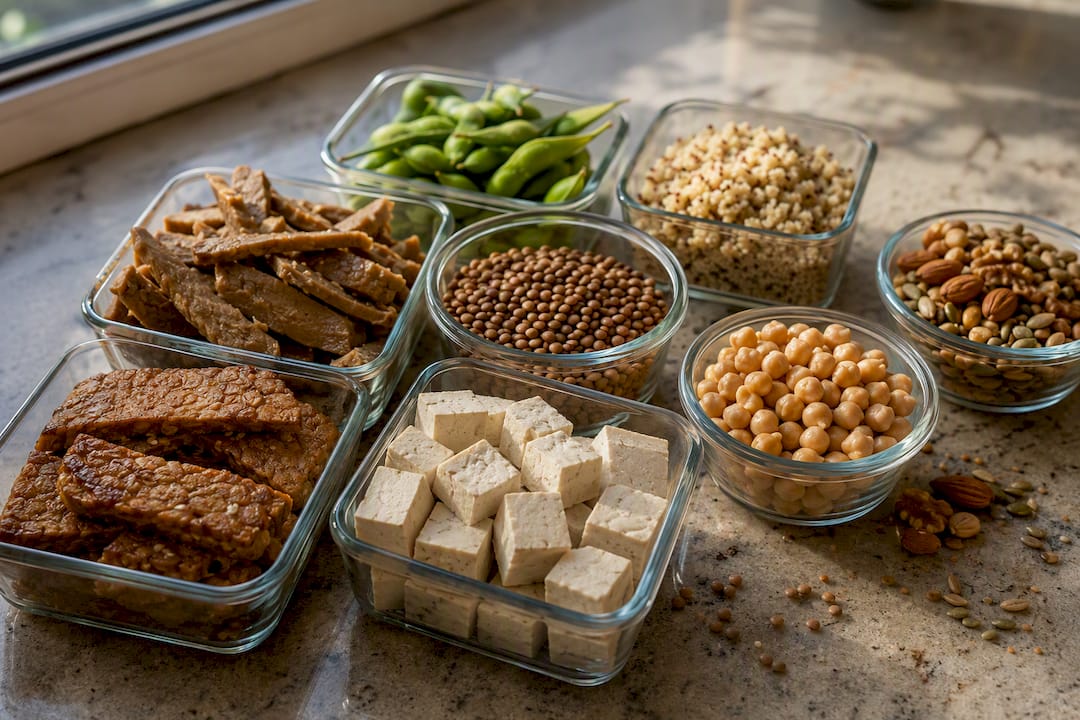
Not all plant foods pull their weight equally. Some staples deliver protein efficiently in a small portion; others need generous quantities to hit the same number.
| Food | Portion | Protein per portion |
|---|---|---|
| Tempeh | 100g | 24g |
| Seitan | 100g | 25g |
| Edamame | 100g | 12g |
| Lentils (cooked) | 80g | 10g |
| Chickpeas (cooked) | 100g | 9g |
| Tofu (firm) | 150g | 20g |
| Quinoa (cooked) | 150g | 8g |
| Mixed nuts & seeds | 30g | 6g |
Analysis of long-term weight-maintenance data suggests protein from pulses and legumes may support weight maintenance and blood pressure more effectively than protein from cereal sources, which is one reason lentils, chickpeas and edamame anchor this list rather than bread or rice.
Useful swap pairs: chickpeas for edamame when you want a lower-carb option; white rice for quinoa when you need more protein from the same bowl. Plant protein powders and mycoprotein products can fill genuine gaps, but check the label on processed meat substitutes. Some carry more salt and saturated fat than the whole-food version they’re replacing. Granavitalis’s guide to top vegan protein sources breaks down more of these staples by portion.
What does a full day of high-protein plant-based eating look like?
This template lands close to 95g of protein across roughly 1,550 kcal, distributing protein evenly rather than back-loading it at dinner.
| Meal | Item | Protein | Calories |
|---|---|---|---|
| Breakfast | Tofu scramble + toast | 24g | 350 kcal |
| Snack | Edamame pods | 11g | 120 kcal |
| Lunch | Lentil and chickpea salad | 28g | 420 kcal |
| Snack | Roasted chickpeas | 10g | 150 kcal |
| Dinner | Tempeh stir-fry with quinoa | 22g | 380 kcal |
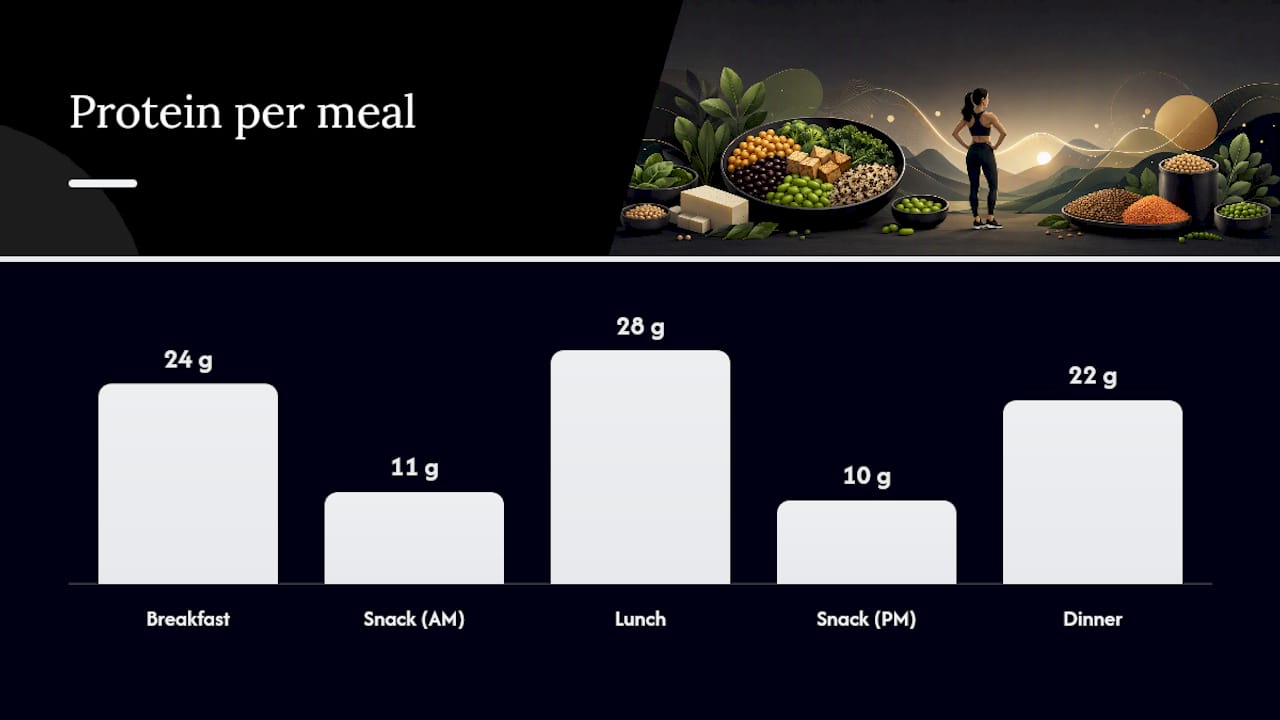
To raise protein further, add a fortified soya milk shake. To reduce calories, halve the quinoa portion at dinner and add extra greens instead.
Why whole-food plant proteins deserve first place on your plate
I’d argue the biggest mistake people make going plant-based for weight loss is reaching for powders and bars before mastering lentils, tofu and tempeh. Whole foods bring fibre and volume that protein isolates simply cannot replicate, and the dietetic guidance on this is unambiguous: well-planned plant-based diets meet protein needs without supplementation for most people. If you have specific medical needs or training goals, a registered dietitian can tailor the numbers properly.
A simple next step to keep your plant meals protein-rich
Building high-protein plant meals week after week gets easier once your pantry is stocked with the right foundations, not scattered ingredients bought once and forgotten. Granavitalis exists for exactly that gap: whole-food nut butters and seed blends that add protein and healthy fats to breakfasts, snacks and post-workout meals without relying on processed bars or isolates.
If you’re already leaning on nut butter as a quick protein top-up for oats, toast or smoothies, the Raw Organic Pecan Butter gives you a minimally processed option with no added sugar or palm oil. Want to try a few before committing to one jar? The Organic Nut & Seed Butter Selection Box lets you test several varieties across a week of meal prep, so you can find the one that fits your protein and calorie targets best. Pick a jar and add it to your next batch-cook session.
Where this article’s guidance comes from
- NHS weight-loss dietary guidance for daily protein ranges during weight loss.
- British Dietetic Association’s protein guide for per-meal targets.
- NICE guidance NG246 on energy deficit and plant-based diets.
- NHS plant-based eating guide for fortification tactics.
- Practical travel meal tips from Wild Foodz’s healthy eating guide for portable high-protein options.
Frequently asked questions
Can you get enough protein on a plant-based weight-loss diet? Yes. NHS and British Dietetic Association guidance confirms well-planned plant-based diets meet protein needs, provided you eat a variety of pulses, tofu, tempeh, seitan, nuts and seeds daily.
Do you need to combine plant proteins at every meal to get complete amino acids? No. The body maintains an amino acid pool over the day, so varied plant proteins eaten across meals, not necessarily combined at each one, cover essential amino acid needs.
What is the best plant protein for weight loss? No single food wins outright. Tempeh, seitan and tofu offer the highest protein per portion, while lentils and chickpeas add fibre that supports satiety during a calorie deficit.
How many calories should a high-protein plant-based meal have for weight loss? Most main meals in this guide fall between 350 and 480 kcal, which fits a daily calorie deficit for many adults while still hitting 25 to 30g of protein per meal.
This article is general information, not a substitute for advice from a qualified doctor. Consult a qualified healthcare professional about your own circumstances before acting on anything here.
Sources
- Healthy eating habits — Guys and St Thomas’ NHS Foundation Trust
- Practical guide: nutritional considerations re protein — British Dietetic Association
- NG246 Physical activity and diet — NICE
- Eating well guide — plant-based (North West NHS)
- Plant-based caloric restriction diet trial — Frontiers in Nutrition (2026)