
What Is Einkorn Flour Used For: Ancient Nutrition Today
Most british households searching for gluten-free options overlook an ancient grain that has thrived for over 10,000 years. Einkorn flour packs up to 21 percent protein and delivers more micronutrients than modern wheat, offering a rich, nutty flavour for baking and cooking. If you want a nutrient-dense alternative to traditional flours that supports a balanced diet, discover how einkorn transforms recipes while connecting you to some of the oldest farming traditions on Earth.
Table of Contents
- Einkorn Flour Explained: Origins And Nutritional Value
- Types Of Einkorn Flour And Main Distinctions
- How Einkorn Flour Is Used In Modern Baking
- Benefits For Gluten Sensitivity And Gut Health
- Comparing Einkorn Flour With Other Alternatives
- Common Mistakes When Baking With Einkorn
Key Takeaways
| Point | Details |
|---|---|
| Einkorn’s Nutritional Value | Einkorn flour offers higher protein levels (19-21%) and is rich in antioxidants and micronutrients compared to modern wheat varieties. |
| Types of Einkorn Flour | There are three main types of einkorn flour: whole grain, sifted, and fine-milled, each with distinct nutritional profiles and textures suitable for different culinary applications. |
| Baking Techniques | Successful baking with einkorn requires adjusted mixing techniques and hydration levels due to its weaker gluten strength, making it essential to modify traditional recipes. |
| Alternative for Gluten Sensitivity | Einkorn may be a suitable option for some individuals with mild wheat sensitivities, offering better digestibility and potential health benefits over standard wheat products. |
Einkorn Flour Explained: Origins And Nutritional Value
Einkorn represents a remarkable chapter in agricultural history, standing as one of humanity’s earliest cultivated wheat varieties. Originating in the Fertile Crescent around 10,000 years ago, this ancient grain has survived millennia of agricultural transformation, maintaining its distinctive genetic profile while modern wheat varieties evolved dramatically.
Scientific research reveals that einkorn possesses extraordinary nutritional characteristics that set it apart from contemporary wheat species. Nutritional studies demonstrate that einkorn contains significantly higher protein levels compared to modern wheat variants, ranging between 19-21%. Its unique protein composition includes different gluten structures, which contribute to its remarkable adaptability for specific culinary applications like unleavened breads and cookies.
The grain’s remarkable nutritional profile extends beyond protein content. Einkorn is rich in micronutrients and antioxidant compounds, making it an exceptional choice for health-conscious individuals seeking nutrient-dense alternatives. Its ability to thrive in poor soil conditions further underscores its sustainability credentials, offering an environmentally resilient grain option that connects modern nutritional needs with ancient agricultural practices.
Pro tip: When baking with einkorn flour, remember its lower gluten strength requires adjusted mixing and kneading techniques to achieve optimal texture in your recipes.
Types Of Einkorn Flour And Main Distinctions
Einkorn flour presents a fascinating array of variations, distinguished by its unique botanical and genetic characteristics. Botanical distinctions reveal that einkorn is a diploid wheat species, fundamentally different from modern free-threshing wheat varieties. This genetic uniqueness translates directly into distinct flour types with remarkable variations in protein content, gluten structure, and culinary performance.
Primarily, einkorn flour can be categorised into three main types: whole grain, sifted, and fine-milled. Whole grain einkorn flour retains the entire wheat kernel, including bran, germ, and endosperm, offering the most comprehensive nutritional profile. Sifted einkorn flour removes some of the bran, creating a lighter texture, while fine-milled einkorn flour provides the most delicate consistency, ideal for pastries and delicate baked goods.
The genetic complexity of einkorn means that different varieties exhibit nuanced characteristics. Some strains demonstrate higher protein concentrations, while others show enhanced antioxidant profiles. These variations make einkorn flour a versatile ingredient for bakers and nutritionists seeking specialised grain options. The flour’s limited gluten strength requires careful handling, making it particularly suitable for unleavened breads, cookies, and specific culinary applications that do not demand extensive gluten development.
Here’s a quick comparison of einkorn flour types and their best uses:
| Flour Type | Nutritional Profile | Texture Produced | Ideal Culinary Application |
|---|---|---|---|
| Whole Grain | Highest micronutrients | Dense, hearty | Rustic breads, flatbreads |
| Sifted | Moderate nutrients | Lighter crumb | Cookies, lighter loaves |
| Fine-Milled | Finest nutrient content | Delicate, tender | Pastries, cakes |
Pro tip: When experimenting with einkorn flour, start by replacing approximately 25-30% of standard wheat flour in recipes to understand its unique textural properties and adjust your technique accordingly.
How Einkorn Flour Is Used In Modern Baking
Modern bakers are increasingly embracing einkorn flour as a nutritious alternative to conventional wheat flour, recognising its unique culinary potential. Specialised baking techniques have emerged to address einkorn’s distinctive gluten characteristics, allowing bakers to create delectable baked goods with enhanced nutritional profiles. The flour’s lower gluten strength means that traditional baking methods require careful adaptation to achieve optimal texture and rise.
Einkorn flour demonstrates remarkable versatility across various baking applications. It excels in creating dense, flavourful breads, particularly when utilised in sourdough recipes that enhance its natural qualities. Artisan bakers and home cooks alike find success in crafting cookies, pastries, and unleavened breads that showcase the grain’s rich, nutty flavour profile. Notably, the flour performs exceptionally well in shorter-gluten products like crackers, flatbreads, and delicate pastry items that do not demand extensive gluten development.

Nutritional innovations are further expanding einkorn’s role in modern baking. Researchers are exploring techniques like germination to enhance the flour’s nutritional value, creating new opportunities for health-conscious bakers. These developments suggest that einkorn flour is not merely a nostalgic ingredient but a forward-looking option for contemporary culinary exploration. Its unique protein composition and potential health benefits make it an increasingly attractive choice for those seeking alternative grain options.
Pro tip: When incorporating einkorn flour into your baking, start with a blend of 50% einkorn and 50% traditional flour to help develop your technique and understand its unique baking characteristics.
Benefits For Gluten Sensitivity And Gut Health
For individuals struggling with wheat-related digestive challenges, einkorn flour offers a promising alternative that challenges conventional understanding of gluten sensitivity. Unique protein compositions suggest that einkorn’s gluten structure differs significantly from modern wheat varieties, potentially providing a more digestible option for those with mild wheat intolerances. Critically, while not safe for individuals with coeliac disease, einkorn presents a nuanced approach to understanding gluten consumption.
The grain’s remarkable nutritional profile extends beyond its gluten characteristics. Einkorn contains an impressive array of bioactive compounds, including carotenoids and phenolic acids that contribute to improved gut health. These antioxidant-rich properties may help reduce systemic inflammation, supporting digestive wellness in ways traditional wheat cannot match. Research indicates that einkorn’s unique molecular structure could potentially mitigate some of the inflammatory responses typically associated with wheat consumption.
Nutritional scientists are particularly intrigued by einkorn’s potential for individuals with non-coeliac gluten sensitivity. The flour’s lower immunostimulatory peptide content suggests a gentler interaction with the digestive system, offering hope for those who experience discomfort with standard wheat products. Its distinctive protein profile demonstrates that not all wheat varieties are created equal, and ancient grains like einkorn may hold key insights into more digestible, nutritionally dense food options.
Pro tip: If you experience mild wheat sensitivities, consult a nutritionist about gradually introducing small quantities of einkorn flour to assess your individual tolerance and potential digestive response.
Comparing Einkorn Flour With Other Alternatives
Navigating the landscape of alternative flours requires a nuanced understanding of their unique characteristics. Comparative nutritional analyses reveal that einkorn flour stands distinctly apart from other wheat varieties, including modern wheat and ancient alternatives like emmer and spelt. Its protein profile, mineral composition, and functional properties create a nutritional fingerprint that sets it apart from conventional flour options.
When examining wholegrain alternatives, einkorn demonstrates remarkable advantages over traditional wheat products. Notably, einkorn pasta retains significantly higher levels of antioxidants, phenolics, and phytosterols during cooking and digestion compared to standard durum wheat pasta. This preservation of nutritional integrity suggests that einkorn offers more than just an alternative flour—it represents a superior nutritional approach to grain-based foods.
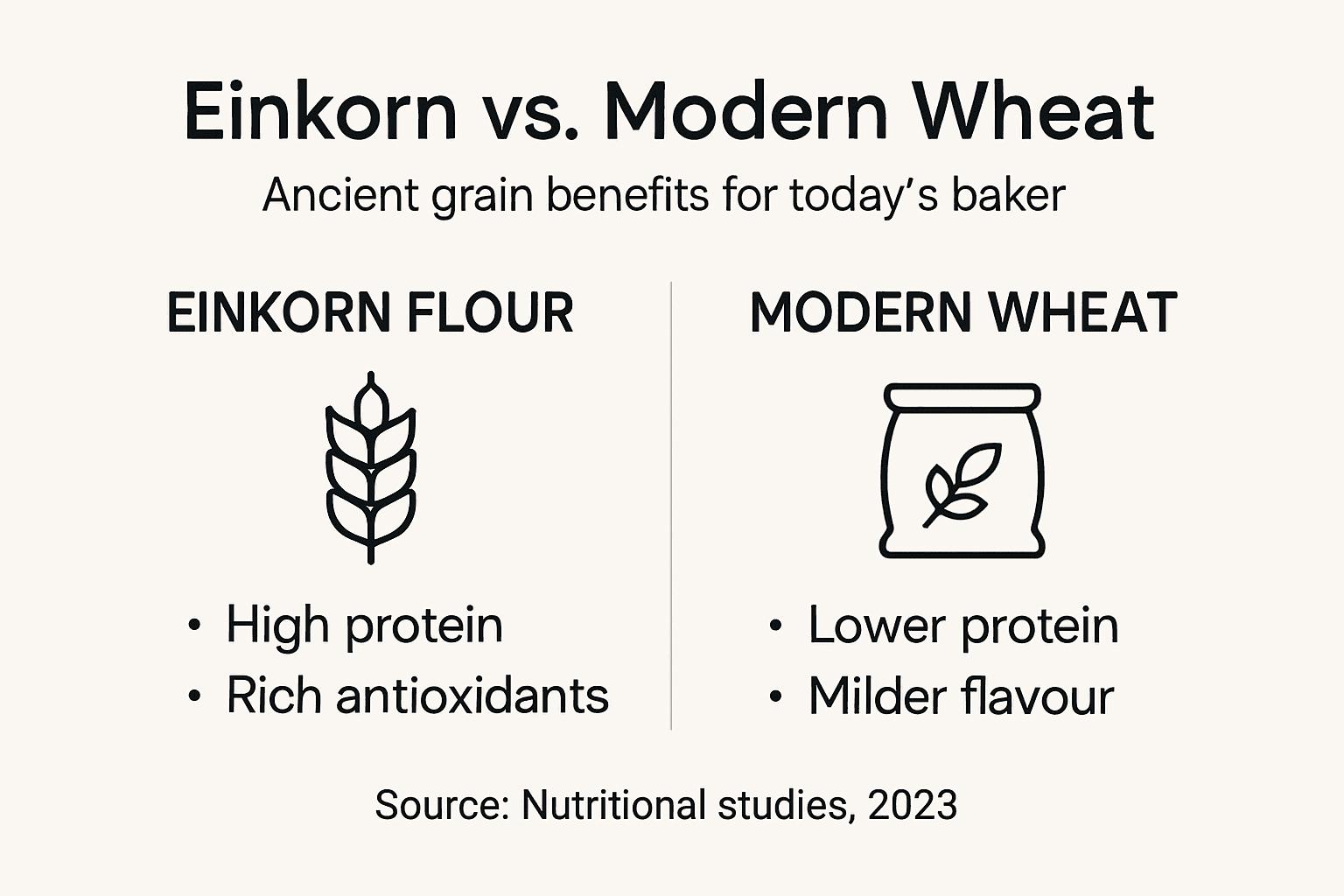
The comparative differences extend beyond mere nutritional metrics. Einkorn’s unique protein structure means it handles differently in culinary applications, with weaker gluten strength that impacts baking and cooking techniques. While this might seem challenging, it actually opens up fascinating opportunities for innovative cooking approaches. Its distinct farinograph properties make it particularly suitable for specific recipes that benefit from its lighter, more delicate characteristics, distinguishing it from both modern wheat and other ancient grain alternatives.
For reference, here is how einkorn flour compares with other major wheat alternatives on key baking and health features:
| Feature | Einkorn | Modern Wheat | Spelt | Emmer |
|---|---|---|---|---|
| Protein Content | High (19-21%) | Moderate (12%) | Moderate | Moderate |
| Gluten Strength | Weak, fragile | Strong, elastic | Medium | Medium |
| Antioxidant Levels | Very high | Lower | Moderate | High |
| Digestive Tolerance | Better for some | Lowest | Moderate | Moderate |
Pro tip: When substituting einkorn flour in recipes, start by replacing 25-30% of standard flour to understand its unique texture and flavour profile before making complete conversions.
Common Mistakes When Baking With Einkorn
Baking with einkorn flour demands a nuanced approach that differs significantly from traditional wheat baking techniques. Baking technique research highlights critical errors home bakers frequently encounter, primarily stemming from treating einkorn like standard wheat flour. Its distinctive protein structure requires specialised handling to achieve optimal results, making traditional recipe approaches potentially disastrous.
One of the most prevalent mistakes is using high-speed mixing techniques that can irreparably damage einkorn’s delicate gluten network. Unlike modern wheat flour, einkorn’s protein composition is extraordinarily fragile, meaning aggressive mixing breaks down the already limited gluten structure. Bakers must adopt gentle, minimal mixing methods, focusing on careful incorporation of ingredients rather than vigorous kneading. Hydration levels also present a significant challenge, with many bakers failing to adjust liquid ratios to accommodate einkorn’s unique moisture absorption characteristics.
Recipe substitution represents another common pitfall for home bakers. Simply replacing standard wheat flour with einkorn in a one-to-one ratio rarely produces satisfactory results. The flour’s weaker gluten strength means that bread and pastry recipes require fundamental reformulation. Successful baking with einkorn demands understanding its inherent limitations and strengths, potentially necessitating additional binding agents, adjusted rising times, and modified baking temperatures to compensate for its distinctive molecular properties.
Pro tip: When first experimenting with einkorn flour, start by replacing only 25% of your standard flour and gradually increase the proportion as you become familiar with its unique baking characteristics.
Unlock Ancient Nutrition with Einkorn Flour for Modern Baking Success
Einkorn flour offers a unique solution for those seeking nutrient-dense, ancient grains with distinctive protein and antioxidant benefits. This ancient wheat variety addresses common baking challenges from its delicate gluten structure to its exceptional flavour and health properties. If you want to explore baking with einkorn but are unsure how to handle its special texture and nutritional advantages, Granavitalis has you covered with premium, thoughtfully sourced grains tailored for modern lifestyles.
Discover our carefully curated selection in All Flours – Granavitalis and explore the rich world of nutrient-packed Grains – Granavitalis. Each product supports your journey toward authentic wholefood vitality rooted in tradition yet fuelled for today. Visit Granavitalis now to start baking with einkorn flour and transform your meals into nourishing experiences filled with purity, performance, and purpose.
Frequently Asked Questions
What nutritional benefits does einkorn flour offer compared to modern wheat?
Einkorn flour contains higher protein levels (19-21%) and is rich in micronutrients and antioxidants, making it a more nutrient-dense alternative to modern wheat.
How do I adjust recipes when using einkorn flour?
When baking with einkorn flour, it’s advisable to start by replacing about 25-30% of standard wheat flour in your recipes to understand its unique properties, including lower gluten strength.
Can einkorn flour be used for gluten-sensitive individuals?
Einkorn flour may be a better option for those with mild wheat sensitivities due to its distinct gluten structure, but it is not safe for individuals with coeliac disease.
What are the primary types of einkorn flour, and how do they differ?
The main types of einkorn flour are whole grain, sifted, and fine-milled. Whole grain flour retains the entire wheat kernel, while sifted flour has some bran removed, and fine-milled flour provides a delicate texture for pastries.