
What Is Einkorn Wheat? Complete Guide & Benefits
Did you know that einkorn wheat was first domesticated nearly 10,000 years ago in what is now southeastern Turkey? This ancient grain brings a richness to our tables that modern wheat cannot match. Its simple genetic makeup holds unique nutritional benefits and connects us with early farming traditions. Understanding einkorn gives us a direct taste of the agricultural ingenuity that helped shape civilizations.
Table of Contents
- Einkorn Wheat Defined And Its Ancient Origins
- Unique Nutritional Profile And Health Benefits
- How Einkorn Differs From Modern Wheat Varieties
- Culinary Uses And Tips For Cooking With Einkorn
- Potential Risks, Considerations And Alternatives
Key Takeaways
| Point | Details |
|---|---|
| Ancient Origins | Einkorn wheat, one of the oldest cultivated grains, originated approximately 10,000 years ago in the Fertile Crescent of Turkey. |
| Nutritional Benefits | Einkorn contains significantly higher levels of protein, minerals, and antioxidants compared to modern wheat varieties. |
| Distinct Genetic Makeup | Unlike modern wheat, einkorn is diploid, resulting in a simpler genetic structure and higher nutritional density. |
| Cooking Considerations | Special techniques are required for cooking with einkorn due to its unique gluten structure and sticky dough. |
Einkorn Wheat Defined And Its Ancient Origins
Einkorn wheat is one of humanity’s oldest cultivated grains, representing a direct link to our agricultural ancestors. According to research from archaeological sources, einkorn is a diploid wheat species that was among the first plants domesticated approximately 10,000 years ago in the southeastern region of Turkey, specifically within the historical Fertile Crescent.
As an ancient grain, einkorn has a fascinating genetic profile that distinguishes it from modern wheat varieties. It exists in two primary forms: the wild species Triticum boeoticum and its domesticated counterpart Triticum monococcum. Understanding ancient grains explained reveals how these early wheat varieties spread across Europe, with archaeological evidence suggesting its presence in Britain as far back as 8,000 years ago.
The journey of einkorn wheat is a testament to human agricultural innovation. From its origins in the Fertile Crescent, this hardy grain gradually migrated across Europe, persisting in northern European agricultural systems well into the early 20th century. Its resilience and nutritional profile made it a crucial food source for early farming communities, providing sustenance during challenging environmental conditions.
- Originated in southeastern Turkey- Among the first domesticated plant species- Genetically distinct from modern wheat varieties- Spread across Europe over thousands of years
Today, einkorn represents more than just a grain - it’s a living connection to our agricultural heritage, offering a glimpse into how our ancestors developed sustainable food systems thousands of years ago.
Unique Nutritional Profile And Health Benefits
Einkorn wheat stands out in the world of grains for its exceptional nutritional complexity. Research reveals that this ancient grain contains significantly higher levels of crucial nutrients compared to modern wheat varieties. According to studies published in food science journals, einkorn demonstrates notably elevated levels of protein, crude fibre, potassium, magnesium, and calcium.
The nutritional advantages of einkorn extend beyond basic macronutrients. Understanding how ancient grains support wellness naturally highlights its remarkable antioxidant profile. Scientific research indicates that einkorn contains three to eight times more lutein than contemporary wheat varieties, suggesting potential benefits for eye health and cellular protection.
Nutrient highlights of einkorn wheat include:
- 30% higher protein content compared to modern wheat
- Elevated levels of essential minerals like magnesium and potassium
- Significantly higher antioxidant compounds
- Rich in phenolic acids and selenium
What makes einkorn truly special is its genetic simplicity. Unlike heavily modified modern wheat, this ancient grain retains its original nutritional integrity, offering a pure, minimally processed food source that connects us directly to our agricultural heritage. Its unique nutritional composition makes it an extraordinary choice for those seeking whole, nutrient-dense foods.

How Einkorn Differs From Modern Wheat Varieties
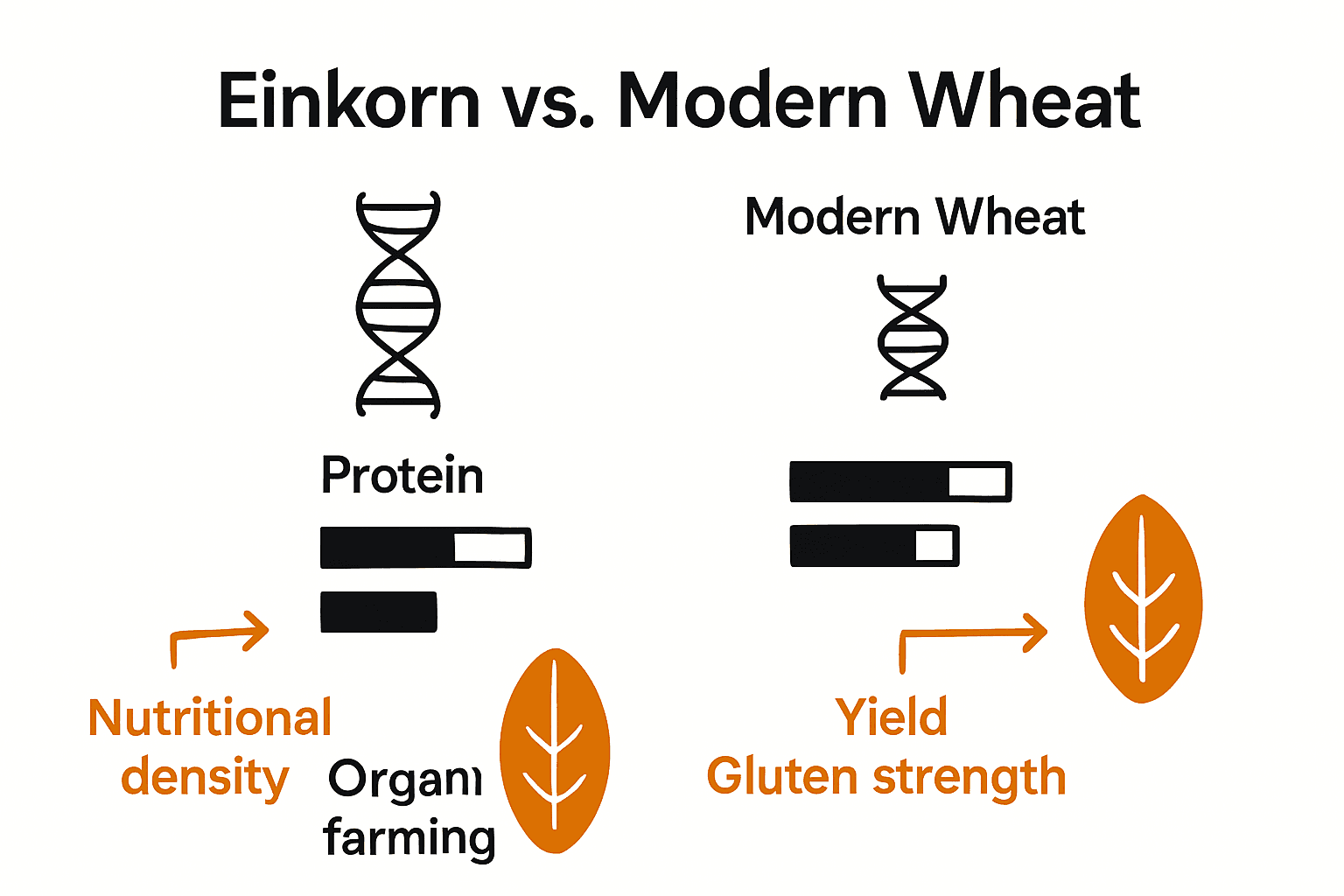
At first glance, einkorn might look similar to modern wheat, but its genetic makeup tells a dramatically different story. Genetic simplicity sets einkorn apart, with research revealing significant nutritional and structural differences from contemporary wheat varieties. The hidden cost of “modern” grains highlights how extensive breeding has fundamentally altered wheat’s original nutritional profile.
When it comes to agricultural performance, einkorn demonstrates unique characteristics. Scientific studies show that einkorn typically produces lower crop yields (3.5–4.5 tonnes per hectare) compared to modern winter wheat. However, it excels in low-input and organic farming environments, maintaining impressive protein contents up to 18%, which is substantially higher than many modern wheat varieties.
Key differences between einkorn and modern wheat include:
- Genetic structure: Diploid (two sets of chromosomes) vs. hexaploid in modern wheat
- Protein composition: Higher proportion of albumins and globulins
- Yield potential: Lower agricultural output but better nutritional density
- Adaptability: Superior performance in organic and low-intervention farming systems
The most fascinating distinction lies in protein fractions. Einkorn contains higher proportions of specific protein types that modern breeding processes have gradually eliminated. This means einkorn offers a more complex, nutrient-dense grain that more closely resembles the wheat our ancestors consumed thousands of years ago.
Here’s a comparison of einkorn wheat and modern wheat varieties:
| Characteristic | Einkorn Wheat | Modern Wheat |
|---|---|---|
| Genetic Structure | Diploid (2 sets) | Hexaploid (6 sets) |
| Protein Content | Up to 18% | 10–14% (typically) |
| Crop Yield | 3.5–4.5 t/ha | Much higher |
| Gluten Strength | Weaker, stickier dough | Stronger, elastic dough |
| Adaptability | Excels in low-input farming | Optimised for high-input systems |
| Nutritional Density | Higher mineral & antioxidants | Lower, more uniform |
| Use in Baking | Requires special techniques | Standard baking methods |
Culinary Uses And Tips For Cooking With Einkorn
Einkorn flour offers a unique culinary experience that connects modern kitchens with ancient cooking traditions. Unlike contemporary wheat, einkorn requires some special techniques to unlock its full potential.
 How to incorporate ancient grains naturally suggests understanding its distinctive characteristics before diving into cooking.
In traditional cuisines, particularly in northern Provence, einkorn demonstrates remarkable versatility. Historically traced back to 7500 BC, this ancient grain can be prepared in multiple ways - from whole grain dishes to milled flour creations. Chefs and home cooks appreciate its ability to transform into hearty salads, rich soups, artisanal breads, and even specialty pastas. However, its unique gluten structure means bakers must adjust their usual techniques, especially when working with its notably sticky dough.
Cooking tips for einkorn include:
- Use slightly less liquid than with modern wheat flour
- Knead bread dough more gently to prevent over-developing gluten
- Experiment with shorter mixing times
- Allow extra hydration time for more tender results
- Consider lower baking temperatures for more even cooking
While einkorn contains gluten and isn’t suitable for gluten-free diets, its nutritional density and historical significance make it a fascinating ingredient for culinary enthusiasts seeking to explore traditional grain preparations. Its rich, slightly nutty flavour offers a taste of agricultural heritage that modern wheat simply cannot replicate.
Potential Risks, Considerations And Alternatives
While einkorn offers remarkable nutritional benefits, it’s crucial to understand its limitations and potential challenges for different dietary needs. Gluten content remains a significant consideration for individuals with wheat sensitivities or celiac disease. Understanding ancient grains explained emphasizes the importance of understanding grain compatibility with individual health requirements.
Einkorn’s unique genetic structure means it isn’t suitable for everyone. People with gluten intolerance should avoid this grain, as it still contains gluten proteins. For those seeking alternatives, several options provide similar nutritional profiles while addressing specific dietary constraints. Quinoa, amaranth, and buckwheat offer gluten-free alternatives that can deliver comparable protein and mineral content.
Key considerations when incorporating einkorn include:
- Not suitable for gluten-free diets
- May trigger wheat allergies
- Potentially more expensive than modern wheat
- Requires specific cooking techniques
- Limited availability compared to conventional grains
For individuals with wheat sensitivities, consulting a nutritionist or healthcare professional becomes essential before introducing einkorn into their diet. Alternative ancient grains can provide similar nutritional benefits with potentially fewer digestive challenges, ensuring that everyone can explore diverse and nutritious grain options tailored to their specific health needs.
Rediscover the Power of Einkorn with Granavitalis
Are you ready to embrace the wholesome nutrition of ancient grains like einkorn wheat Discover how this nutritionally rich, historically treasured grain can transform your meals and support your health goals. At Granavitalis, we understand the importance of connecting to food that nourishes deeply and sustainably, just as our ancestors did. Our carefully selected range of premium ancient grains and flours, including einkorn, offers higher protein, antioxidants, and minerals for those seeking genuine nourishment without compromise.
Explore our All Flours – Granavitalis collection to find einkorn flour that meets your cooking and wellness needs. With expert knowledge, we help you unlock the traditional benefits of einkorn while making preparation simple and enjoyable. Visit Granavitalis now to start your journey towards balanced eating rooted in history and rich nutrition. Take the step today and bring the taste of ancient grains back to your table for a stronger tomorrow.
Frequently Asked Questions
What is einkorn wheat?
Einkorn wheat is one of the oldest cultivated grains, a diploid wheat species that was among the first plants domesticated around 10,000 years ago. It has a unique genetic profile that sets it apart from modern wheat varieties.
What are the health benefits of einkorn wheat?
Einkorn wheat contains higher levels of protein, essential minerals like potassium and magnesium, and significant antioxidant compounds compared to modern wheat, making it a nutrient-dense choice for a healthy diet.
How does einkorn wheat differ from modern wheat?
Einkorn wheat has a diploid genetic structure, higher protein content, and a different gluten composition than modern hexaploid wheat. It is less modified and retains more of its original nutritional integrity.
How can I cook with einkorn wheat?
When cooking with einkorn flour, use slightly less liquid than modern wheat flour, knead the dough gently, allow for extra hydration, and consider lower baking temperatures for optimal results.