
What Is Einkorn Flour Made From and Why It Matters
Most British home bakers are searching for a flour that delivers both nutrition and history. Einkorn wheat packs in up to 50 percent more antioxidants than typical modern wheat, giving British adults a powerful reason to rethink their pantry staples. For anyone looking to enrich their diet with authentic, nutrient-rich grains, ancient wheat varieties like einkorn offer a unique taste of agricultural tradition and a sensible option for modern plant-based eating.
Table of Contents
- Einkorn Wheat: An Ancient Grain Defined
- How Einkorn Differs from Modern Wheat
- Nutritional Profile and Health Benefits
- Sourcing and Processing of Einkorn Flour
- Einkorn in UK Diets: Practical Uses
Key Takeaways
| Point | Details |
|---|---|
| Einkorn Wheat’s Historical Significance | Einkorn wheat connects modern consumers to ancient agricultural practices, offering insights into humanity’s early farming innovations. |
| Genetic Stability | With a simpler genetic structure and minimal modification over millennia, einkorn demonstrates superior disease and drought resistance compared to modern wheat. |
| Nutritional Advantages | Einkorn wheat is richer in protein, minerals, and antioxidants, making it a healthier alternative for those seeking nutrient-dense food options. |
| Artisanal Sourcing | The sourcing and processing of einkorn flour involve careful, traditional methods, emphasising the importance of purchasing from artisanal producers for quality. |
Einkorn Wheat: An Ancient Grain Defined
Einkorn wheat represents one of humanity’s most extraordinary agricultural legacies, standing as a testament to our earliest agricultural innovations. Originating in the Fertile Crescent, this remarkable grain has remained virtually unchanged for thousands of years, offering modern consumers a direct connection to our agricultural heritage.
As a diploid wheat species, einkorn possesses a remarkably simple genetic structure that distinguishes it from contemporary wheat varieties. Unlike modern wheat, which has undergone extensive selective breeding, einkorn has maintained its original genetic profile. This preservation means the grain retains characteristics that have been gradually engineered out of modern wheat strains, making it a fascinating subject for nutritionists and food historians alike.
The genetic resilience of einkorn wheat is particularly noteworthy. Scientists have discovered that its unique genome structure contains traits that have allowed it to survive across millennia with minimal modification. This genetic stability suggests remarkable adaptability and nutritional integrity that modern wheat varieties might lack, presenting an intriguing alternative for those seeking more traditional, less processed grain options.
Pro tip: When exploring ancient grains like einkorn, consider purchasing from speciality suppliers who understand and respect traditional agricultural practices and can provide authentic, minimally processed products.
How Einkorn Differs from Modern Wheat
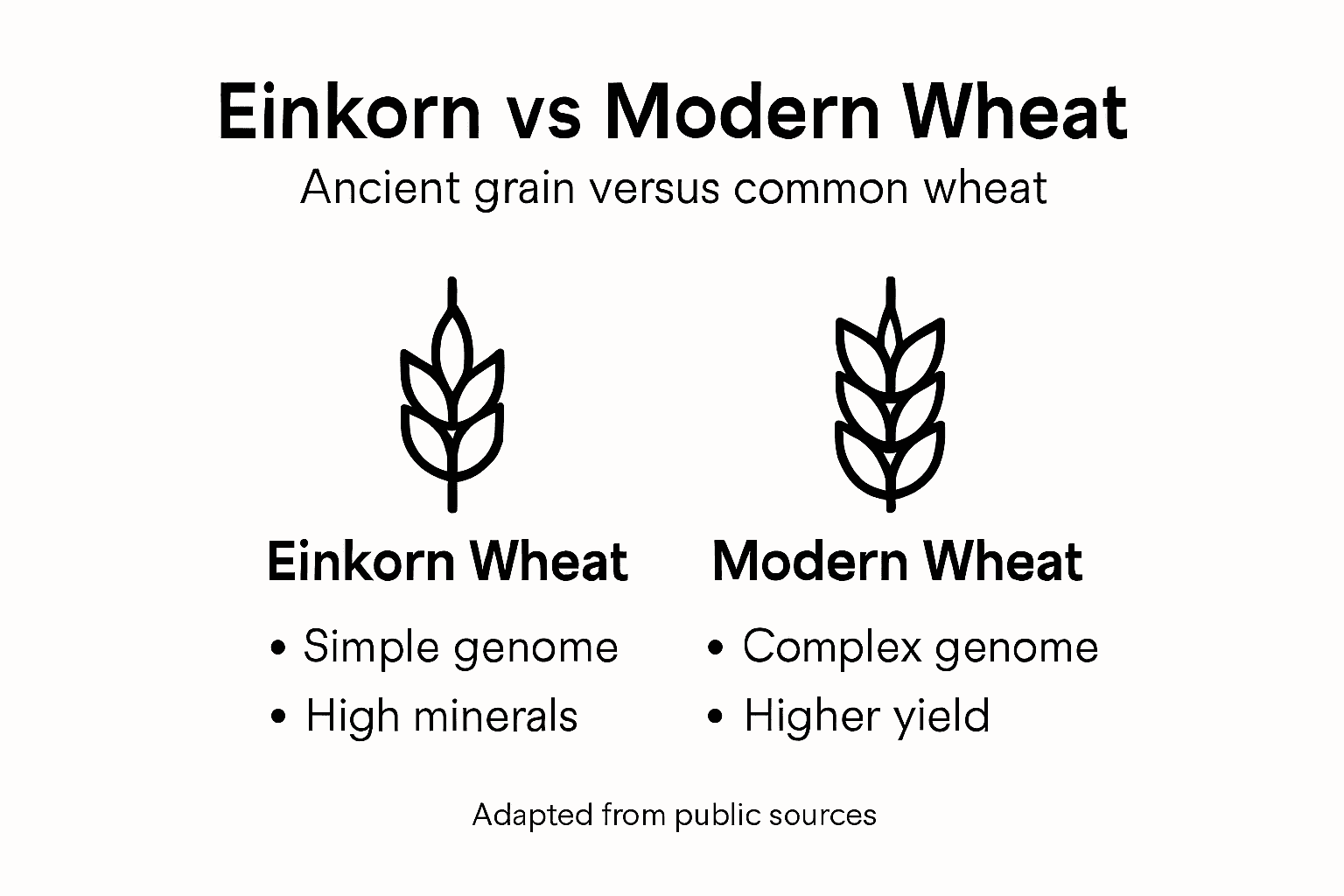
Einkorn wheat represents a fascinating agricultural anomaly, standing distinctly apart from contemporary wheat varieties through its remarkable genetic structure. Diploid genetic composition means einkorn possesses just 14 chromosomes, compared to modern bread wheat’s complex 42-chromosome configuration. This fundamental genetic difference translates into profound variations in grain characteristics, nutritional profile, and agricultural performance.
Unlike modern wheat, which has been intensively bred for commercial yield and ease of harvesting, einkorn wheat maintains its original genetic diversity and primitive traits. Its grains are smaller and enclosed in a tougher husk, making processing more labour-intensive but preserving unique nutritional qualities. Wild seed dispersal mechanisms differ significantly, with cultivated einkorn retaining intact seed heads while wild varieties demonstrate more dynamic seed distribution strategies.
The most striking differences emerge in resilience and adaptability. Einkorn wheat demonstrates remarkable environmental tolerance, including enhanced drought resistance and disease resilience that modern wheat varieties have gradually lost through selective breeding. These preserved genetic traits suggest einkorn represents not just a grain, but a living historical record of agricultural evolution, offering insights into humanity’s earliest farming practices and nutritional strategies.
Pro tip: When exploring einkorn wheat, seek out heritage grain producers who specialise in maintaining traditional cultivation methods and can provide authentically grown, minimally processed grains.
Here’s a concise comparison of einkorn and modern wheat highlighting key differences:
| Attribute | Einkorn Wheat | Modern Wheat |
|---|---|---|
| Chromosome Count | 14 | 42 |
| Genetic Modification | Minimal over millennia | Extensive selective breeding |
| Grain Size | Small and tightly husked | Larger, easy to thresh |
| Disease Resistance | High due to ancient traits | Variable, often reduced |
| Drought Tolerance | Robust environmental tolerance | Lower due to modern cultivation |
| Processing Difficulty | Requires specialised handling | Processed using standard equipment |
Nutritional Profile and Health Benefits
Einkorn wheat emerges as a nutritional powerhouse, distinguished by its exceptional nutrient composition that sets it apart from conventional wheat varieties. Nutritional research reveals that this ancient grain is significantly richer in protein, minerals, and powerful antioxidants compared to modern wheat strains. Its remarkable profile suggests potential benefits for individuals seeking more nutrient-dense food options.

The grain’s unique nutritional landscape extends beyond basic macronutrients. Einkorn contains higher levels of essential nutrients including phosphorus, potassium, and vitamin B, making it a compelling choice for health-conscious individuals. Gluten composition differences present another intriguing aspect, with evidence suggesting that its distinct gluten structure may be more tolerable for people experiencing mild gluten sensitivities. This characteristic makes einkorn an attractive alternative for those seeking to diversify their grain intake while potentially minimising digestive discomfort.
Beyond its nutritional merits, einkorn wheat offers sensory qualities that distinguish it from industrial wheat varieties. Its unique flavour profile and textural characteristics make it particularly appealing for specialty baking and culinary applications. The grain’s robust nutritional content, combined with its historical significance, positions it as more than just a food source – it represents a connection to traditional agricultural practices and holistic nutrition.
Pro tip: When incorporating einkorn flour into your diet, start with small quantities and gradually increase to allow your digestive system to adapt to its unique nutritional profile.
The table below summarises main nutrient differences between einkorn and traditional wheat:
| Nutrient | Einkorn Wheat | Conventional Wheat |
|---|---|---|
| Protein Content | Higher | Lower |
| Mineral Levels | Rich in phosphorus, potassium | Moderate |
| Antioxidants | Elevated | Relatively low |
| Gluten Structure | Simpler, possibly less allergenic | Complex, less digestible |
| Vitamin B Content | Higher | Moderate |
Sourcing and Processing of Einkorn Flour
Einkorn flour production represents a meticulous journey from field to mill, distinctly different from contemporary wheat processing. Hulled wheat characteristics define its unique processing requirements, with grains tightly enclosed in tough protective husks that demand specialised handling. This fundamental difference means einkorn requires additional processing steps compared to modern free-threshing wheat varieties.
The sourcing of einkorn flour is inherently more complex and artisanal. Typically cultivated in organic or specialised farming systems, einkorn yields are significantly lower than industrial wheat crops. Milling techniques focus on preserving the grain’s nutritional integrity, involving careful dehulling to remove protective husks before grinding. This process ensures that more bran and germ are retained, contributing to the flour’s distinctive nutritional profile and sensory characteristics.
Unlike mass-produced wheat flours, einkorn flour production demands precision and expertise. Specialised equipment is often required to manage the grain’s harder hull and unique grain structure. Farmers and millers working with einkorn are typically passionate artisans committed to maintaining the grain’s traditional qualities, understanding that each processing step significantly impacts the final flour’s nutritional value and culinary performance.
Pro tip: When purchasing einkorn flour, look for small-batch producers who can provide detailed information about their sourcing and processing methods to ensure maximum nutritional quality.
Einkorn in UK Diets: Practical Uses
Artisanal baking trends have increasingly embraced einkorn wheat, transforming it from an archaeological curiosity to a sought-after ingredient in contemporary British kitchens. This ancient grain is finding its place in health-conscious culinary circles, particularly among home bakers and speciality food enthusiasts seeking more nutritious and historically resonant ingredients. Its distinctive nutty flavour and unique texture make it particularly appealing for creating distinctive breads, crackers, and specialty baked goods.
The versatility of einkorn flour extends beyond traditional bread making. British chefs and home cooks are experimenting with this grain in pasta, pastries, and even sweet treats, appreciating its robust nutritional profile and heritage. Archaeological discoveries have further sparked interest, connecting modern dietary choices with ancient agricultural practices. Small-scale farmers and artisan producers are playing a crucial role in reintroducing this grain, offering consumers an opportunity to explore a more authentic and nutritionally dense wheat alternative.
In the UK’s evolving food landscape, einkorn represents more than just an ingredient – it’s a culinary movement towards reconnecting with traditional food systems. Health-focused consumers are drawn to its potentially easier digestibility and nutrient-rich composition, making it an attractive option for those seeking alternatives to highly processed modern wheat products. From sourdough breads to artisan crackers, einkorn is gradually establishing itself as a premium, purposeful grain choice.
Pro tip: When cooking with einkorn flour, adjust your liquid ratios and expect a slightly different texture compared to standard wheat flour to achieve optimal results.
Discover the Power of Einkorn Flour with Granavitalis
Einkorn flour, made from one of the oldest wheat varieties, offers a unique blend of nutritional richness, ancient heritage, and natural resilience. If you are looking to reconnect with grains that are minimally processed and packed with protein, minerals, and antioxidants, einkorn flour is a fantastic choice. Unlike modern wheat, einkorn’s genetic simplicity and traditional cultivation provide a more wholesome alternative for those seeking clean nutrition and better digestibility.
Explore our premium range of All Flours – Granavitalis where einkorn flour shines alongside other carefully sourced ancient grains. Whether you want to enhance your baking or embrace nutrient-dense wholefoods, now is the perfect moment to fuel your lifestyle with flours rooted in tradition. Visit Granavitalis today and start your journey towards clean living and genuine wellbeing.
Frequently Asked Questions
What is einkorn flour made from?
Einkorn flour is made from einkorn wheat, one of the oldest cultivated grains. It is derived from the kernels of einkorn wheat, which are tightly enclosed in a tough husk, requiring specialised processing.
How does einkorn flour differ from modern wheat flour?
Einkorn flour differs from modern wheat flour in its genetic structure, having only 14 chromosomes compared to modern wheat’s 42. This results in unique nutritional profiles and better resilience in terms of environmental tolerance.
What are the nutritional benefits of einkorn flour?
Einkorn flour is richer in protein, minerals such as phosphorus and potassium, and antioxidants compared to conventional wheat. Its gluten structure may also be more tolerable for those with mild gluten sensitivities.
How can I use einkorn flour in baking?
Einkorn flour can be used in various baking applications including bread, pastries, and pasta. However, when using it, you may need to adjust liquid ratios and expect slightly different textures compared to standard wheat flour.