
3 Meal Builds for Shoppers to Ease Progesterone Related Palpitations
Targeted food choices and steady meals can support progesterone-related balance and often ease benign heart palpitations. The nutrients that matter most are vitamin B6, zinc, vitamin C and magnesium, alongside enough protein and healthy fats at each meal. This is nutritional support, not clinical hormone therapy, and the practical shifts below cover what to eat, when to eat it, and what to leave off your plate.
TL;DR:
- Consuming foods rich in vitamin B6, zinc, vitamin C, and magnesium supports progesterone levels and hormone balance, helping to reduce heart palpitations.
- Building meals around plant-based proteins, seeds, leafy greens, and oily fish ensures steady blood sugar and electrolyte levels, which can prevent arrhythmia triggers.
- Avoiding large, late meals, excess caffeine, refined sugar, and alcohol helps minimize blood flow shifts and nervous system stimulation that worsen palpitations.
- Maintaining hydration and electrolyte intake, especially magnesium and potassium from foods like bananas and nuts, supports electrical stability of the heart.
- Monitoring symptoms with a detailed log, and consulting a healthcare professional for persistent episodes, is essential for ruling out underlying cardiac or hormonal issues.
Table of Contents
- Which nutrients support progesterone and a steady heart rhythm?
- How do you build a day of meals around these nutrients?
- Why do electrolytes and hydration matter for palpitations?
- What foods and habits make palpitations worse?
- How progesterone influences heart rhythm
- Common causes and risk factors to watch for
- How progesterone interacts with other hormones affecting the heart
- Progesterone therapy and heart palpitation side effects
- Monitoring palpitations during progesterone treatment
- Author perspective: how Granavitalis approaches food-first hormonal support
- Stock your kitchen for progesterone-supportive eating
- Sources
- FAQ
Which nutrients support progesterone and a steady heart rhythm?
Six nutrients do most of the heavy lifting when you’re eating to support progesterone-related balance and calmer heart rhythm. None of them work in isolation. They overlap in the same wholefoods, which makes the shopping list shorter than you’d think.
Vitamin B6 acts as a cofactor in the hormone pathways that support progesterone production. The NIH Office of Dietary Supplements lists sunflower seeds, salmon, pinto beans and beef liver among the richest food sources, and all four fit easily into a weekly rotation without needing a supplement aisle.
Zinc works alongside B6 in the same pathways. Pumpkin seeds, chickpeas and shellfish are the standout sources, and a handful of pumpkin seeds on porridge or salad covers a meaningful share of daily needs.
Vitamin C supports corpus luteum function, the structure responsible for progesterone output after ovulation. Citrus fruit, berries, kiwi, peppers and broccoli all deliver it, and pairing vitamin C foods with iron or plant proteins at the same meal improves absorption of both.
Magnesium calms the nervous system and helps stabilise the heart’s electrical signalling. A peer-reviewed cardiovascular review notes that magnesium deficiency is linked to arrhythmia risk, and that supplementation, typically in the 300 to 400 mg range, is sometimes explored under medical supervision when diet alone isn’t enough. Dark chocolate, spinach and almonds are reliable dietary sources worth stocking before reaching for a supplement bottle.
Pro Tip: Don’t self-prescribe magnesium supplements above food-level amounts. Get a blood test if palpitations persist, and only add a targeted magnesium dose after speaking with a GP or dietitian.
Protein and healthy fats round out the picture. Aiming for an adequate amount of protein per main meal helps keep blood sugar steady, which in turn reduces the cortisol spikes that compete with progesterone signalling.
A stocked kitchen for this way of eating looks like:
- Sunflower seeds, pumpkin seeds and almonds
- Ancient grains such as spelt, buckwheat or quinoa
- Legumes: chickpeas, pinto beans, lentils
- Oily fish like salmon or mackerel, twice a week
- Citrus fruit, berries and leafy greens
How do you build a day of meals around these nutrients?
You don’t need a complicated meal plan to hit these nutrient targets. Three simple builds cover breakfast, lunch and evening, and each one can flex around dietary needs.
- High-protein ancient-grain porridge. Cook buckwheat or spelt flakes in milk or a fortified plant alternative, then stir in a scoop of plant protein powder, a tablespoon of nut butter and a spoonful of pumpkin seeds. Top with berries for vitamin C. Swap dairy milk for oat or soya milk to keep it vegan, and use certified gluten-free oats if coeliac.
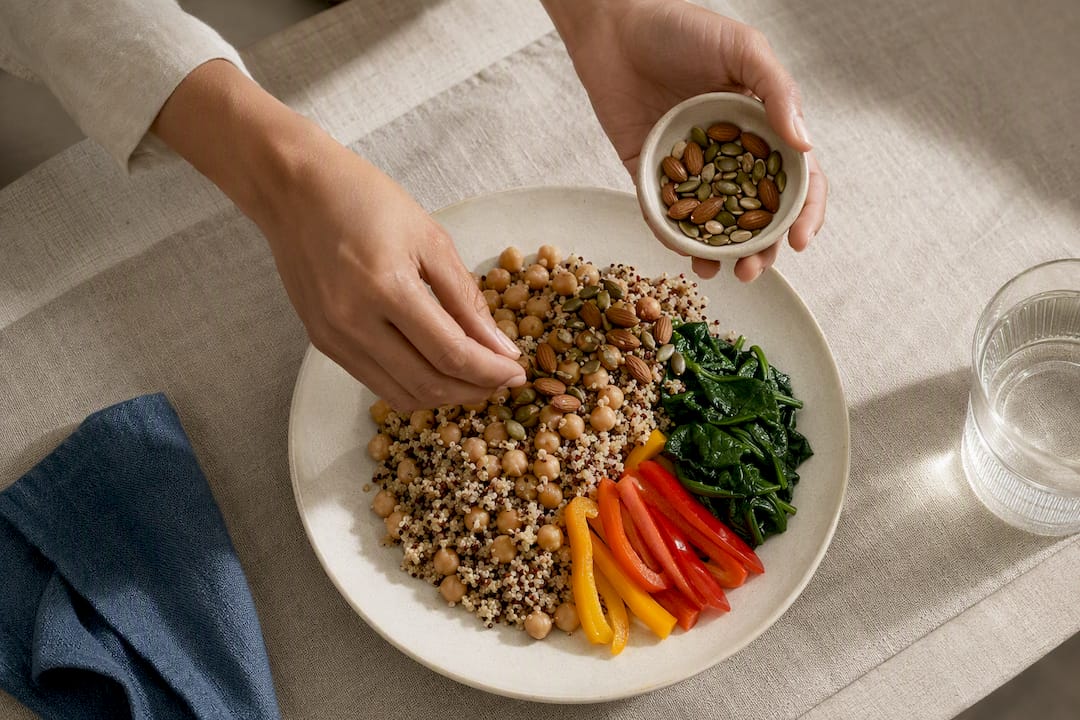
- Legume and leafy-green lunch bowl. Combine chickpeas or pinto beans with spinach, roasted vegetables and a citrus vinaigrette (orange or lemon juice, olive oil, mustard). Scatter sunflower and pumpkin seeds on top for the B6 and zinc combination. This bowl alone can carry close to 25 grams of protein once the legumes and seeds are counted.
- Small evening meal. Keep dinner lighter than lunch. A grilled salmon fillet with steamed broccoli and a small portion of quinoa delivers B6, vitamin C and protein without the heavy load that can trigger post-meal palpitations. If you need a snack later, reach for a protein ball or a small square of dark chocolate rather than a full plate.
For readers who want more breakfast variety, this approach pairs well with ideas from balanced breakfasts for lasting energy or a guide on adding protein to porridge naturally.
Portion guidance stays consistent across all three meals: 25 to 30 grams of protein at breakfast and lunch, slightly less at dinner, with seeds and nuts used as a topping rather than a separate snack pile.
Why do electrolytes and hydration matter for palpitations?
Magnesium and potassium govern the electrical stability of your heartbeat, and low levels of either can make palpitations more frequent. The same cardiovascular review that flags magnesium’s role in arrhythmia risk also notes it can modestly lower blood pressure, which matters if your palpitations come with a racing, anxious feeling rather than a genuine irregular beat.
Potassium works alongside magnesium in the same electrical system. Bananas, leafy greens and nuts are the easiest sources to add without overhauling meals, and a resource on palpitations and when to seek care points to the same pairing of hydration and electrolyte-rich foods as a sensible first response.
A short nervous-system hygiene checklist worth following daily:
- Eat at roughly the same times each day rather than skipping meals
- Prioritise consistent sleep, since poor sleep amplifies palpitation sensitivity
- Avoid caffeine on an empty stomach
- Limit sensory overload where possible (notifications, noise, back-to-back screens)
- Drink water steadily through the day rather than in large bursts
If palpitations happen frequently despite steady hydration and a mineral-rich diet, that pattern is worth raising with a GP rather than managing through food alone. Persistent or worsening episodes, especially with chest pain, breathlessness or fainting, need medical review, not another dietary tweak.
What foods and habits make palpitations worse?
Large, late meals are one of the most consistent dietary triggers. Northwell Health explains that heavy meals redirect blood flow toward digestion, which can transiently shift heart rate and blood pressure, and a smaller evening portion reduces that effect.
A few habit rules cut most of the risk:
- Keep dinner lighter than lunch, and finish eating two to three hours before bed
- Limit refined sugar and ultra-processed snacks, which spike and then crash blood sugar
- Cap alcohol intake, since it’s a common palpitation trigger for many people
- Take caffeine with food rather than on an empty stomach, and watch total intake across coffee, tea and energy drinks
- Keep a protein-rich snack (nuts, a protein ball, boiled eggs) on hand so you’re not reaching for sugary options when hungry
None of these rules demand perfection. Swapping one large late dinner for a smaller plate, three or four nights a week, is often enough to notice a difference.
How progesterone influences heart rhythm
Progesterone has a calming effect on the nervous system, partly through its influence on GABA receptors in the brain, and this same calming action extends to how the heart responds to stress signals. When progesterone levels shift, whether from natural monthly fluctuation or a broader hormonal change, the balance between the calming parasympathetic system and the more excitable sympathetic system can tip toward the latter, and that shift is often what people experience as a racing or fluttering heartbeat.
This is why palpitations often cluster around certain points in the monthly cycle rather than appearing randomly. Falling progesterone in the days before a period, when oestrogen also drops, is a common window for people to notice their heart “skipping” or thumping harder than usual, even when nothing is structurally wrong with the heart itself.
Blood sugar plays into this mechanism too. Lower progesterone can coincide with reduced insulin sensitivity, which makes blood sugar dips more likely, and a sudden blood sugar dip triggers adrenaline release, another well-known palpitation trigger. That’s part of why steady, protein-anchored meals do double duty here: they support the hormone pathways directly through nutrients like B6 and zinc, and they prevent the blood sugar swings that provoke a racing heart independently of hormones altogether.
None of this means every palpitation has a hormonal cause. But the pattern of timing, especially around the days leading into a period, is a useful clue worth tracking.
Common causes and risk factors to watch for
Heart palpitations tied to progesterone fluctuation rarely have one single cause. They tend to cluster with a handful of contributing factors, and recognising the pattern helps you work out whether food and lifestyle changes are likely to help.
The most common contributors include:
- Cyclical hormone shifts, particularly the premenstrual drop in both progesterone and oestrogen
- Poor sleep, which lowers your tolerance for the adrenaline spikes that cause fluttering
- Chronic stress, since cortisol and progesterone share overlapping production pathways and compete for resources
- Nutrient gaps, especially in magnesium, B6 and zinc, which blunt the body’s ability to regulate hormone output smoothly
- Excess caffeine or alcohol, both of which interact with the same nervous-system pathways progesterone normally helps calm
- Underlying thyroid imbalance, which frequently overlaps with progesterone irregularities and independently causes palpitations
Age and life stage matter too. People approaching midlife hormonal transition often report a noticeable uptick in palpitations, not because something is wrong, but because progesterone output becomes less predictable month to month. Weight changes, certain medications and untreated anaemia can all compound the effect.
None of these risk factors are diagnostic on their own. The value in knowing them is practical: if you’re eating well and still getting frequent episodes, one of these other factors, sleep, stress, thyroid function, is worth investigating alongside your diet rather than instead of it.
How progesterone interacts with other hormones affecting the heart
Progesterone doesn’t act alone. It works in a constant push and pull with oestrogen, cortisol and thyroid hormones, and it’s this interaction, more than progesterone in isolation, that usually determines whether you feel a racing heartbeat.
Oestrogen and progesterone typically move in opposite directions across the cycle, and oestrogen tends to have a mildly stimulating effect on heart rate compared with progesterone’s calming one. When the ratio between the two swings sharply, rather than gradually, the heart can respond with a noticeable flutter or thump. This is one reason palpitations often show up at very specific points in the month rather than evenly throughout it.
Cortisol adds another layer. Progesterone and cortisol are produced from shared precursor hormones, so periods of high stress can, over time, divert resources away from progesterone production, a phenomenon sometimes referred to loosely as “cortisol steal.” Elevated cortisol independently raises heart rate and blood pressure, which compounds any rhythm disturbance already caused by shifting progesterone.
Thyroid hormones interact with this system too. An overactive thyroid amplifies the heart’s sensitivity to every other hormonal signal in the mix, including progesterone’s fluctuations, while an underactive thyroid can blunt normal hormone signalling altogether. This is why persistent palpitations sometimes trace back to a thyroid panel rather than progesterone specifically, and why ruling out thyroid issues is a sensible step if dietary changes aren’t shifting the pattern.
Progesterone therapy and heart palpitation side effects
Palpitations are a recognised, though not universal, side effect reported with progesterone therapy, particularly during dose adjustments or when starting treatment. The mechanism overlaps with the natural fluctuations described above: a change in circulating progesterone, whether rising or falling, can temporarily disturb the balance between the calming and stimulating branches of the nervous system.
Other reported side effects alongside palpitations often include mild dizziness, changes in mood, bloating and breast tenderness, and these tend to settle as the body adjusts to a stable dose. The timing matters: side effects clustered in the first few weeks of a new prescription or dose change are more likely to be transitional than a sign of an ongoing problem.
Not everyone on progesterone therapy experiences palpitations, and the ones who do report a wide range of severity, from a barely noticeable flutter to something distracting enough to interrupt sleep. Anyone starting or adjusting progesterone treatment should raise new or worsening palpitations with the prescribing clinician rather than assuming they’re a fixed cost of treatment. Dose, formulation and delivery method (oral versus topical, for example) can all influence how noticeable this side effect is, and adjustments are often possible.
The dietary strategies covered earlier, steady meals, adequate magnesium, and avoiding stimulant excess, apply just as usefully to someone managing therapy-related palpitations as to someone experiencing them from natural hormonal fluctuation.
Monitoring palpitations during progesterone treatment
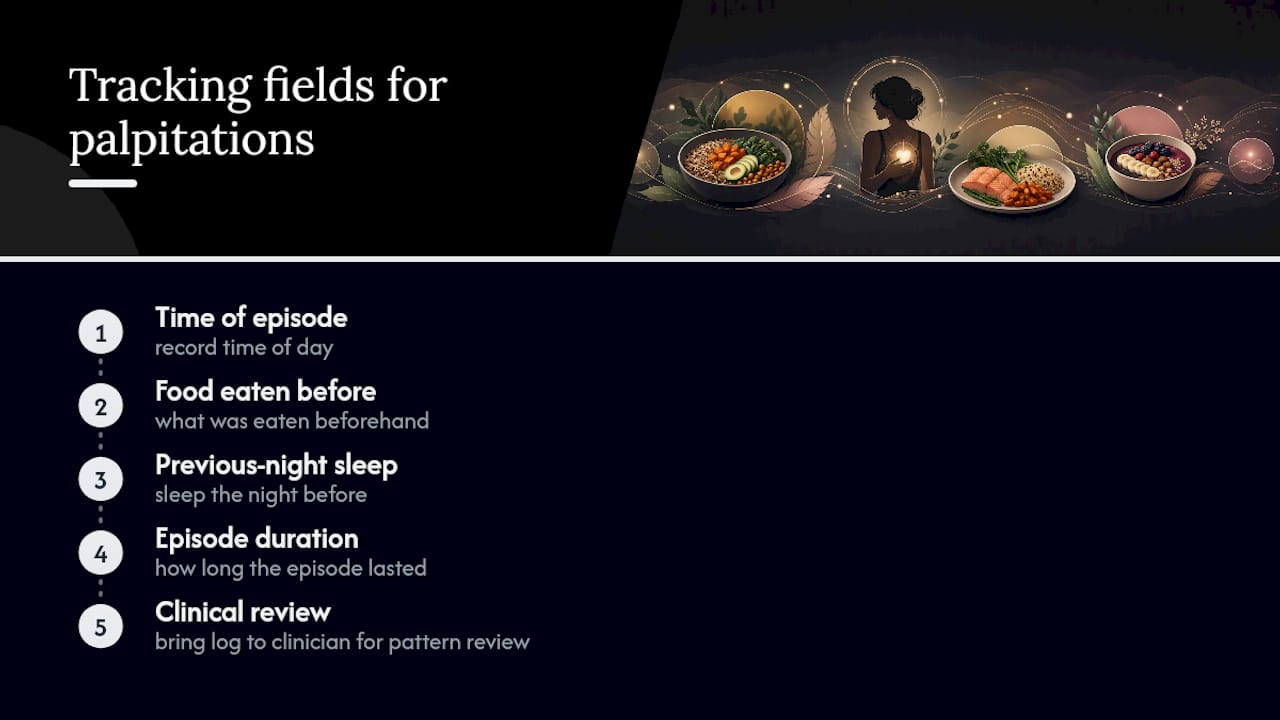
Anyone on progesterone therapy who notices palpitations should track them rather than guess at the pattern. A simple log noting the time of day, what was eaten beforehand, sleep the night before, and how long the episode lasted gives a clinician far more to work with than a vague description of “my heart feels off sometimes.”
Look out for a few specific warning signs that shift this from a monitoring situation to an urgent one: palpitations accompanied by chest pain, breathlessness, fainting or near-fainting, or episodes that last more than a few minutes without settling. Any of those warrant prompt medical attention rather than a wait-and-see approach.
For milder, more intermittent palpitations, most clinicians suggest a staged approach: confirm there’s no underlying cardiac issue with a basic ECG if episodes are frequent, review magnesium and thyroid levels, then reassess the progesterone dose or delivery method if the pattern persists. Diet sits comfortably alongside this process rather than replacing it. Keeping blood sugar steady, magnesium intake adequate and caffeine moderate makes it easier for a clinician to see whether the progesterone dose itself is the driver, because the more obvious lifestyle triggers have already been controlled for.
Regular follow-up appointments, particularly in the first three months of treatment or after any dose change, are the standard way this gets managed. Bring the symptom log to those appointments. It turns a subjective complaint into a pattern a clinician can actually act on.
Author perspective: how Granavitalis approaches food-first hormonal support
Most advice on hormonal palpitations jumps straight to supplements or medication, and skips the far simpler question of what’s actually on your plate. That’s a gap worth closing, because the nutrients that matter here, B6, zinc, magnesium, vitamin C, protein, are things you can genuinely buy and cook with this week.
This kind of practical nutrition includes ancient-grain flours, plant and whey protein powders, and nut butters which can help meet protein and mineral targets without overhauling your entire kitchen. A scoop of protein in porridge, a spoonful of nut butter on toast, these are small, repeatable habits, not a project.
The honest take: food won’t override a genuine cardiac or thyroid issue, and it shouldn’t be asked to. But for the benign, cyclical palpitations most people experience, steady food choices are underused and oversimplified in equal measure.
— Jarrod
Stock your kitchen for progesterone-supportive eating
The food-first approach covered in this article focuses on real ingredients you can build a meal around, rather than another supplement to remember. This aligns with advice for more protein, more magnesium-rich foods, and fewer processed shortcuts.

Start with the basics. Our vegan protein powders make it simple to hit 25 to 30 grams of protein at breakfast without extra prep, and they blend straight into the ancient-grain porridge recipe covered earlier. Pair that with a jar from our nut butters range for magnesium and healthy fats in one spoonful, and stock your gluten-free grains from our gluten-free flours collection if you’re building the lunch bowl or evening meal on quinoa or buckwheat. If you want a ready-made snack for the “smaller evening meal” habit, the dark chocolate crunchy protein balls deliver protein and a touch of magnesium-rich cocoa without a heavy plate before bed. Browse the full range and put together your own starter selection today.
Sources
The claims in this article draw on a small set of authoritative sources worth bookmarking if you want to dig deeper into the science behind these food choices.
- Vitamin B6 — health professional fact sheet — NIH Office of Dietary Supplements
- Magnesium and cardiovascular disease — review (PMC)
- Why heart palpitations after eating happen — Northwell Health
This article is general information, not a substitute for advice from a qualified doctor. Consult a qualified healthcare professional about your own circumstances before acting on anything here.
FAQ
Can low progesterone cause heart palpitations?
Falling progesterone can tip the nervous system toward a more excitable state, which some people experience as a racing or fluttering heartbeat, especially in the days before a period. Steady meals with adequate B6, zinc and magnesium support the pathways involved, though persistent or severe palpitations still need medical review.
What foods help with progesterone-related heart racing?
Vitamin B6 sources like sunflower seeds, salmon and pinto beans, magnesium-rich foods such as spinach and almonds, and zinc from pumpkin seeds and chickpeas are the main food-based priorities. Pairing these with 25 to 30 grams of protein per main meal also helps stabilise blood sugar, which reduces palpitation triggers unrelated to hormones.
Can magnesium supplements stop palpitations linked to progesterone?
Dietary magnesium from food is the sensible first step, and research on magnesium and cardiovascular health links adequate intake to better cardiac rhythm stability. Supplementation, often in the 300 to 400 mg range, is sometimes used under medical supervision, but it should be discussed with a GP rather than started independently.
Does eating late at night make palpitations worse?
Yes, large or late meals redirect blood flow toward digestion, which can transiently shift heart rate and blood pressure and trigger palpitations, according to Northwell Health. Keeping dinner smaller and finishing eating two to three hours before bed reduces this effect for most people.
Does Granavitalis sell products that support this kind of diet?
Granavitalis stocks vegan protein powders, nut butters and ancient-grain flours that align with the protein and mineral targets covered in this article. Current prices and product details are listed on the site.