
Why protein for menopause: what you need to know
TL;DR:
- Protein intake is crucial during menopause to counteract muscle loss caused by declining oestrogen levels.
- Most women benefit from consuming 1.0–1.2 g/kg/day of protein, paired with resistance exercise, to maintain muscle function.
Protein rarely gets the attention it deserves when women start managing menopause symptoms. Most conversations focus on hormone therapy, hot flushes, or sleep disruption. Yet understanding why protein for menopause matters could be one of the most practical steps you take for your long-term health. Oestrogen decline triggers a cascade of physiological changes that make muscle preservation harder and dietary protein more urgent. This article breaks down the science, the realistic intake targets, the best food sources, and how to put it all together in daily life.
Table of Contents
- Key takeaways
- Why protein for menopause is not optional
- How much protein you actually need
- Protein sources suited to menopause nutrition
- Protein and resistance exercise: the combination that delivers
- Practical strategies for hitting your protein targets
- My honest take on protein and menopause
- Support your menopause nutrition with Granavitalis
- FAQ
Key takeaways
| Point | Details |
|---|---|
| Muscle loss accelerates at menopause | Oestrogen decline reduces muscle synthesis efficiency, making adequate protein non-negotiable. |
| Aim for 1.0–1.2 g/kg/day | This range supports muscle preservation better than the standard RDA for most menopausal women. |
| Protein works best with exercise | Combined with resistance training, protein produces meaningful gains in strength and physical function. |
| Quality and distribution matter | Spread protein across meals and prioritise leucine-rich sources to overcome anabolic resistance. |
| Whole foods come first | Meet your protein floor through food before considering supplements. |
Why protein for menopause is not optional
The standard dietary advice women receive during menopause tends to centre on calcium, vitamin D, and reducing processed foods. Protein gets a brief mention, if at all. That gap is a real problem, because the hormonal changes happening in your body during this period directly alter the way your muscles respond to dietary protein.
Oestrogen plays a quiet but significant role in muscle maintenance. When levels drop, muscle mass reduces more quickly and more reliably than most women expect. This condition, known as sarcopenia, does not only affect frail older women. It begins accelerating during perimenopause and continues through postmenopause, contributing to reduced strength, slower metabolism, and greater risk of falls and fractures.
The second piece of the puzzle is anabolic resistance. This is the term for what happens when your muscles become less responsive to the protein you eat. Older muscle responds less efficiently to dietary protein, which means the same meal that would have built muscle effectively at 35 does far less at 55. Your body still uses protein, but not as efficiently as before.
- Oestrogen decline triggers accelerated loss of muscle fibre quality and quantity
- Anabolic resistance increases your effective protein requirement above the standard recommended daily allowance (RDA)
- Muscle function supports metabolic rate, bone density, and physical independence
- Protein also contributes to hormone production, immune function, and satiety, all of which shift during menopause
Pro Tip: If you notice you are gaining body fat without eating significantly more, reduced muscle mass lowering your resting metabolic rate is likely a contributing factor. Protein protects that muscle.
The IMS 2026 guidelines now explicitly recognise adequate nutrition, including protein, as part of comprehensive midlife health management. This is not fringe advice. It is evidence-based guidance from the leading international authority on menopause medicine.
How much protein you actually need
The standard RDA for protein sits at 0.8 g per kilogram of bodyweight per day. That figure was never designed with menopausal physiology in mind. It represents the minimum required to prevent deficiency in a healthy young adult, not the amount needed to preserve muscle mass in a woman navigating hormonal change.
For menopausal women, the evidence points to a higher and more realistic target. Healthy adults need 1.0–1.2 g/kg/day to maintain muscle mass and function, with frail individuals or those in caloric restriction needing even more. If you weigh 70 kg, that means aiming for 70–84 g of protein daily at a minimum.
| Scenario | Recommended protein intake | Practical example (70 kg woman) |
|---|---|---|
| Sedentary, no specific health concerns | 0.8 g/kg/day (minimum RDA) | ~56 g/day |
| Active menopausal woman | 1.0–1.2 g/kg/day | 70–84 g/day |
| Weight loss with resistance training | ~1.2 g/kg/day | ~84 g/day |
| Frail or managing sarcopenia | ≥1.2 g/kg/day | 84 g+ per day |
What about going higher? A systematic review of 34 studies found no definitive dose-response benefit for intakes above 1.4 g/kg/day when combined with exercise. More protein beyond that threshold does not appear to deliver proportionally greater muscle gains. The practical message is clear: hit your floor consistently before worrying about optimising higher.
If you are actively trying to lose weight, the calculus shifts slightly. Protein around 1.2 g/kg/day during caloric restriction with resistance training helps preserve lean tissue that you would otherwise lose alongside body fat. This is particularly relevant for menopausal women who find weight creeping up and want to address it without sacrificing muscle.
Pro Tip: Track your protein intake for three days using a simple food diary app. Most women discover they are hitting 50–60 g daily when they actually need 80 g or more. Seeing the gap makes it concrete.
Protein sources suited to menopause nutrition
Not all protein is created equal. The concept of complete versus incomplete protein matters here. Complete proteins contain all nine essential amino acids your body cannot produce on its own. Animal proteins such as eggs, dairy, lean poultry, and fish are complete. Most plant proteins are incomplete individually, but combining different plant sources throughout the day solves this.
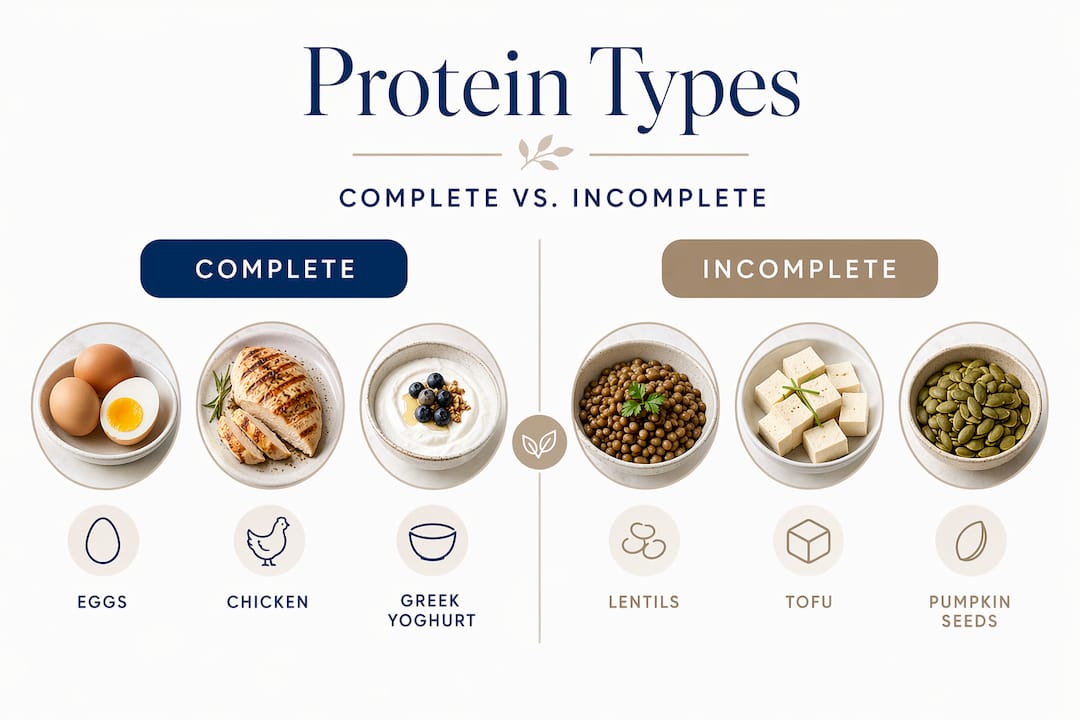
What makes a protein source particularly valuable for menopausal women is its leucine content. Leucine is the amino acid that most directly triggers muscle protein synthesis. Leucine-rich sources support muscle synthesis and aid in sarcopenia management, making food choices like eggs, Greek yoghurt, lentils, and pumpkin seeds especially worth prioritising.
| Protein source | Approx. protein per 100 g | Leucine-rich? | Suitable for plant-based diets? |
|---|---|---|---|
| Chicken breast (cooked) | 31 g | Yes | No |
| Greek yoghurt | 10 g | Yes | No |
| Lentils (cooked) | 9 g | Moderate | Yes |
| Pumpkin seeds | 30 g | Yes | Yes |
| Chickpeas (cooked) | 9 g | Moderate | Yes |
| Eggs | 13 g | Yes | No |
| Tofu (firm) | 8 g | Moderate | Yes |
For women following vegetarian or vegan diets, plant protein sources can absolutely meet menopausal protein needs when chosen thoughtfully. Pumpkin seeds are an exceptional example, offering 30 g protein per 100 g alongside magnesium and zinc. Combining legumes with ancient grains, seeds with oats, or nut butters with wholegrain bread creates complete amino acid profiles across the day.
Practical meal planning does not need to be complicated. Aim to include a meaningful protein portion at each main meal rather than loading it all into dinner. A breakfast of Greek yoghurt and seeds, a lunch built around lentils or chicken, and an evening meal centred on fish or tofu gets most women close to their target without counting obsessively.
Protein and resistance exercise: the combination that delivers
Here is the honest truth about protein during menopause. It does not work particularly well in isolation. Protein is not a supplement you take to counteract muscle loss while remaining sedentary. It is the raw material that resistance exercise converts into maintained strength, function, and physical independence.

Resistance exercise improves muscle strength and function in postmenopausal women with sarcopenia more reliably than it increases muscle mass on its own. That distinction is important. You may not see dramatic changes on the scales or in measurements. What you will notice is that you feel stronger, move better, carry shopping more easily, and recover faster from physical activity.
Here is how to structure the combination effectively:
- Commit to two or three resistance training sessions per week. Bodyweight exercises, resistance bands, and free weights all count. Progressive load is what matters, adding a small challenge each week.
- Meet your protein target consistently across the full week, not just on training days. Adequate protein intake enables training adaptation and recovery, so daily consistency outweighs perfect timing.
- Distribute your protein across three to four meals rather than concentrating it in one sitting. This overcomes anabolic resistance more effectively than a single large protein meal.
- Include a protein-rich meal or snack within two hours of your training session. While protein timing alone does not dramatically change outcomes when total intake is adequate, a post-exercise protein opportunity is still a smart habit.
- Track your functional progress rather than aesthetic change. Strength improvements and better mobility are the most achievable and meaningful outcomes to expect.
The IMS 2026 evidence supports this integrated approach explicitly, framing menopause health as a multi-domain challenge requiring nutrition, physical activity, and lifestyle management working together.
Practical strategies for hitting your protein targets
Knowing you need more protein is one thing. Actually getting it into your meals consistently is where most women struggle. The gap between intention and intake is usually a planning problem, not a motivation problem.
- Start with breakfast. It is the meal most likely to be protein-poor. Swapping toast alone for eggs with seeds, or adding Greek yoghurt and nut butter to porridge, can add 15–25 g before 9 am.
- Use nut and seed butters as dense protein top-ups. A generous tablespoon of almond or pecan butter on oatcakes or stirred into a smoothie adds high-quality fat and protein without a heavy meal.
- Prioritise protein first on your plate. When building any meal, decide your protein source before you add the carbohydrates or vegetables. This mental shift alone tends to increase daily totals.
- Batch-cook legumes and grains. Chickpeas, lentils, and quinoa keep well in the fridge and can be added to salads, soups, or wraps throughout the week with minimal effort.
- Consider protein supplementation selectively. Whole foods should always come first. But if you are travelling, time-poor, or consistently falling short, a clean plant-based protein powder made from pea or hemp protein is a practical bridge. Look for products with minimal additives and at least 20 g protein per serving.
Pro Tip: Before adding protein supplements, audit your existing meals. Most women find they can add 20–30 g of protein per day simply by adjusting portions of foods already in their kitchen.
You can also explore low-calorie plant protein options that fit naturally into lighter menopause-friendly meals without adding significant calories, which matters if you are also managing weight.
My honest take on protein and menopause
I have seen so many women arrive at the conversation about menopause nutrition feeling overwhelmed by conflicting messages. Every article seems to promise a different fix. What I have learned, through reading the evidence closely and speaking with women navigating this stage, is that protein is consistently underestimated and consistently under-consumed.
The women who make the most meaningful improvements in how they feel and function during menopause are not the ones chasing the latest supplement. They are the ones who quietly and consistently raise their protein intake, pick up resistance exercise two or three times a week, and stick with it for three to six months. The benefits are real but they are not instant. That mismatch between effort and visible reward is where most people give up too early.
What I find genuinely frustrating is how often protein gets reduced to aesthetics in popular health media. The real story is about independence. Preserving muscle strength in your fifties and sixties determines how freely you move, how resilient you are to illness and injury, and how much energy you have for the life you want to live. That is worth taking seriously.
Generic nutrition advice also does not serve menopausal women well. Your protein needs are genuinely different from a 30-year-old’s, and those differences are grounded in physiology, not marketing. Personalising your intake targets to your bodyweight, activity level, and health goals is not overcomplicating things. It is doing nutrition properly.
— Jarrod
Support your menopause nutrition with Granavitalis
At Granavitalis, whole-food protein is built into every product we make. Our nut and seed butters are not snack foods with a health halo. They are nutrient-dense, minimally processed sources of protein, healthy fats, and micronutrients that fit naturally into the kind of menopause nutrition strategy this article describes.
The raw organic pecan butter from RAWGORILLA is a particularly clean choice: no added oils, no fillers, just whole pecans delivering plant protein and magnesium in a form your body recognises. If you want to explore further, the nut and seed selection box gives you a range of protein-rich butters to find what works best in your daily meals. Pair these with a read on why quality protein matters from our nutrition blog to build a genuinely informed approach to eating through menopause.
FAQ
How much protein do menopausal women need daily?
Most menopausal women benefit from 1.0–1.2 g of protein per kilogram of bodyweight per day, which is higher than the standard RDA of 0.8 g/kg/day, because oestrogen decline and anabolic resistance reduce muscle protein synthesis efficiency.
Can protein help with menopause weight gain?
Protein supports lean muscle mass during caloric restriction, which helps maintain metabolic rate and reduces fat gain. Pairing 1.2 g/kg/day protein with resistance training is the most evidence-supported approach for managing body composition during menopause.
What are the best protein sources for menopausal women?
Eggs, Greek yoghurt, lentils, pumpkin seeds, chicken, and tofu are all strong options. For plant-based diets, combining legumes, seeds, and ancient grains across the day provides a complete amino acid profile.
Do I need protein supplements during menopause?
Whole foods should meet your protein needs first. Supplementation with a clean plant-based protein powder is a practical option when consistently falling short due to appetite changes, time constraints, or dietary restrictions.
Does the timing of protein intake matter during menopause?
Total daily protein intake matters more than precise timing. However, distributing protein across three to four meals throughout the day helps overcome anabolic resistance more effectively than one large protein-rich meal.