

The healthiest ancient grains and how to cook them
TL;DR:
- Ancient grains require careful selection and cooking methods for optimal taste and nutrition.
- Tasting during cooking is essential, as timing alone can lead to over or undercooked grains.
- Proper preparation techniques like soaking, sprouting, and pressure cooking enhance digestibility and nutritional value.
Ancient grains have earned their place on the modern plate, but getting them right is trickier than most recipes let on. Quinoa, farro, spelt, freekeh, amaranth, millet, barley, teff, and einkorn each behave differently in the pot, and a single wrong water ratio can turn a nutritious grain into a stodgy disappointment. The good news is that once you understand the logic behind selection and cooking method, these grains become some of the most reliable, flavourful ingredients in your kitchen. This guide cuts through the confusion and gives you a structured, expert-backed approach to cooking ancient grains perfectly, every time.
Table of Contents
- How to choose the best ancient grain for your kitchen
- Essential cooking methods for ancient grains
- Advanced techniques: Soaking, sprouting, and pressure cooking
- When to use which method: Texture, nutrition, and meal type
- The overlooked secret to success with ancient grains
- Ready to transform your meals? Discover healthy essentials
- Frequently asked questions
Key Takeaways
| Point | Details |
|---|---|
| Grain choice matters | Selecting the right ancient grain ensures both nutritional benefit and meal enjoyment. |
| Match method to goal | Cooking technique depends on desired texture and dish type, from salads to porridges. |
| Soak, sprout, or pressure for best health | Advanced prep—from soaking to pressure cooking—unlocks digestibility and nutrition. |
| Taste before finishing | Taste grains near the end of cooking to achieve perfect textures and avoid mushiness. |
| Prep ahead for success | Batch-cooked ancient grains keep fresh in the fridge for 3-5 days, ready for many meals. |
How to choose the best ancient grain for your kitchen
Not all ancient grains are the same, and that variety is precisely what makes them so useful. The term “ancient grain” refers to grains and seeds that have remained largely unchanged over thousands of years, unlike modern wheat, which has been heavily hybridised for industrial yield. You can read more about what is ancient grain and why that distinction matters nutritionally.
The first practical decision is gluten. Most ancient grains contain gluten, with the notable exceptions being quinoa, millet, amaranth, and teff. If you follow a plant-based diet and need to avoid gluten, those four are your foundation. Quinoa, millet, teff, and amaranth are naturally gluten-free and pack impressive protein profiles, making them ideal for vegan and vegetarian cooking. For a deeper look at why this matters, the benefits of gluten-free grains go well beyond simple intolerance management.
Beyond gluten, consider what you actually want from the grain nutritionally:
- Quinoa: Complete protein, all nine essential amino acids, roughly 8g protein per cooked cup. Ideal for salads and bowls.
- Farro: High in fibre and magnesium, chewy texture, excellent for soups and grain salads.
- Amaranth: Rich in calcium and iron, cooks to a porridge-like consistency, great for breakfast.
- Millet: Mild flavour, fluffy when cooked correctly, works well as a rice substitute.
- Teff: Tiny but dense in iron and calcium, earthy flavour, perfect for porridges and baked goods.
- Spelt: Higher protein than modern wheat, nutty flavour, suits pasta dishes and hearty salads.
- Freekeh: Roasted green wheat with a smoky depth, high in fibre, excellent in pilafs.
- Einkorn: One of the oldest wheats, rich in carotenoids, best used in flour form or slow-cooked dishes.
For those exploring gluten-free ancient grains specifically, the choice between quinoa, teff, millet, and amaranth often comes down to the dish you are making rather than nutrition alone.
Pro Tip: Always choose whole or semi-pearled grains over fully pearled versions. Pearling strips away the bran layer, removing fibre, B vitamins, and minerals that make ancient grains worth eating in the first place.
Essential cooking methods for ancient grains
Once you have selected your grain, your cooking method determines everything about the final texture and taste. The water ratios and timings vary considerably across grains, so a one-size approach will consistently let you down.
Here is a quick reference for the most common grains:
| Grain | Water ratio | Cooking time | Method |
|---|---|---|---|
| Quinoa | 1:2 | 15 min | Absorption |
| Farro (semi-pearled) | 1:2.5 | 25-30 min | Absorption or pasta |
| Spelt | 1:3 | 40-50 min | Absorption |
| Millet | 1:2 | 20 min | Absorption |
| Teff | 1:3 | 15-20 min | Absorption |
| Freekeh | 1:2.5 | 25 min | Pilaf-style |
| Amaranth | 1:3 | 20-25 min | Absorption |
The three most reliable methods are absorption, pasta-style, and pilaf-style:
- Absorption method: Combine grain and cold water in a saucepan, bring to the boil, reduce to a simmer, cover, and cook until all water is absorbed. This produces fluffy, separate grains ideal for bowls and salads.
- Pasta method: Cook the grain in a large pot of boiling salted water with no fixed ratio, then drain. This gives a firmer, al dente texture and works particularly well for farro and spelt.
- Pilaf-style: Sauté the dry grain in a little oil for two to three minutes before adding hot stock. The fat coating slows water absorption slightly, producing a richer, more complex flavour. Freekeh and millet respond especially well to this approach.
For meal prep with ancient grains, batch cooking two or three grains at the weekend sets you up for the entire week. Cook a large pot of farro using the pasta method on Sunday, and you have the base for soups, salads, and warm bowls through to Friday.
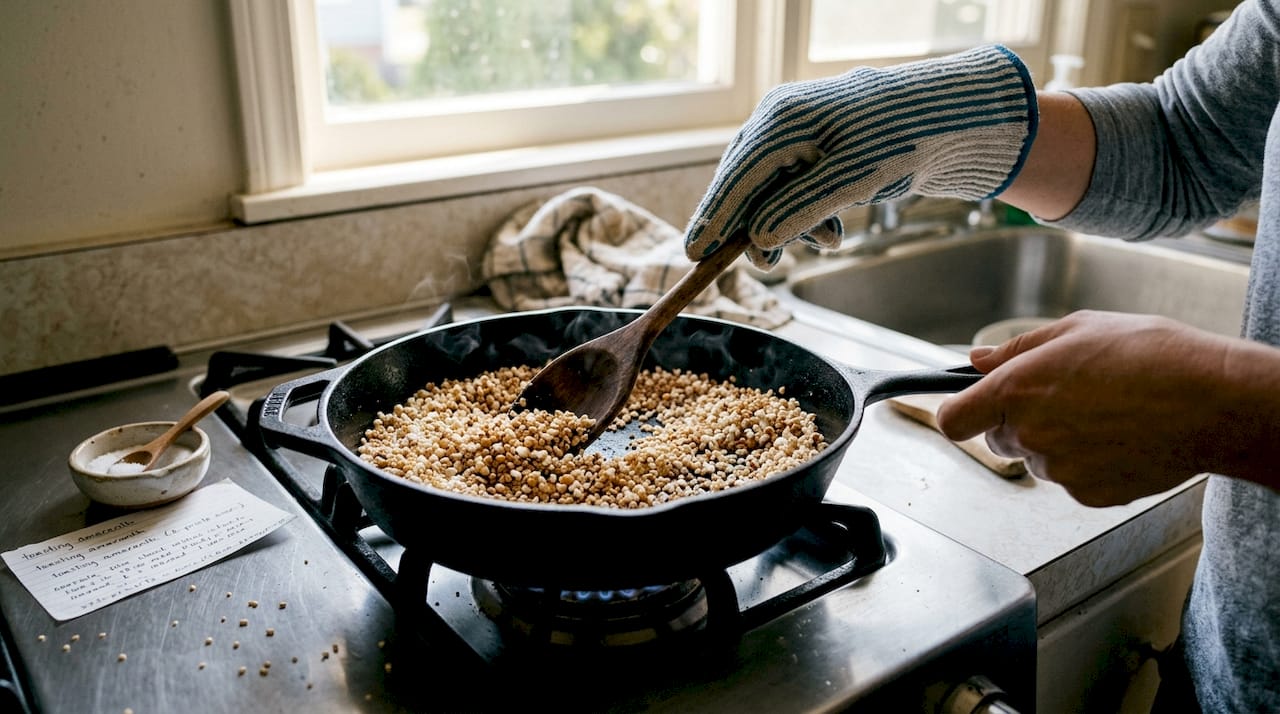
Pro Tip: Toasting before cooking enhances the nutty flavour of almost every ancient grain. Add the dry grain to a hot, dry pan for two to three minutes, stirring constantly, until it smells toasted. Then proceed with your chosen method.
Advanced techniques: Soaking, sprouting, and pressure cooking
For those seeking optimal health from their grains, preparation goes beyond simply boiling water. Three techniques stand out for transforming both nutrition and convenience.
Soaking is particularly recommended for tough grains like spelt, farro, and kamut. Cover the grain in cold water for 8 to 12 hours, drain, rinse, and cook as normal. Soaking softens the outer bran, reduces cooking time by up to 30%, and begins breaking down phytic acid, a compound that can limit mineral absorption.
Sprouting takes this further. Sprouting reduces anti-nutrients and measurably boosts vitamins, particularly B vitamins and vitamin C. To sprout at home: rinse the grain, soak for 8 hours, drain and rinse twice daily, and allow to sit in a jar covered with muslin for two to three days until small tails appear. Sprouted grains can be eaten raw in salads or lightly cooked.
Pressure cooking is the practical choice when time is short. Pressure cookers cut cooking time dramatically, with farro ready in 7 to 12 minutes on high pressure compared to 25 to 30 minutes on the stovetop.
| Technique | Best for | Time saving | Key benefit |
|---|---|---|---|
| Soaking | Spelt, farro, kamut | Up to 30% | Improved digestibility |
| Sprouting | Quinoa, wheat berries | N/A (adds days) | Boosted vitamins, reduced anti-nutrients |
| Pressure cooking | All grains | 50-70% | Speed and convenience |
For storing cooked grains after any of these methods, refrigerate in an airtight container and use within five days. Freeze in portions for longer storage.
The single biggest mistake people make with ancient grains is treating preparation as optional. Soaking is not fussy cooking. It is simply respecting the grain.
When to use which method: Texture, nutrition, and meal type
Applying the right method depends entirely on what you are making. Absorption yields fluffy grains, the pasta method gives al dente texture, and pressure cooking is ideal for speed. Each has its place, and matching method to meal type is what separates competent grain cooking from genuinely great results.
Here is how to think about it:
- Grain salads: Use the pasta method for farro or spelt. The firmer texture holds up well against dressings and does not turn mushy when refrigerated. This is also the best approach for batch meal prep tips where grains will be dressed and stored.
- Warm bowls and pilafs: Absorption or pilaf-style works best. The grains stay separate and absorb the flavours of the stock or aromatics used.
- Porridge and breakfast bowls: Use a higher water ratio and cook low and slow. Amaranth and teff naturally become creamy with extended cooking, while quinoa can be coaxed into a porridge with a 1:3 ratio and a longer simmer.
- Soups and stews: Add pre-cooked grains in the final five minutes, or cook raw grains directly in the broth using a slightly reduced liquid ratio, since the grain will absorb from the soup itself.
- Baking: Cooked whole grains added to bread dough or muffin batter add moisture, chew, and nutrition without altering the overall structure significantly.
The most common error in grain cookery is finishing by the clock rather than by taste. A timer is a guide, not a guarantee.
Edge cases matter here. If you are making a grain salad that will be served cold the next day, slightly undercook the grain. It will continue to absorb moisture from the dressing overnight and reach the ideal texture by the time it is served.
The overlooked secret to success with ancient grains
Most home cooks follow a recipe to the letter and then wonder why the result does not match the photograph. The issue is almost never the grain itself. It is the absence of tasting throughout the cooking process.
Professional kitchens do not rely on timing alone. Cooks taste at intervals, adjust heat, and make decisions based on what they find in the pot, not what the clock says. Ancient grains vary in age, storage conditions, and degree of processing, all of which affect how quickly they cook. A bag of farro bought six months ago will behave differently from a fresh batch.
Real-world meal prep taught us this lesson clearly. Batch cooking works brilliantly, but only when you treat each batch as its own event. Start tasting your grains five minutes before the suggested time. You are looking for a texture that is tender but still has a little resistance at the centre. That moment is different every time, and no recipe can predict it precisely.
The broader principle is this: ancient grains reward attention. They are not convenience foods in the traditional sense. They are ingredients that respond to care, and the cooks who get the best results are the ones who stay curious throughout the process rather than walking away and trusting the timer.
Pro Tip: Taste-test before the clock says you are done. Pull a few grains out, let them cool for ten seconds, and chew. That ten-second habit will improve every batch you ever cook.
Ready to transform your meals? Discover healthy essentials
If this guide has sparked your interest in building ancient grain meals that genuinely deliver on flavour and nutrition, Granavitalis has the ingredients to take things further.

Pair your cooked grains with our organic pecan butter for a rich, protein-boosting drizzle over warm bowls, or explore our full nut and seed butter selection to find the flavour combinations that work best with your favourite grains. From tahini-dressed farro salads to amaranth porridge finished with almond butter, the right add-in transforms a simple grain dish into something genuinely nourishing. Every product we offer is chosen to complement whole, real-food cooking, so your ancient grain meals get the finish they deserve.
Frequently asked questions
Which ancient grains are completely gluten-free?
Quinoa, millet, teff, and amaranth are naturally gluten-free ancient grains and ideal for those avoiding gluten. Always check packaging for cross-contamination warnings if you have coeliac disease.
What is the fastest way to cook ancient grains?
Pressure cookers dramatically shorten cooking times, with farro ready in 7 to 12 minutes on high pressure. Most other grains follow a similar reduction in cooking time compared to stovetop methods.
Why soak or sprout ancient grains before cooking?
Soaking reduces cooking time and begins breaking down phytic acid, while sprouting boosts vitamins and reduces anti-nutrients that can limit mineral absorption. Both steps improve digestibility.
How long can I store cooked ancient grains?
Cooked grains keep for 3 to 5 days in the refrigerator in an airtight container. Freeze in portioned bags for up to three months if you are batch cooking for the week ahead.