
Foods with the most fibre: a portion-by-portion guide
Pulses, bran cereals, chia and linseeds, nuts, wholegrains, and certain fruits and vegetables top the list of foods with the most fibre, some delivering over 20g per 100g. Adults should aim for about 30g of fibre a day, built up gradually across meals rather than in one sitting. Increase your intake slowly and drink plenty of fluids, since fibre pulls water into the gut and a sudden jump can leave you bloated.
TL;DR:
- Most adults fall short of the 30g daily fibre target, with only around 40% meeting the recommended intake, averaging 16 to 20g.
- Incorporating fibre-rich foods like bran cereals, baked beans, pulses, seeds, and nuts into daily meals can help close the intake gap effectively.
- Gradually increasing fibre intake over 2 to 4 weeks and drinking more water prevents digestive discomfort when boosting fibre consumption.
- Checking labels for foods with at least 6g of fibre per 100g ensures marketing claims reflect actual fibre content.
- A balanced diet with both soluble and insoluble fibre sources is essential, and variety is more important than relying on single “superfoods.”
Table of Contents
- The highest-fibre foods, ranked by what’s actually on your plate
- Two sample days that hit 30g of fibre
- How to increase fibre without wrecking your digestion
- Reading labels: what “high fibre” actually means
- How Granavitalis fits into a higher-fibre diet
- Fibre needs by age: children, teens, and adults
- Getting enough fibre on a gluten-free or vegan diet
- Why the “one superfood” approach to fibre misses the point
- Sources
The highest-fibre foods, ranked by what’s actually on your plate
Most UK adults are eating roughly half of what they need. Average daily fibre intake sits at around 16 to 20g, against a 30g target, and only around 4 in 10 adults hit the recommended amount. That gap is not closed by one miracle ingredient. It closes by knowing which foods punch hardest per portion and building them into meals you’ll actually repeat.
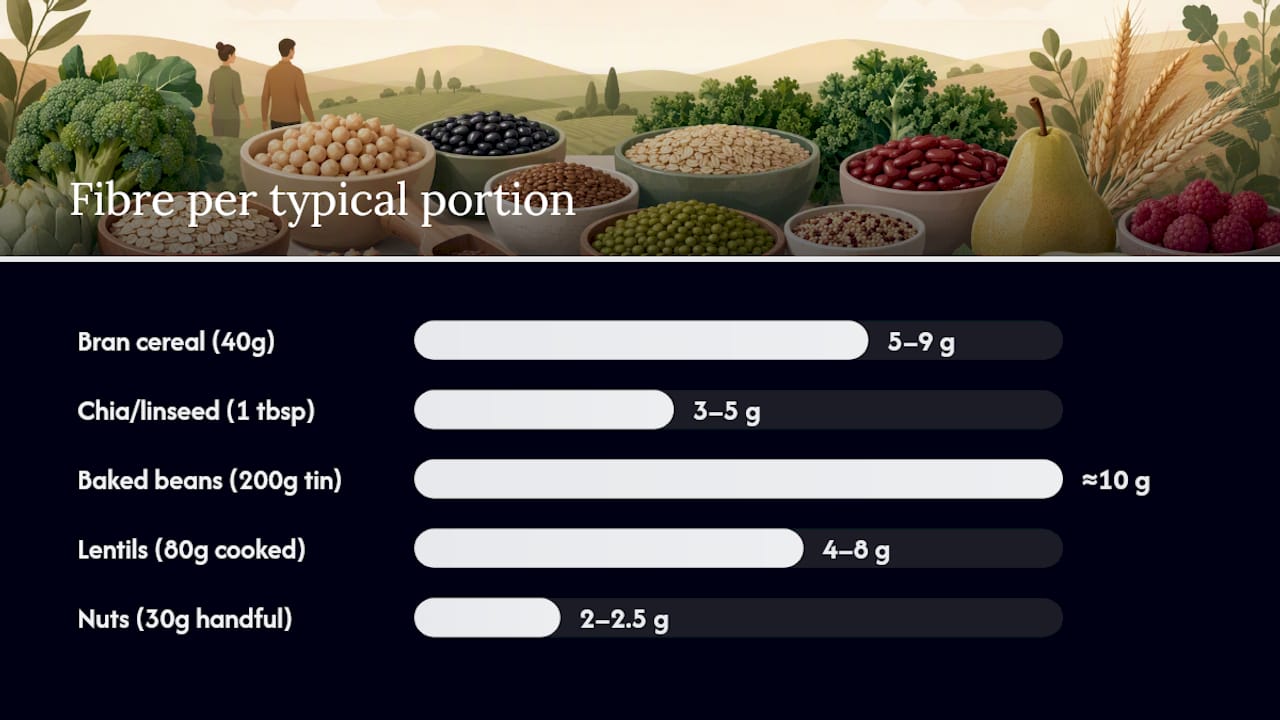
Bran cereals sit at the top of any fibre table. Shredded whole wheat and wheat bran cereals typically carry 13 to 24.5g of fibre per 100g, which works out to roughly 5 to 9g in a standard 40g bowl. That single breakfast choice can cover a fifth of your daily target before you’ve added milk.
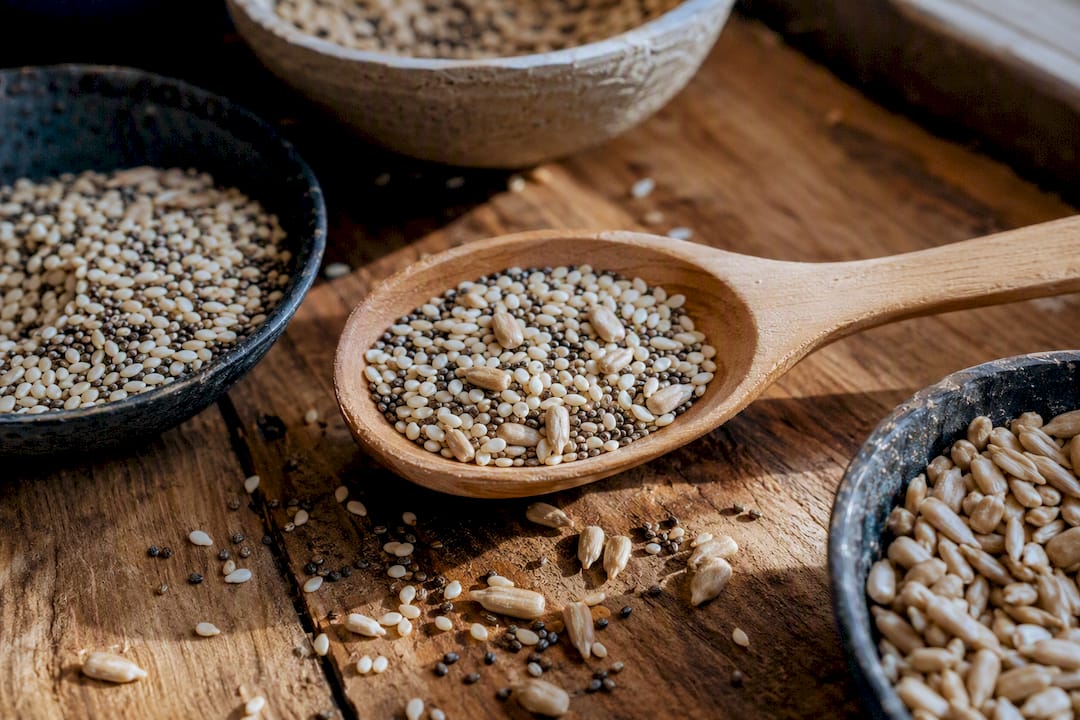
Seeds are the next heavyweight, and they’re deceptively easy to add without changing a recipe. Sesame seeds carry around 7.9g of fibre per 100g, sunflower seeds around 6g, and a tablespoon of chia or linseed stirred into porridge or yoghurt adds roughly 3 to 5g on its own. None of that requires cooking or planning; it’s a spoon and thirty seconds.
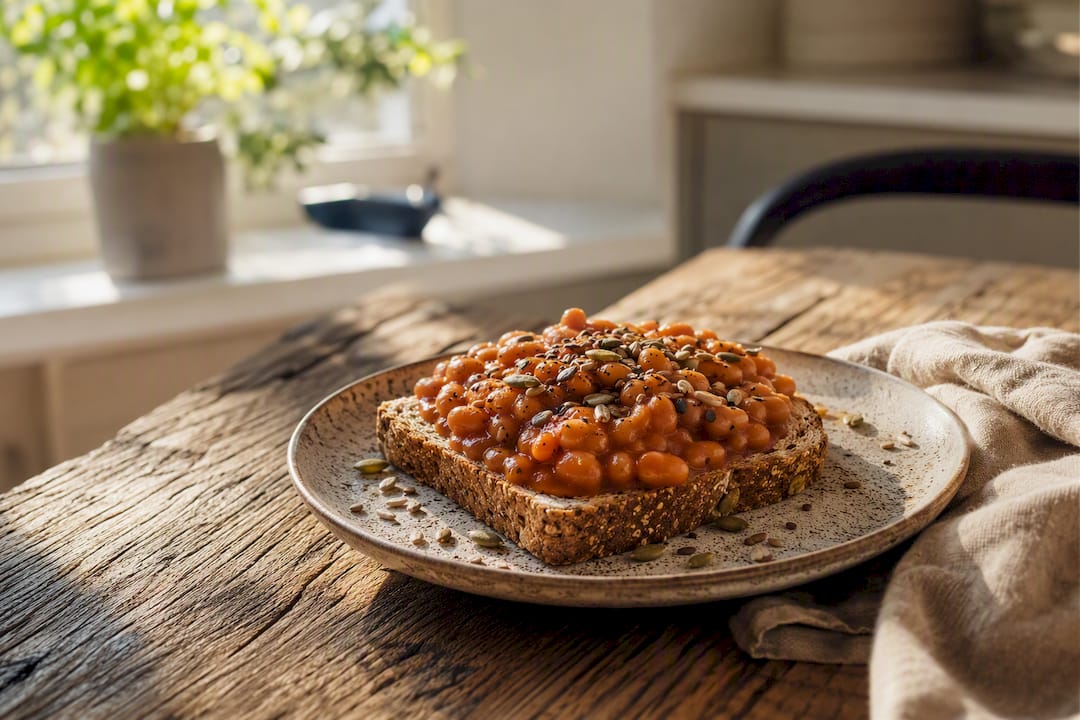
Pulses are the quiet workhorses of UK fibre intake. Cereal products, vegetables, and pulses, particularly baked beans, are the biggest contributors to population fibre intake, which tells you something useful: you don’t need exotic ingredients to hit 30g, you need to eat beans and lentils more often. A standard tin of baked beans on toast adds a significant amount of fibre in one sitting.
Nuts round out the list, and they double as a protein source, which matters if you’re trying to build meals that are high in fibre and protein rather than fibre alone. Peanuts carry around 7.6g of fibre per 100g and almonds around 7.4g. A small handful, roughly 30g, gives you 2 to 2.5g of fibre alongside 6 to 7g of protein.
Here’s how the main categories stack up per typical portion:
- Bran cereals: 5 to 9g per 40g bowl, among the densest breakfast options available.
- Baked beans: around 10g per standard 200g tin, one of the easiest additions to an existing meal.
- Lentils and pulses: 4 to 8g per 80g cooked portion, ideal stirred into a bolognese or curry.
- Chia or linseed: 3 to 5g per tablespoon, added cold to yoghurt, porridge, or a smoothie.
- Wholemeal bread: around 4g per two-slice serving, a straight swap for white with no extra effort.
- Almonds or peanuts: 2 to 2.5g per 30g handful, plus a useful protein boost.
- Dried figs: around 6.9g per 100g, useful stirred through a fruit and nut mix.
- Vegetables (carrots, broccoli, sweetcorn): 2 to 4g per typical portion, adding up fast across three meals.
Soluble fibre, the type found in oats, beans, and fruit, dissolves in water and slows digestion, helping steady blood sugar and cholesterol. Insoluble fibre, found in wheat bran, nuts, and vegetable skins, adds bulk and speeds food through the gut. You want both, which is exactly why experts recommend variety over relying on any single source: a diet built entirely from bran cereal ticks the insoluble box but misses the soluble benefits oats and pulses provide.
Two sample days that hit 30g of fibre
Numbers only matter once they sit inside a day you’d actually eat. Here are two versions, one built around meat and dairy, one entirely plant-based, both landing close to the 30g mark.
Omnivore day: Bran cereal with milk (7g) and a banana (3g) for breakfast; wholemeal sandwich with a side salad (6g) for lunch; a handful of almonds as a snack (2g); chicken stir-fry with mixed vegetables and brown rice for dinner (8g); running total around 26 to 28g, easily topped up with an apple.
Plant-based day: Porridge oats topped with chia seeds and berries (9g) for breakfast; lentil soup with wholemeal roll (10g) for lunch; a small handful of walnuts (2g); chickpea curry with brown rice for dinner (9g); total comfortably over 30g. Our high-fibre vegan recipes collection has full versions of meals like this.
Quick swaps, ranked by effort versus payoff:
- White bread to wholemeal: adds roughly 3 to 4g per two-slice serving.
- Plain rice to brown rice: adds around 2g per cooked portion.
- Stirring lentils into a bolognese or shepherd’s pie: adds 4 to 6g without changing the recipe’s character.
- A tablespoon of seeds on porridge or yoghurt: adds 3 to 5g in seconds.
- Swapping a crisps snack for a small handful of nuts: adds 2g plus protein.
- Checking cereal labels for anything above 6g per 100g: an instant upgrade with zero extra cooking.
How to increase fibre without wrecking your digestion
Jumping from 18g to 30g overnight is the single most common reason people quit on fibre within a week. The British Dietetic Association recommends increasing intake gradually, alongside more fluids, because fibre absorbs water as it moves through the gut. Skip that step and you’re looking at bloating, cramping, or the opposite of the digestive improvement you were after.
Spread the increase over 2 to 4 weeks. Add one or two extra fibre portions a day rather than overhauling every meal at once, and aim to drink more water as your intake climbs.
- Split seed intake across meals instead of adding it all at breakfast.
- Soak or rinse linseeds if you find them harder to digest whole.
- If you’re prone to IBS, choose lower-FODMAP pulses or soak and split them before cooking to reduce gas while still raising fibre.
- Persistent symptoms are worth raising with a dietitian rather than pushing through.
Pro Tip: Keep a simple daily checklist rather than counting grams. Tick off one fibre addition at breakfast, one at lunch, one snack, and one at dinner. Four small wins add up to 30g far more reliably than one ambitious meal.
Reading labels: what “high fibre” actually means
Packaging claims are easy to game, but the UK rule is fixed: a food is officially “high fibre” at 6g or more per 100g, and a “source of fibre” at 3g or more. Anything below that is marketing, not substance.
- Check the nutrition panel for fibre per 100g, not just per serving, since serving sizes vary wildly between brands.
- Look for “wholegrain” or “wholemeal” as the first ingredient, not further down the list.
- Watch the sugar and calorie count on “high-fibre” bars and cereals. Some hit the 6g threshold while carrying more sugar than a chocolate biscuit, so a wholefood alternative, like fruit and nuts, often does more nutritional good for fewer trade-offs.
How Granavitalis fits into a higher-fibre diet
Granavitalis sources ancient grains, nuts, and seeds with minimal processing, which matters when fibre content is often the first thing stripped out during refining. Our organic pecan butter and ancient grain flours slot straight into the swaps above, whether that’s a spoonful in porridge or a flour switch in home baking. What suits you depends on your own dietary pattern and any digestive sensitivities, so treat these as concentrated additions rather than a replacement for variety.
Fibre needs by age: children, teens, and adults
Fibre targets rise with age, and applying the adult 30g figure to a five-year-old is a common mistake that leads to bloated, uncomfortable children rather than healthier ones. NHS guidance sets child targets well below the adult figure: around 15g a day for children aged 2 to 5, roughly 20g for ages 5 to 11, and about 25g for ages 11 to 16. Adults settle at 30g from age 17 onwards.
The practical difference is portion size, not food choice. A child’s bowl of bran cereal, a smaller portion of lentil soup, or half a slice of wholemeal toast instead of two still builds the same fibre habits without the volume that leads to stomach ache. Introducing seeds and pulses early, in small amounts, tends to make older children far more receptive to wholegrain and pulse-based meals later, since taste preferences form young.
For toddlers under two, doctors generally advise against a heavily high-fibre diet, since it can fill small stomachs before enough calories and nutrients are consumed. From two onwards, fibre can increase steadily alongside the rest of a varied diet.
Older adults sometimes reduce fibre intake without meaning to, simply because appetite drops and portion sizes shrink. The 30g target doesn’t change with age past adulthood, so smaller, more fibre-dense meals, a tablespoon of seeds here, a handful of nuts there, matter more as overall food volume falls.
Getting enough fibre on a gluten-free or vegan diet
Cutting out gluten or animal products doesn’t have to mean cutting fibre. It just shifts where you need to look.
On a gluten-free diet, the risk is losing wheat bran and standard wholemeal bread without replacing them. Ancient grains like quinoa, buckwheat, and amaranth are naturally gluten-free and carry meaningful fibre, and gluten-free oats (certified for cross-contamination) work exactly like standard porridge oats. Brown rice, lentils, and most vegetables are naturally gluten-free and fibre-rich, so the base of a high-fibre diet doesn’t actually depend on wheat at all.
On a vegan diet, fibre is rarely the problem, since pulses, wholegrains, nuts, seeds, fruit, and vegetables are the backbone of most plant-based eating already. The more common gap is protein alongside that fibre. Pairing lentils with grains, or nuts with seeds, covers both at once, and a high-fibre breakfast built around oats, chia, and nut butter does the same job in a single bowl. For meal ideas that lean on seeds specifically, seed-based recipes across breakfast, lunch, and dinner are a genuinely practical starting point.
Whatever the restriction, the same rule from earlier applies twice as hard: variety beats reliance on one substitute ingredient, gluten-free or otherwise.
Why the “one superfood” approach to fibre misses the point
Most fibre advice still gets sold as a hunt for a single hero ingredient, chia seeds one year, psyllium husk the next. That framing is backwards. The research consistently points the other way: cereal products, vegetables, and pulses together do the heavy lifting in most people’s diets, not one standout food.
What gets underestimated is how much staple swaps outperform novelty additions. Switching to wholemeal bread or a higher-fibre breakfast cereal moves the needle more than an occasional smoothie boost, simply because you eat bread and cereal daily and chia seeds occasionally. Consistency beats intensity here, every time.
If I had to prioritise one thing for someone starting from near-zero, it wouldn’t be adding an exotic ingredient. It would be fixing breakfast first, since that’s the meal most people eat identically every day, and a bran cereal or seeded porridge locks in 7 to 9g before 9am with no ongoing decision-making required. Everything else becomes easier once that habit is set.
— Jarrod
Sources
If you’ve read this far, you already know the theory. The gap for most people isn’t knowledge, it’s having genuinely concentrated ingredients on hand rather than relying on willpower at the supermarket shelf every week. Granavitalis exists for exactly that gap: ancient grain flours, seeds, and nut butters sourced with minimal processing, so the fibre stays intact rather than stripped out during refining.

The organic pecan butter works as a straight swap into any of the porridge or toast ideas above, and the nut and seed butter selection box is a practical way to try several concentrated sources without committing to one jar. If you’d rather start with a ready-made option that combines seeds and ancient grains in one go, the Immune Booster Superfood Bundle covers that ground without extra shopping. Pick one, add it to tomorrow’s breakfast, and build from there.
This article is general information, not a substitute for advice from a qualified doctor. Consult a qualified healthcare professional about your own circumstances before acting on anything here.
- How to get more fibre into your diet - NHS
- Fibre – British Dietetic Association (BDA)
- Importance of dietary fibre, strategies for increasing intake and maintenance of the supply chain in the UK