
13 Micronutrient-Dense Foods UK Shoppers Can Rotate Weekly
Liver, sardines, shellfish, dark leafy greens, eggs, legumes, and nuts and seeds top the list of foods that are high in micronutrients, delivering more vitamins and minerals per calorie than almost anything else on a supermarket shelf. Fortified dairy and plant alternatives fill in the gaps. The main caveats: most UK adults still need a vitamin D supplement over autumn and winter, and pregnant women need extra folic acid, no matter how varied their diet already is.
TL;DR:
- Most UK adults still require a vitamin D supplement during autumn and winter, regardless of their diet’s diversity.
- Liver provides the highest concentration of vitamin A, B12, and iron, but should be limited during pregnancy due to excess vitamin A.
- Incorporating oily fish, shellfish, dark leafy greens, eggs, legumes, nuts, seeds, and whole grains weekly ensures broad micronutrient coverage.
- Frozen vegetables, tinned fish, and fortified plant milks offer cost-effective, nutrient-preserving options to maintain micronutrient intake.
- Rotating a handful of nutrient-dense foods across the week is more practical and impactful than striving for daily perfection.
Table of Contents
- Which foods pack the most vitamins and minerals?
- How to build a micronutrient-rich plate and weekly plan
- Getting enough micronutrients on a plant-based or restricted diet
- Why food-first nutrition beats chasing single ingredients
- A realistic take on eating for micronutrients
- Simple ways to add nutrient density without overhauling your diet
- Sources
- FAQ
Which foods pack the most vitamins and minerals?
Nutrient density is not the same thing as calorie content, and that distinction explains why a plate of liver and kale beats a plate of white rice and chicken breast on almost every micronutrient measure, even though the second plate might have more protein. A peer-reviewed nutrient density analysis found that organ meats, small oily fish, dark green leafy vegetables, shellfish, legumes, nuts, and seeds consistently rank highest across multiple priority micronutrients at once, rather than excelling at just one.
That is the standard nutrition scientists use when they talk about “nutrient density”: how much vitamin and mineral value a food delivers relative to its energy content. It is a more useful lens than chasing individual “superfoods”, because most whole foods contribute several micronutrients simultaneously, and your overall dietary pattern matters more than any single ingredient.
Here are the foods that consistently earn their place near the top of that list, with what each one actually supplies and how to work it into a normal week.
1. Liver
Liver is the single most concentrated source of vitamin A, vitamin B12, and iron in the standard British diet, and a 100g portion of lamb’s liver can supply several times your daily vitamin A requirement in one sitting. That concentration is exactly why the NHS advises against liver during pregnancy — too much preformed vitamin A can harm a developing baby. For everyone else, once a week, fried gently with onions or blitzed into a coarse pâté, is plenty.
2. Sardines, mackerel, and salmon
Small oily fish deliver omega-3 fats, vitamin D, and vitamin B12 in one mouthful, and tinned versions are just as nutritious as fresh. Eating the small bones in tinned sardines also gives you a useful calcium hit most people miss entirely. Eating oily fish regularly, mashed onto toast or stirred through pasta, can help cover a meaningful portion of your vitamin D needs outside summer.
3. Shellfish (mussels, oysters, prawns)
Shellfish are exceptional for iodine, zinc, and B12, three micronutrients that are genuinely hard to get enough of on a Western diet. Oysters in particular carry some of the highest zinc concentrations of any food, which matters for immune function and wound healing. Frozen prawns stirred through a stir-fry are an easy, affordable way to get shellfish into a normal weeknight meal.
4. Mussels and oysters specifically
Worth separating out from general shellfish because bivalves like mussels and oysters also carry meaningful iron and selenium alongside their iodine and zinc. A kilogram of mussels steamed in a splash of cider costs less than most ready meals and covers several days’ worth of iodine in one go.
5. Dark green leafy vegetables
Kale, spinach, and spring greens are the standout sources of vitamin K, folate, and magnesium, and cooking them lightly (rather than boiling them to mush) preserves far more of the folate. Steaming or a quick stir-fry with a little oil helps you absorb the fat-soluble vitamin K more effectively too. Frozen spinach is genuinely just as good as fresh and considerably cheaper.
6. Seaweed
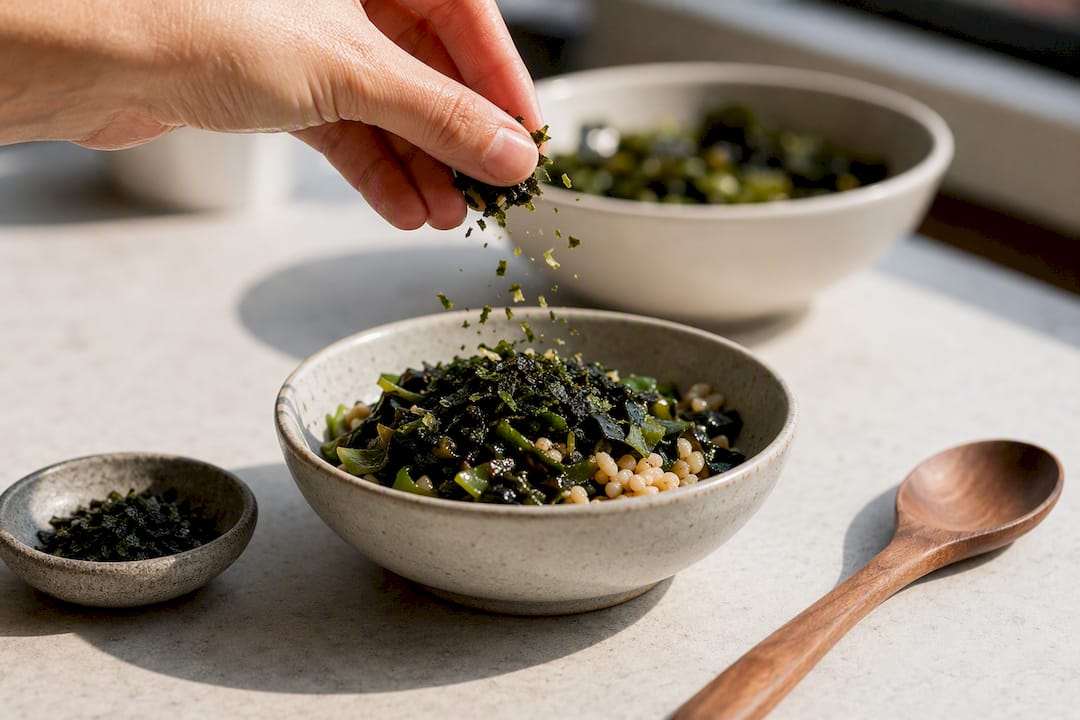
Seaweed is one of the only plant foods with a naturally high iodine content, which makes it valuable for anyone reducing dairy or fish. The catch is variability: some seaweed products contain wildly inconsistent iodine levels, so it works better as an occasional addition (a sprinkle of nori flakes, a side of wakame) than a reliable daily source.
7. Eggs
Eggs are a genuinely complete micronutrient package: B12, choline, selenium, and a decent amount of vitamin D if you buy ones labelled as enriched. The Linus Pauling Institute lists eggs among the classic dietary sources of nutrients important for ageing well, alongside meat, poultry, and shellfish. Two or three a week, boiled, scrambled, or baked into a frittata with leftover vegetables, is an easy habit to keep.
8. Legumes (lentils, chickpeas, beans)
Legumes bring iron and folate at a fraction of the cost of meat, and they hold onto their nutrient value whether you buy them dried or tinned. Government healthy-eating guidance specifically flags pulses as an important nutrient-dense staple, alongside nuts and wholegrains. A tin of chickpeas blitzed into hummus or thrown into a curry base is one of the cheapest wins in this entire list.
9. Nuts and seeds
Nuts and seeds supply magnesium, healthy fats, and precursors to omega-3s, and they are worth buying whole rather than pre-ground where possible, since grinding speeds up how quickly the oils go rancid. Brazil nuts deserve a special mention: just one or two a day supplies more selenium than most people get in a week from anything else, which matters because selenium deficiency is genuinely common in UK soils. Keep a jar of mixed nuts and seeds by the kettle and add a small handful to porridge, yoghurt, or salads.
10. Whole and ancient grains
Wholegrains and ancient grains such as spelt, buckwheat, and einkorn carry meaningfully more B vitamins and magnesium than their refined counterparts, because the bran and germ, where most of the micronutrients live, stay intact. Swapping white rice or standard flour for an ancient grain version is one of the simplest upgrades you can make without changing a recipe at all.
11. Dairy and fortified alternatives
Milk, yoghurt, and cheese remain reliable sources of calcium and iodine, and many plant milks are now fortified to match, provided you check the label for added calcium, iodine, and vitamin D. Not all plant milks are fortified equally, so this is one area worth genuinely reading the packaging rather than assuming.
12. Potatoes with the skin on
Potatoes get an unfair reputation as an empty starch, but eaten with the skin on, they are a decent source of vitamin C and one of the best dietary sources of potassium going. Roasting or baking rather than boiling preserves more of both.
13. Berries
Strawberries, blackberries, and blueberries supply vitamin C and a wide range of antioxidant plant compounds, and frozen berries retain their nutrient content just as well as fresh, often for a third of the price. A handful stirred into porridge or yoghurt is an easy way to hit part of your daily fruit and vegetable target.
Taken together, these thirteen groups cover almost every micronutrient a typical UK diet falls short on. None of them needs to be eaten daily. What matters, according to the British Dietetic Association, is rotating through several of them across a week rather than fixating on any single item.
How to build a micronutrient-rich plate and weekly plan
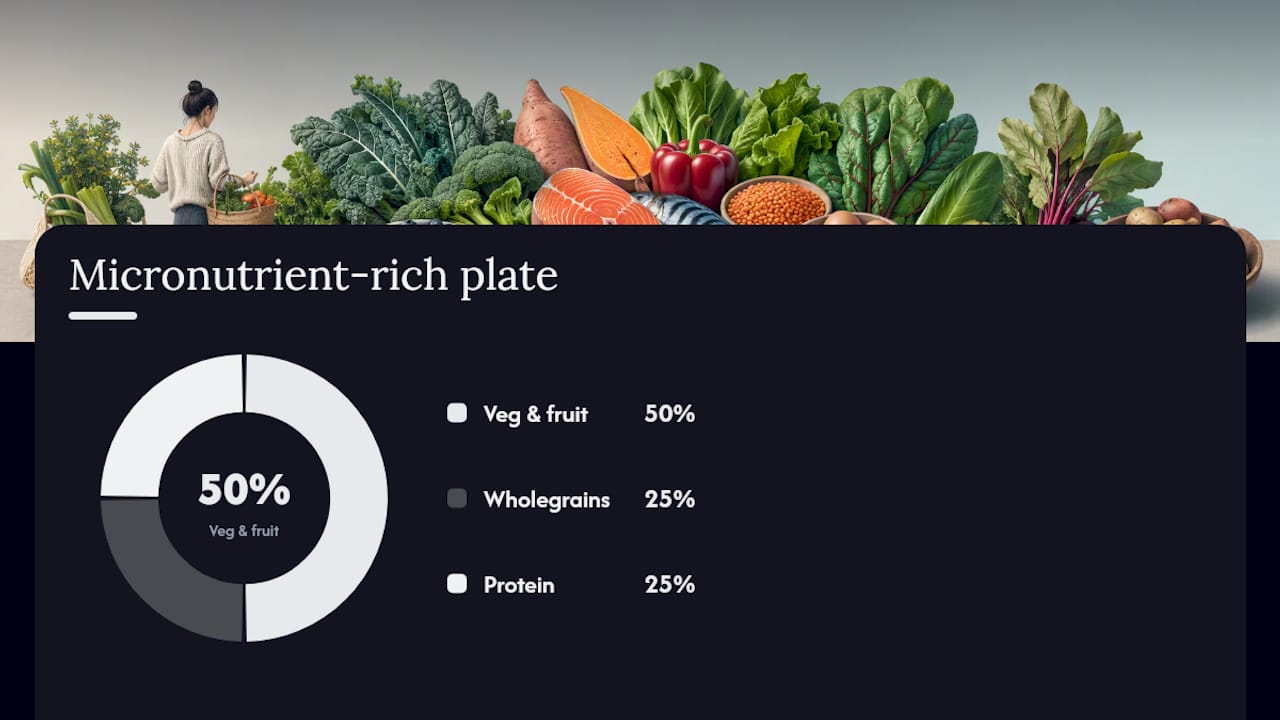
A simple mental template makes this list usable rather than overwhelming: half the plate vegetables and fruit in varied colours, a quarter wholegrains, and a quarter protein that includes at least one micronutrient-dense item from the list above. That structure roughly mirrors the “5 a day” principle from GOV.UK’s healthy-eating guidance, which recommends at least five varied portions of fruit and vegetables daily, not five of the same apple.
Shopping smart matters as much as the food choices themselves. Frozen vegetables and tinned fish are not compromises; the British Dietetic Association’s guidance on eating well for less confirms frozen and tinned produce holds onto its nutrient value just as well as fresh, often better, since it is processed at peak ripeness rather than sitting in transit for days.
A few habits make the biggest difference over a normal week:
- Buy whole nuts and seeds in bulk and portion them into small jars rather than pre-bought snack packs, which cost more for less.
- Keep a stock of tinned sardines, mackerel, and mussels for weeks when fresh fish feels like too much effort.
- Batch-cook a big pot of lentils or chickpeas on a Sunday and use it across three different meals.
- Choose fortified plant milk over an unfortified one if dairy is off the table.
- Freeze spinach, kale, or berries in portions so nothing goes to waste before you get round to using it.
Small additions compound faster than big meal overhauls. Stirring a tablespoon of nut butter or a spoonful of ground seeds into porridge, having an egg or a tin of sardines twice a week, or swapping white bread for an ancient grain loaf are the kind of low-effort changes that stick, because they do not require rethinking your entire diet.
Pro Tip: If appetite or meal size is limiting how much you can eat in one go, think “little and often” rather than three big meals. A handful of nuts, a boiled egg, or a spoonful of nut butter on oatcakes between meals adds real micronutrient value without needing you to eat more at any single sitting.
Getting enough micronutrients on a plant-based or restricted diet
Vegetarians and vegans can absolutely hit their micronutrient targets, but it takes a bit more deliberate planning around a handful of specific nutrients, rather than assuming a plant-heavy diet automatically covers everything.
Vitamin B12 is the one non-negotiable gap. It exists almost exclusively in animal foods, so anyone avoiding meat, fish, eggs, and dairy needs either fortified foods (check plant milks and breakfast cereals for added B12) or a reliable supplement. This is not a minor detail to sort out eventually; it is the first thing to fix.
Iron absorption from plant sources works differently to iron from meat, but there are real fixes:
- Pair iron-rich legumes, nuts, and seeds with a source of vitamin C, such as peppers, citrus, or berries, since vitamin C significantly improves how much plant iron your body actually absorbs.
- Soak or sprout lentils, chickpeas, and beans where possible, which reduces the phytates that otherwise block some mineral absorption.
- Spread iron-rich foods across the week rather than relying on one big lentil dish and calling it done.
Calcium and iodine need similar label-checking discipline. Fortified plant milks and yoghurts close the calcium gap reliably, but iodine is trickier: sea vegetables like seaweed contain iodine, but concentrations vary so much between batches that they should not be treated as a dependable daily source. A fortified plant milk or an iodine supplement is a more consistent bet for anyone who has cut dairy entirely.
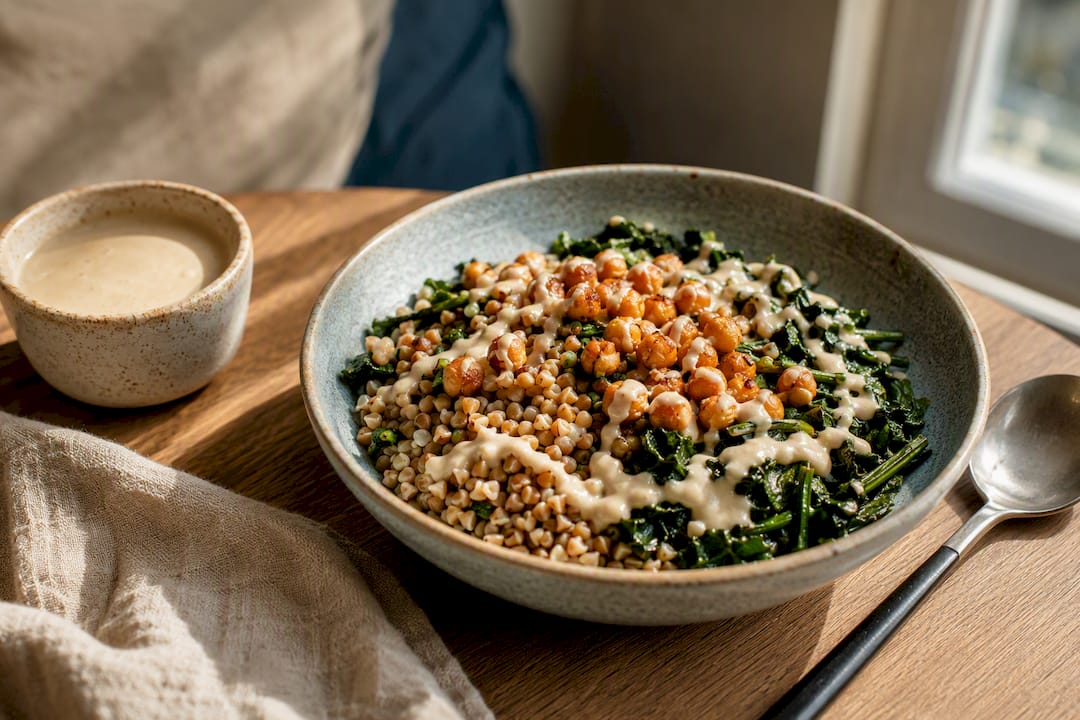
Ancient grains, nut butters, and legumes do a lot of the heavy lifting in a well-planned plant-based diet. A bowl of buckwheat with roasted chickpeas, greens, and a spoonful of tahini covers folate, magnesium, iron, and healthy fats in a single dish, and this piece on plant sources high in protein has more combinations worth trying if you want to build out a rotation.
Why food-first nutrition beats chasing single ingredients
A food philosophy based on Purity, Performance, and Purpose favours minimally processed ancient grains, nuts, seeds, and plant proteins, sourced traditionally, to deliver consistent micronutrient value rather than engineered marketing claims.
The foods on the list above correspond to commonly available products like ancient grain flours that retain B vitamins and magnesium better than refined ones. Nut and seed butters make it easy to add nuts and seeds to meals, and plant proteins provide options for meals that focus on legumes and grains rather than meat. None of it requires a supplement drawer’s worth of pills; it requires buying the right whole ingredients and using them consistently.
A realistic take on eating for micronutrients
Perfection is not the goal here, and chasing it is usually what makes people give up on nutrition advice altogether. Eating liver every week or tracking every gram of selenium is not realistic for most people, and it is not necessary either. What actually moves the needle is rotating through a handful of the nutrient-dense foods above most weeks and not overthinking the rest.
Two pieces of public-health advice are worth taking seriously regardless of how well you eat: a vitamin D supplement through autumn and winter, and folic acid for anyone pregnant or planning to be. Diet quality does not override either recommendation. Beyond that, variety across weeks matters more than precision within any single day.
— Jarrod
Simple ways to add nutrient density without overhauling your diet
Nut butters and ancient grains are two of the easiest entry points if you want to lift the micronutrient content of meals you already cook, rather than starting from scratch. A spoonful of Raw Organic Pecan Butter stirred into porridge or spread on ancient grain toast adds magnesium and healthy fats in seconds, no recipe required.

Granavitalis is not a substitute for the whole foods on this list, and it does not claim to be. Liver, oily fish, shellfish, and dark leafy greens still need to be on your plate regularly. What Granavitalis offers is a convenient way to close the gaps around them: ancient grain flours to swap into baking, clean plant proteins for meals built around legumes, and the Organic Nut & Seed Butter Selection Box if you want variety across several nut and seed sources rather than committing to just one jar. If you are building a weekly shop around nutrient density rather than convenience, start there and add the whole foods around it.
Sources
- Vitamins and minerals | NHS
- Priority micronutrient density in foods | Frontiers in Nutrition (PMC/NIH)
- Gov
FAQ
What food has the most micronutrients?
Liver is generally considered the single most micronutrient-dense food, supplying exceptional amounts of vitamin A, B12, and iron in a small portion, though sardines and dark leafy greens follow closely across a broader range of nutrients.
What are the 12 foods you should eat every day?
There is no single official list, but a strong everyday rotation includes leafy greens, legumes, nuts and seeds, wholegrains, eggs, oily fish, berries, dairy or fortified alternatives, and colourful vegetables, varied across the week rather than all eaten daily.
What are the essential micronutrients?
Micronutrients fall broadly into vitamins and minerals: the NHS groups vitamins into fat-soluble (A, D, E, K) and water-soluble (C and the B vitamins), alongside key minerals including calcium, iron, iodine, potassium, zinc, and magnesium.
Do I need supplements if I eat these foods regularly?
Most people covering a varied diet still benefit from a vitamin D supplement in autumn and winter, and anyone pregnant needs additional folic acid, regardless of how nutrient-dense their meals already are.
Are frozen and tinned foods still high in micronutrients?
Yes. Frozen vegetables and tinned oily fish retain their vitamin and mineral content just as well as fresh versions, and they are often a more affordable way to eat nutrient-dense foods consistently.