
Einkorn Wheat Nutrition Facts: Ancient Grain Benefits
Over half of British households now seek out alternative grains for health and variety, yet misunderstandings about ancient wheat still abound. With growing interest in traditional foods, many overlook the distinct qualities that set einkorn wheat apart from its modern counterparts. This guide unpacks the facts and dispels the most common myths, making it easier to see why this ancient grain is enjoying renewed attention on British tables.
Table of Contents
- Einkorn Wheat Explained And Common Misconceptions
- Nutritional Profile Compared To Modern Wheat
- Protein Quality, Amino Acids And Fibre Content
- Micronutrients: Vitamins And Mineral Highlights
- Gluten Structure And Digestibility Factors
- Choosing, Cooking And Storing Einkorn Wheat
Key Takeaways
| Point | Details |
|---|---|
| Nutritional Superiority | Einkorn wheat contains higher protein, essential minerals, and lower gluten reactivity compared to modern wheat. |
| Unique Gluten Composition | The gluten structure of einkorn is different, offering enhanced digestibility for some individuals, making it suitable for those with mild sensitivities. |
| Culinary Considerations | Adjustments in cooking techniques are necessary for einkorn due to its lower gluten content and distinctive properties. |
| Storage Best Practices | To maintain freshness, store einkorn in airtight containers in cool, dark environments, and use flour within 3-4 months of milling. |
Einkorn Wheat Explained and Common Misconceptions
Einkorn wheat represents one of humanity’s most ancient cultivated grains, with a remarkable history stretching back thousands of years. Genomic studies from agricultural researchers reveal that this remarkable grain was the first domesticated wheat species, playing a pivotal role in agricultural development approximately 10,000 years ago in the Fertile Crescent.
Contrary to popular misconceptions, einkorn is not just another wheat variety but a distinct species with unique nutritional characteristics. While modern wheat has undergone extensive hybridisation and genetic modification, einkorn remains remarkably close to its original wild form. This genetic preservation means it offers a nutritional profile quite different from contemporary wheat varieties, with higher protein content, more essential minerals, and potentially lower gluten reactivity for some individuals.
One significant misunderstanding about einkorn is that it’s simply an obsolete grain with no modern relevance. In reality, this ancient wheat represents a powerful nutritional resource. Its complex genetic structure, developed through millennia of natural selection, provides nutrients in a form that more closely resembles the diet of our agricultural ancestors. Researchers have discovered that einkorn contains higher concentrations of important compounds like antioxidants, carotenoids, and certain minerals compared to modern wheat variants.
Pro Tip for Nutrition Enthusiasts: When incorporating einkorn into your diet, start with small quantities and observe how your body responds, as its unique protein structure may differ from standard wheat grains you’re accustomed to consuming.
Nutritional Profile Compared to Modern Wheat
Nutritional research reveals striking differences between einkorn wheat and modern wheat varieties. Comparative scientific studies demonstrate that ancient wheat species like einkorn possess significantly more favourable nutritional characteristics compared to contemporary wheat cultivars. These differences extend beyond basic macronutrient composition, encompassing mineral content, vitamin profiles, and potential health benefits.
At the micronutrient level, einkorn wheat stands out for its exceptional mineral density. Researchers have confirmed that einkorn contains higher concentrations of essential minerals such as potassium, magnesium, and calcium compared to modern wheat variants. Nutritional analyses further reveal that einkorn grains exhibit lower total carbohydrate content while simultaneously offering increased protein and crude ash content, making it a more nutrient-dense alternative to standard wheat.
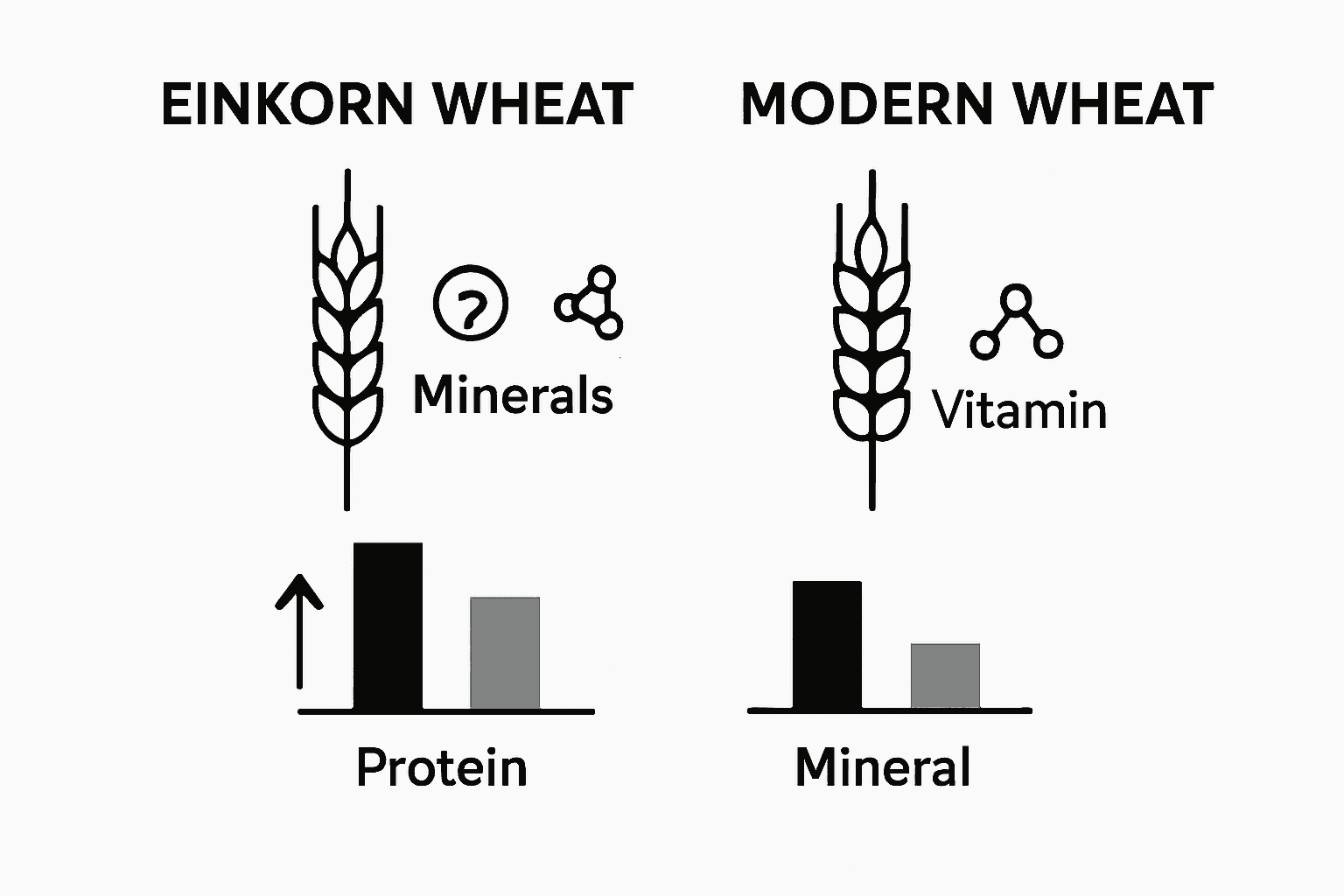
The biochemical composition of einkorn wheat presents a compelling nutritional profile that distinguishes it from industrially developed wheat. Modern wheat has undergone extensive genetic modification to enhance yield and pest resistance, often at the expense of nutritional complexity. In contrast, einkorn maintains its original genetic structure, which translates to higher levels of important compounds like vitamin E and phenolic content. These inherent nutritional advantages suggest that einkorn could offer more comprehensive health benefits compared to conventional wheat products.
Pro Tip for Nutritional Optimisation: When substituting einkorn for standard wheat, start with a gradual transition and monitor your body’s response, as its unique nutritional composition may interact differently with your metabolic processes.
To highlight the nutritional contrasts between einkorn and modern wheat, see the table below:
| Nutritional Aspect | Einkorn Wheat | Modern Wheat |
|---|---|---|
| Protein Content | Higher (approx. 18%) | Lower (approx. 14%) |
| Gluten Reactivity | Lower, gentler on digestion | Higher, may provoke sensitivities |
| Essential Minerals | Richer in potassium, iron, zinc | Moderately present |
| Vitamin E & Carotenoids | Significantly elevated | Some, but in lower amounts |
| Genetic Modification | Unmodified, retains wild genetics | Highly hybridised for yield and resilience |
| Fibre Content | Slightly lower (approx. 11%) | Slightly higher (approx. 15.1%) |
Protein Quality, Amino Acids and Fibre Content
Einkorn wheat distinguishes itself through a remarkable protein composition that sets it apart from contemporary wheat varieties. Scientific research on kernel characteristics reveals that einkorn contains higher protein content compared to polyploid wheat species, while maintaining a comparable amino acid profile. This nutritional advantage suggests that einkorn could be a superior protein source for individuals seeking more nutrient-dense grain alternatives.

The amino acid composition of einkorn is particularly noteworthy, with research indicating enhanced digestibility compared to modern wheat variants. Certain einkorn genotypes have demonstrated impressive versatility, showing promising characteristics for bread-making and pasta production. While the fibre content is slightly lower than modern wheat varieties – with einkorn containing approximately 11.0% fibre compared to modern wheat’s 15.1% – nutritional analyses highlight its rich concentration of bioactive compounds such as phenolic acids and phytosterols.
Beyond basic nutritional metrics, einkorn’s protein quality offers unique health potential. The grain’s amino acid profile suggests potential benefits for muscle recovery, metabolic function, and overall nutritional balance. Its lower gluten content and enhanced digestibility make it an intriguing option for individuals seeking alternative grain sources that do not compromise nutritional integrity. The presence of additional bioactive compounds further elevates einkorn’s nutritional profile, positioning it as a compelling choice for health-conscious consumers seeking more than just standard wheat products.
Pro Tip for Nutritional Diversity: Experiment with incorporating einkorn flour into your diet gradually, starting with small quantities in baking or cooking to appreciate its unique protein and nutrient characteristics.
Micronutrients: Vitamins and Mineral Highlights
Einkorn wheat emerges as a nutritional powerhouse, distinguished by its exceptional micronutrient profile that significantly surpasses contemporary wheat varieties. Scientific investigations into trace compounds reveal that einkorn contains remarkably higher concentrations of valuable nutrients, including vitamin E, luteins, steryl ferulates, and essential minerals such as iron and zinc. These findings position einkorn as a potentially superior nutritional alternative to standard wheat products.
The bioactive composition of einkorn wheat is particularly impressive, with comprehensive nutritional analyses demonstrating elevated levels of critical micronutrients. The grain boasts substantially higher concentrations of total phenolic acids, folate, phytosterols, and total tocols compared to modern wheat varieties. These micronutrients contribute to a complex nutritional matrix that may offer enhanced health benefits, suggesting that einkorn represents more than just a simple grain alternative.
While current research demonstrates einkorn’s remarkable micronutrient density, scientists acknowledge that further investigation is needed to fully understand the bioavailability and precise health implications of these compounds. The presence of higher concentrations of trace elements and bioactive components hints at potential advantages for metabolic health, cellular function, and overall nutritional support. The unique micronutrient profile of einkorn wheat underscores the potential value of exploring ancient grain varieties as part of a balanced, nutrient-rich diet.
Pro Tip for Nutrient Maximisation: Consider incorporating small amounts of einkorn flour into your regular cooking and baking to diversify your micronutrient intake without dramatically altering your existing dietary patterns.
Gluten Structure and Digestibility Factors
Einkorn wheat presents a fascinating complexity in its gluten structure that distinguishes it from modern wheat varieties. Academic research on wheat biochemistry reveals that as a diploid wheat species, einkorn possesses a unique gluten composition characterised by distinctive dough properties. Its gluten generates a notably sticky texture that can be challenging for traditional bread-making processes, resulting in reduced volume expansion compared to conventional wheat products.
Scientific investigations into gluten digestibility demonstrate that einkorn’s gluten structure offers remarkable advantages for individuals with certain digestive sensitivities. Unlike polyploid wheat species, einkorn gluten exhibits enhanced digestibility, which suggests potential benefits for people experiencing mild gluten intolerances. Selected einkorn genotypes have even demonstrated promising bread-making performances, indicating that its unique gluten characteristics need not compromise culinary functionality.
The biochemical nuances of einkorn’s gluten structure represent a significant departure from industrially developed wheat. While modern wheat has been progressively engineered to enhance bread-making properties, einkorn maintains its original genetic complexity. This preservation means its gluten molecules interact differently within food preparations, potentially offering a more authentic and less processed protein experience. The grain’s inherent gluten characteristics suggest a more gentle interaction with human digestive systems, making it an intriguing option for those seeking alternative grain sources.
Pro Tip for Gluten Sensitivity: When first introducing einkorn into your diet, start with small quantities and monitor your body’s response to understand your individual digestive tolerance.
Choosing, Cooking and Storing Einkorn Wheat
Einkorn wheat offers a unique culinary experience that requires specific selection and handling techniques. Culinary research on ancient grains reveals that einkorn possesses a distinctive nutty sweetness that distinguishes it from conventional wheat varieties. Its hard outer husk provides natural protection against insects and fungi, making it particularly well-suited for organic farming practices and ensuring superior grain quality.
When selecting and preparing einkorn wheat, understanding its unique properties is crucial. Unlike modern wheat, einkorn requires modified cooking and baking techniques due to its lower gluten content and different protein structure. Home cooks should anticipate that breads and baked goods made with einkorn flour will have a slightly different texture and rise compared to traditional wheat products. This means adjusting liquid ratios, kneading techniques, and baking times to accommodate its distinctive characteristics.
Proper storage is paramount to maintaining einkorn wheat’s nutritional integrity and flavour profile. The grain should be kept in airtight containers, stored in cool, dark environments to prevent moisture and oxidation. Whole einkorn berries can be stored for several months when kept in sealed containers, while flour has a shorter shelf life and should ideally be used within 3-4 months of milling. For maximum freshness, consider storing einkorn flour in the refrigerator, which can extend its usable period and preserve its delicate nutritional components.
Pro Tip for Grain Preparation: When first experimenting with einkorn, start by substituting only a portion of standard wheat flour in your recipes to understand its unique baking properties and gradually adjust your technique.
For practical guidance, here is a summary of tips for working with einkorn wheat:
| Area | Best Practice | Purpose |
|---|---|---|
| Storage | Airtight container, cool/dark place | Preserves nutrients and flavour |
| Flour Usage | Use within 3-4 months or refrigerate | Maintains freshness and nutritional quality |
| Baking Approach | Adjust liquids, expect denser texture | Accommodates lower gluten and unique protein makeup |
| Dietary Intro | Start with small quantities | Supports digestion and helps identify sensitivities |
Discover the Power of Einkorn with Granavitalis
If you are seeking a nutrient-rich wheat alternative that honours ancient traditions and supports modern wellness goals then einkorn wheat is a grain worth exploring. This article highlights the unique protein quality, superior mineral density and gentle gluten digestibility of einkorn — qualities that can elevate your nutrition without compromising flavour or functionality. At Granavitalis we offer a curated selection of ancient grains including einkorn to help you experience these benefits firsthand.
Start your journey towards cleaner nutrition today by browsing our Grains collection for premium einkorn options. Complement your selection with our diverse range of All Flours tailored for mindful cooking and baking. Embrace meals fuelled by wholefood vitality rooted in tradition at Granavitalis. Act now to enrich your diet with pure ancestral nutrition crafted for today’s demands.
Frequently Asked Questions
What are the main nutritional benefits of einkorn wheat compared to modern wheat?
Einkorn wheat has a higher protein content, more essential minerals, and improved nutrient density, making it a potentially healthier option compared to modern wheat. Additionally, it contains elevated levels of antioxidants and vitamins such as vitamin E, which can provide more comprehensive health benefits.
Is einkorn wheat suitable for individuals with gluten sensitivities?
While einkorn wheat does contain gluten, its unique gluten structure is thought to be more digestible for some individuals with mild gluten sensitivities. However, those with celiac disease or severe gluten intolerance should consult with a healthcare professional before trying einkorn.
How can I incorporate einkorn wheat into my diet?
You can gradually add einkorn flour to your baking by substituting it for a portion of standard wheat flour. Start with recipes that allow for a slight adaptation in liquid ratios and kneading techniques, as einkorn has different properties compared to modern wheat.
What is the best way to store einkorn wheat to maintain its nutritional quality?
Store einkorn wheat in an airtight container in a cool, dark place to prevent moisture and oxidation. Whole einkorn berries can be stored for several months, while flour should ideally be used within 3-4 months of milling for maximum freshness.