
20 ppm: Which Cornmeal UK Coeliacs Can Trust
Yes: plain cornmeal made from maize is naturally gluten free, since corn belongs to a different plant family from wheat, rye and barley. The real risk isn’t the grain itself but what happens to it afterwards. Shared mills, factory lines, and vague “may contain” labels can turn a naturally safe ingredient into a genuine hazard, so checking certification matters more than checking the packet’s front of pack claims.
TL;DR:
- Certification and clear labeling are crucial because cross-contamination from shared milling equipment can introduce gluten into naturally gluten-free cornmeal products.
- Products without an explicit gluten-free claim, “may contain” warnings, or certification marks should be treated as unverified and potentially unsafe for coeliac diets.
- Pre-mixed or flavored polenta and corn products often contain additives, flavorings, or coatings with gluten, making plain, single-ingredient options safer.
- Buying from specialized, reputable online retailers or physical stores with allergen-specific sections reduces risk and ensures genuine gluten-free sourcing.
- Proper storage and kitchen practices, such as dedicated containers and utensils, are essential to prevent reintroducing gluten into safe cornmeal.
Table of Contents
- What cornmeal is gluten free and which corn products are safe
- How cross-contamination happens and why it matters
- Reading the label: what actually tells you it’s safe
- Is instant or flavoured polenta actually safe?
- Where to buy certified gluten-free cornmeal in the UK
- Buying, storing and using gluten-free cornmeal at home
- Why purity in sourcing matters more than the marketing around it
- Buy maize and cornmeal you can actually trust
- Sources
What cornmeal is gluten free and which corn products are safe
Cornmeal, cornflour, polenta and grits all come from the same source: dried, ground maize. None of them naturally contains the gluten proteins found in wheat, rye or barley, which is why maize sits alongside rice and buckwheat as a genuinely safe cereal for coeliac diets.
Naming gets confusing across the Atlantic, and it’s worth untangling before you shop:
- Cornmeal is coarsely ground dried maize, used for cornbread, coating, and thickening.
- Polenta is the Italian name for the same grain, either sold as raw meal or as a cooked, ready-to-slice product.
- Cornflour in British English is a fine, starchy thickener; Americans call the equivalent product “corn starch” and use “cornmeal” for something coarser.
- Grits, popular in the southern United States, are ground hominy corn, cooked into a porridge-like dish.
None of that naming confusion changes the underlying chemistry. Coeliac UK’s guidance on grains confirms maize is safe on a gluten-free diet, provided it hasn’t picked up gluten somewhere along the supply chain.
How cross-contamination happens and why it matters
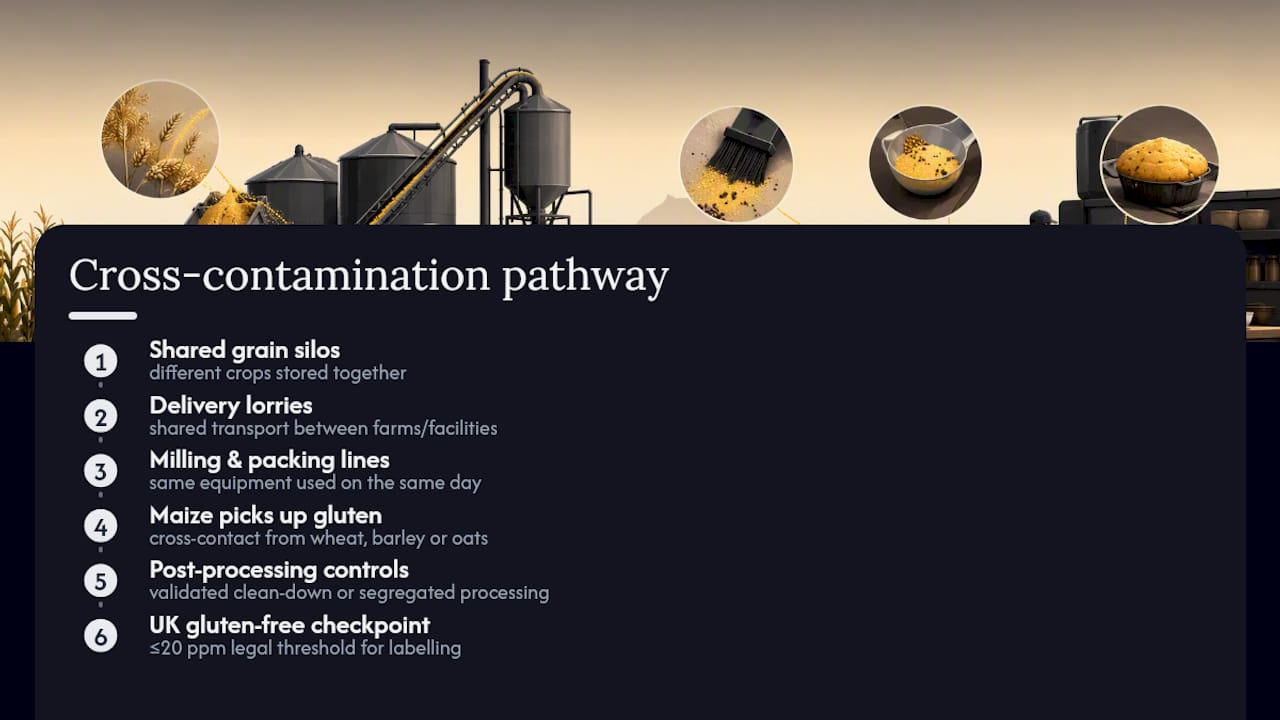
Maize rarely travels alone. Many mills process wheat, barley or oats on the same equipment, often on the same day, sometimes on the very same production line with only a basic clean-down in between. Grain silos, delivery lorries, and packing lines get shared across a facility because building separate infrastructure for every crop is expensive. That’s where a naturally gluten-free grain picks up trace gluten it never had in the field.
For someone without coeliac disease, a trace amount barely registers. For someone with it, that trace triggers an immune response that damages the small intestine, regardless of how small the dose. This is why the UK legal threshold for a “gluten-free” claim sits at 20 parts per million, the point below which manufacturers may label a product safe. Independent testing has previously found gluten in cornmeal that carried no gluten-free claim at all, which is the clearest argument for buying certified products rather than assuming plain-looking cornmeal is automatically clean.
Certification isn’t paperwork for its own sake. A genuinely certified product has usually been through segregated processing lines or validated cleaning protocols precisely because shared milling is the dominant real-world risk, not an edge case.
Reading the label: what actually tells you it’s safe
Checking a pack takes under a minute once you know what you’re looking for.
- Look for an explicit “gluten-free” claim or the Crossed Grain trademark. Either signals the product has been assessed against the legal threshold, not just assumed safe because it’s corn.
- Scan the ingredients list for bolded allergens. UK allergen guidance requires wheat, rye and barley to stand out from the rest of the ingredient text, making them easy to spot at a glance.
- Read any “may contain” warning as a hard no, not a maybe. For strict coeliac management, precautionary labelling is treated as unacceptable, however small the risk sounds.
- Contact the manufacturer directly if the pack is ambiguous. A quick email or call clears up more than guessing ever will.
Pro Tip: If a product’s own website doesn’t mention gluten-free status anywhere, that silence is itself an answer. Genuinely certified brands say so loudly, on the front of the pack.
Remember that “gluten-free” in UK and EU law means ≤20 parts per million, not zero. That’s the standard behind every legitimate claim you’ll see on shelf.
Is instant or flavoured polenta actually safe?
Plain polenta made from cornmeal and water is naturally gluten-free, and stays that way as long as it hasn’t been cross-contaminated during milling. The trouble starts with convenience formats, where manufacturers add extras to save you a step in the kitchen.
Watch for these on pre-mixed or flavoured products:
- Stabilisers and thickeners added to instant or tube-style polenta, which occasionally derive from gluten-containing grains.
- Cheese, herb, or stock flavourings blended in at the factory, each a separate ingredient with its own sourcing risk.
- Breaded or coated polenta chips, where the coating is frequently wheat-based rather than corn-based.
- Maltodextrin or glucose syrup listed on the ingredients panel, which sound alarming but are generally considered safe in the UK regardless of their starting grain.
The practical rule: plain, single-ingredient polenta needs less scrutiny than anything pre-mixed, pre-flavoured or pre-breaded. If a convenience product doesn’t carry an explicit gluten-free claim, treat it as unverified rather than assuming the corn base makes it automatically fine.
Where to buy certified gluten-free cornmeal in the UK
Supermarket “free-from” aisles and dedicated health-food shops are usually your quickest route to certified cornmeal and polenta, since retailers curate those sections specifically for allergen safety. Specialist online retailers go further, often listing certification status directly on the product page rather than making you dig for it.
When searching online, a few habits save time:
- Search “gluten-free polenta” or “certified gluten-free cornmeal” rather than just “cornmeal”, which pulls up unlabelled results too.
- Filter search results by allergen or dietary tags where the retailer offers them.
- Open the full product page before buying, since certification marks sometimes appear only in the detailed description, not the thumbnail.
- Message customer support if a listing is vague. A genuine specialist supplier will answer allergen questions quickly and specifically.
Buying from a supplier that sources and mills with gluten-free handling in mind removes most of the guesswork that unlabelled cornmeal leaves behind.
Buying, storing and using gluten-free cornmeal at home
A shopping checklist keeps decisions consistent once you’re standing in an aisle or scrolling a product page: certification mark present, no “may contain” warning, ingredients list short and legible. If any of those three fails, put it back.
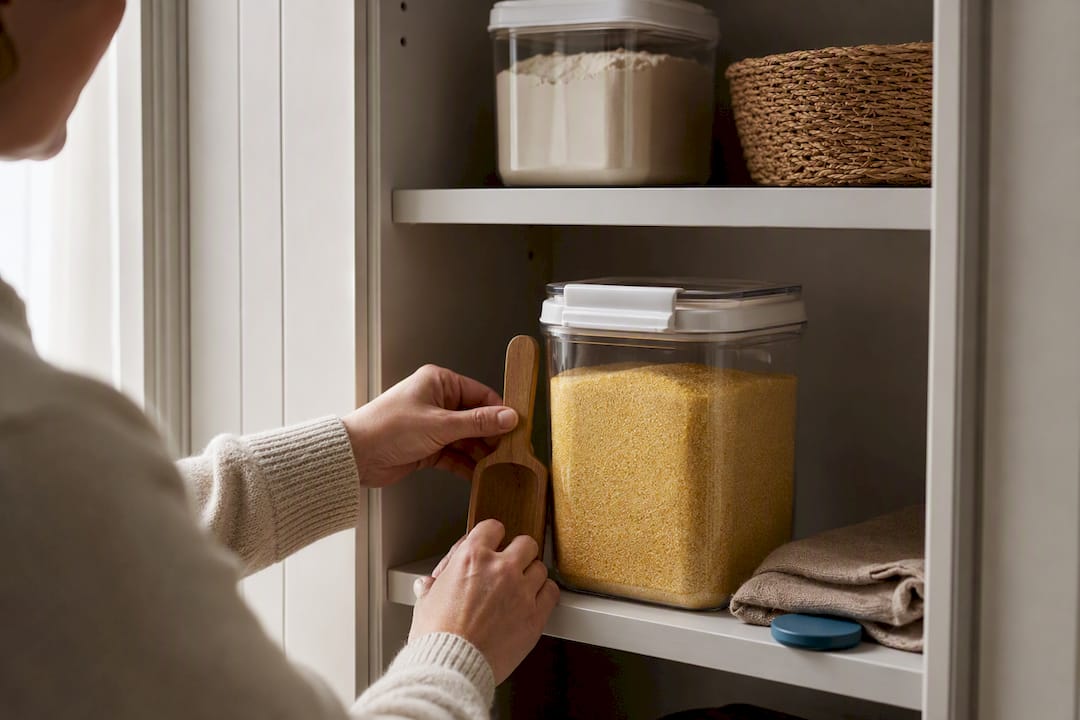
At home, the biggest risk isn’t the shop, it’s your own kitchen. Store gluten-free cornmeal in labelled, sealed containers, away from wheat flour, and keep a dedicated scoop or spoon for it. Shared sieves, toasters and wooden utensils are common culprits for reintroducing trace gluten into an otherwise safe ingredient. Coeliac UK’s grain guidance covers this kind of home cross-contact prevention in more depth if you want a fuller checklist.
Pro Tip: Cornmeal absorbs liquid differently to wheat flour, so when substituting it into a recipe, add liquid gradually rather than all at once. It thickens fast and can turn gluey if you overdo it early.
For texture, coarser cornmeal gives cornbread and crusts more bite, while fine cornflour blends smoothly into sauces and batters. Choosing the right grind matters as much as choosing the right label.
Why purity in sourcing matters more than the marketing around it
The gluten-free food market has no shortage of products that lean on the word “natural” while saying nothing concrete about how they’re actually processed. That gap between marketing language and verifiable fact is where risk hides, and it’s a gap Granavitalis was built to close rather than exploit.
Sourcing maize that hasn’t been hybridised or handled carelessly isn’t a compliance checkbox, it’s the whole point of an ancient-grain approach to food. Readers who want to go further into which grains are safe on a coeliac diet can read what grains coeliacs can eat for the fuller picture beyond corn alone. Granavitalis’s own gluten-free product range reflects that same standard, sourced and labelled with clarity rather than vague reassurance.
— Jarrod
Buy maize and cornmeal you can actually trust
Some brands sell maize-based flours with clear, transparent sourcing, which matters far more than any front-of-pack slogan once you’ve read this far. Rather than gambling on an unlabelled bag from an unfamiliar brand, buying from a specialist who states exactly what’s in the product, and how it’s milled, removes most of the uncertainty this article has walked through.
The organic white corn flour and organic maize flour on the Granavitalis site are sourced with that same purity-first standard the brand applies across its ancient-grain range. If you’re building a gluten-free kitchen and want cornmeal you don’t have to second-guess every time you bake, check the product pages, read the ingredient listings, and add what fits your recipe. For a wider look at pantry staples worth stocking, Granavitalis’s full range is worth a browse while you’re there. And if you’re curious how maize compares to other corn-based staples in everyday cooking, this guide to corn tortillas is a useful read on the culinary side of things.
This article is general information, not a substitute for advice from a qualified doctor. Consult a qualified healthcare professional about your own circumstances before acting on anything here.
Sources
- Gluten-free labelling for coeliac disease (CUH patient information)
- Grains on a gluten-free diet (Coeliac UK)
- Is polenta gluten-free? (Beyond Celiac)