
Plant-Based Protein Explained: Ingredients, Sources, Impact
Finding the best way to support muscle recovery and long-term health is a real challenge for anyone balancing work, fitness, and nutrition in the UK. With more adults shifting towards plant-based protein for its health benefits and environmental advantages, understanding where your protein comes from and what it delivers has never been more relevant. Here, you will discover how proteins from legumes, grains, seeds, and nuts can power up your workouts, fill nutritional gaps, and fit seamlessly into your active lifestyle.
Table of Contents
- Plant-Based Protein: Definition And Key Facts
- Core Ingredients: Grains, Legumes, Seeds And More
- How Plant Proteins Are Processed And Sourced
- Nutritional Profile And Major Health Benefits
- Comparing Plant And Animal Protein Sources
- Common Mistakes And Sourcing Pitfalls
Key Takeaways
| Point | Details |
|---|---|
| Plant-based protein sources are diverse. | Utilising a variety of legumes, grains, seeds, and nuts ensures a complete amino acid profile essential for muscle recovery. |
| Monitor essential nutrients. | Individuals on strict plant-based diets should pay attention to vitamin B12 and iodine to avoid deficiencies. |
| Sustainable eating practices are vital. | Choosing plant proteins contributes to environmental sustainability, making them a healthier choice for both individuals and the planet. |
| Combination is key for optimal nutrition. | Strategically mixing different plant protein sources throughout the week enhances overall nutritional value and supports fitness goals. |
Plant-based protein: definition and key facts
Plant-based protein refers to protein derived from plants rather than animals. These proteins come from legumes like lentils and chickpeas, whole grains, seeds, and nuts. Unlike animal proteins, plant-based options align with sustainable eating practices whilst delivering the amino acids your body needs for muscle repair and recovery.
The key distinction is that plant-based proteins are sourced from legumes, grains, seeds, and nuts, making them accessible alternatives to meat, fish, and dairy. Whether you’re training for a half-marathon or simply building strength through consistent gym sessions, these protein sources provide real nutritional value without the environmental footprint of animal agriculture.
What makes plant-based proteins particularly valuable is their amino acid profile. They contain essential amino acids including leucine, lysine, and methionine—the building blocks your muscles require after a tough workout. A combination of different plant sources ensures you get the complete amino acid spectrum your body cannot manufacture on its own.
Plant-based diets encompass various patterns from fully vegan approaches to flexitarian choices that simply increase plant food intake. Research shows these dietary patterns are linked to reduced risk of heart disease and diabetes, making them intelligent choices for long-term health. The diversity in how people approach plant-based eating reflects growing recognition of both nutritional benefits and environmental sustainability.
One practical consideration: whilst plant-based proteins deliver excellent nutrition, some people following strictly plant-based diets may need to monitor vitamin B12 and iodine intake more carefully. These nutrients require deliberate attention, whether through supplementation or fortified foods. Understanding your personal nutritional needs ensures you maximise the benefits whilst avoiding gaps in your diet.
The shift towards plant-based protein isn’t about perfection or all-or-nothing thinking. Many health-conscious adults in the UK are discovering that incorporating more plant proteins—whether that’s a chickpea-based lunch or hemp seeds in your breakfast—enhances their fitness results and supports their wellness goals without requiring complete dietary overhaul.
Pro tip: Combine different plant protein sources throughout your week—legumes on Monday, seeds on Wednesday, whole grains on Friday—to ensure you’re getting the full spectrum of amino acids your muscles need for optimal recovery and growth.
Core ingredients: grains, legumes, seeds and more
Plant-based protein doesn’t come from a single source. Instead, it’s built from a range of whole food ingredients, each bringing its own nutritional strength to the table. Understanding where these proteins come from helps you make informed choices about what you actually eat.
Legumes are your powerhouses. Soy, peas, lentils, and chickpeas pack more protein per serving than almost any other plant food. A single tin of chickpeas delivers around 19 grammes of protein, making them ideal for post-workout meals or filling lunches. Lentils cook faster than most legumes and adapt to both savoury and subtly spiced dishes.
Grains provide a quieter protein source. Cereals like wheat, rice, and oats contribute meaningful protein alongside fibre and complex carbohydrates. Brown rice offers roughly 5 grammes of protein per cooked cup, whilst oats deliver around 10 grammes per 100 grammes of dry grain. These aren’t the highest-protein foods, but their combination with legumes creates complete amino acid profiles.
Seeds and nuts bridge the gap. Chia seeds, pumpkin seeds, almonds, and hemp seeds are nutritionally dense, offering protein alongside healthy fats and micronutrients. Hemp seeds contain all nine essential amino acids, making them particularly valuable for strength training. A small handful of almonds provides roughly 6 grammes of protein plus vitamin E and magnesium.

The real advantage comes from combining these ingredients strategically. Rice and beans together form a complete protein. Oat porridge topped with chia seeds and almonds creates a breakfast that fuels your morning and supports muscle recovery. This combination approach aligns perfectly with how traditional cuisines have built nutrition for centuries.
When you’re building your plant-based protein intake, variety matters more than perfection. Some weeks you might emphasise lentil-based meals, other weeks you could focus on seed-rich breakfasts. This rotating approach keeps your nutrition interesting whilst ensuring you’re getting diverse micronutrients alongside protein.
Here is a summary comparing common plant-based protein sources and their nutritional highlights:
| Source | Typical Protein per Serving | Key Micronutrients | Special Attributes |
|---|---|---|---|
| Lentils | 9g per 100g cooked | Iron, folate, fibre | Quick to cook, versatile |
| Chickpeas | 19g per tin | Manganese, B6, fibre | Good for salads, stews |
| Hemp seeds | 9g per 3 tbsp | Magnesium, omega-3 | Contains all amino acids |
| Oats | 10g per 100g dry | Zinc, magnesium | Good for energy, breakfast |
| Almonds | 6g per handful | Vitamin E, magnesium | Supports heart health |
| Brown rice | 5g per cooked cup | B vitamins, selenium | Easy to combine with beans |
Pro tip: Buy dried legumes in bulk and prepare large batches on Sunday, then portion them into containers for quick meals throughout the week—this approach costs less than tinned options whilst delivering identical protein content.
How plant proteins are processed and sourced
Plant proteins don’t arrive on your plate ready to use. They go through specific processing steps that transform raw ingredients into the nutritious products you consume. Understanding this journey helps you appreciate what you’re eating and make choices aligned with your fitness goals.
Sourcing begins with sustainable farming. The best plant proteins come from farms that prioritise soil health and environmental responsibility. Legumes, cereals, and oilseeds are grown using practices that reduce water usage and avoid unnecessary chemicals. UK consumers increasingly seek these sustainably sourced options, recognising that nutrition and environmental impact connect directly.
Processing transforms raw ingredients into usable protein. Plant protein extraction involves milling, isolation, and concentration methods that separate protein from the plant material. When you buy protein powder or meat alternatives, manufacturers have already completed these steps. Milling breaks down whole grains and seeds into finer particles. Extraction isolates the protein component, whilst concentration increases its density.
This processing improves both nutrition and usability. Raw legumes contain compounds that make protein harder to digest. Processing reduces antinutrients whilst preserving the amino acids your muscles need. The result is a product with better bioavailability, meaning your body can actually use more of the protein you consume.
Texture and flavour improvements matter for real-world eating. Processing innovations now allow plant proteins to mimic meat and dairy textures whilst maintaining their whole-food authenticity. This matters because you’re more likely to eat nutritious foods you actually enjoy. A plant-based burger that tastes good gets eaten regularly, supporting your fitness routine consistently.
Different products require different processing approaches. Whole lentils need minimal processing and retain maximum nutrients. Plant protein isolates undergo more intensive refinement but deliver concentrated protein for specific applications like post-workout shakes. Neither approach is inherently better—they serve different purposes in your nutrition strategy.
Pro tip: Choose minimally processed plant proteins like whole legumes and seeds for everyday meals, but use protein isolates strategically after workouts when your muscles need rapid amino acid absorption.
Nutritional profile and major health benefits
Plant-based proteins deliver far more than just protein. They come packaged with fibre, vitamins, minerals, and compounds your body actively needs for strength, recovery, and long-term health. This comprehensive nutritional package distinguishes plant proteins from isolated animal sources.
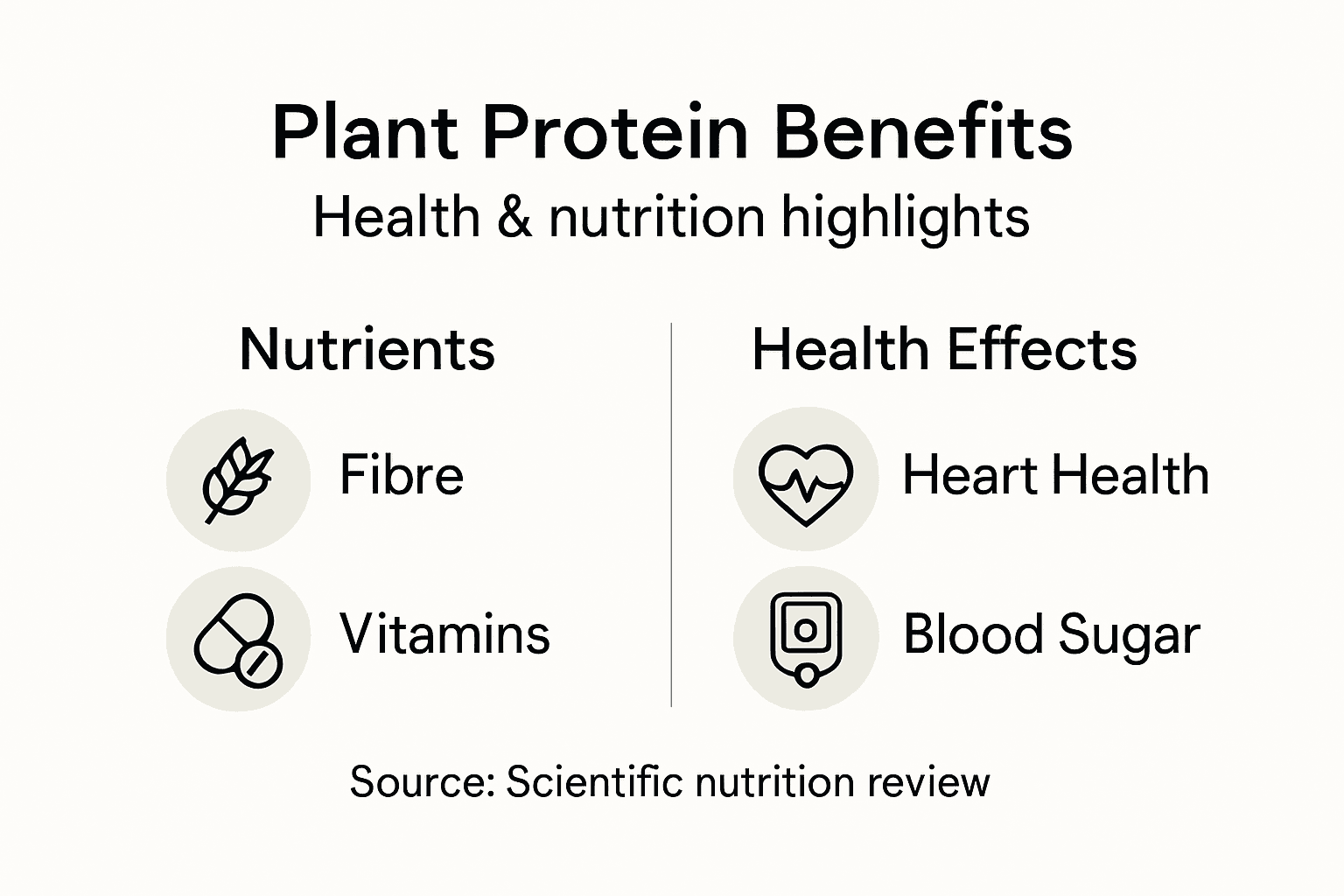
The amino acid advantage matters for muscle building. Plant proteins contain all nine essential amino acids your body cannot make independently. Leucine, the amino acid that signals muscle growth, appears in plant sources alongside lysine and methionine. When you combine different plant proteins throughout your day, you create a complete amino acid profile that supports muscle maintenance and development during strength training.
Cardiovascular benefits extend beyond the gym. Plant proteins reduce the risk of cardiovascular disease whilst supporting better weight management and metabolic health. A diet rich in plant-based proteins naturally displaces processed foods and excessive saturated fats. Your heart responds by operating more efficiently, your blood pressure stabilises, and your cholesterol markers improve.
The fibre content deserves special attention. Plant proteins inherently contain dietary fibre that animal sources lack completely. This fibre supports digestive health, feeds beneficial gut bacteria, and creates sustained fullness between meals. When you eat a lentil-based lunch, you’re not just getting protein—you’re supporting your entire digestive system.
Metabolic health improves measurably. Plant-based proteins contribute to managing blood sugar levels, reducing diabetes risk, and supporting weight management without calorie restriction obsession. Your body processes plant proteins differently than animal proteins, creating metabolic advantages that support your fitness goals long-term. Research shows improvements appear within weeks of dietary shifts, not months.
Micronutrients arrive alongside macronutrients. Plant proteins deliver iron, zinc, magnesium, and B vitamins essential for energy production and muscle recovery. Whilst bioavailability sometimes differs from animal sources, varied plant consumption ensures adequate intake. This is why rotating between legumes, seeds, and grains creates superior nutrition compared to relying on single sources.
Pro tip: Track your plant protein intake across the week rather than obsessing over individual meals—consistency with variety guarantees complete nutrient absorption and sustainable health benefits.
Comparing plant and animal protein sources
Both plant and animal proteins build muscle and support recovery, but they arrive with fundamentally different nutritional profiles. Understanding these differences helps you construct a protein strategy aligned with your fitness goals and values.
Animal proteins offer completeness. Meat, fish, eggs, and dairy provide all nine essential amino acids in single servings. Your body digests them efficiently, absorbing most of the protein you consume. This simplicity appeals to many people pursuing straightforward nutritional strategies.
However, this completeness comes packaged with trade-offs. Animal proteins typically carry higher saturated fat content, which affects cardiovascular health markers. A 200-gramme steak delivers 40 grammes of protein but also 20 grammes of fat, much of it saturated. Additionally, animal agriculture generates substantially higher greenhouse gas emissions than plant farming, creating environmental consequences beyond your individual nutrition.
Plant proteins require strategic combination. Combining diverse plant protein sources achieves an amino acid profile adequate to meet human nutritional requirements just as effectively as animal sources. Rice and beans together create complete protein. Lentils with whole grains offer similar results. This isn’t about individual meals being incomplete—it’s about weekly nutrition patterns ensuring adequacy.
The advantages stack up quickly. Plant proteins naturally arrive with dietary fibre that animal sources completely lack. That same serving of lentils delivering 18 grammes of protein includes 7 grammes of fibre, supporting digestive health and sustained energy. Saturated fat content drops dramatically. Your cardiovascular system responds with improved cholesterol markers and blood pressure.
Practical reality requires balance for most people. Neither approach is inherently superior. Many health-conscious adults find that emphasising plant proteins for everyday meals whilst including occasional animal proteins creates optimal nutrition without rigid restriction. Your body processes the amino acids identically regardless of source. What matters is total protein intake, consistency, and the broader nutritional context of your diet.
The cost difference matters too. Plant proteins like lentils and chickpeas cost substantially less than equivalent protein from meat or fish, making consistent protein intake more sustainable financially.
The following table contrasts major aspects of plant and animal protein sources:
| Aspect | Plant Protein | Animal Protein |
|---|---|---|
| Amino Acid Profile | Needs varied sources for completeness | Complete in single source |
| Fibre Content | Naturally high in most sources | None present |
| Saturated Fat | Usually low | Often high in red meats and dairy |
| Environmental Impact | Lower land and water usage | Higher emissions and resource use |
| Micronutrients | Includes iron, zinc, magnesium | Higher B12, sometimes more absorbable |
| Typical Cost | Often lower (e.g., lentils, grains) | Often higher (e.g., steak, fish) |
Pro tip: Build your protein intake around plant sources for 70-80% of meals, then include animal proteins strategically when they genuinely enhance your nutrition or align with your preferences—this balanced approach maximises health benefits while avoiding unnecessary restriction.
Common mistakes and sourcing pitfalls
Many people start plant-based eating with genuine enthusiasm, then stumble because they make avoidable mistakes. Understanding these pitfalls helps you build a sustainable protein strategy from the beginning.
The single-source trap destroys consistency. Relying exclusively on one plant protein source creates nutritional gaps and boredom. Eating only tofu week after week leaves you missing micronutrients that chickpeas or lentils would provide. Your palate grows tired. Your motivation evaporates. This is precisely why your protein intake eventually fails, not because plant proteins don’t work, but because you’ve built an unsustainable approach.
Processing quality varies wildly. Not all plant protein products are created equally. Some processing methods strip away nutrients whilst introducing additives that undermine your health goals. Common sourcing pitfalls include contamination with anti-nutritional factors and inconsistent functional properties that affect how your body actually uses the protein. A cheap protein powder loaded with fillers and artificial flavourings won’t serve your fitness goals the way whole legumes or quality isolates do.
Ignoring the complete amino acid picture sabotages results. Challenges with plant protein include achieving adequate amino acid profiles and bioavailability, particularly when relying on limited sources. You might hit your protein targets numerically whilst missing critical amino acids. This matters less for younger, healthy adults but becomes genuinely problematic over time and for certain populations.
Underestimating nutritional gaps creates deficiencies. Some plant-based eaters assume protein intake solves everything. Then they wonder why energy crashes appear mid-afternoon or recovery from training feels sluggish. Often the culprit isn’t protein—it’s missing iron, B12, or zinc that plant sources require more deliberate attention to secure. Thoughtful meal planning or strategic supplementation prevents these gaps entirely.
Buying based purely on price signals trouble. The cheapest plant proteins often come with the poorest sourcing practices. Beans grown in locations with minimal environmental oversight may contain pesticide residues. Processing quality drops. Nutrition density suffers. Investing slightly more in quality ingredients pays dividends in actual results.
Pro tip: Rotate between at least three different plant protein sources weekly—legumes, seeds, and whole grains—and check ingredient labels for additives and processing methods rather than focusing solely on price or protein percentage.
Discover True Plant-Based Nutrition with Granavitalis
As the article reveals, the challenge with plant-based proteins lies in achieving complete amino acid profiles, maintaining purity through minimal processing, and sourcing sustainably to support both your performance and long-term health. Many struggle with limited variety, poor-quality products, and nutritional gaps that can slow muscle recovery and everyday vitality. At Granavitalis, we understand these pain points and offer a range of carefully curated wholefood ingredients including ancient grains, nuts and seeds, and clean plant-proteins designed to fuel your body and mind effectively.
Embrace a smarter approach to plant-based nutrition rooted in tradition with Granavitalis. Our focus on purity, performance and purpose means every product you choose delivers maximal integrity and supports your fitness and wellness goals without compromise. Start your journey today and explore our thoughtfully crafted selection to build strength, recovery and sustained energy. Unlock the full potential of plant-based proteins now by visiting Granavitalis and fuel your future by honouring the past.
Frequently Asked Questions
What are the main sources of plant-based protein?
Plant-based protein is primarily derived from legumes (like lentils and chickpeas), whole grains, seeds, and nuts. These sources provide essential amino acids crucial for muscle repair and recovery.
How can I ensure I get a complete amino acid profile from plant-based proteins?
To achieve a complete amino acid profile, combine different plant protein sources throughout your meals. For instance, pairing rice with beans or adding seeds to your meals can ensure you receive all essential amino acids your body needs.
What are the health benefits of incorporating plant-based protein into my diet?
Incorporating plant-based protein offers numerous health benefits, including reduced risk of heart disease, improved metabolic health, and better digestive health due to their high fibre content. They also contribute to muscle repair and overall wellness.
Are there any nutritional gaps I should be aware of when following a plant-based protein diet?
Yes, individuals on a strictly plant-based diet should monitor their intake of vitamin B12 and iodine, as these nutrients require careful attention and may need to be obtained through supplementation or fortified foods to avoid deficiencies.