
3 Low Risk Teas for Perimenopause: Chamomile, Rooibos, Ginger
Sage, chamomile, rooibos, nettle, peppermint and ginger are the teas most commonly tried for perimenopause complaints like hot flushes, poor sleep, bloating and low mood. Evidence for all of them is thin and inconsistent, so treat any tea as a gentle addition, not a treatment. Speak to your GP or pharmacist before starting herbal remedies, especially alongside medication.
TL;DR:
- Black cohosh has the most research among herbal remedies, but its results remain inconsistent and it carries potential liver safety risks.
- Herbs like red clover, licorice root, and black cohosh should be approached with caution and discussed with a healthcare professional before use.
- Lifestyle changes such as regular exercise, a Mediterranean diet, and maintaining good sleep hygiene are significantly more effective for managing perimenopause symptoms than herbal teas.
- Gentler teas like chamomile, rooibos, and ginger are low-risk options for sleep and digestion symptoms, but should still be treated as supportive, not curative.
- Proper sourcing, trialing individual herbs for two to three weeks, and consulting healthcare providers are essential steps to minimize risks when exploring herbal remedies.
Table of Contents
- The best herbal teas for perimenopause, symptom by symptom
- What the clinical evidence actually says
- How to try herbal teas without taking unnecessary risks
- Lifestyle changes that outperform most herbal teas
- Where wholefood nutrition fits alongside a calming tea
- A measured view on where tea fits in
- Fuel perimenopause from the inside with wholefood nutrition
- Sources
- FAQ
The best herbal teas for perimenopause, symptom by symptom
Not every tea suits every symptom, and some carry real cautions worth knowing before you reach for a second cup. Here’s how the most commonly recommended options stack up.
- Sage is traditionally used for hot flushes and night sweats, with small trials hinting at benefit, though nothing large or conclusive. Avoid it in high doses if you’re epileptic, and be cautious combining it with sedatives.
- Chamomile is one of the gentlest options, mainly used for sleep and anxiety rather than vasomotor symptoms. It can increase the effect of blood-thinning medication, so check with a pharmacist if you take warfarin.
- Rooibos has no strong evidence for perimenopause specifically but is caffeine-free and low-risk, making it a reasonable everyday swap for coffee or black tea in the evening.
- Nettle is sometimes used for its mild diuretic and iron content, though there’s little research tying it directly to hot flushes or mood. It can interact with blood pressure medication and diuretics.
- Peppermint may ease digestive bloating, a common perimenopause complaint, but can worsen acid reflux and interacts with some heartburn medicines.
- Ginger is well studied for nausea and mild anti-inflammatory effects, though not specifically for menopause symptoms. It can increase bleeding risk when combined with anticoagulants.
- Black cohosh is the most researched herbal option for hot flushes, yet the systematic review evidence remains mixed, and there have been rare reports of liver problems. Anyone with liver disease should avoid it entirely.
- Red clover contains plant oestrogens and is marketed for vasomotor symptoms, but the NHS is clear that evidence for how well it works, or how safe it is long term, is very limited. Women with a history of breast cancer or other oestrogen-sensitive conditions are generally advised to avoid it.
- Licorice root may support adrenal function in folk use, but regular consumption raises blood pressure and can cause dangerous potassium loss. It’s a poor choice for anyone with hypertension or heart conditions, and shouldn’t be sipped daily.
- Ginseng is sometimes used for energy and mood, though the research supporting it for perimenopause specifically is sparse. It can affect blood sugar levels and interacts with blood thinners.
Chamomile, rooibos and ginger sit at the low-risk end of this list. Black cohosh, red clover and licorice sit at the higher-risk end and deserve a proper conversation with a clinician before you start, not just a quick read of the packet.
What the clinical evidence actually says
Herbal teas for perimenopause sit in a frustrating grey zone: widely used, weakly studied. The NHS states plainly that there is very little evidence for how well herbal remedies work or how safe they are for menopause symptoms, despite their popularity. NICE’s NG23 guidance goes further, advising clinicians to tell patients that options like black cohosh aren’t reliably effective for hot flushes and sweats.
The research problem isn’t just a shortage of studies. It’s that the studies which exist often use different extracts, different doses and different preparation methods, which makes comparing results close to meaningless. A clinical review in PMC found that black cohosh is the only herb with a reasonable body of randomised trial data, and even that comes with mixed safety signals. Everything else relies mostly on tradition and small, low-quality studies.
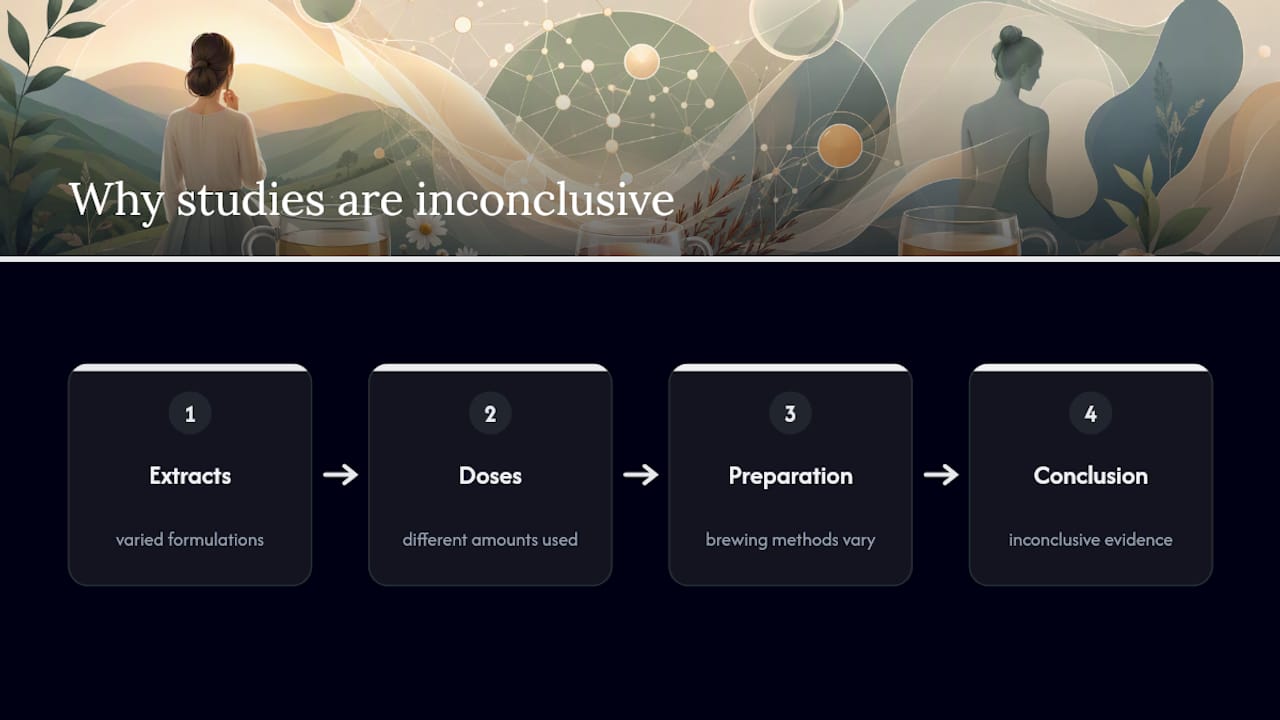
Only black cohosh has been studied in proper randomised trials among the herbs commonly sold for menopause, and even its results are inconsistent. That single fact should temper any claim that a particular tea is “proven” to work.
Where a herbal tea does show a measurable effect in trials, the benefit tends to be small and tied to a specific, standardised extract rather than to loose leaves brewed at home, where active compound levels vary widely. Risks worth flagging include oestrogenic activity in herbs like red clover and black cohosh, liver and digestive side effects, and drug interactions. St John’s wort, sometimes used for mood during perimenopause, is a particularly strong example: it induces liver enzymes that can weaken the effect of oral contraceptives, some antidepressants and anticoagulants, a genuinely dangerous interaction for anyone self-medicating without medical advice.
How to try herbal teas without taking unnecessary risks
A cautious approach protects you far better than trial and error. Before adding any herbal tea to your routine, work through these steps in order.
- Talk to your GP or pharmacist first, particularly if you take prescription medicines, have a history of breast cancer, or a liver condition.
- Check for the THR mark. Products carrying MHRA Traditional Herbal Registration have met basic quality and safety standards, unlike many unregulated herbal blends.
- Buy from reputable sellers and favour single-ingredient loose teas over complex multi-herb blends, so you can identify what’s causing any reaction.
- Trial one tea at a time for two to three weeks, noting sleep, mood or flush frequency in a simple diary.
- Stop and seek medical advice if you notice digestive upset, unusual bruising, jaundice, or any new symptom after starting a herb.
Pro Tip: Keep a one-line note each evening (“2 hot flushes, slept 6 hours”) rather than a vague impression. Two weeks of real notes tells you far more than a gut feeling about whether a tea is actually helping.
Lifestyle changes that outperform most herbal teas
The evidence for lifestyle measures is considerably stronger than for most herbs, and it isn’t close. A UK cohort study found that most women rated regular exercise and mindfulness as effective for vasomotor symptoms, whereas less than half rated herbal remedies as effective.
Small, consistent habits do more heavy lifting than any single herb:
- Weight-bearing exercise several times a week supports bone density and mood, and appears to ease flushes for many women.
- A Mediterranean-style diet rich in vegetables, oily fish and wholegrains is linked to better symptom management.
- A consistent sleep routine, including a cool bedroom and a wind-down period without screens, helps counter perimenopause-related insomnia.
- Cutting back alcohol and caffeine, especially in the evening, reduces flush triggers for many women.
Pro Tip: A modest tea habit works best as a small ritual layered onto these bigger habits, not a replacement for them. A cup of chamomile after a walk does more for you than the same cup on its own.
Where wholefood nutrition fits alongside a calming tea
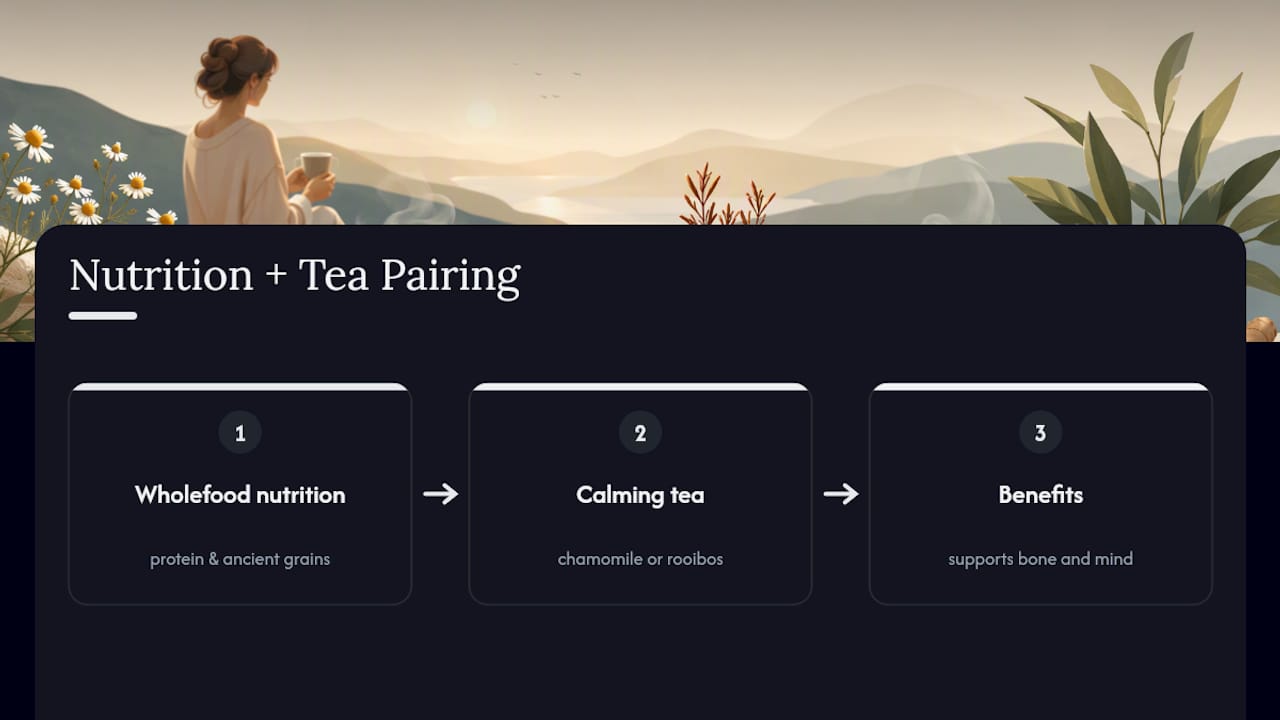
Herbal teas are a small piece of a much bigger nutritional picture during perimenopause. Protein at breakfast supports muscle mass that naturally declines with falling oestrogen, and Granavitalis has written about why protein matters for menopause in more depth. Ancient grains bring steady energy and fibre that many women find useful when blood sugar swings worsen mood, covered further in our guide to ancient grains and menopause wellness. Pairing a nutrient-dense porridge with a calming cup of chamomile or rooibos is a simple, sustainable way to support both bone and mind. For readers curious about other botanicals, our piece on turmeric for menopause covers a related option worth understanding.
A measured view on where tea fits in
Responses to herbal teas vary hugely between women, so what eases your colleague’s flushes might do nothing for you. Track your own results honestly, and treat tea as one small support alongside sleep, movement and proper medical advice, never as the main event.
— Jarrod
Fuel perimenopause from the inside with wholefood nutrition
A focus on perimenopause wellbeing includes sustained protein, steady energy and nutrient-dense staples sourced with clear, minimally processed ingredient lists. Where herbal teas offer a gentle ritual, categories like Vegan Protein Powders and Whey & Casein Protein Powder support the muscle and bone maintenance that becomes more important as oestrogen falls, and our porridge protein guide shows how to build that into a normal breakfast without fuss.
If you’re building a calmer, more balanced daily routine, browse the full Granavitalis store for ancient grain flours, nut butters and honey blends that pair naturally with a modest tea habit, and start with whichever category matches what your mornings are missing right now.
Sources
- Herbal remedies and complementary medicines for menopause symptoms - NHS
- Menopause: identification and management | NICE guidance (NG23)
- Systematic review / clinical analysis on herbal remedies - PMC
- Use and perceived efficacy of complementary and alternative medicines after discontinuation of hormone therapy: nested UK study - UCL discovery
This article is general information, not a substitute for advice from a qualified doctor. Consult a qualified healthcare professional about your own circumstances before acting on anything here.
FAQ
What drink is good for perimenopause?
Chamomile, rooibos and ginger teas are among the gentlest options for perimenopause symptoms like poor sleep and digestive discomfort, with a low risk profile for most people. None has strong clinical evidence behind it, so the NHS advises treating any herbal drink as a supportive habit rather than a treatment.
What did Davina McCall take for menopause?
Davina McCall has spoken publicly about using HRT rather than herbal remedies to manage her menopause symptoms, and has campaigned for wider access to it. Herbal teas were not central to her approach, and any decision about HRT versus herbal options should be made with a GP.
How can I balance my hormones during perimenopause?
There’s no tea or supplement that reliably “balances hormones” during perimenopause, despite common marketing claims. The strongest evidence supports regular exercise, consistent sleep routines and a Mediterranean-style diet, with herbal teas as a minor addition at best.
What can I take naturally instead of HRT?
Some women try black cohosh, red clover or sage for hot flushes, but NICE guidance notes these aren’t reliably effective and carry their own risks, including interactions and, for some herbs, contraindications with breast cancer history. Lifestyle measures such as exercise and mindfulness have stronger supporting evidence and carry far less risk.
Is it safe to drink herbal tea every day during perimenopause?
Mild teas like rooibos and chamomile are generally fine for daily use, but stronger herbs such as licorice root or black cohosh shouldn’t become a daily habit without medical guidance. Anyone on prescription medication, particularly blood thinners or antidepressants, should check for interactions before drinking any herbal tea regularly.