
Step-by-Step Guide to Protein-Rich Breakfasts UK
Nearly one third of adults feel sluggish before lunch even after a morning meal, which often points to gaps in breakfast choices. Protein intake and ingredient quality can make or break your energy and focus through the day. Learning how to build a smarter breakfast by using ancient grains and protein sources not only helps you stay full longer but also supports your personal wellness goals. This guide shows you how to create morning meals that truly fuel both body and mind.
Table of Contents
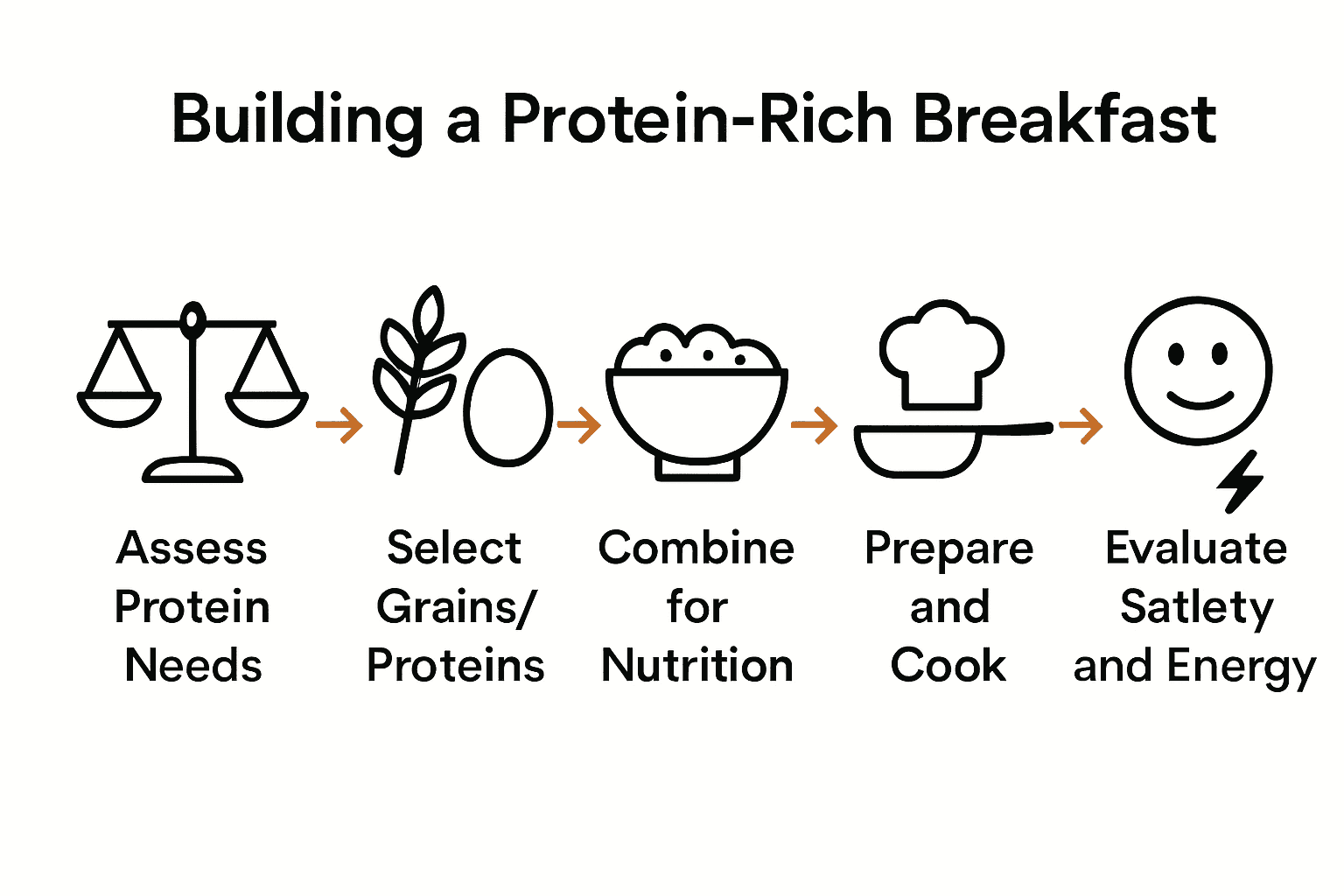
- Step 1: Assess Your Protein Needs And Wellness Goals
- Step 2: Select Ancient Grains And Quality Protein Sources
- Step 3: Combine Ingredients For Balanced Nutrition
- Step 4: Prepare And Cook Satisfying Breakfast Meals
- Step 5: Evaluate Satiety And Energy Levels Post-Meal
Quick Summary
| Key Point | Explanation |
|---|---|
| 1. Assess your protein needs | Calculate protein based on your weight, fitness goals, and current intake to ensure proper nourishment. |
| 2. Choose quality protein sources | Select ancient grains like quinoa and amaranth to enhance your breakfast with complete protein and essential nutrients. |
| 3. Combine ingredients wisely | Incorporate a mix of proteins, grains, and healthy fats to create a balanced, nutritious breakfast that sustains energy. |
| 4. Use proper cooking techniques | Implement gentle cooking methods to preserve nutrients in grains and enhance flavors, improving breakfast quality. |
| 5. Monitor your body’s response | Track post-meal energy and hunger levels to adjust breakfast choices for optimal nutritional satisfaction and well-being. |
Step 1: Assess your protein needs and wellness goals
Understanding your protein requirements is crucial for creating a balanced breakfast strategy that supports your overall wellness. According to Gov UK, individual protein needs vary significantly based on age, activity level, and personal health objectives.
To effectively assess your protein needs, start by considering several key factors. Your body weight, fitness goals, lifestyle, and current health status all play important roles in determining the right protein intake. NHS recommends taking a holistic approach that considers not just quantity, but quality of protein sources.
Here are practical steps to evaluate your personal protein requirements:
- Calculate your baseline protein needs based on body weight (roughly 0.8g per kilogram for average adults)
- Consider your specific wellness goals like muscle building, weight management, or sustained energy
- Track your current protein intake for a week to understand your existing nutritional patterns
- Consult with a nutritionist or healthcare professional for personalized guidance
Remember that protein needs are not one-size-fits-all. Your ideal intake depends on individual factors like muscle mass, activity level, and overall health objectives. By taking a thoughtful approach to assessing your protein needs, you can design a breakfast strategy that truly supports your wellness journey.
Step 2: Select ancient grains and quality protein sources
Choosing the right ancient grains and protein sources is essential for creating a nutritious and satisfying breakfast that supports your wellness goals. British Nutrition Foundation highlights the remarkable nutritional profile of ancient grains like quinoa and spelt as excellent protein sources that offer more than just basic nutrition.
When selecting ancient grains and protein sources, consider a diverse range of options that provide both complete proteins and complementary nutrients. Look for grains that offer a balanced amino acid profile and additional health benefits. Some top protein-rich ancient grains include:
- Quinoa: A complete protein source with all nine essential amino acids
- Amaranth: High in protein and rich in minerals
- Spelt: An ancient wheat variety with a robust protein content
- Buckwheat: Despite its name, not a wheat but a protein-packed seed
Exploring ancient grains: The forgotten powerhouses for building muscle and strength can provide additional insights into maximizing the nutritional potential of these incredible grains. Aim to mix different grains to ensure a broad spectrum of nutrients and prevent dietary monotony. Remember that quality matters just as much as quantity when selecting your protein sources for optimal morning nutrition.

Step 3: Combine ingredients for balanced nutrition
Balancing your breakfast ingredients is an art that requires thoughtful combination of proteins, whole grains, and complementary nutrients. According to the NHS Eatwell Guide, creating a nutritionally complete meal involves strategically integrating different food groups to support overall health and energy levels.
British Nutrition Foundation recommends developing a holistic approach to ingredient combination that maximizes nutritional value. This means thinking beyond simple protein content and considering how different components interact and enhance each other’s nutritional profiles.
Here are some practical strategies for combining ingredients effectively:
- Pair ancient grains with plant based proteins like nuts and seeds
- Add healthy fats to improve nutrient absorption
- Include fresh fruits or vegetables for additional micronutrients
- Experiment with different protein sources to maintain variety
How to Add More Protein to Porridge Naturally offers additional insights into creative ingredient combinations. The key is to create a breakfast that not only satisfies hunger but also provides sustained energy and supports your wellness goals. By thoughtfully mixing ingredients, you transform a simple meal into a powerful nutritional strategy.
Step 4: Prepare and cook satisfying breakfast meals
Creating delicious and nutritious breakfast meals requires a thoughtful approach to preparation and cooking techniques. British Nutrition Foundation emphasizes the importance of balancing flavour and nutrition when designing morning meals that fuel your body and support overall wellness.
Mastering protein-rich breakfast preparation involves understanding cooking methods that preserve nutrient integrity and enhance flavour profiles. Start by selecting cooking techniques that complement your chosen ingredients such as gentle simmering for grains or light toasting for nuts and seeds to maximize their nutritional potential.
Here are some practical cooking strategies for satisfying breakfast meals:
- Use low heat when preparing ancient grains to retain maximum nutrients
- Experiment with overnight soaking to improve digestibility
- Layer textures by combining cooked and raw ingredients
- Use minimal processed cooking oils to maintain ingredient quality
How to Make High-Protein Porridge: A Nutritious Start provides additional insights into creating protein-packed morning meals. The goal is to transform simple ingredients into a breakfast that not only tastes incredible but provides sustained energy and supports your nutritional goals.
Step 5: Evaluate satiety and energy levels post-meal
Monitoring your body’s response to breakfast is a crucial step in optimizing your nutritional strategy. British Nutrition Foundation highlights the critical connection between portion sizes, meal composition, and subsequent energy and satiety levels.
Tracking your bodys physiological responses requires mindful observation and honest self assessment. Pay attention to how you feel in the two to three hours following your protein rich breakfast noting key indicators such as hunger levels mental clarity and overall energy. This process helps you understand whether your current breakfast meets your nutritional needs or requires adjustment.
Here are practical strategies for evaluating your post breakfast experience:
- Note your hunger levels one to two hours after eating
- Track your mental focus and energy throughout the morning
- Observe any digestive comfort or discomfort
- Record your mood and overall sense of wellbeing
The goal is to develop a breakfast that provides sustained energy without mid morning crashes. By consistently monitoring these factors you can fine tune your morning nutrition to support optimal performance and wellness. Consider keeping a simple journal to track these observations and identify patterns that work best for your individual metabolism and lifestyle.
Power Your Mornings with Protein-Rich Ancient Grains from Granavitalis
Struggling to design a breakfast that truly supports your wellness goals and keeps you energized throughout the morning? The article’s focus on assessing protein needs, choosing ancient grains, and crafting balanced meals highlights the challenge of replacing quick-fix cereals with nourishing options. If you want to embrace a breakfast that sustains satiety, aids muscle repair, and fuels your day, Granavitalis offers thoughtfully selected products that make this transformation simple and delicious.

Explore our range of Protein Power Packs to enhance your morning routine with high-quality proteins paired perfectly with ancient grains. For those embracing plant-based nutrition, our Vegan Protein Powders provide pure, balanced protein sources that fit seamlessly into your breakfast strategy. Begin your wellness journey now at Granavitalis and feel the difference from the very first bowl. Don’t wait to make your breakfast count—fuel your body the way nature intended today.
Frequently Asked Questions
How do I assess my protein needs for a breakfast?
Understanding your protein needs requires evaluating factors like your body weight, fitness goals, and current health status. Start by calculating your baseline protein requirement at roughly 0.8g per kilogram of body weight and adjust based on your wellness objectives.
What ancient grains should I include in my protein-rich breakfasts?
Include ancient grains such as quinoa, amaranth, spelt, and buckwheat in your breakfasts as they offer quality protein and essential nutrients. Aim to combine different grains to enhance the nutritional profile and enjoy variety in your meals.
How can I combine ingredients for balanced nutrition in my breakfast?
To balance your breakfast nutrition, pair ancient grains with protein sources like nuts and seeds, and add fruits or vegetables for extra vitamins. Experiment with different combinations to keep your meals interesting while ensuring they meet your nutritional needs.
What cooking methods are best for preparing a protein-rich breakfast?
Use low heat cooking methods for grains to preserve nutrients and consider overnight soaking to improve digestibility. Focus on cooking techniques that enhance flavors without compromising the integrity of your nutritious ingredients.
How can I evaluate my satiety and energy levels after breakfast?
Monitor your hunger and energy levels for two to three hours after eating your breakfast. Take notes on your mental clarity and overall mood to adjust your meal composition if needed, aiming for sustained energy without crashes.
What should I do if my breakfast doesn’t keep me satisfied?
If your breakfast doesn’t keep you satisfied, reassess your protein and nutrient balance by increasing quality protein sources or adding healthy fats. Adjusting portion sizes, such as increasing protein to 20-30g per meal, may help maintain satiety throughout the morning.