
Ancient Grains and Immunity: Complete Guide
Over 90 percent of grains eaten today come from just a handful of modern varieties, but many people are rediscovering the powerful benefits of ancient grains. These age-old cereals gave rise to farming itself and carried entire civilizations through history. Packed with more nutrients and boasting natural resilience, ancient grains stand apart from their modern counterparts. Learn how these remarkable crops connect us to our past while offering unique advantages for health and wellness.
Table of Contents
- Ancient Grains Defined And Their History
- Types Of Ancient Grains For Health
- Nutritional Components That Support Immunity
- How Ancient Grains Influence The Immune System
- Integrating Ancient Grains Into Daily Diets
Key Takeaways
| Point | Details |
|---|---|
| Ancient Grains Defined | Ancient grains differ from modern varieties, boasting remarkable nutritional advantages and historical significance dating back thousands of years. |
| Nutritional Benefits | Incorporating ancient grains like quinoa and amaranth enhances dietary protein, minerals, and antioxidants, offering superior health benefits over refined grains. |
| Immune System Support | Nutrient-rich components in ancient grains support immune health through antioxidant and anti-inflammatory effects, contributing to overall wellness. |
| Versatile Integration | Ancient grains can be easily incorporated into daily meals by replacing conventional grains in various dishes, enhancing both nutrition and flavor. |
Ancient Grains Defined And Their History
Ancient grains represent a fascinating category of cereals that have sustained human populations for thousands of years, offering remarkable nutritional profiles and deep historical roots. These grains differ significantly from modern hybrid wheat varieties, representing some of humanity’s earliest agricultural achievements.
According to Slowfood, Einkorn provides an extraordinary example of ancient grain heritage. Domesticated around 9,500 BC in the Near East, this grain was introduced to Britain during the Neolithic period approximately 4,500 BC. Despite being eventually supplanted by emmer wheat during the Bronze Age, Einkorn persisted in certain European regions due to its remarkable adaptability to challenging soil conditions and harsh weather.
En.wikipedia highlights another pivotal ancient grain: Barley. Domesticated in the Fertile Crescent around 9,000 BC, archaeological evidence suggests wild barley consumption dating back to 23,000 BC near the Sea of Galilee. As a staple crop, barley spread extensively from Mesopotamia across various regions, fundamentally transforming agricultural practices.
Key characteristics that distinguish ancient grains include:
- Minimal genetic modification compared to modern wheat varieties
- Higher nutrient density
- Greater protein content
- Enhanced mineral and micronutrient profiles
- Natural resistance to environmental stress
These grains represent more than just food sources—they are living connections to our agricultural heritage, embodying centuries of human innovation and survival strategies. By understanding and reintegrating these time-tested grains into modern diets, we can potentially access nutritional benefits that have nourished civilisations for millennia.
For a deeper exploration of ancient grain characteristics, read our comprehensive guide on understanding ancient grains.
Types Of Ancient Grains For Health
Ancient grains represent a diverse and nutritionally powerful group of cereals that offer far more than traditional wheat alternatives. These remarkable grains have been cultivated for thousands of years and continue to provide exceptional health benefits for modern consumers seeking natural, nutrient-dense food options.
According to Brownhealth, the ancient grain landscape is rich with exceptional varieties including farro, sorghum, teff, millet, quinoa, amaranth, spelt, khorasan wheat, and einkorn. Each of these grains brings unique nutritional characteristics to the table. Quinoa stands out as a complete protein containing all nine essential amino acids, while amaranth provides double the protein content compared to rice and corn.
Academy Healing Nutrition emphasises that certain ancient grains like quinoa, buckwheat, teff, and amaranth are particularly beneficial pseudocereals. Quinoa, for instance, is exceptionally high in protein, fiber, iron, magnesium, and antioxidants, making it an ideal nutritional choice for vegans and vegetarians seeking comprehensive plant-based nutrition.
Key health benefits of ancient grains include:
- Superior nutrient profiles compared to modern refined grains
- Higher protein content
- Enhanced mineral and micronutrient concentrations
- Natural gluten-free options
- Improved digestibility
These grains offer more than just nutritional advantages—they represent a connection to traditional agricultural practices and provide a holistic approach to wellness.
 By incorporating these diverse ancient grains into your diet, you can enjoy a wide range of flavors while supporting your overall health.
For more insights into selecting the right ancient grains for your nutritional needs, explore our guide on ancient grains and modern wellness.
Nutritional Components That Support Immunity
Immune health is intricately linked to nutritional intake, with certain dietary components playing a critical role in supporting our body’s natural defense mechanisms. Ancient grains emerge as powerful allies in this complex biological process, offering a rich array of nutrients that directly contribute to immune system function.
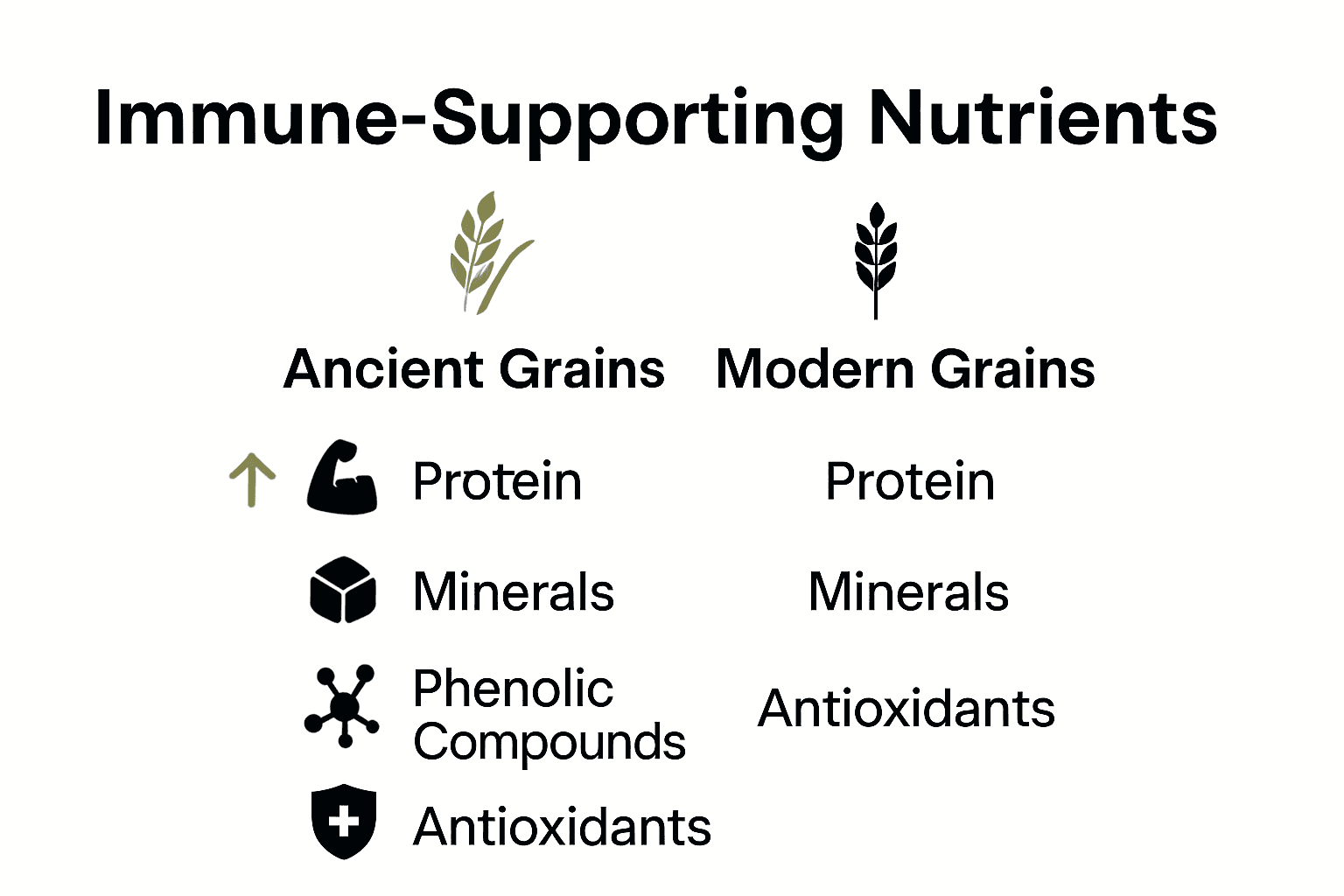
According to Preprints, ancient grains are exceptionally rich in phenolic compounds, flavonoids, resistant starch, and essential fatty acids. These remarkable nutritional components work synergistically to provide potent antioxidant, anti-inflammatory, cardioprotective, and antidiabetic effects. By reducing oxidative stress and inflammation, these nutrients play a significant role in supporting and modulating immune system responses.
Brownhealth highlights the importance of whole grains that retain all three grain components: the bran, germ, and endosperm. This comprehensive preservation ensures a nutritional powerhouse rich in critical immune-supporting elements. The bran, in particular, contains an impressive spectrum of nutrients including:
- Fiber
- B vitamins
- Minerals like iron, copper, zinc, and magnesium
- Antioxidants
- Immune-modulating phytochemicals
These nutrients work together to strengthen immune responses, reduce inflammation, and support overall cellular health.
By incorporating whole ancient grains into your diet, you’re not just consuming food—you’re providing your body with sophisticated nutritional tools designed to enhance immune resilience and long-term wellness.
To explore more about how nutrition impacts immune function, check out our comprehensive guide on ancient grains and modern wellness.
How Ancient Grains Influence The Immune System
Immune system function is a complex biological process deeply influenced by nutritional intake, with ancient grains emerging as powerful natural modulators of our body’s defensive capabilities. These nutrient-dense foods offer more than basic sustenance—they provide sophisticated biochemical support that can enhance our natural immune responses.
According to Preprints, ancient grains are extraordinarily rich in phenolic compounds, flavonoids, resistant starch, and essential fatty acids. These remarkable nutritional components work synergistically to deliver potent antioxidant and anti-inflammatory effects. By actively reducing oxidative stress and systemic inflammation, these nutrients play a critical role in supporting and regulating immune system functionality.
Academy Healing Nutrition highlights the specific immune-boosting potential of grains like quinoa, which contains powerful plant compounds such as quercetin and kaempferol. These antioxidants offer remarkable protective benefits:
- Protection against chronic conditions
- Potential defense against infections
- Support for heart health
- Potential cancer-fighting properties
- Reduction of systemic inflammation
The intricate relationship between ancient grains and immune health demonstrates how nutrition can be a powerful tool in supporting our body’s natural defense mechanisms. By incorporating these nutrient-rich foods into our diet, we provide our immune system with sophisticated biochemical support that goes far beyond basic nutrition.
To learn more about how dietary choices can enhance your immune resilience, explore our guide on understanding how ancient grains support wellness naturally.
Integrating Ancient Grains Into Daily Diets
Incorporating ancient grains into everyday meals is simpler than most people imagine. These nutritional powerhouses offer incredible versatility, transforming ordinary dishes into nutrient-dense culinary experiences that support overall health and well-being.
According to Brownhealth, ancient grains can be seamlessly integrated into various meal formats. Farro works wonderfully in salads and soups, while sorghum serves as an excellent gluten-free flour substitute for baking. Teff can be prepared as a hot cereal or porridge, and quinoa makes an exceptional base for grain bowls or salad additions.
Gemma Sampson provides additional creative integration strategies for ancient grains. Freekeh, a roasted green wheat, can replace couscous or rice in multiple dishes. Kamut kernels can be soaked overnight and simmered similarly to rice, while sorghum can be ground into flour for baked goods or boiled whole as a rice alternative.
Practical ways to integrate ancient grains into your diet include:
- Replacing standard rice with quinoa in stir-fries
- Using teff flour in pancake or muffin recipes
- Creating grain salads with mixed ancient grains
- Substituting pasta with cooked ancient grain varieties
- Adding whole grains to soups and stews for extra nutrition
Experimentation is key when introducing these nutritious grains into your diet. Start with small quantities, explore different cooking methods, and discover the unique flavors and textures that make ancient grains such a delightful culinary adventure.
For more inspiration on naturally incorporating ancient grains into your meals, explore our guide on how to incorporate ancient grains.
Boost Your Immunity with Ancient Grains from Granavitalis
If you are looking to strengthen your immune system with natural, nutrient-rich ingredients, our selection of premium grains offers ancient grains packed with powerful antioxidants, fibre, and essential nutrients. These time-tested foods can help reduce inflammation and support your body’s defence systems every day.

Discover the benefits of ancient grains and make wholesome nutrition an effortless part of your routine. Visit Granavitalis to explore our range and find convenient, delicious options to integrate into your meals. Start your journey to better immunity today by choosing quality grains that honour tradition and promote wellness. Learn more about how to incorporate these superfoods into your lifestyle on our All Flours page and embrace a healthier future now.
Frequently Asked Questions
What are ancient grains and how do they benefit the immune system?
Ancient grains are cereals that have been cultivated for thousands of years and offer a rich array of nutrients that support immune system function. They are high in phenolic compounds, flavonoids, resistant starch, and essential fatty acids that provide antioxidant and anti-inflammatory benefits, enhancing immune resilience.
Which ancient grains are particularly beneficial for immune health?
Quinoa, amaranth, buckwheat, and teff are notable for their immune-boosting properties. Quinoa, for instance, provides complete protein and essential amino acids, while amaranth boasts high protein content and minerals, contributing to overall immune support.
How can I incorporate ancient grains into my daily diet?
You can easily integrate ancient grains into your meals by using them in salads, soups, or as side dishes. For example, replace rice with quinoa, add teff flour to baking recipes, or use farro in grain salads to enhance nutritional value.
Are ancient grains suitable for gluten-free diets?
Many ancient grains, such as quinoa, sorghum, and millet, are naturally gluten-free, making them excellent choices for those with gluten sensitivities. However, it’s important to check for cross-contamination if you have celiac disease or severe intolerance.