
Ancient Grains in 2025 Breakfast: Nutrition for Modern Life
Most british breakfast tables rely on modern wheat, yet ancient grains have quietly fueled civilizations for thousands of years. Nutrition science confirms these heritage grains often contain up to 50 percent more fibre and micronutrients than their modern counterparts. For people in the United Kingdom who are seeking authentic taste, improved well-being, and sustainable choices, exploring ancient grains opens a world of flavorful, nutrient-rich options that can easily elevate any morning routine.
Table of Contents
- Ancient Grains: What Sets Them Apart
- Popular Ancient Grains For Breakfast Choices
- Nutritional Power: Benefits For 2025 Lifestyles
- Choosing Sustainable And Ethical Grain Sources
- Preparation Tips For Balanced Breakfasts
Key Takeaways
| Point | Details |
|---|---|
| Nutritional Superiority | Ancient grains typically provide higher levels of protein, essential minerals, and complex carbohydrates than modern grains, making them a more nutritious choice. |
| Environmental Sustainability | Cultivating ancient grains requires fewer industrial interventions, supporting environmental sustainability and resilience to climate change. |
| Diverse Breakfast Options | Incorporating a variety of ancient grains into breakfast can enhance nutrient intake and prevent dietary monotony by offering different flavours and textures. |
| Ethical Sourcing | Choosing organic and fair trade ancient grains helps support small-scale farmers and promotes biodiversity, contributing to a more sustainable food system. |
Ancient Grains: What Sets Them Apart
Ancient grains represent a remarkable nutritional category that stands distinctly apart from modern wheat varieties. Unlike contemporary grains extensively modified through industrial agriculture, these time-honoured crops have remained genetically unchanged for thousands of years. Nutritional research from Harvard demonstrates that these grains often retain significantly more nutrients and fibre compared to their refined counterparts.
What makes ancient grains truly exceptional is their remarkable genetic stability and nutrient density. Varieties like quinoa, amaranth, teff, and millet have sustained human populations for millennia, offering robust nutritional profiles that modern grains struggle to match. According to nutritional experts, these grains typically provide higher levels of protein, essential minerals, and complex carbohydrates that support sustained energy release.
The distinctive characteristics of ancient grains extend beyond their nutritional composition. These grains have evolved naturally, without extensive human genetic manipulation, preserving their original phytonutrient structures. Their cultivation often requires fewer industrial interventions, making them more environmentally sustainable and potentially more resilient to changing climate conditions. This natural preservation means consumers receive a food product that is closer to its original botanical form, packed with natural goodness.
Pro Tip for Grain Selection: When shopping for ancient grains, look for minimally processed varieties that maintain their whole grain integrity, and prioritise organic options to ensure the most authentic nutritional experience.
Key Differences Between Ancient and Modern Grains:
- Genetic stability
- Higher nutrient density
- Less industrial processing
- More complex nutritional profile
- Greater environmental sustainability
Popular Ancient Grains for Breakfast Choices
Starting your morning with ancient grains can transform an ordinary breakfast into a nutrient-dense, energy-boosting meal. Ancient grain varieties like amaranth offer remarkable nutritional advantages that modern processed grains simply cannot match. These heritage grains provide complex carbohydrates, essential proteins, and a range of micronutrients that support sustained morning energy and overall wellness.
Some outstanding ancient grain options for breakfast include quinoa, amaranth, teff, and buckwheat. Buckwheat, despite its misleading name, is completely gluten-free and can be beautifully transformed into hearty morning pancakes or creamy porridge. Amaranth stands out as another exceptional choice, being naturally gluten-free and packed with protein and fibre, making it an ideal base for warming breakfast bowls or as a crunchy cereal topping.
The versatility of these ancient grains means you can experiment with multiple preparation methods. Quinoa can be served as a savoury breakfast bowl with roasted vegetables, while teff works wonderfully in morning muffins or as a porridge base. Millet offers a delightful, slightly nutty flavour that pairs perfectly with fruits and nuts, creating a balanced and satisfying breakfast experience.
Here is a concise comparison of popular ancient grains for breakfast:
| Ancient Grain | Unique Benefit | Typical Breakfast Use |
|---|---|---|
| Quinoa | High in complete protein | Porridge or breakfast bowls |
| Amaranth | Rich in lysine and fibre | Power bowls, cereal topping |
| Teff | Abundant in iron and calcium | Muffins or porridge base |
| Buckwheat | Naturally gluten-free | Pancakes or creamy porridge |
| Millet | Nutty taste, B vitamins | Porridge with fruit and nuts |
Popular Ancient Grain Breakfast Ideas:
- Quinoa breakfast porridge with fresh berries
- Amaranth power bowl with nuts and seeds
- Buckwheat pancakes with honey
- Teff muffins with dried fruits
- Millet porridge with cinnamon and apple
Pro Tip for Morning Nutrition: Rotate your ancient grains weekly to ensure a diverse nutrient intake and prevent breakfast monotony.
Nutritional Highlights of Ancient Grains:
- High protein content
- Rich in dietary fibre
- Naturally gluten-free options
- Complex carbohydrate profile
- Enhanced micronutrient density
Nutritional Power: Benefits for 2025 Lifestyles
In our rapidly evolving modern world, nutrition needs to be more than just sustenance—it must be a strategic approach to supporting complex lifestyle demands. Scientific research confirms that ancient grains can play a crucial role in managing contemporary health challenges, particularly for individuals navigating the intricate health landscape of 2025.
Metabolic Health Support: Ancient grains are emerging as powerful allies in addressing modern metabolic challenges. Comprehensive research indicates their remarkable potential in preventing chronic inflammatory conditions, with bioactive compounds that offer potent antioxidant protection. Grains like quinoa, amaranth, and millet are not merely food items but functional nutritional resources designed to combat the physiological stress of contemporary living.
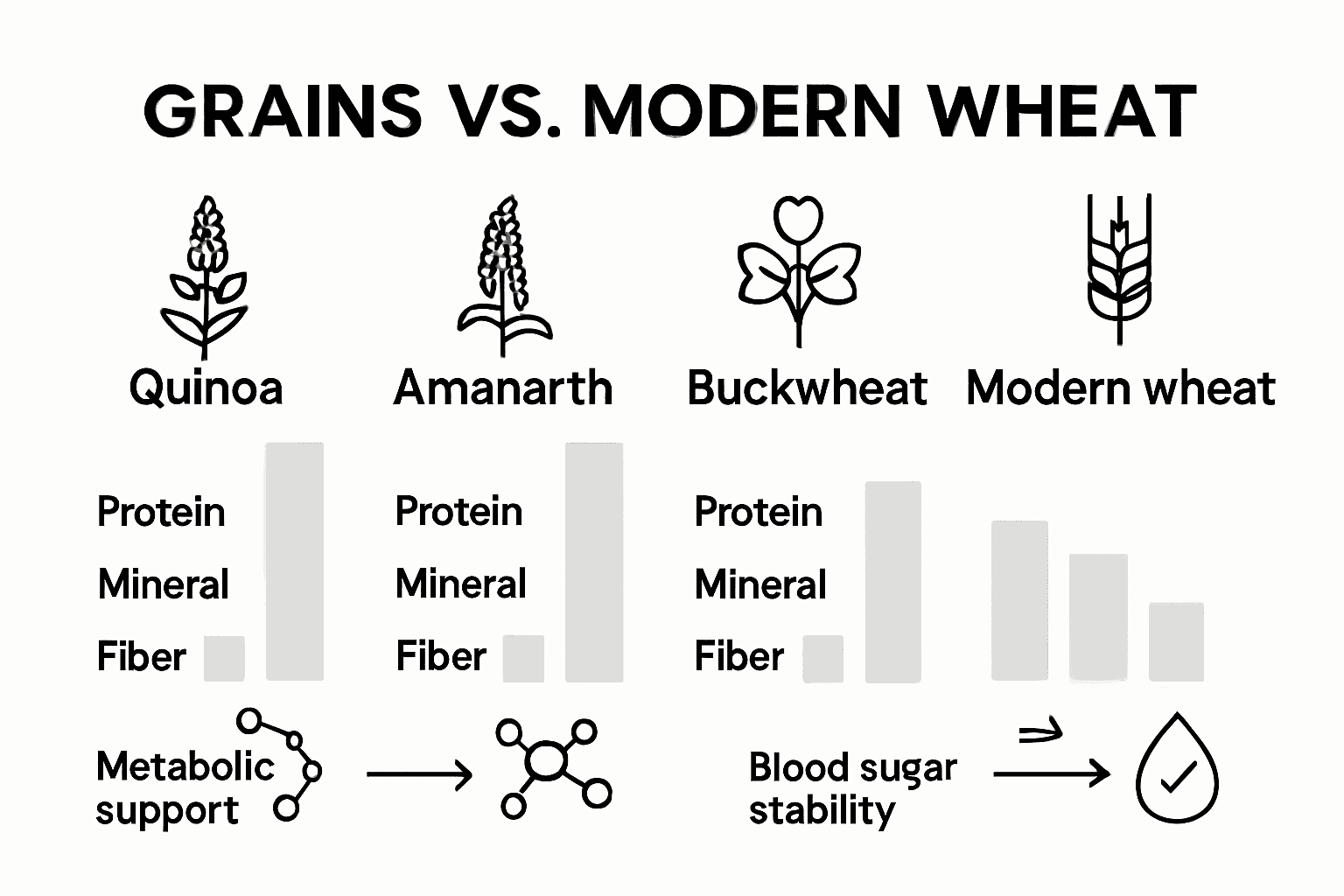
The nutritional profile of ancient grains aligns perfectly with the wellness priorities of 2025. These grains offer a holistic approach to nutrition, addressing multiple health dimensions simultaneously. They provide sustained energy, support cognitive function, help manage blood sugar levels, and contribute to long-term metabolic resilience. Their complex carbohydrate structures, rich micronutrient content, and adaptogenic properties make them an ideal nutritional foundation for professionals, athletes, and anyone seeking optimal performance.
Key Nutritional Advantages for Modern Lifestyles:
- Sustained energy release
- Enhanced metabolic resilience
- Cognitive function support
- Natural blood sugar management
- Comprehensive antioxidant protection
Pro Tip for Nutritional Adaptation: Integrate a variety of ancient grains into your diet, rotating them weekly to maximise nutritional diversity and prevent dietary monotony.
Bioactive Compounds in Ancient Grains:
- Polyphenols
- Flavonoids
- Essential amino acids
- Omega-3 fatty acids
- Minerals and trace elements
Choosing Sustainable and Ethical Grain Sources
The journey towards sustainable nutrition begins with understanding the profound impact of our grain choices. Scientific research highlights how cultivating ancient grains can support small-scale farmers and promote biodiversity, presenting a powerful alternative to conventional grain production methods that often prioritise industrial efficiency over ecological balance.
Ethical grain sourcing goes far beyond simple agricultural practices. It encompasses a holistic approach that considers environmental sustainability, fair farmer compensation, preservation of traditional agricultural knowledge, and minimal ecological disruption. Ancient grains like quinoa, amaranth, and teff represent more than just nutritional powerhouses—they are living examples of agricultural heritage that maintain genetic diversity and support local farming communities.
When selecting sustainable grain sources, consumers should consider multiple interconnected factors. This includes understanding the origin of the grains, their cultivation methods, water usage, soil health preservation, and the economic impact on farming communities. Organic certification, regenerative agriculture practices, and direct trade relationships offer transparent insights into the grain’s journey from field to plate. By choosing grains that respect ecological boundaries and support traditional farming practices, individuals can contribute to a more resilient and equitable food system.
The table below outlines key sustainability considerations when sourcing ancient grains:
| Ethical Factor | Environmental Effect | Impact on Communities |
|---|---|---|
| Organic certification | Reduces chemical use | Supports healthy soils |
| Regenerative practices | Boosts biodiversity | Preserves traditional knowledge |
| Fair trade principles | Encourages crop variety | Ensures fair farmer compensation |
| Local sourcing | Lowers food miles | Strengthens local economic resilience |
Key Considerations for Sustainable Grain Sourcing:
- Organic certification
- Regenerative agriculture practices
- Fair trade principles
- Local and regional production
- Minimal environmental impact
Pro Tip for Ethical Purchasing: Research the supply chain of your grains, prioritising brands that provide transparent information about farmer partnerships and sustainable cultivation methods.
Sustainability Impact Indicators:
- Biodiversity preservation
- Water conservation
- Soil health maintenance
- Carbon footprint reduction
- Community economic empowerment
Preparation Tips for Balanced Breakfasts
Creating a balanced breakfast with ancient grains requires thoughtful preparation and strategic nutritional planning. Nutritional experts recommend incorporating ingredients like chia seeds, linseeds, and quinoa into morning meals, transforming ordinary breakfasts into nutrient-dense powerhouses that support sustained energy and metabolic health.

Successful ancient grain breakfast preparation involves understanding cooking techniques that preserve nutritional integrity. Different grains require unique approaches: quinoa benefits from thorough rinsing to remove natural saponins, while amaranth performs best with a precise liquid-to-grain ratio. Overnight soaking can significantly reduce cooking time and enhance digestibility, making morning preparation more efficient. Consider batch cooking grains during less busy times, allowing quick assembly of nutritious breakfast bowls throughout the week.
Balancing macronutrients is crucial when designing ancient grain breakfasts. Combine complex carbohydrates from grains with quality proteins like Greek yoghurt, nuts, or plant-based protein powders. Add healthy fats from sources such as chia seeds, ground flaxseeds, or nut butters to create a comprehensive nutritional profile. Incorporate fresh fruits or vegetables for additional micronutrients and fibre, ensuring a well-rounded meal that supports sustained energy and metabolic function.
Ancient Grain Breakfast Preparation Strategies:
- Batch cook grains in advance
- Use precise cooking techniques
- Balance macronutrients
- Experiment with varied toppings
- Prepare overnight soaks
Pro Tip for Morning Efficiency: Prepare grain bases and toppings separately during weekend meal prep, enabling quick assembly of nutritious breakfasts during busy weekday mornings.
Essential Breakfast Grain Combinations:
- Quinoa with Greek yoghurt and berries
- Amaranth porridge with almond butter
- Teff with poached eggs and spinach
- Millet bowl with roasted vegetables
- Buckwheat pancakes with chia seeds
Embrace Ancient Grains for a Balanced 2025 Breakfast
Modern life calls for foods that honour tradition yet meet contemporary nutritional demands. If you are seeking sustained energy, metabolic resilience, and clean nutrition, embracing ancient grains like quinoa, amaranth, and teff can help transform your breakfast routine. These grains provide natural nutrient density, gluten-free options, and support a mindful lifestyle rooted in simplicity and purity.
Discover the power of whole grains with Grains – Granavitalis and explore our curated range of Gluten Free Flours – Granavitalis to craft breakfasts that fuel your body and mind. 
Take the step towards vibrant mornings by choosing ancient grains that match your health goals and ethical values. Start your journey with Granavitalis for pure, performance-driven nutrition that honours the past while fuelling today. Visit Granavitalis now to find your perfect ancient grain fit and create breakfasts designed for modern life.
Frequently Asked Questions
What are ancient grains and how do they differ from modern grains?
Ancient grains are crops that have remained genetically unchanged for thousands of years, such as quinoa, amaranth, teff, and millet. They differ from modern grains in their genetic stability, higher nutrient density, and lower levels of industrial processing.
What are the nutritional benefits of incorporating ancient grains into breakfast?
Ancient grains provide higher levels of protein, essential minerals, and complex carbohydrates compared to refined grains. They support sustained energy release, enhance metabolic resilience, and aid in blood sugar management, making them suitable for modern lifestyles.
How can I prepare ancient grains for breakfast?
You can prepare ancient grains by batch cooking them in advance, using precise cooking techniques specific to each grain, and combining them with quality proteins, healthy fats, and fresh fruits or vegetables to create a balanced meal.
Are ancient grains gluten-free and suitable for all diets?
Many ancient grains, such as quinoa, amaranth, and buckwheat, are naturally gluten-free and suitable for gluten-sensitive individuals. However, it’s essential to check specific grain types and their processing methods to ensure they meet dietary requirements.