
Sustainability of Ancient Grains – Real Benefits Today
Most advice about ancient grains gets it wrong. While their popularity has surged in British kitchens, many myths still distort what these crops actually offer. Over 60 percent of consumers believe ancient grains are always healthier than modern varieties, yet nutritionists argue the truth is more complex. This article challenges common assumptions, explores evidence-based benefits, and helps you cut through the hype about ancient grains in the British food scene.
Table of Contents
- Ancient Grains Defined And Common Myths
- Comparing Ancient And Modern Grain Varieties
- Environmental Impact Of Ancient Grain Farming
- Nutritional Strengths And Dietary Benefits
- Adapting Ancient Grains For Modern Lifestyles
Key Takeaways
| Point | Details |
|---|---|
| Ancient Grains Defined | Ancient grains are crops like spelt, quinoa, and amaranth, minimally altered by selective breeding, maintaining their nutritional integrity. |
| Nutritional Comparisons | Ancient grains are not inherently superior to modern grains; whole grains like brown rice also offer significant health benefits. |
| Environmental Benefits | Ancient grain farming supports sustainability, requiring fewer resources and promoting biodiversity compared to intensive modern agriculture. |
| Adaptation for Modern Use | These grains can easily be integrated into modern diets, offering versatile and nutritious options suitable for busy lifestyles. |
Ancient Grains Defined and Common Myths
Ancient grains represent a fascinating nutritional category of crops that have remained largely unchanged by selective breeding over thousands of years. These remarkable grains include varieties like spelt, quinoa, amaranth, einkorn, and Kamut, which have maintained their original genetic structure compared to modern wheat varieties. The Whole Grains Council defines ancient grains as crops that have experienced minimal human intervention, preserving their original nutritional integrity and genetic composition.
Contrary to popular belief, ancient grains are not inherently superior to modern whole grains. While they offer unique nutritional profiles, common whole grains like brown rice and whole wheat provide comparable health benefits at more affordable prices. Nutritionists suggest that the perceived advantages of ancient grains might be somewhat overstated, though they do offer interesting dietary diversity and potential health advantages.
Key characteristics of ancient grains include their robust nutrient density, distinctive flavour profiles, and potential digestibility advantages for some individuals. These grains often contain higher levels of protein, fibre, and micronutrients compared to heavily processed grains. Common myths surrounding ancient grains include the belief that they are automatically gluten-free or significantly more nutritious than modern alternatives. In reality, each grain variety offers unique nutritional benefits, and consumers should evaluate them individually rather than accepting blanket claims about their superiority.
Comparing Ancient and Modern Grain Varieties
When exploring grain varieties, understanding the nutritional landscape reveals fascinating differences between ancient and modern options. Scientific research indicates that ancient grains like emmer, einkorn, and spelt often demonstrate higher levels of antioxidants and anti-inflammatory properties compared to contemporary wheat varieties. These unique characteristics suggest potential health advantages, though researchers caution against making absolute claims about their superiority.
Ancient grains distinguish themselves through diverse genetic profiles and minimal processing. While modern wheat has been selectively bred for high yields and consistent agricultural performance, ancient grains have maintained their original genetic structures. This fundamental difference means ancient grains often present more complex nutritional profiles, with potential benefits for individuals seeking varied dietary options. Nutritional comparisons with modern cereals reveal nuanced differences in protein content, mineral composition, and potential digestibility.

The comparative analysis between ancient and modern grains extends beyond simple nutritional metrics. Each grain variety offers unique characteristics that might appeal to different dietary needs and preferences. Some individuals report easier digestion with ancient grain varieties, while others appreciate their distinctive flavour profiles. However, it remains crucial to approach these grains as complementary nutritional sources rather than viewing them through a simplistic lens of ‘superior’ or ‘inferior’. The key is understanding individual grain characteristics and how they might contribute to a balanced, diverse dietary approach.
Environmental Impact of Ancient Grain Farming
Scientific research exploring agricultural sustainability reveals fascinating insights into ancient cereals’ environmental potential. These remarkable grain varieties demonstrate extraordinary adaptability, capable of thriving in diverse soil conditions while requiring significantly fewer cultivation inputs compared to modern wheat varieties. By maintaining genetic diversity and resilience, ancient grains represent a promising approach to sustainable agricultural practices that support broader ecosystem health.
Researchers are increasingly recognising the critical role ancient grains might play in addressing climate change challenges. Investigations at the John Innes Centre highlight how Middle Eastern wheat varieties possess unique genetic characteristics that could potentially enhance crop resistance against extreme environmental conditions like prolonged droughts and unexpected flooding. These ancient grain varieties offer genetic diversity absent in contemporary agricultural monocultures, presenting a potentially transformative solution for global food security.
The environmental advantages of ancient grain farming extend beyond immediate crop performance. These grain varieties typically require less intensive farming interventions, meaning reduced water consumption, minimal chemical fertiliser usage, and lower carbon emissions associated with agricultural production. By promoting biodiversity and supporting more naturalistic farming approaches, ancient grains represent a holistic strategy for sustainable agriculture that aligns with contemporary environmental conservation goals. The potential to rehabilitate agricultural ecosystems while maintaining robust crop yields makes ancient grains an increasingly attractive option for forward-thinking farmers and environmentally conscious consumers.
Nutritional Strengths and Dietary Benefits
Scientific research on ancient grain nutritional profiles reveals remarkable insights into their exceptional dietary value. These grains are distinguished by dense nutrient compositions, offering substantially higher levels of essential minerals like iron, magnesium, and calcium compared to modern refined alternatives. Their rich profile of bioactive compounds and dietary fibres suggests potential advantages for metabolic health, cardiovascular function, and overall nutritional well-being.
Comparative studies of wheat varieties demonstrate intriguing biological differences between ancient and modern grain breads. Despite similar chemical compositions, breads crafted from ancient grains exhibit unique cellular interactions, hinting at nuanced health benefits beyond standard nutritional measurements. This suggests that the genetic integrity of ancient grains might contribute to more complex and potentially beneficial physiological responses.
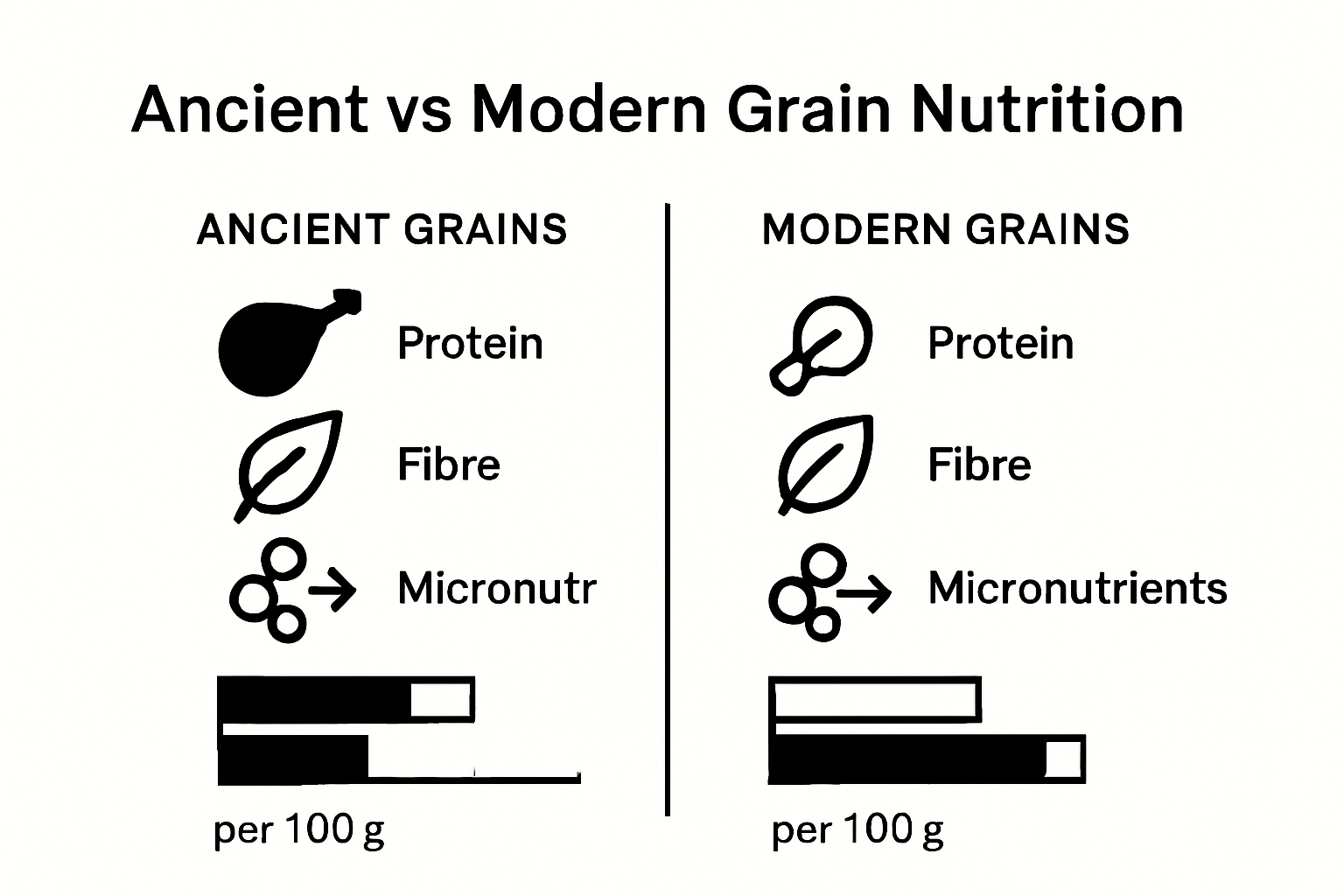
The nutritional landscape of ancient grains extends far beyond simple macronutrient content. These grains provide beneficial unsaturated fatty acids, complex carbohydrate structures, and a diverse range of micronutrients that support holistic dietary requirements. Their relatively unmodified genetic structure means they retain nutritional characteristics that have been gradually diminished in modern, intensively bred grain varieties. For individuals seeking more nutrient-dense, minimally processed food options, ancient grains represent an excellent dietary strategy that connects traditional nutritional wisdom with contemporary health objectives.
Adapting Ancient Grains for Modern Lifestyles
Research exploring global nutritional strategies highlights the extraordinary potential of ancient grains to address contemporary dietary challenges. Their remarkable adaptability and dense nutritional profiles make them an ideal solution for individuals seeking more diverse and nutrient-rich food options in fast-paced modern lifestyles. From quick breakfast porridges to innovative baking ingredients, these grains offer versatile approaches to integrating traditional nutrition into everyday meals.
Practical incorporation of ancient grains requires thoughtful preparation and creative culinary approaches. Home cooks can experiment with varieties like quinoa, amaranth, and spelt as alternatives to standard wheat, introducing exciting textures and flavour profiles into familiar recipes. Strategies for naturally incorporating these grains might include substituting traditional flour with ancient grain alternatives, creating protein-rich salads, or developing unique breakfast and baking recipes that leverage their distinctive nutritional characteristics.
Modern lifestyles demand nutritional solutions that are both convenient and health-conscious. Ancient grains meet this requirement by offering quick-cooking options, portable meal preparations, and nutrient-dense alternatives to processed foods. Their inherent versatility allows for seamless integration into meal preparation routines, supporting busy individuals who prioritise nutrition without compromising on taste or preparation time. Whether used in morning smoothies, afternoon snacks, or evening meal components, these grains represent a bridge between traditional nutritional wisdom and contemporary dietary needs.
Discover the Real Benefits of Sustainable Ancient Grains Today
The article highlights the challenge of choosing grains that are both nutritionally rich and environmentally sustainable. Many people seek foods that support wellbeing while respecting the planet. Ancient grains offer a time-tested solution with their natural genetic integrity, lower farming impacts, and dense nutrient profiles. If you are aiming to add powerful nutrient-dense foods that are aligned with sustainability goals to your diet, ancient grains are a great place to start.
Explore our carefully sourced selection of Grains – Granavitalis to experience the unique flavours and environmental benefits that ancient grains bring.
Make the smart choice now—fuel your body and honour the earth with ingredients rooted in tradition yet powered for today. Visit Granavitalis to browse our range of ancient grain products and explore versatile options from All Flours – Granavitalis along with our specially curated Gluten Free Flours – Granavitalis collection. Start your journey towards true nutrition built on purity, performance and purpose.
Frequently Asked Questions
What are ancient grains and how do they differ from modern grains?
Ancient grains are crops that have remained largely unchanged by selective breeding over thousands of years. They include varieties like spelt, quinoa, and amaranth. Unlike modern grains, which have been tailored for higher yields and consistency, ancient grains preserve their original genetic structure and offer diverse nutritional profiles.
What are the environmental benefits of growing ancient grains?
Ancient grains are highly adaptable and require fewer cultivation inputs, resulting in reduced water usage and lower carbon emissions. They promote biodiversity and can contribute positively to ecosystems, making them a more sustainable farming option compared to modern wheat varieties.
Are ancient grains nutritionally superior to modern grains?
While ancient grains like einkorn and spelt may offer unique nutritional benefits, common whole grains such as brown rice and whole wheat can provide comparable health advantages at lower prices. Each type of grain should be evaluated individually based on its specific nutritional profile.
How can I incorporate ancient grains into my diet?
You can easily incorporate ancient grains into your diet by substituting them for modern grains in recipes. They can be used in salads, as flour alternatives in baking, or in porridge for breakfast. Their variety of textures and flavours also make them suitable for diverse culinary applications.