

Nutrient-Dense Breakfasts: Fuel for UK Wellness
Finding the right breakfast can be a real challenge when you want more than just a quick meal. For many health-focused adults in the United Kingdom, an energising start means choosing foods that deliver genuine nutritional quality and help support fitness ambitions. Research now highlights the value of a nutrient-dense breakfast, with tools like the Breakfast Quality Score that assess protein, fibre, and micronutrient variety. This article offers practical guidance for building breakfast routines around plant-based and ancient grain ingredients that drive energy and lasting wellness.
Table of Contents
- Defining Nutrient-Dense Breakfasts In The UK
- Key Components Of A Balanced Morning Meal
- Ancient Grains And Plant-Based Benefits
- Risks Of Skipping Or Choosing Poor Breakfasts
- Practical Impact On Energy And Performance
Key Takeaways
| Point | Details |
|---|---|
| Nutrient-Dense Breakfasts | Breakfasts should be strategically composed to deliver balanced macronutrients and essential micronutrients for overall health. |
| Importance of Variety | A balanced morning meal must include a mix of fruits, wholegrains, protein sources, and healthy fats to ensure nutritional adequacy. |
| Ancient Grains and Plant-Based Options | Incorporating ancient grains and plant-based ingredients enhances breakfast nutrition, providing better protein quality and micronutrient density. |
| Risks of Skipping Breakfast | Regularly skipping breakfast is linked to increased health risks, such as cardiovascular disease and weight management challenges. |
Defining Nutrient-Dense Breakfasts in the UK
Nutrient-dense breakfasts represent strategic nutritional foundations designed to provide maximum health benefits through carefully selected food choices. In the United Kingdom, these breakfasts are increasingly recognised as critical components of daily wellness, moving beyond simple caloric intake to purposeful nutritional strategy.
Recent nutrition research introduces a comprehensive framework for evaluating breakfast quality. The Breakfast Quality Score (BQS) provides a systematic approach to assessing nutritional value, evaluating nutrient composition comprehensively. This scoring method considers multiple critical factors:
- Protein content
- Dietary fiber levels
- Micronutrient diversity
- Energy contribution
- Limiting saturated fats and free sugars
- Sodium management
Understanding the UK dietary landscape reveals fascinating insights into breakfast consumption patterns. National dietary surveys demonstrate that morning meals contribute approximately 20-22% of daily energy intake, highlighting their significant nutritional role. Interestingly, traditional British breakfasts tend to be:
- Higher in carbohydrate content
- Often sugar-rich
- Potentially lower in protein
- Abundant in key micronutrients like B vitamins, vitamin D, and calcium
A truly nutrient-dense breakfast transcends mere satiety, strategically delivering balanced macronutrients and essential micronutrients. This approach transforms breakfast from a simple meal into a targeted nutritional intervention supporting overall health and wellness.
Pro tip: Select breakfast ingredients that provide a balanced combination of protein, complex carbohydrates, and micronutrients to maximise your morning nutritional intake.
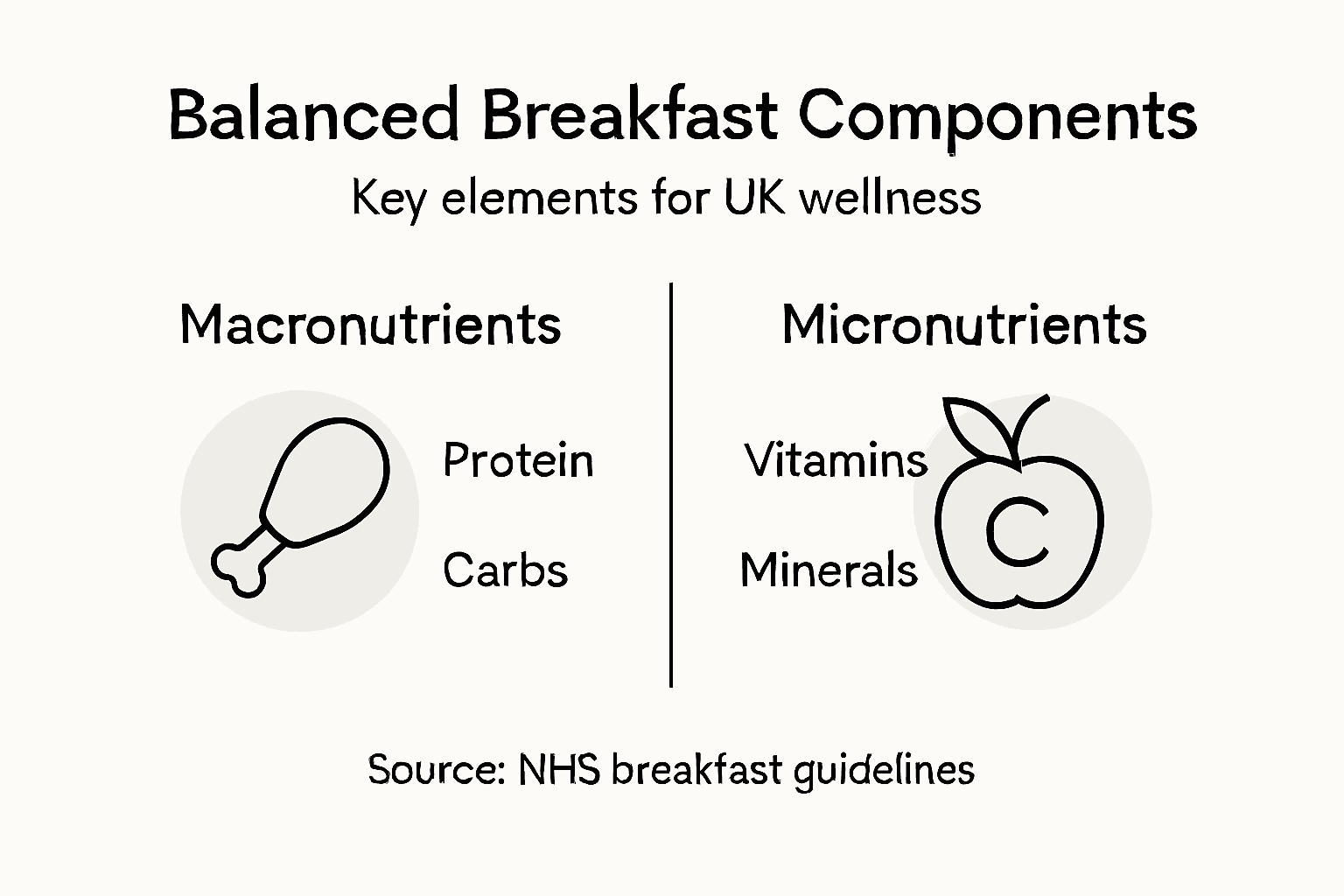
Key Components of a Balanced Morning Meal
Crafting a balanced morning meal requires understanding the intricate interplay of nutritional components that support overall health and sustained energy. Comprehensive dietary guidelines recommend a strategic approach to breakfast composition that goes beyond simple hunger satisfaction.
A truly balanced morning meal should incorporate multiple essential food groups:
- Fruits and Vegetables: Provide critical vitamins, minerals, and dietary fiber
- Wholegrain Carbohydrates: Deliver sustained energy and essential nutrients
- Protein Sources: Support muscle maintenance and metabolic functions
- Dairy or Alternatives: Supply calcium and additional protein
- Healthy Fats: Contribute to nutrient absorption and hormonal balance
The protein component plays a particularly crucial role in morning nutrition. Options like eggs, lean meats, beans, and pulses offer concentrated nutritional value, helping to stabilise blood sugar and provide lasting satiety. Wholegrain options such as porridge oats or wholemeal bread complement these protein sources by adding complex carbohydrates and additional micronutrients.

Nutritional experts emphasise the importance of variety and proportion. The NHS recommends creating breakfast plates that balance different food groups while limiting excessive sugar, saturated fats, and salt. This approach ensures not just caloric intake, but meaningful nutritional contribution to daily health requirements.
Pro tip: Prepare breakfast ingredients the night before to ensure a balanced, nutrient-rich morning meal that supports your wellness goals.
Ancient Grains and Plant-Based Benefits
The nutritional landscape is evolving, with ancient grains and plant-based options emerging as powerhouse breakfast ingredients that deliver exceptional health benefits. Nutrient-dense ancient grain varieties like quinoa, millet, teff, and sorghum are revolutionising morning nutrition with their remarkable nutritional profile.
These extraordinary grains offer multiple health advantages:
- High-Quality Protein: Superior amino acid composition
- Rich Micronutrients: Essential vitamins and minerals
- Complex Carbohydrates: Sustained energy release
- Bioactive Compounds: Natural antioxidants and anti-inflammatory agents
- Gut Health Support: Enhanced digestive function
Plant-based alternatives are transforming breakfast options with their versatile nutritional contributions. Plant-based drink options such as oat, soya, and almond milk provide fortified nutrients while supporting environmental sustainability. These alternatives typically offer lower saturated fat content and increased fiber, making them attractive options for health-conscious individuals.
The strategic combination of ancient grains and plant-based ingredients creates a powerful nutritional approach. By prioritising these whole food sources, individuals can develop breakfast meals that support cardiovascular health, regulate blood sugar, and provide comprehensive nutritional benefits.
The table below summarises how ancient grains compare with traditional breakfast cereals in the context of UK breakfast choices:
| Aspect | Ancient Grains (e.g., quinoa, teff) | Traditional Cereals (e.g., cornflakes, rice puffs) |
|---|---|---|
| Protein Content | Higher and more complete profile | Lower, often incomplete |
| Micronutrient Density | Rich in iron, magnesium, B vitamins | Variable, many depend on fortification |
| Fibre Content | Naturally high in fibre | May lack fibre unless fortified |
| Sustainability | Often more environmentally friendly | Production can be resource-intensive |
| Glycaemic Impact | Lower, supports stable blood sugar | Typically higher, may cause sugar spikes |
Pro tip: Experiment with mixing different ancient grains and plant-based proteins to create a diverse, nutrient-rich breakfast that keeps your meals exciting and nutritionally balanced.
Risks of Skipping or Choosing Poor Breakfasts
Breakfast is far more than a morning ritual—it’s a critical health intervention with profound physiological consequences. Cardiovascular research reveals significant risks associated with consistently skipping or poorly selecting morning meals.
The potential health risks of inadequate breakfast consumption include:
- Increased Cardiovascular Disease Risk: Higher likelihood of heart complications
- Metabolic Disruption: Impaired glucose and insulin regulation
- Inflammatory Pathway Activation: Heightened systemic inflammation
- Weight Management Challenges: Higher probability of obesity
- Nutritional Deficiency: Reduced essential micronutrient intake
UK studies underscore the serious implications of breakfast neglect. Skipping meals frequently leads to compensatory eating patterns characterised by unhealthy snacking, typically involving high-fat and high-sugar foods. These dietary choices can significantly elevate risks of chronic health conditions, transforming a seemingly innocuous morning habit into a potential long-term health liability.
The following table highlights the potential long-term effects of regularly skipping or poorly selecting breakfast compared to consistently eating a nutrient-dense breakfast:
| Health Outcome | Skipping/Poor Breakfast | Nutrient-Dense Breakfast |
|---|---|---|
| Cardiovascular Risk | Increased risk of heart disease | Supports heart health |
| Weight Control | Higher obesity likelihood | Aids healthy weight maintenance |
| Energy Levels | Fluctuations and fatigue | Sustained, balanced energy |
| Cognitive Function | Possible decline in focus | Improved mental clarity |
| Appetite Regulation | Elevated snacking and cravings | Stable hunger and satiety |
Pro tip: Prepare quick, nutrient-dense breakfast ingredients the evening before to ensure you never compromise your morning nutrition.
Practical Impact on Energy and Performance
Breakfast plays a pivotal role in daily energy management and cognitive performance, transcending simple nutrition. Systematic reviews of breakfast consumption reveal nuanced insights into how morning meals directly influence physiological and psychological functioning.
Key performance impacts of strategic breakfast consumption include:
- Cognitive Function: Enhanced mental clarity and concentration
- Metabolic Efficiency: Stabilised blood sugar and energy levels
- Appetite Regulation: Reduced likelihood of uncontrolled snacking
- Physical Endurance: Sustained energy for morning activities
- Psychological Resilience: Improved mood and stress management
Research from De Montfort University highlights a critical mechanism: reducing breakfast size often triggers compensatory eating of energy-dense, high-fat snacks later in the day. This undermines potential calorie deficits and disrupts metabolic balance. Nutrient-dense morning meals act as metabolic primers, setting the physiological tone for sustained performance and wellness.
Pro tip: Combine complex carbohydrates with lean proteins in your breakfast to create a steady, long-lasting energy release that supports both mental and physical performance.
Transform Your Morning with Nutrient-Dense Choices from Granavitalis
Struggling to create breakfasts that truly support your health and energy through the day? This article highlights the critical importance of nutrient-dense morning meals built on ancient grains, clean plant-proteins, and balanced nutrients. At Granavitalis, we share your goal of moving beyond empty calories and inconsistent energy toward carefully crafted nutrition rooted in tradition and designed for modern life.
Our Metabolic Advantage Pack – Granavitalis provides a powerful starting point for anyone looking to stabilise blood sugar, enhance satiety, and fuel sustained wellness. Combine that with flavour and focus from our Flavours and Power Ups – Granavitalis and you have the essential toolkit to support mindful breakfasts that align with the article’s proven principles.

Take control of your morning nutrition today. Visit Granavitalis to explore how time-honoured grains and clean ingredients can reshape your breakfast routine and energise your UK wellness journey. Your body and mind deserve breakfasts that do more than fill hunger—they fuel your life with clarity, strength, and balance.
Frequently Asked Questions
What are the key components of a nutrient-dense breakfast?
A nutrient-dense breakfast should include a balance of fruits and vegetables, wholegrain carbohydrates, protein sources, dairy or alternatives, and healthy fats to ensure a rich supply of essential nutrients.
Why is protein important in breakfast?
Protein is crucial in breakfast as it helps stabilise blood sugar levels, promotes muscle maintenance, and keeps you feeling full longer, reducing the chances of unhealthy snacking later in the day.
What are the health risks of skipping breakfast?
Skipping breakfast can lead to increased risks of cardiovascular disease, metabolic disruption, higher obesity likelihood, and nutritional deficiencies due to reduced essential micronutrient intake.
How do ancient grains compare to traditional cereals for breakfast?
Ancient grains like quinoa and teff generally offer higher protein content, more complete micronutrient profiles, and better fibre content than traditional cereals, making them a healthier choice for breakfast.
Recommended
- Nutritious Breakfasts: Fuel for Modern Wellbeing – Granavitalis
- Nutritious Breakfast Checklist: Build Your Morning Power Meal – Granavitalis
- 7 Micronutrient-Packed Breakfast Foods for Lasting Energy – Granavitalis
- 7 Fibre-Rich Breakfast Foods for More Energy in the Morning – Granavitalis
- Understanding Employee Wellness Programs and Their Benefits – The Ocean Straw
- Foska Oats – TOJ EXPRESS