
Ancient Grains Nutrition Facts: Boosting Energy Daily
Most british adults aiming for plant-based diets turn to ancient grains, yet over 40% still believe common myths about their nutrition and benefits. With modern lifestyles demanding more sustained energy and quicker recovery after exercise, understanding the real strengths of ancient grains is key. This overview shines a light on how staples like quinoa, teff, and amaranth can fit effortlessly into a british routine while cutting through the confusion around their nutritional value.
Table of Contents
- Defining Ancient Grains And Nutrition Myths
- Types Of Ancient Grains Used Today
- Nutritional Benefits For Energy And Recovery
- Comparing Ancient Vs Modern Grains’ Profiles
- Integrating Ancient Grains Into Uk Diets
- Potential Allergens And Safe Consumption
Key Takeaways
| Point | Details |
|---|---|
| Ancient Grains Offer Unique Nutritional Benefits | Ancient grains like Quinoa and Amaranth provide complex carbohydrates, higher protein content, and essential micronutrients compared to modern wheat varieties. |
| Not All Ancient Grains Are Gluten-Free | Many ancient grains, such as Spelt and Einkorn, contain gluten; therefore, they may not be suitable for individuals with wheat sensitivities. |
| Gradual Introduction is Key | Integrating ancient grains into the diet should be done gradually to help monitor individual responses and reduce allergic reactions. |
| Culinary Adaptation Is Important | Explore traditional recipes by substituting common ingredients with ancient grains to enhance nutritional diversity without compromising taste. |
Defining Ancient Grains and Nutrition Myths
Ancient grains represent a category of minimally processed, heritage grain varieties that have remained largely unchanged through agricultural history. Unlike modern wheat varieties developed through intensive hybridisation, these grains have maintained their original genetic structures for thousands of years. Nutritional research on ancient grains reveals fascinating insights into their unique nutritional profiles and potential health benefits.
Contrary to popular belief, ancient grains are not inherently superior to modern varieties, but they do offer distinct nutritional advantages. Grains such as quinoa, millet, teff, and sorghum contain complex carbohydrate profiles, higher protein content, and more diverse micronutrient compositions compared to highly processed wheat alternatives. Scientific investigations have critically examined these claims, demonstrating that while ancient grains are nutritionally interesting, they are not magical solutions to dietary challenges.
The most prevalent nutrition myths surrounding ancient grains include assumptions that they are automatically gluten-free, significantly more nutritious, or universally beneficial for all individuals. In reality, each grain variety presents unique nutritional characteristics. Some ancient grains like quinoa offer complete protein profiles, while others like amaranth provide robust mineral content. Understanding these nuanced differences requires moving beyond blanket generalisations and examining individual grain properties scientifically.
Pro Tip: Nutritional Exploration: Introduce ancient grains gradually into your diet, rotating between different varieties to maximise nutritional diversity and prevent potential sensitivities.
Types of Ancient Grains Used Today
Ancient grains represent a diverse and fascinating category of traditional food sources that have gained significant attention in modern nutrition. Comprehensive research highlights a range of fascinating grain varieties including wild rice, millet, quinoa, amaranth, and various traditional wheat types that offer unique nutritional profiles and culinary possibilities.
The most prominent ancient grains can be categorised into two primary groups: cereal grains and pseudocereals. Cereal grains like einkorn, emmer, and spelt are technically grass-derived grains with remarkable genetic stability. Pseudocereals such as quinoa, amaranth, and buckwheat are botanically distinct yet nutritionally similar, providing complete protein profiles and essential minerals. Scientific publications exploring ancient grain characteristics reveal these grains are not merely historical curiosities but represent sophisticated nutritional resources with potential for modern dietary integration.
Each ancient grain brings distinctive attributes to the table. Quinoa stands out for its complete protein composition, containing all essential amino acids. Teff offers remarkable iron content and is a staple in Ethiopian cuisine. Amaranth provides significant calcium and magnesium, while sorghum presents remarkable drought resistance and gluten-free properties. These grains are not just nutritional powerhouses but also represent cultural food heritage, connecting contemporary diets with traditional agricultural practices.
The following table compares the unique nutritional highlights and culinary uses of key ancient grains:
| Grain | Notable Nutritional Benefit | Typical Culinary Use |
|---|---|---|
| Quinoa | Complete protein, high magnesium | Salads, pilafs, baking |
| Teff | High iron, rich in fibre | Porridge, flatbreads, baking |
| Amaranth | Abundant in calcium and magnesium | Porridge, baking, thickener |
| Sorghum | Rich in antioxidants, gluten-free | Flour, porridge, brewing |
| Einkorn | Higher protein, more micronutrients | Pasta, bread, cakes |
Pro Tip: Nutritional Exploration: Experiment with different ancient grains weekly, rotating varieties to maximise nutritional diversity and discover unique flavour profiles.
Nutritional Benefits for Energy and Recovery
Energy metabolism represents a complex biological process where ancient grains play a surprisingly sophisticated role. Comprehensive nutritional research demonstrates that these grains contain unique combinations of dietary fibre, micronutrients, and bioactive compounds that support sustained energy release and efficient metabolic function.
The nutritional profile of ancient grains directly impacts mitochondrial performance and glucose regulation. Complex carbohydrates found in grains like quinoa, amaranth, and teff provide a steady, slow-release energy mechanism that prevents sudden blood sugar spikes. Their intricate molecular structures include extended-chain polysaccharides that enable gradual nutrient absorption, ensuring consistent energy levels throughout physical activities and supporting prolonged muscular endurance.

Recovery processes are equally supported by the rich nutritional landscape of ancient grains. Their high antioxidant content helps manage post-exercise inflammation, while mineral concentrations such as magnesium, zinc, and iron contribute to muscle repair and cellular regeneration. Proteins in these grains contain essential amino acid profiles that accelerate tissue reconstruction, making them particularly valuable for athletes and individuals engaged in regular physical training. The comprehensive nutritional matrix of ancient grains essentially transforms them from simple food sources into sophisticated recovery and performance enhancement tools.
Pro Tip: Recovery Nutrition: Consume ancient grains within 45 minutes post-exercise to maximise protein absorption and support optimal muscle tissue repair.
Comparing Ancient vs Modern Grains’ Profiles
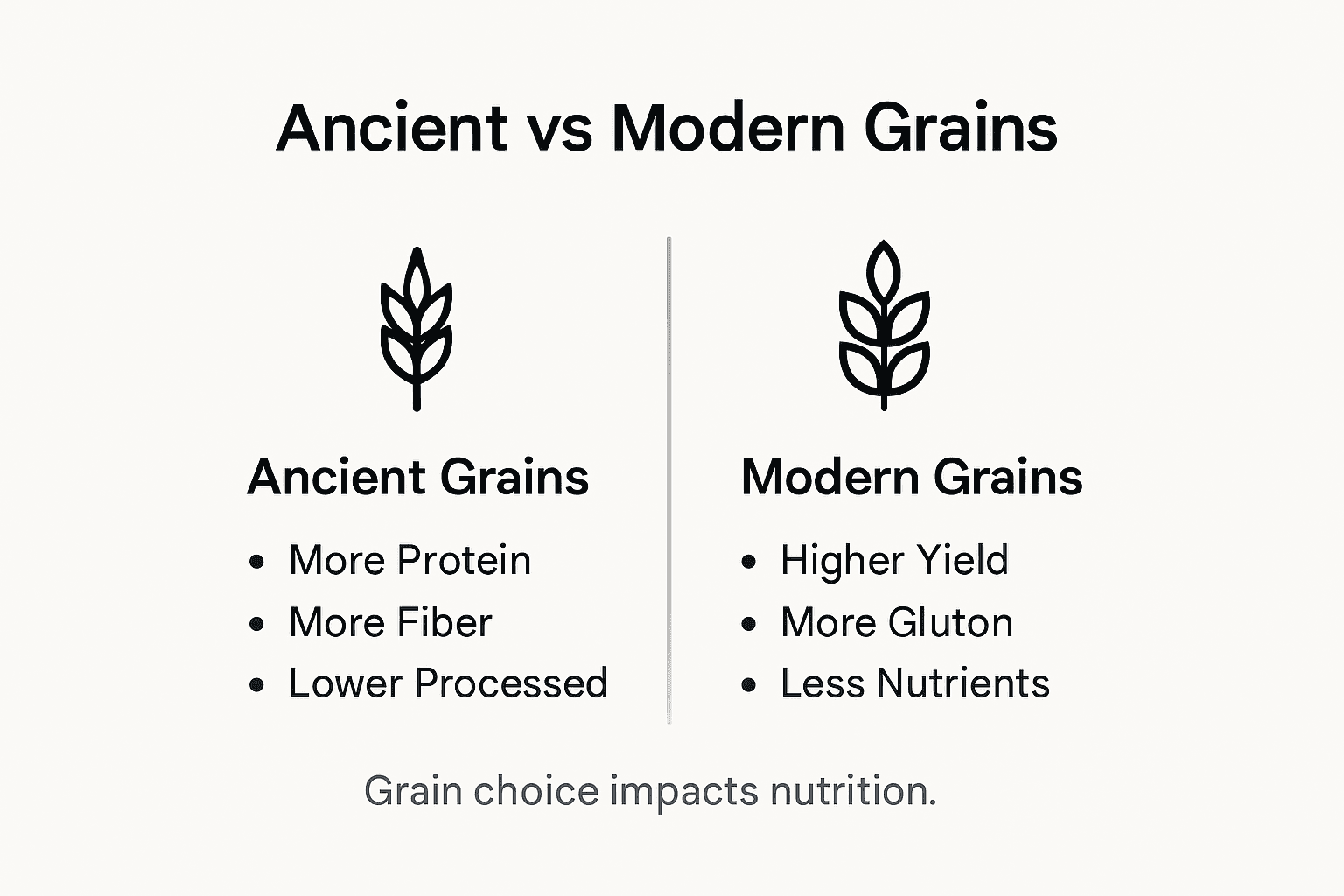
Nutritional composition represents the primary distinguishing factor between ancient and modern grain varieties. Comprehensive scientific comparisons of grain samples reveal profound differences in macro and micronutrient profiles, suggesting that modern wheat developments have potentially compromised nutritional integrity.
Modern grain breeding techniques have predominantly focused on agricultural productivity, resulting in wheat varieties with reduced genetic diversity and potentially diminished nutritional complexity. Ancient grains like einkorn, emmer, and spelt maintain more stable genetic structures, offering more consistent protein quality, higher mineral content, and lower glycemic responses. UK-based research from Rothamsted Research indicates that these traditional grains demonstrate superior dietary fibre concentrations and micronutrient densities compared to industrially optimised grain varieties.
The key nutritional distinctions emerge in several critical areas. Ancient grains typically feature more complex protein structures with enhanced amino acid profiles, improved digestibility, and lower inflammatory responses. Their micronutrient compositions remain more diverse, including trace minerals like selenium, zinc, and magnesium in more bioavailable forms. Modern grains, by contrast, often exhibit simplified nutritional matrices, engineered primarily for yield, shelf-stability, and industrial processing requirements rather than comprehensive nutritional value.
Pro Tip: Grain Selection: Integrate a diverse range of ancient grains into your diet, rotating between varieties to maximise nutritional complexity and minimise potential sensitivities.
Integrating Ancient Grains Into UK Diets
The landscape of British nutrition is evolving, with national dietary guidelines increasingly recognising the potential of whole grain diversity, including ancient grain varieties. Traditional British diets have predominantly relied on wheat-based products, but emerging nutritional research suggests expanding our grain repertoire can significantly enhance dietary quality and metabolic health.
Evidence-based dietary recommendations highlight the importance of strategic grain integration. For UK households, this means gradually introducing ancient grains like quinoa, amaranth, and teff into familiar recipes. Simple adaptations such as replacing standard rice with quinoa, incorporating millet into morning porridge, or using spelt flour in baking can dramatically increase nutritional diversity without disrupting established eating patterns.
Practical implementation requires understanding regional taste preferences and cooking methods. British consumers tend to appreciate subtle flavour profiles, so selecting ancient grains with mild, nutty characteristics can ease dietary transitions. Combining ancient grains with traditional British ingredients like root vegetables, herbs, and lean proteins creates nutritionally enhanced meals that feel comfortingly familiar yet nutritionally progressive.
Pro Tip: Grain Introduction: Start with one new ancient grain variety monthly, preparing it in a familiar dish to build confidence and gradually expand your nutritional repertoire.
Potential Allergens and Safe Consumption
Wheat allergies represent a significant concern for many individuals considering dietary changes, and ancient grains are not automatically hypoallergenic. Scientific research investigating wheat protein fractions demonstrates that ancient grain varieties can trigger similar immunological responses to modern wheat, challenging the misconception that they are universally safer for sensitive individuals.
The protein structures in ancient grains like spelt, einkorn, and emmer contain gluten peptides that can potentially activate immune responses in individuals with wheat sensitivities. While some people report improved digestibility, this is not a universal experience. Individual variability means that some consumers might tolerate certain ancient grain varieties better than others, but blanket claims of hypoallergenicity are scientifically unfounded. Careful, incremental introduction and professional medical guidance are crucial for those with known wheat allergies or coeliac disease.
Effective strategies for safe consumption involve methodical approaches to grain integration. Individuals with known sensitivities should consider working with nutritionists to conduct controlled trials, potentially starting with smaller quantities of specific ancient grains and monitoring physiological responses. Cross-contamination risks also remain significant, particularly for those with severe gluten intolerances, necessitating careful sourcing from dedicated gluten-free processing facilities.
This summary table outlines practical strategies for safely integrating ancient grains for those with sensitivities:
| Safety Strategy | Purpose | Key Recommendation |
|---|---|---|
| Gradual Introduction | Reduce risk of reactions | Start with small, single-grain portions |
| Professional Guidance | Ensure medical safety | Consult NHS-registered dietitian |
| Monitor Individual Responses | Detect potential intolerances | Keep a food and symptom diary |
| Source Certified Gluten-Free | Avoid cross-contamination | Use dedicated suppliers and labels |
Pro Tip: Allergen Management: Consult a registered dietitian before introducing new grains, and always perform small-scale personal tolerance tests when exploring ancient grain varieties.
Elevate Your Daily Energy with Ancient Grains from Granavitalis
Unlock the true potential of sustained energy and mindful recovery through carefully sourced ancient grains. This article highlights the complex carbohydrates and nutrient-rich profiles that support steady energy release and muscle repair—key for anyone seeking balanced vitality through their diet. If you want to embrace the power of grains like quinoa, teff and amaranth with confidence and clarity, Granavitalis offers premium options to suit your energy and wellness goals.
Discover our Grains – Granavitalis collection of heritage grains, chosen for their purity and performance.

Experience the difference that authentic, nutrient-dense ancient grains can make to your daily strength, recovery and focus. Visit Granavitalis to explore these foundational foods along with our complete range including All Flours – Granavitalis and Protein Power Packs – Granavitalis. Transform your nutrition by honouring time-tested tradition with every meal today.
Frequently Asked Questions
What are ancient grains and how are they different from modern grains?
Ancient grains are minimally processed, heritage varieties that have remained largely unchanged throughout history. Unlike modern grains, which have been heavily hybridised for productivity, ancient grains maintain their original genetic structures and often offer unique nutritional profiles.
What nutritional benefits do ancient grains provide for energy and recovery?
Ancient grains contain complex carbohydrates that provide sustained energy release, preventing sudden blood sugar spikes. They are rich in macronutrients and micronutrients that support muscle repair and recovery, making them particularly beneficial for athletes and active individuals.
Are all ancient grains gluten-free?
Not all ancient grains are gluten-free. While grains like quinoa and sorghum are gluten-free, others like spelt and einkorn contain gluten proteins that may trigger reactions in individuals with wheat sensitivities or coeliac disease.
How can I incorporate ancient grains into my diet?
You can integrate ancient grains by replacing modern grains with them in familiar recipes. For example, use quinoa in salads, millet in porridge, or spelt flour in baking. Gradually introducing one new grain at a time can help build familiarity and diversify your nutritional intake.